A kindergarten screening notice can put a bilingual family in a tight spot, because parents want help without having a home language treated like a problem. A young bilingual child may know a concept in Spanish, Ukrainian, Arabic, Mandarin, or another home language before English catches up, and a quick school task can miss that difference. Today, use five quiet minutes to write down which language your child uses for counting, naming pictures, following directions, and telling a story, then bring that note to the screening conversation.
Reviewed by Whizki Editorial Team, Early Childhood Education Editors.
Start with the language of the task
The testing language question should come before any talk about scores. Ask, Which language will the screening use, and can my child answer in the home language? NAEYC guidance reminds early-childhood teams to view a child inside family, culture, and language context, so the language of the task matters as much as the task itself.
The interpretation support question protects both the child and the adult conversation. Ask, Will a trained interpreter be present for directions, child responses, and the family meeting? Speech-language pathology practice treats interpretation as a support for valid communication, not as a favor or an afterthought.
The home-language evidence question gives the school a fuller picture. Ask, Can I share words, videos, drawings, or stories from home to show what my child understands? The same idea comes up in the previous bilingual home guide, because a direct translation rarely shows the whole way a child uses language.
Use this six-question script
The first two questions are simple and worth asking out loud. Ask, What language will my child hear during directions? Then ask, What language may my child use to answer? Speech-language pathology teams often separate comprehension from expression, and bilingual children may show one skill in one language before another language catches up.
The next two questions look at the task beyond spoken English. Ask, Are there nonverbal measures, such as pointing, matching, building, or copying, when spoken language gets in the way? Then ask, How will the school record home-language evidence? Occupational-therapy basics also support watching motor planning, attention to materials, and visual matching before assuming a child did not understand.
The last two questions bring people into the picture. Ask, How will family observations and teacher observations be included? Then ask, How will the school separate normal bilingual language development from the skill being screened, such as letter knowledge, counting, hearing sounds, or following a routine? The Orton-Gillingham approach separates sound, symbol, and meaning, which helps adults notice whether the challenge is English vocabulary or the screened skill.
The six-question script can fit on one index card and takes about three minutes to read before a meeting. A preschooler age 3 or 4 may show more through pointing, sorting, and play talk, while a kindergartener age 5 to 7 may show more through retelling, drawing, and early letter-sound attempts. The script cannot guarantee a placement or service, but the script can help the screening team ask better questions.
Read behavior as information, not refusal
The child who goes quiet during screening may be thinking, translating, watching the adult, or checking the room. Occupational-therapy heuristics ask adults to notice posture, pencil grip, fatigue, and sensory load before calling a task refusal. A calm note such as, My child names animals in our home language but may pause with new adults, gives the team useful context.
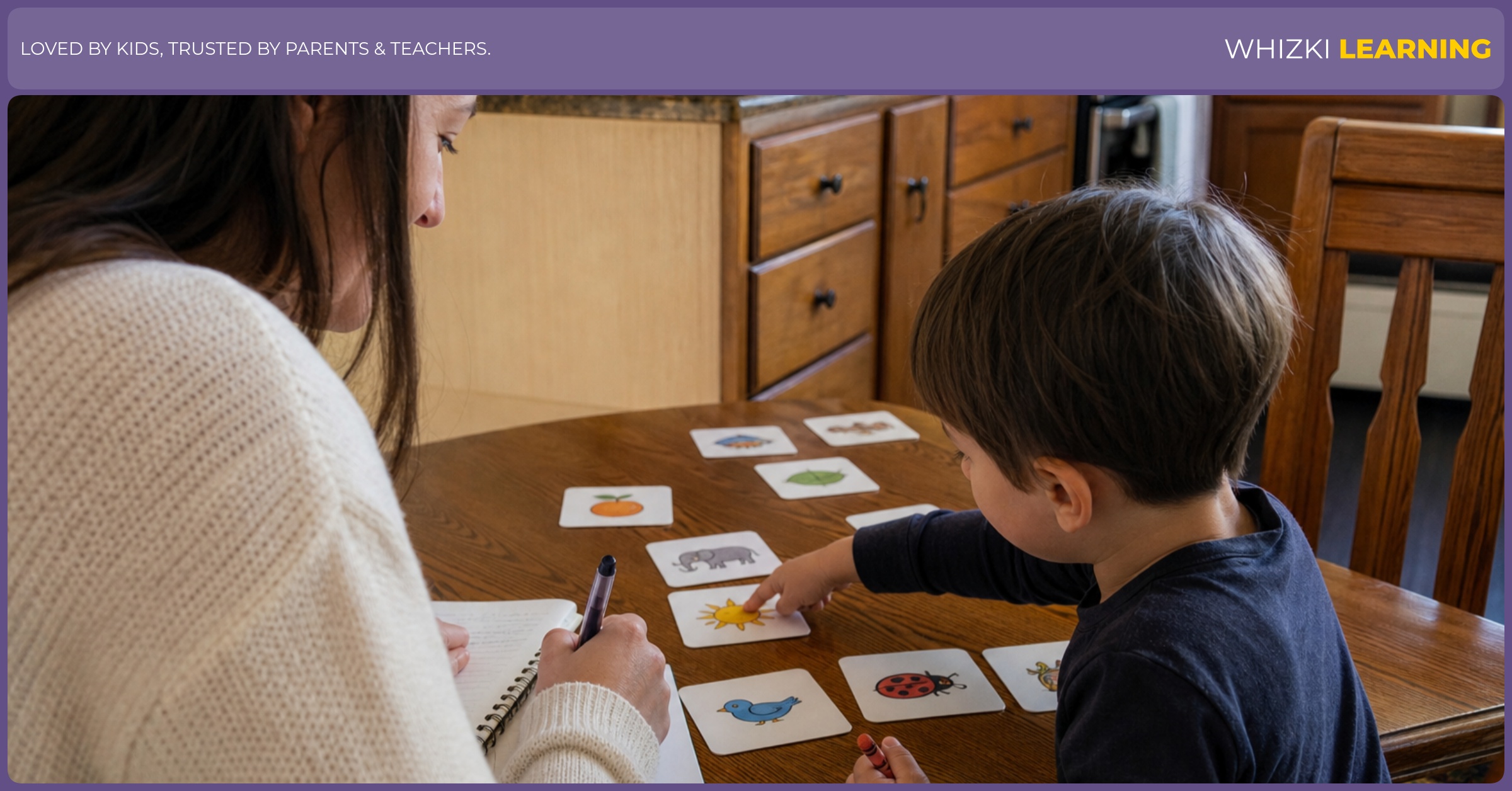
Reggio and Montessori observation traditions both value watching the child with real materials before rushing to a label. The teacher can watch whether the child matches shapes, sorts objects, follows a modeled action, or retells a play scene with gestures. Those observations can sit beside screening results rather than being treated as side comments.
The family can gather a small sample at home without turning the evening into school. Choose three picture cards, five blocks, and one favorite book, then notice the language your child chooses for naming, comparing, and explaining. If a parent wants more gentle practice ideas across early skills, the family learning hub can support short off-screen routines.
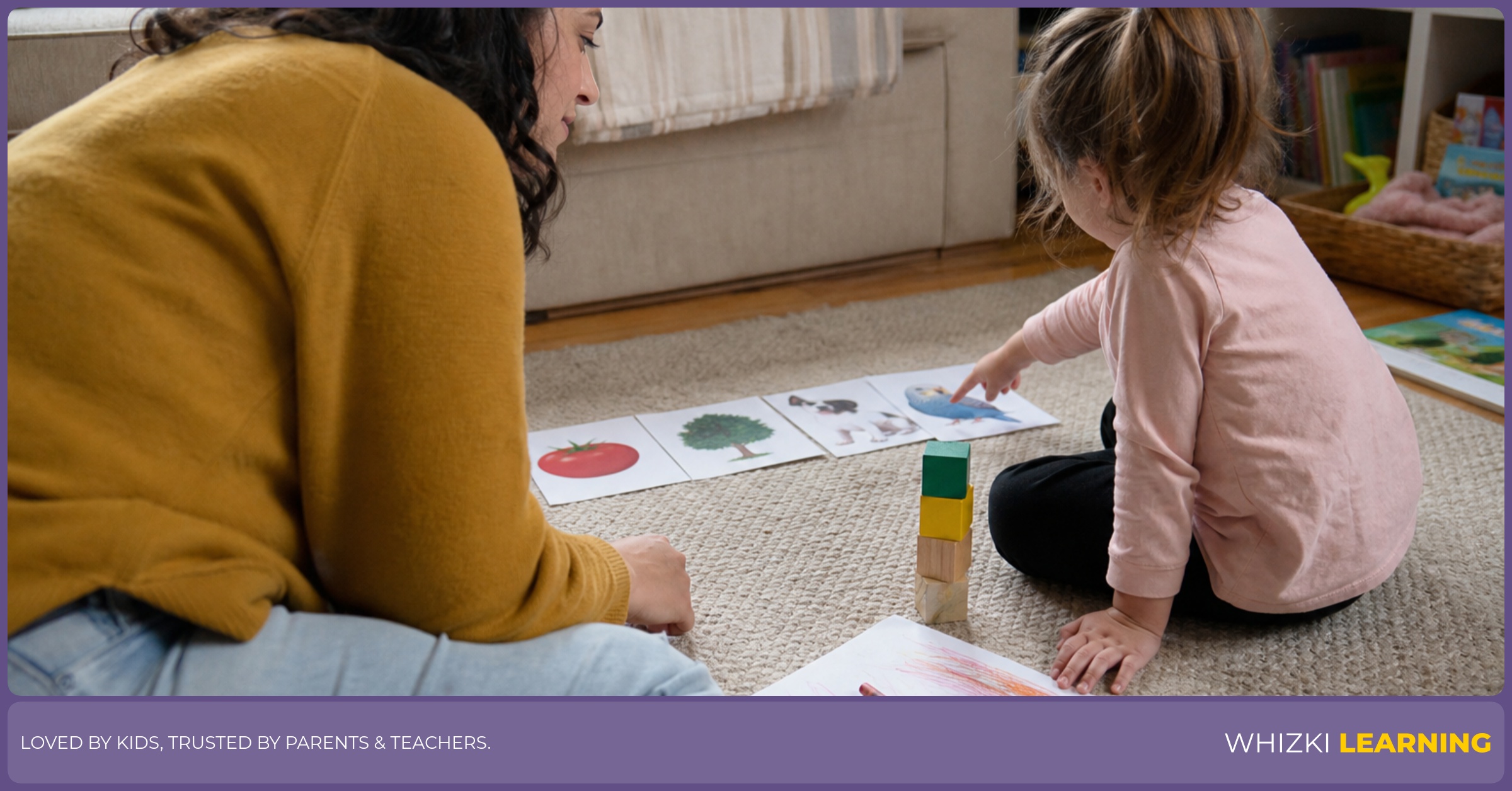
The printable letter pages in the alphabet learning hub can give a family a low-pressure way to notice what a child names in each language. A parent can point to one picture, invite the home-language word first, and add the English word only when the child seems ready.
Choose the next step after screening
The decision after screening should match the concern, not the panic in the room. If the school can screen in the home language or use a qualified interpreter, ask for those details in writing before the appointment. NAEYC-aligned practice favors family partnership, so the family note belongs in the record of the conversation.
The next path changes when the school cannot provide enough language support right away. Ask whether the team can use nonverbal tasks, classroom observation, and a follow-up conversation with an interpreter before making decisions from one English-heavy sitting. Speech-language pathology practice cautions adults to compare language exposure, opportunity, and response patterns before treating bilingual development as a delay.
The letter and sound path needs a separate look from spoken vocabulary. In Orton-Gillingham teaching, a child can know a sound, miss the English word for the picture, and still need credit for the sound knowledge. A teacher can ask for pointing, sorting by beginning sound, or choosing between two pictures so the screened skill is clearer.
The honest limit is that a parent checklist cannot replace a formal evaluation when a real concern remains. If a child struggles to understand familiar directions in every language, loses skills, or cannot communicate basic needs with words, signs, gestures, or pictures, ask the pediatrician or school team for a deeper review. A good screening conversation keeps the door open instead of making one short task carry too much weight.
The goal is not to argue with the school before the screening begins. The goal is to make the child visible as a whole young learner with more than one language, real family knowledge, and growing early-school skills. Bring the six questions, bring one home example, and ask the team how language will be separated from the skill being screened.