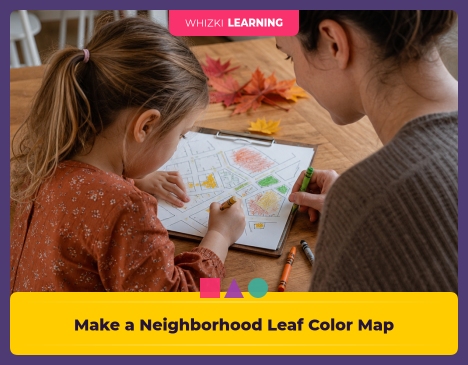
When shoes are missing and dinner is already on your mind, choose a ten-minute loop today and ask your child to spot one red, yellow, brown, or green tree before turning back. A neighborhood leaf color map works because the activity is small, visible, and easy to repeat. A child can point, draw a dot, or dictate while an adult handles the clipboard.
Reviewed by Whizki Editorial Team, Early Childhood Education Editors.
Choose a route you can repeat
The leaf color route should be short enough for a tired preschooler, usually one block, one cul-de-sac, one school path, or the view from the front steps. The best time estimate is 10 to 15 minutes for ages 3 to 5 and 15 to 25 minutes for ages 6 to 7. NAEYC guidance reminds early-childhood educators to build learning from familiar places, so a plain sidewalk can be better than a special trip across town. The route matters because the child can visit the same trees again and notice real change.
The adult can make a quick decision before leaving: pick a loop if traffic is calm, pick an out-and-back path if a stroller or wheelchair needs space, or pick a window-view map if weather is rough. The child can help name three landmarks, such as mailbox, corner tree, and bus stop, because landmarks make the map easier to read. The family should leave leaves where collecting is not allowed, including posted parks, gardens, school grounds, and neighbor yards without permission.
Build the map with child-friendly marks
The leaf color map needs only a sheet of paper, four crayons, a pencil, and something firm under the paper. The adult draws the route as a simple line, then adds a square for home, a circle for a tree, or a star for a favorite stop. The child chooses a crayon mark for each color seen, such as red dots near the corner or yellow lines by the driveway.
The 3- and 4-year-old child can make big marks, stickers, or finger taps while an adult writes the color word. The 5- to 7-year-old child can add labels, arrows, tally marks, or a date. The Orton-Gillingham approach often uses say, see, trace, and write routines, and the same multisensory idea helps a child connect the spoken color word with the mark on the page.
The occupational-therapy basics matter during a walk because small hands tire faster than adult hands expect. A short crayon, thick marker, or broken chalk piece can support a more comfortable grasp, and a clipboard keeps the paper from flopping. The goal is noticing, not neatness, so a shaky brown scribble still counts as a useful observation.
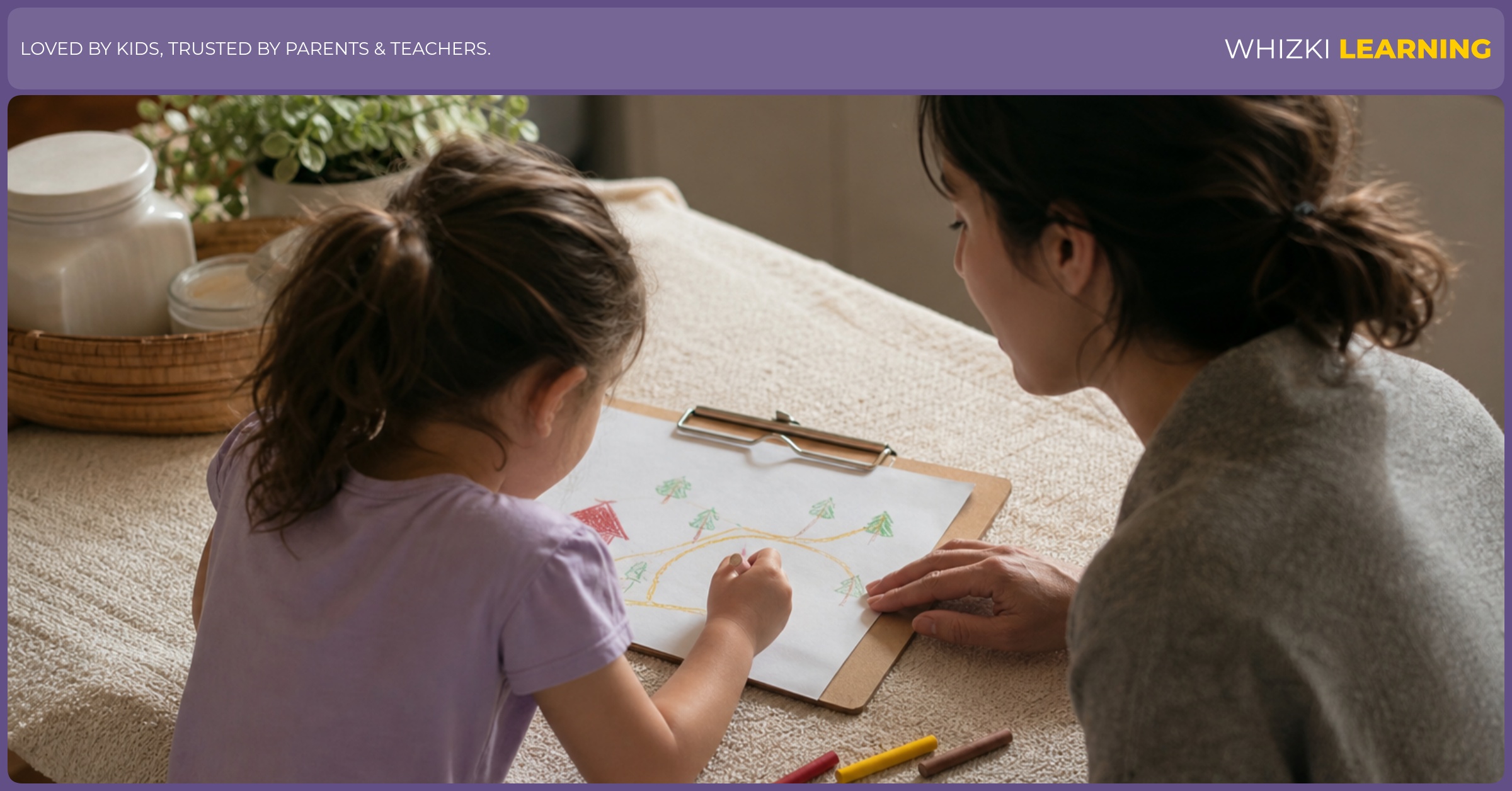
For a seasonal table basket, the holiday and culture printables can sit beside crayons, tape, and the map page. A printable is optional, but a ready page can help when a caregiver wants a quiet follow-up after the walk.
Compare the same places over time
The comparison becomes the science when the family walks the same route again three days, one week, or two weeks later. The child can use the same colors and add a new date beside each mark. Reggio Emilia documentation practice values returning to children’s observations, and a simple before-and-after map gives young children visible proof that plants change over time.
The family can tape the map near the door, place the map in a nature notebook, or add the next walk to the family learning planner. The calendar note can be as small as “check maple tree” or “look for yellow leaves near library.” A repeated plan makes the activity feel doable instead of becoming another project that needs perfect timing.
The fall comparison also pairs well with fruit, weather, and harvest talk. Families who tried the previous fall season guide may recognize the same teacher move: observe the real object before turning the experience into art. The map can lead to a drawing later, but the first job is looking closely at the actual tree.
Try a window-view version
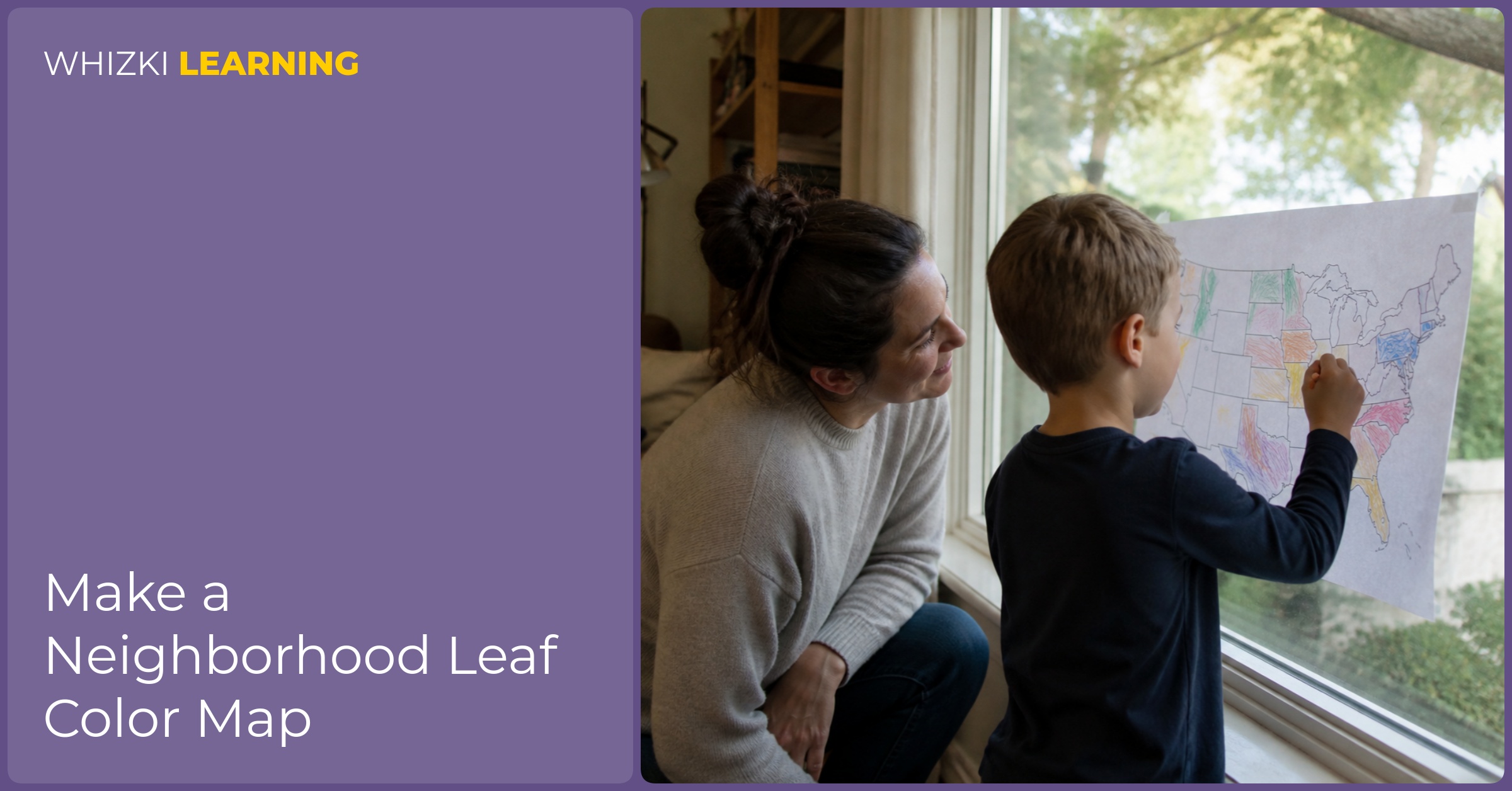
The window-view leaf color map is useful when a baby is napping, a child is sick, the weather is unsafe, or the outdoor route is not accessible that day. The adult can tape paper to the window, draw the window frame, and let the child mark colors in the direction of each tree. Montessori and Reggio classroom traditions both make room for careful observation of ordinary surroundings, and a window gives young children a steady view. The child still practices comparison, direction, color naming, and patience.
The window version works best with two or three fixed spots, such as the maple by the curb, the bush near the fence, and the tree across the street. The child can check the same spots after breakfast for a week and add one mark each day. The adult can say, “The top branch has more orange today,” and the child can decide where the orange mark belongs.
Keep the walk respectful and realistic
The neighborhood leaf color map should not turn into a collecting race. The family can collect only where picking or gathering is clearly allowed, and the family can skip collecting completely by pointing, sketching, or taking an adult-held photo. Public gardens, nature preserves, and some schoolyards protect leaves because fallen plant matter supports soil and small animals.
The safety plan should be simple enough for a young child to remember: hold hands near streets, stop at corners, and ask before touching plants on private property. NAEYC practice asks adults to match activities to children’s real bodies and communities, so a five-minute walk with kind limits is a full lesson. The adult can end early when the child is cold, hungry, or done looking, because the map can wait by the door for another day.
The leaf color map will not look like a grown-up map, and the child may care more about one squirrel or a crunchy sidewalk patch than the exact tree. The real win is the habit of returning to the same place and asking, “What changed?” A short repeated look builds attention, language, early science, and a calmer way to enjoy fall together.