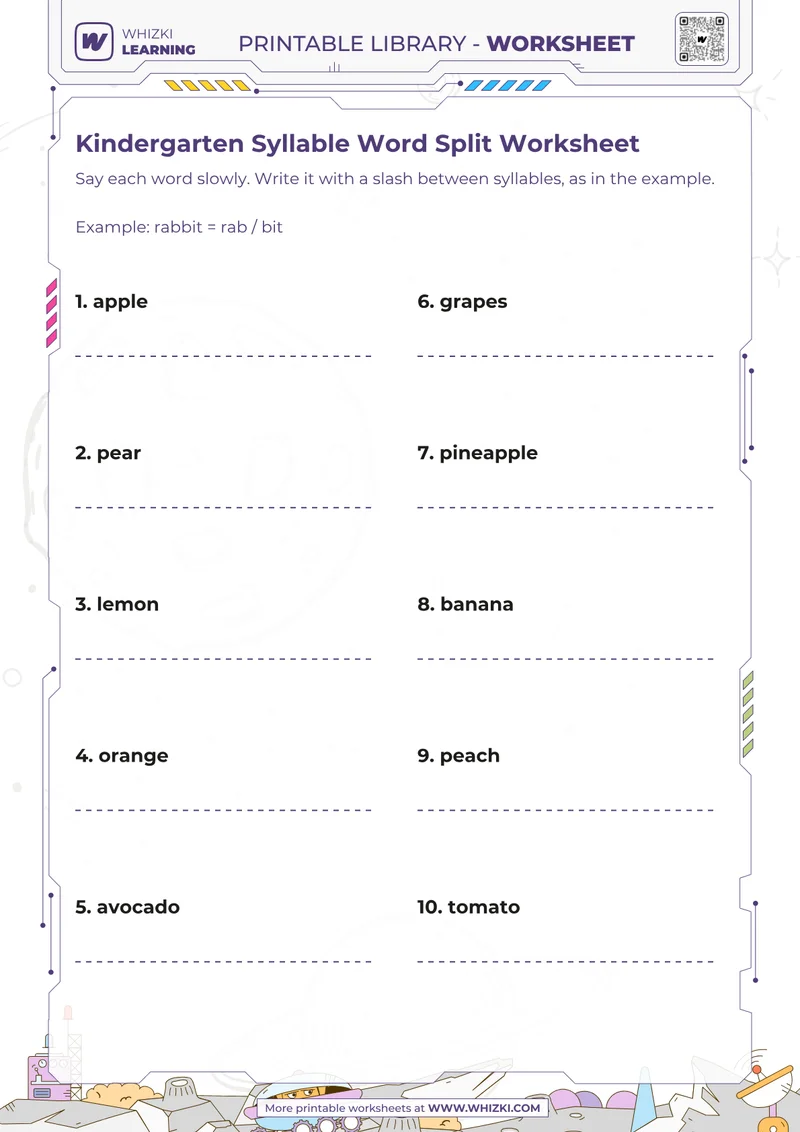
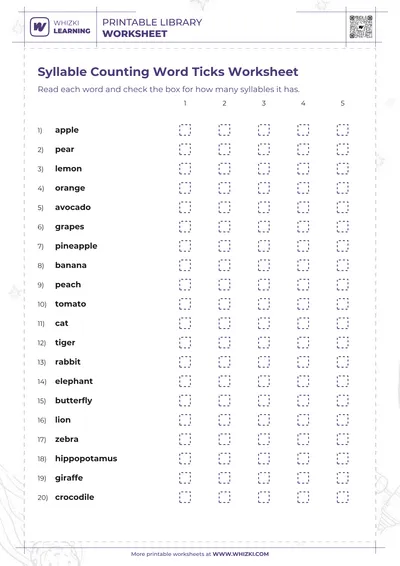
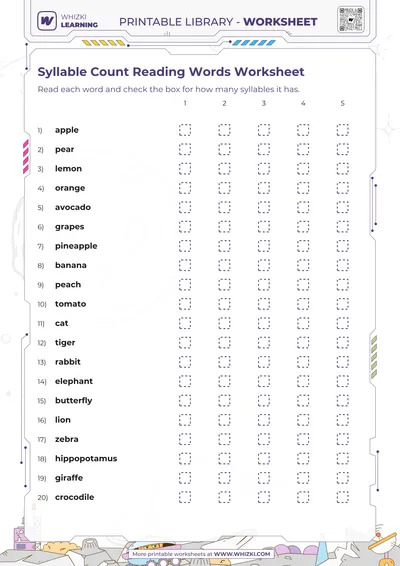
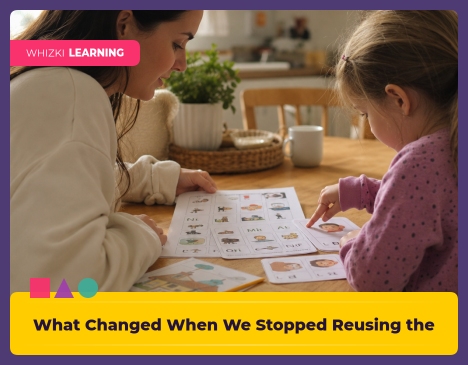
Listen for the spoken parts of a word before picking up a pencil. This syllable splitting worksheet uses 10 printed words, including apple, pear, and avocado. A rabbit example shows how a slash can mark the break between syllables. Children say each practice word and write a divided version on its line. An adult can read the words aloud so listening comes first.
Begin with apple. Say it naturally, then repeat it slowly enough to hear its 2 syllables. Tap once for each spoken part and say the whole word again. Use the writing line to record the parts, following the slash example. For apple, the model is ap/ple. Try pear next and compare its single syllable with the first example.
The word selection is apple, pear, lemon, orange, avocado, grapes, pineapple, banana, peach, tomato. Read an unfamiliar word for your child and give a short example of what it means before asking for its syllables. Work with the spoken rhythm rather than stretching every letter into a separate sound. Syllables are larger spoken units than individual phonemes, so this listening practice belongs to phonological awareness. The printed words and writing can support the activity without turning it into a test of independent reading.
Choose a small group of words for one session and return to the others later. Say one familiar name or household word away from the page and tap its syllables together. Explore the Phonics and Sounds set for related listening and letter activities. When your child is ready to work with written letter order, try the Spelling and Word Building set. Keep the next task matched to the help needed with listening, reading, or writing.