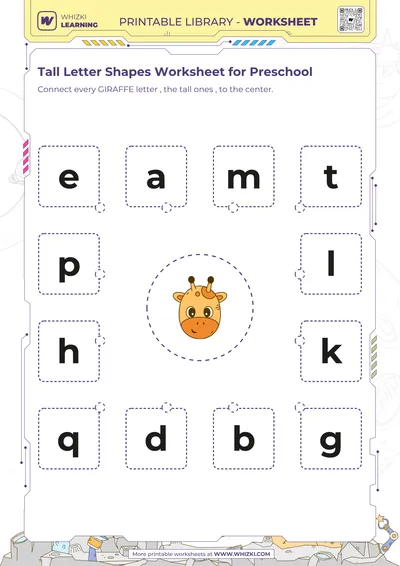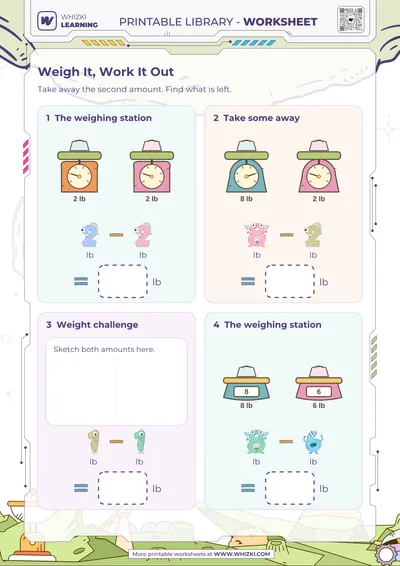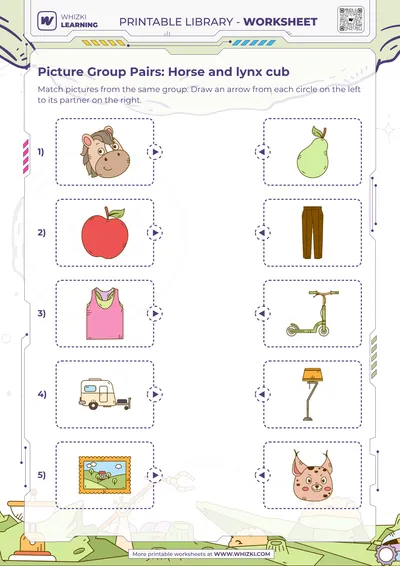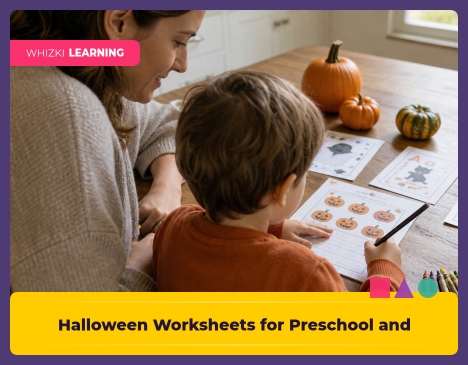
If the printer is humming, dinner is late, and a child is asking for 'one Halloween page,' choose a single calm worksheet first, set out two crayons and a pencil, and save the rest for another pocket of the day. Halloween printables work best for ages 3 to 7 when the page feels playful, gentle, and small enough to finish before a snack or story.
Reviewed by Whizki Editorial Team, Early Childhood Education Editors.
Halloween worksheet skills in the printable mix
The Halloween worksheet mix should cover early learning without feeling like a thick holiday packet. The counting page gives preschool and kindergarten children practice touching one object at a time, which supports one-to-one correspondence. The picture pattern page asks children to notice pumpkin, bat, moon, or leaf sequences and choose what comes next.
The word search page fits children who already recognize several letters and can scan from left to right. The vocabulary page builds oral language with friendly seasonal words such as pumpkin, cat, hat, moon, candy, leaf, and web. The Halloween wording stays light and classroom-safe, with no gory pictures, jump scares, or spooky pressure.
The tracing and handwriting pages give children pencil practice with lines, shapes, letters, and simple words. In Orton-Gillingham teaching, clean print, clear spacing, and saying the sound while writing help the hand, eye, and voice work together. NAEYC guidance also reminds teachers to keep early writing meaningful, so a child can trace a pumpkin word and then say something real about the picture.
When a family or classroom wants the whole printable set in one place, the complete option is the 12-page Halloween Learning Activities Pack. A Plus plan opens the complete 12-page pack with counting, tracing, vocabulary, handwriting, picture patterns, and word search practice. Print one page for morning work, a table center, or a quiet home activity.
Which pages fit ages 3 to 4 and ages 5 to 6
The best Halloween worksheets for ages 3 to 4 are short, visual, and easy to start. A preschool child may do best with counting groups up to 5, matching pictures, coloring a simple vocabulary picture, or tracing wide lines. NAEYC practice favors developmentally appropriate tasks, so the preschool page should invite success before accuracy.
The best Halloween worksheets for ages 5 to 6 can ask for a little more stamina and print awareness. A kindergarten child can count sets up to 10, complete an AB or ABC picture pattern, trace seasonal words, copy a short word, and try a small word search. The Orton-Gillingham approach would keep letter forms clear and ask the child to name the letter or sound while marking the page.
The child’s hand strength matters more than the number on the birthday candle. An occupational therapy rule of thumb is to watch posture, pencil grip, and pressure before asking for more writing. If the child’s shoulders rise, the pencil digs into the paper, or the page becomes a battle, the handwriting worksheet can become a finger-tracing page instead.
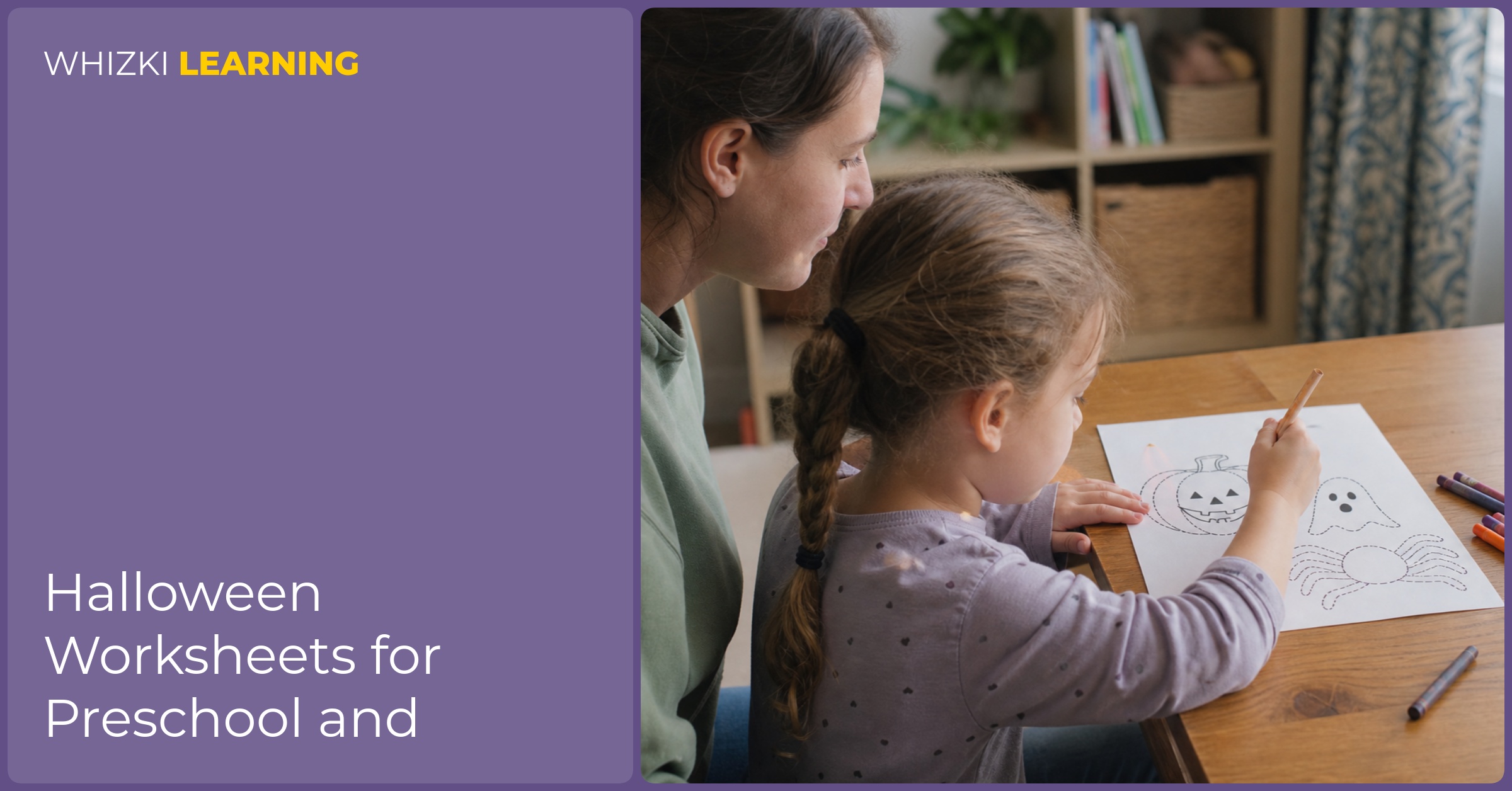
How to print one calm activity at a time
The easiest way to use Halloween worksheets is to print one calm activity at a time. A single page lowers the pressure for the child and the adult, especially during a busy seasonal week. Occupational therapy basics support short work bursts because young hands fatigue quickly during coloring, tracing, and copying.
The printable setup can stay simple: one worksheet, one pencil, two crayons, and a clear ending point. The adult can say, 'Finish the top row,' or 'Trace three words,' instead of asking for the whole page. A defined stopping place helps the child leave the table with pride rather than frustration.
The holiday printable shelf can also stay organized by theme. If a teacher or homeschool parent wants more seasonal pages across the year, holidays and culture printables for young learners can help keep similar pages in one predictable place. A predictable folder means the adult spends less time hunting and more time sitting beside the child.
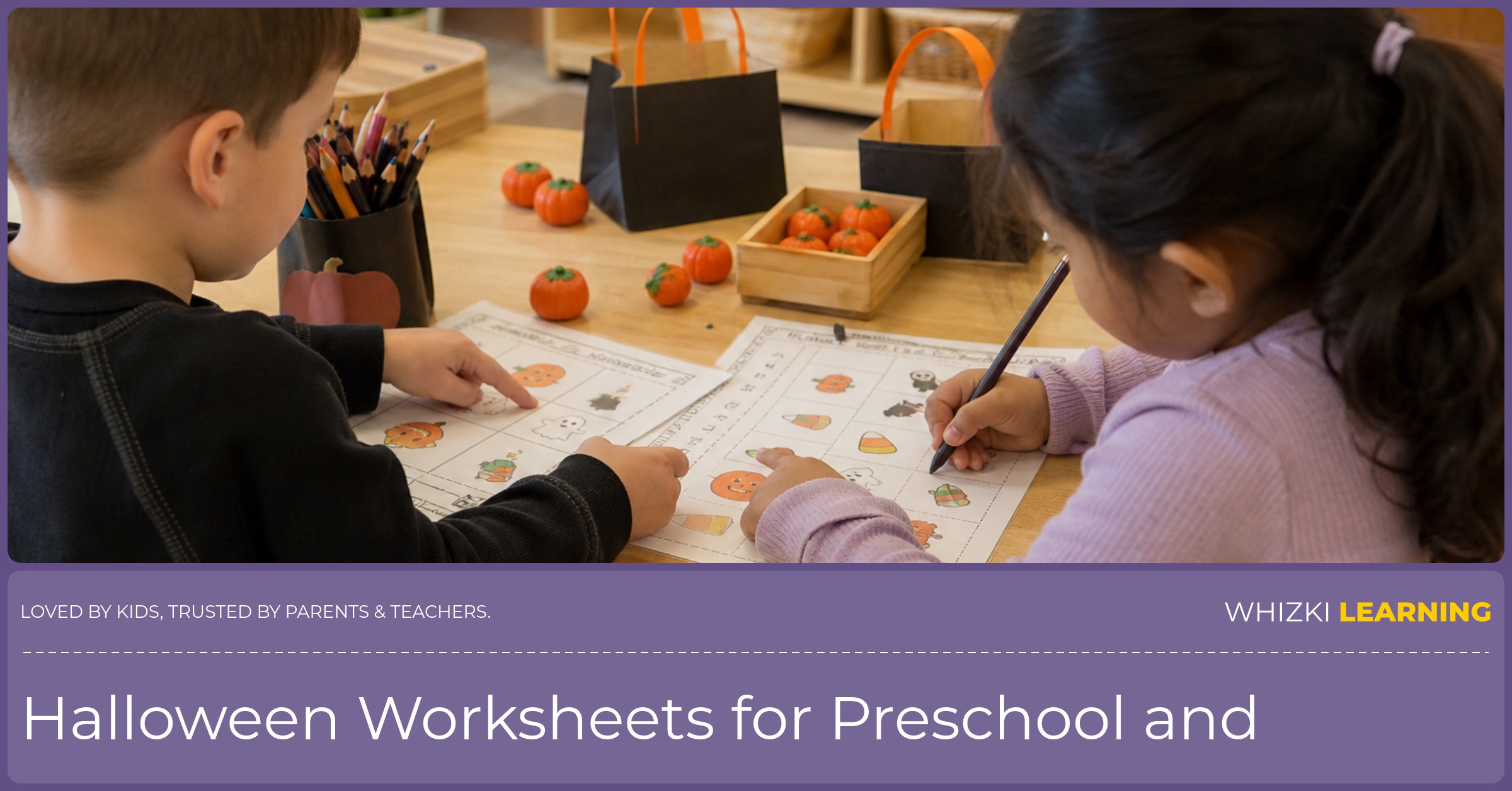
Using Halloween worksheets at home, in morning work, and at centers
The home version of a Halloween worksheet can be cozy and brief. A caregiver can place the counting page next to a small bowl of buttons, mini erasers, or cereal pieces and invite the child to cover each picture before writing the number. Montessori-style hands-on counting makes the printed number feel connected to a real quantity.
The morning work version should be familiar enough for children to begin without a long lesson. A kindergarten teacher might choose a tracing page on Monday, a pattern page on Tuesday, and a vocabulary page on Wednesday. Reggio-inspired observation can guide the next choice because the teacher watches which page leads to careful talk, not just fast finishing.
The classroom center version works best with a clear model and a small pile of copies. A teacher can place a finished sample, a pencil cup, and one basket for completed papers so children know the routine. For a math-heavy station, Halloween math practice ideas can pair counting printables with real objects for sorting, matching, and number talk.
Keep Halloween printables playful and screen-free
The Halloween worksheet should stay friendly, not frightening. A child can talk about pumpkins, costumes, nighttime animals, and pretend play without seeing gore or scary faces. For families who want more off-screen choices after table time, screen-free Halloween activities beyond worksheets can extend the same gentle theme without turning the worksheet page into a party plan.
The vocabulary work matters because children learn new words through use, not flashcard speed. Speech-language pathology practice often pairs a picture, a spoken word, and a child-friendly sentence, such as 'The cat sits by the pumpkin.' A parent or teacher can ask one open question about the picture, then let the child return to tracing or coloring.
The printable routine should leave room for choice. A child can choose the crayon color, the first row, or the page from two adult-approved options. Montessori and Reggio classrooms both respect the child’s attention, and a small choice often turns a worksheet from a demand into a manageable invitation.
Halloween worksheets for preschool and kindergarten are most useful when the adult treats the page as practice, not proof. Counting, picture patterns, word search, vocabulary, tracing, and handwriting can all fit into one week when each page has a clear purpose and a gentle finish line.
The calm plan is simple: print one page, sit nearby, name the skill, and stop before the child is worn out. A friendly Halloween printable can give a child a little pencil time, a little language practice, and a small win during a very exciting season.