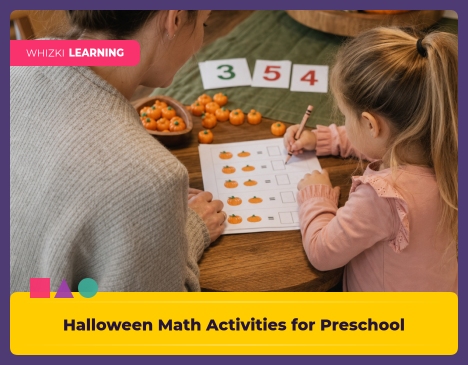
If Halloween week has a child bouncing between candy talk and worksheet refusal, set out ten small treats or buttons and ask the child to touch and count only five before adding more. Halloween math works best when the task is short, hands-on, and easy to stop before the child gets tired. A calm five-minute activity can build the same early-math skill that a long worksheet was supposed to practice.
Reviewed by Dr. Anna Klein, EdD, Early Childhood Curriculum Specialist.
Set up Halloween math for success
Halloween math activities for preschool and kindergarten should start with real objects before pencil work. NAEYC guidance reminds teachers and families that young children learn math through play, talk, movement, and repeated chances to compare, count, and sort. A worksheet can be helpful after the child has already touched the pumpkins, buttons, counters, or crackers.
The goal is not a perfect worksheet; the goal is a short math conversation that the child can finish with confidence. Put ten counters in a small cup, keep one crayon nearby, and give only one direction at a time. Occupational-therapy basics support shorter work periods because small hands fatigue faster than adult eyes expect.
A good Halloween math worksheet has clear spaces, familiar pictures, and no crowded page full of competing tasks. For more practice after the hands-on work, families can browse early math printables that stay focused on early number sense. The printable should match the skill being taught, not the number of cute Halloween pictures on the page.
Counting 1-10 with pumpkins and treats
Counting 1-10 is the first Halloween math activity I use when a classroom feels busy. Montessori and Reggio practice both treat counting as a real action, so the child moves one object for each number word instead of chanting numbers into the air. The adult can say, “Touch each pumpkin once while the counting voice stays slow.”
The preschool version uses numbers 1-5 first, then numbers 6-10 only when the child is steady. Place five toy spiders, five candy corn pieces, or five orange blocks in a row and ask the child to count with a finger tap. If the child skips an object, slide the row apart and try again without correcting every word.
The kindergarten extension uses a ten-frame style layout, ten boxes with one small picture or counter in each box. The child counts the set, circles the matching numeral, and checks the answer by counting the boxes again. The worksheet does not need addition, subtraction, or larger numbers to be useful.
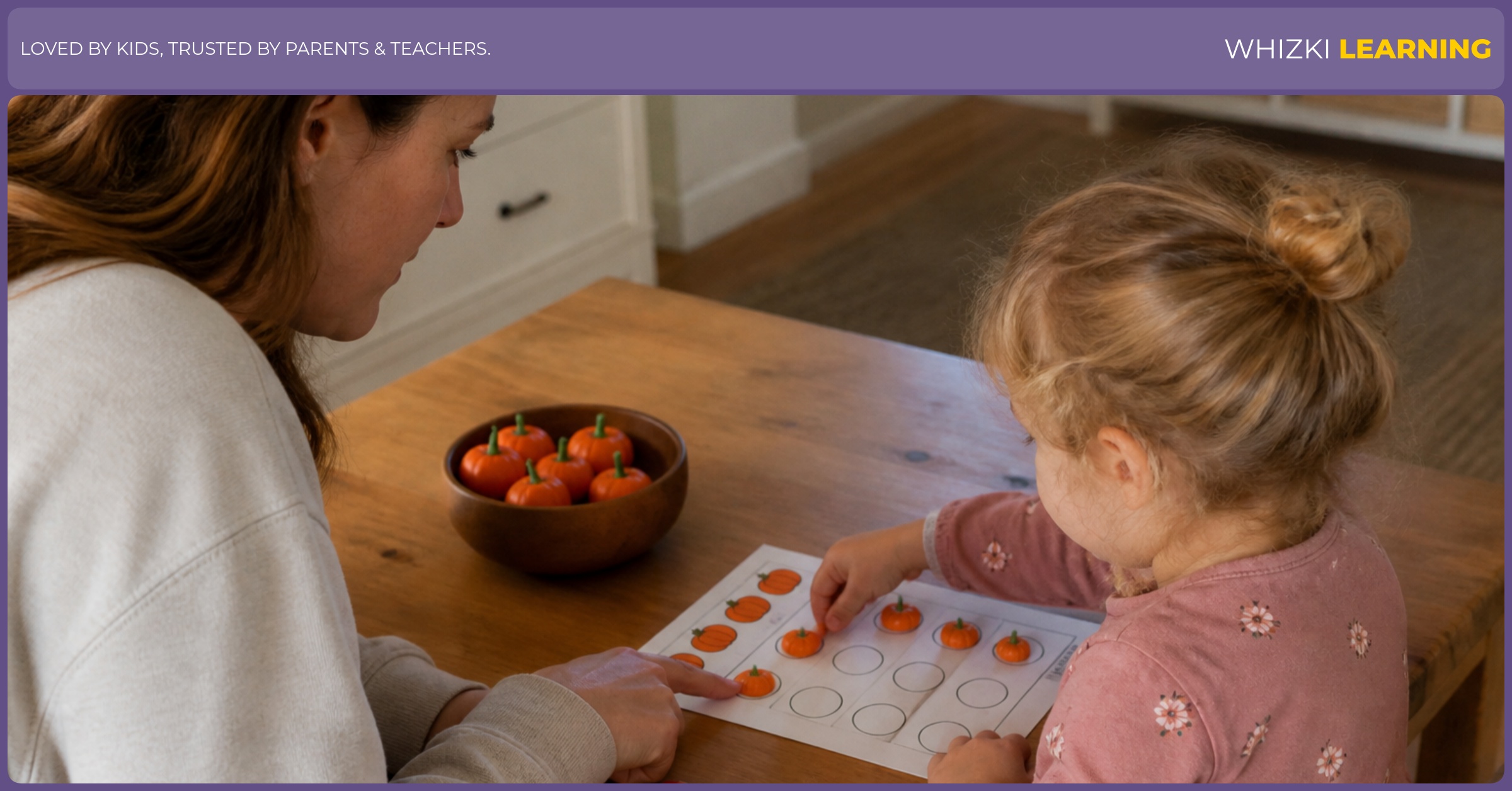
One-to-one correspondence with spooky counters
One-to-one correspondence means one number word matches one object, and the skill is bigger than memorizing the count sequence. In Montessori trays and early-childhood math centers, children build the skill by matching objects to spaces, cups, dots, or pictures. The adult watches the hands because the hands often show the math understanding before the mouth does.
The preschool version uses a “one bat on each moon” page or a muffin tin with one counter in each cup. The child places one item on each picture and stops when every picture has a match. If extra counters remain, the adult can say, “Every moon already has one,” and invite the child to move extras back to the bowl.
The kindergarten extension asks the child to count how many spaces were filled and write or trace the matching numeral. The child can also compare two small rows, such as five ghosts and four pumpkins, after the matching is complete. The number set should stay within 10 so the thinking stays early-kindergarten appropriate.
AB and AAB Halloween picture patterns
Pattern work helps children notice order, repetition, and change. The Orton-Gillingham approach often moves from concrete practice to visual practice and then to symbols, and early math patterns benefit from the same steady path. Clap, move, and build a pattern before asking a child to complete a printed row.
The preschool version starts with AB patterns, such as pumpkin, ghost, pumpkin, ghost. Use real counters or picture cards, then ask the child, “What comes next?” If the child guesses, repeat the pattern aloud while pointing to each picture from left to right.
The kindergarten extension uses AAB patterns, such as bat, bat, moon, bat, bat, moon. The child can color the missing picture or cut out one answer choice and place the answer at the end of the row. A strong kindergarten worksheet uses only one pattern rule per line so the child can focus on the repeating unit.
For families who want the math pages alongside matching seasonal practice, Whizki Learning offers the 12-page Halloween Learning Activities Pack. A Plus plan opens the complete 12-page pack, so the Halloween work can stay in one tidy place without turning the day into a pile of random pages.
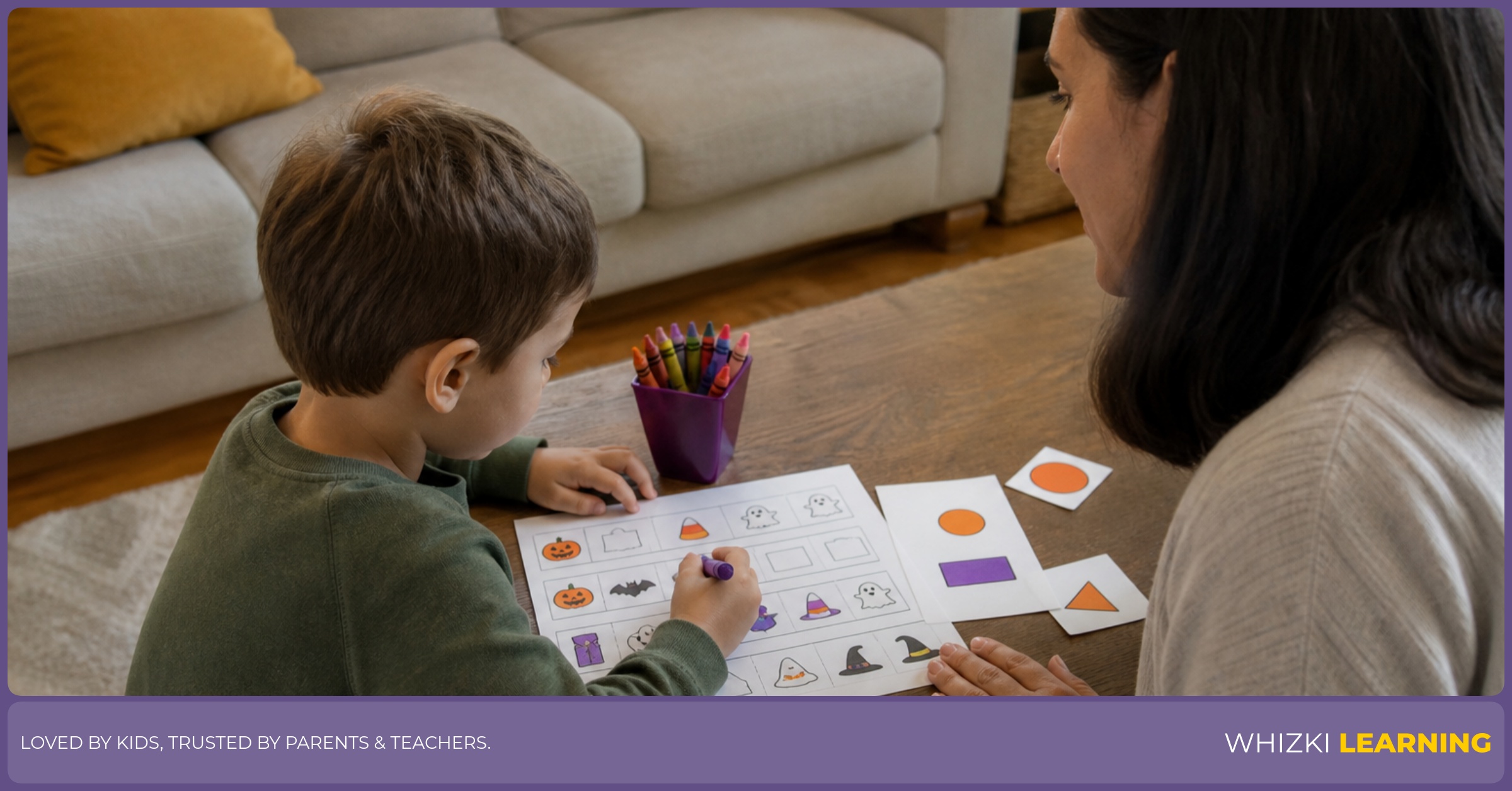
Compare small groups with more, less, and same
Comparing small groups teaches children to look at quantity, not just size, color, or favorite picture. Reggio-inspired observation is helpful here because the adult listens for the child’s reasoning before giving the answer. A child may say the bigger pumpkin group has more because the pictures are larger, and the adult can guide the child back to counting each group.
The preschool version uses two small groups, such as three spiders and two webs. Ask, “Which group has more?” and then count both groups together. Keep the groups close in number because a large difference turns the activity into guessing by sight.
The kindergarten extension adds the words more, less, and same with groups up to 10. The child can draw a small circle around the group with more, place a check beside the group with less, or color both groups when the groups are the same. Avoid greater-than and less-than symbols because those symbols can wait until later instruction.
Spot simple shapes in Halloween pictures
Shape spotting builds visual discrimination, the same classroom skill children use when noticing the difference between letters, numbers, and pictures. Occupational-therapy heuristics often start with big shapes and whole-arm movement before pencil tracing, especially for children who press hard or tire quickly. Halloween pictures give easy targets, such as circle moons, triangle hats, rectangle doors, and oval pumpkins.
The preschool version asks the child to point to one shape at a time in a picture. The adult might say, “Find one circle,” then the child taps the moon or a round pumpkin. The child can cover the shape with a small counter instead of coloring if pencil work becomes frustrating.
The kindergarten extension asks the child to find two or three examples of the same shape and explain the choice. A child might say a witch hat is a triangle because the sides meet at the top. The explanation matters because the child is learning shape features, not memorizing a Halloween picture.
Make an optional count-the-treats graph
A count-the-treats graph is a good optional activity when the child already counts small sets with fair accuracy. NAEYC-aligned early math encourages children to represent real information in simple ways, and a picture graph can do that without moving into older-grade graphing. Keep the graph to three or four categories, such as chocolate, fruit snack, pretzel, and sticker.
The preschool version uses real treats or pretend counters and a paper with one column for each category. The child places each item in the matching column, then counts which column has more. The adult can stop after one question because graphing is a lot of sorting, counting, and comparing at once.
The kindergarten extension uses a simple worksheet where the child colors one box for each treat in a category. The child answers gentle questions, such as “Which column has the most?” and “Which column has the fewest?” The graph stays within 10 total items so the math remains kindergarten level.
Choose Halloween math worksheets with clear purpose
Halloween math worksheets work best when one page teaches one skill. NAEYC guidance and Orton-Gillingham lesson design both support clear sequencing, because children learn more when the task has a visible start, a middle, and an end. A worksheet that mixes counting, tracing, coloring, cutting, and writing may look festive, but the child may not know which skill matters.
Choose a worksheet by naming the skill first: counting 1-10, one-to-one correspondence, AB patterns, AAB patterns, comparing groups, shape spotting, or a simple graph. If a family wants broader seasonal pages for literacy and fine-motor practice, the full Halloween worksheet roundup can help separate math pages from other Halloween learning. A math page should still give the child room to count, point, match, or explain.
The numbers learning hub helps when a child needs more practice with a single numeral before returning to a themed worksheet. Number work feels easier when the child recognizes the numeral, says the number word, and connects the amount to real objects. A Halloween theme can add interest, but the math skill needs to remain the center of the page.
Halloween math does not need to be loud, messy, or complicated to count as real learning. Pick one skill, use ten or fewer objects, and stop while the child still feels successful. A small finished activity is often more valuable than a stack of half-done pages.