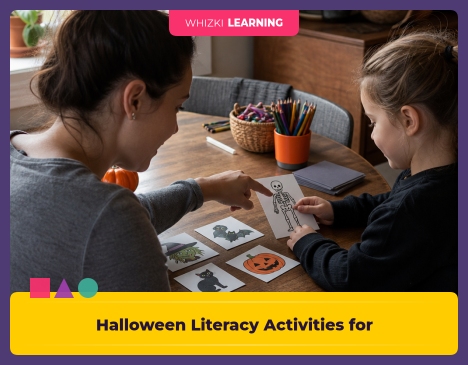
Halloween week can make a four-minute letter page feel like a wrestling match, so choose one friendly word, say the first sound together, then stop while the child still feels successful. Kindergarten literacy grows best in short, warm bursts, especially when the page uses pictures the child can name without fear or guessing.
Reviewed by Sarah Mitchell, M.S., CCC-SLP, Speech-Language Pathologist.
Start with friendly Halloween vocabulary
The Halloween vocabulary page should feel predictable before any child picks up a pencil. In my kindergarten room, I choose concrete words such as bat, cat, ghost, hat, moon, web, and pumpkin because the picture gives the child a fair clue before the printed word is read.
NAEYC guidance reminds teachers to match early literacy work to a child's language, attention, and play, not to a long seasonal word list. A late pre-K child can point to the ghost, clap ghost once, and hear /g/ without needing to decode every letter on the page.
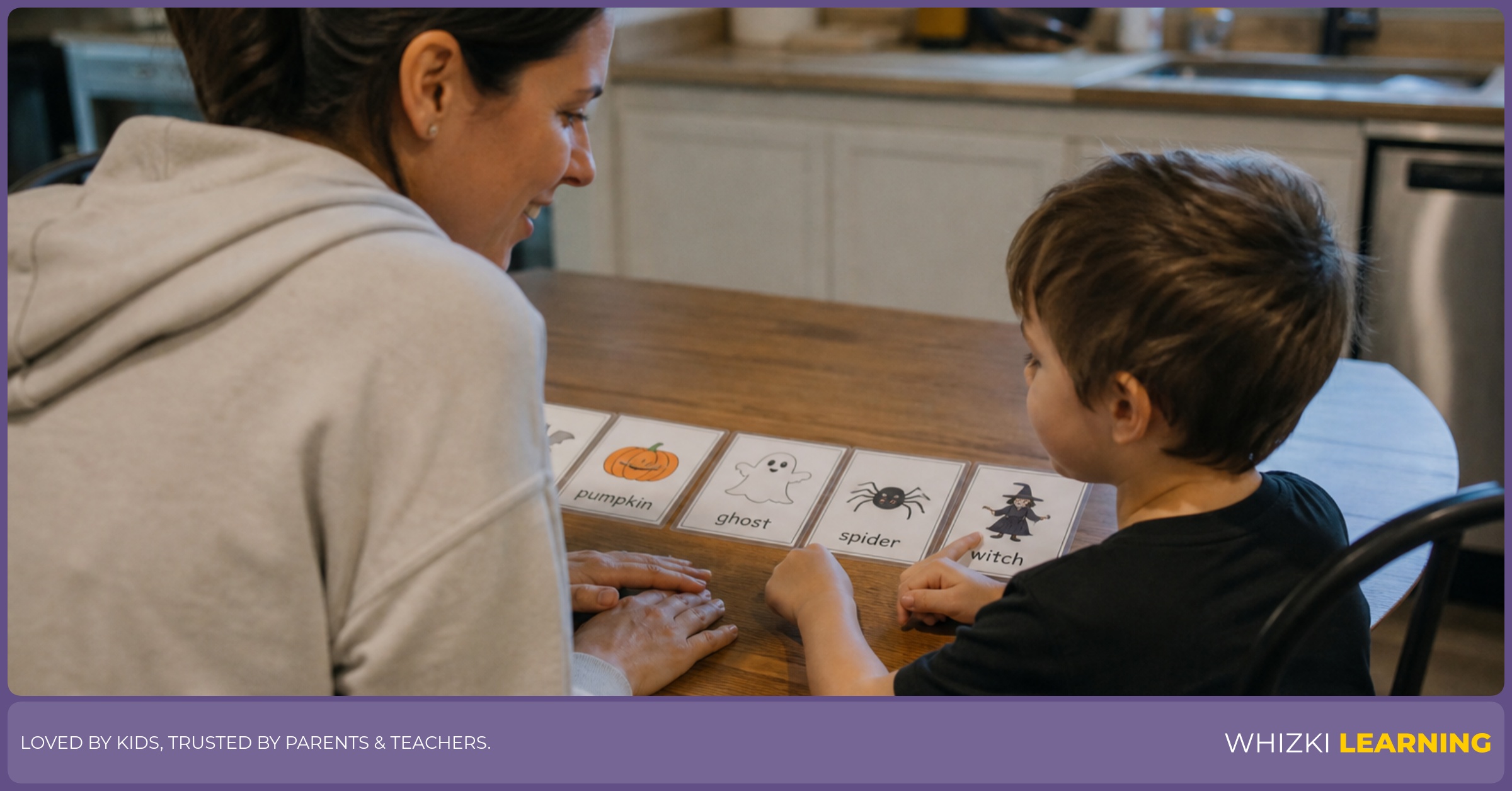
A good first next step is picture naming. The adult points, the child says the word, and the adult repeats the word slowly with a smile. The lesson is vocabulary first, print second, and pencil last.
Teach beginning sounds with mouths and pictures
Beginning sound practice works best when the child can see, say, hear, and tap the word. The Orton-Gillingham approach uses multisensory routines, so the adult can say bat, touch lips together for /b/, and let the child tap one finger on the table for the first sound.
For Halloween words, keep the first-sound job tiny: bat begins with /b/, moon begins with /m/, web begins with /w/, and cat begins with /k/. The letter name can come after the sound, because many four-year-olds hear the mouth sound before the printed letter makes sense.
Families who want more letter-by-letter practice can pair the Halloween page with the alphabet learning hub after the Halloween words are familiar. The alphabet page is best used in short visits, such as one target letter after snack or one quick review before story time.
Match pictures to words before asking for sentences
Picture-to-word matching is a bridge, not a test. In speech-language pathology practice, adults often reduce choices so the child can show meaning with pointing before the child has to explain the answer aloud.
Place three word cards under three pictures: cat, moon, and web. The adult reads each word once, then the child moves the card to the matching picture. If the child guesses, the adult says, “Let's check the first sound,” and points to the first letter without scolding.
Reggio-inspired teaching also values observation during small choices. The matching page tells the adult whether the child recognizes the picture, hears the beginning sound, notices print length, or needs fewer options.
For more page choices with the same gentle reading level, save early reading and writing printables for days when the Halloween theme has done enough work. A familiar non-seasonal page can keep practice steady after costumes and candy leave the table.
Whizki Learning keeps the literacy, fine-motor, and seasonal practice together in the 12-page Halloween Learning Activities Pack. A Plus plan opens the complete 12-page pack, including friendly printables you can use across a short week of late pre-K or kindergarten practice.
Use an easy word search and trace-and-write practice
An easy word search for ages 4 to 6 should use a small grid, clear print, and words the child has already named. Occupational-therapy basics remind adults to reduce visual clutter when the real goal is scanning left to right and circling known words.
Start with two hidden words, such as bat and cat, before adding ghost or moon. The adult can cover half the grid with paper so the child searches a smaller area and keeps the pencil hand relaxed.
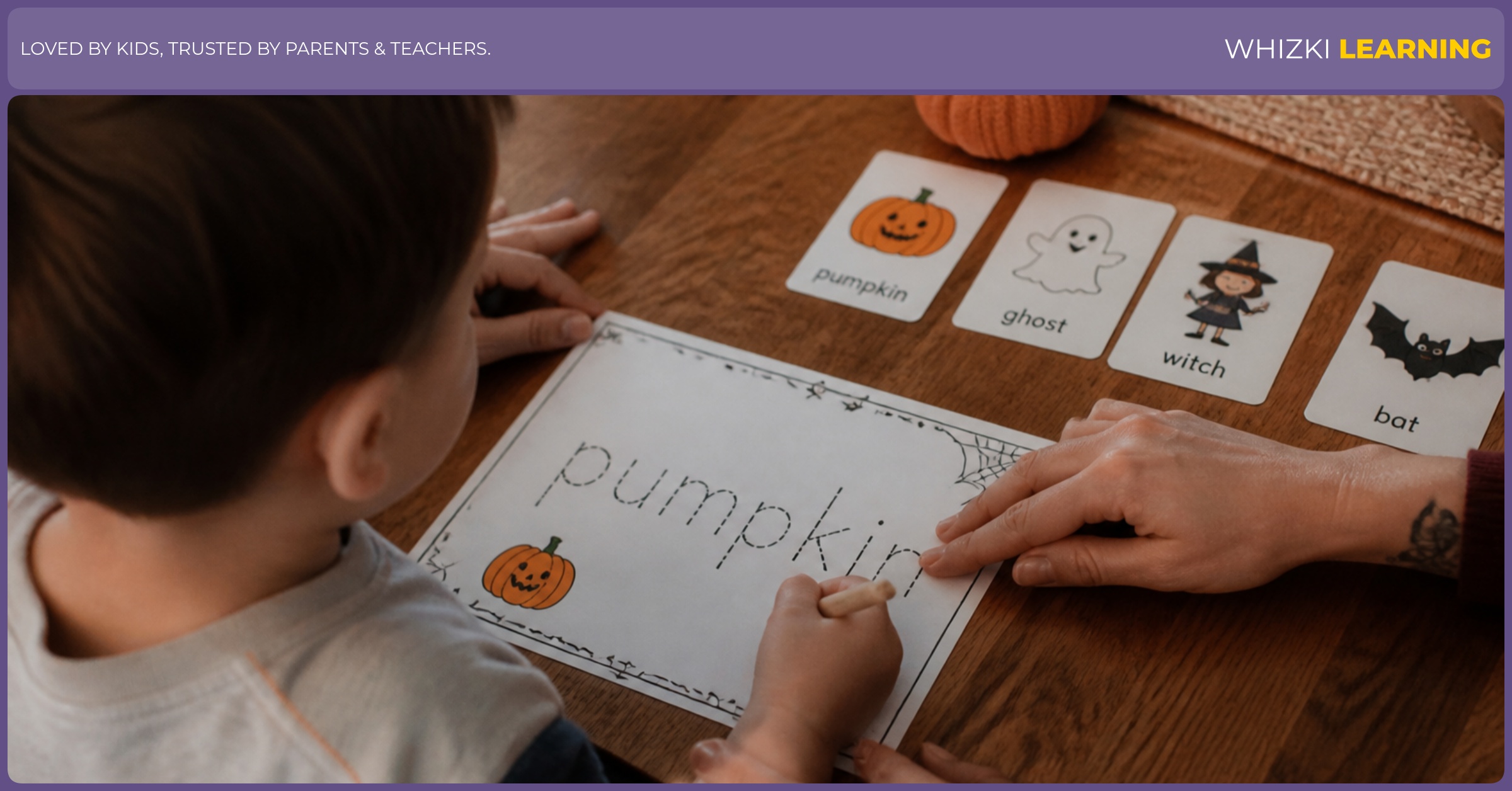
Trace-and-write practice should ask for quality, not a full page of copies. A child can trace pumpkin once, write the first letter underneath, and draw a tiny pumpkin beside the word to connect hand movement with meaning.
Pencil grip matters, but comfort matters too. The occupational therapy rule I use is simple: feet supported, paper angled slightly, and crayon or short pencil held with enough control to make a line without white knuckles.
Tell one oral silly story
The silly-story activity is oral, because many kindergarten children can tell more than words on paper show. Speech-language pathology practice often builds narrative language through who, where, problem, and ending, so the adult can guide the story without asking for spelling.
Put three picture cards on the table: a cat, a hat, and a moon. The child chooses a character, a place, and one funny event, then tells a two-sentence story such as, “The cat wore a big hat. The moon laughed because the hat was upside down.”
The adult's job is to repeat the child's idea with a little stronger language. If the child says, “Cat hat,” the adult can say, “The cat found a hat,” and invite the child to add one more detail.
Keep Halloween literacy small and useful
A Halloween literacy plan should stay narrow: vocabulary, beginning sounds, matching, scanning, handwriting, and one oral story. NAEYC's play-based guidance supports short, meaningful practice over stacks of worksheets, especially for children who are 4, 5, or 6.
If a child loves the theme, the adult can add a second page from the full Halloween worksheet roundup on another day. If a child is tired, one picture-to-word match and one traced word count as a real literacy session.
Preschool and kindergarten teachers can use these pages in centers by setting out only a few crayons and one pencil cup. Homeschoolers can keep the same order for several days so the child learns the routine before the print gets harder.
Halloween literacy does not need spooky pressure or a long worksheet stack. Choose one word, one sound, one match, or one line of writing, then finish with a story or a book while the child still wants to come back tomorrow.