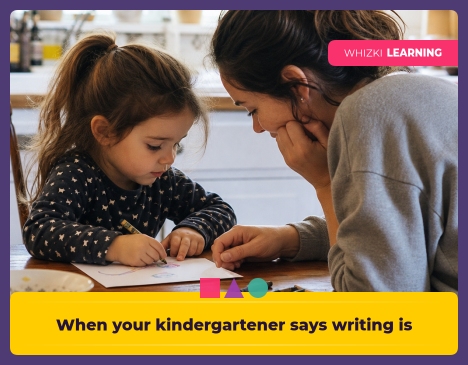
If your kindergartener cries, stalls, jokes around, or suddenly needs a snack every time a pencil appears, put the pencil down for today and watch for one small clue: tired hands, fear of mistakes, or a task that is too hard. Writing is not one skill in kindergarten, because writing asks a young child to plan words, hold sounds in memory, control a pencil, and tolerate a messy first try. A calm pause gives you better information than another worksheet battle.
Reviewed by Whizki Editorial Team, Early Childhood Education Editors.
Why kindergarten writing feels hard
Kindergarten writing is a pile-up of small jobs happening at the same time. NAEYC guidance reminds early-childhood teachers to match writing work to development, because a five-year-old may know an idea before the child can get that idea onto paper. The child who says, "I hate writing," may really mean, "My hand is tired," "My letters look wrong," or "I do not know what comes next."
Reggio-inspired observation helps adults slow down and study the child before fixing the page. The kindergarten teacher or parent can notice whether the child avoids all hand work, only avoids lined paper, or only melts down when asked to spell alone. The pattern points to a better next step than a longer lecture about trying hard.
The Orton-Gillingham approach also gives a useful reminder: young children need explicit, multisensory steps. A child may be ready to build a word with letter tiles before writing the same word with a pencil. The writing plan works best when the adult separates hand strength, letter formation, spelling, and idea-making instead of asking for every skill at once.
Culprit 1: grip fatigue
Grip fatigue is common in children ages 3 to 7 because small hand muscles are still maturing. An occupational-therapy rule of thumb is to look at effort, not just neatness: white knuckles, a thumb wrapped over fingers, a tight shoulder, or frequent hand shaking can mean the tool is asking too much. A child who loves telling stories but hates writing may be fighting the pencil more than the sentence.
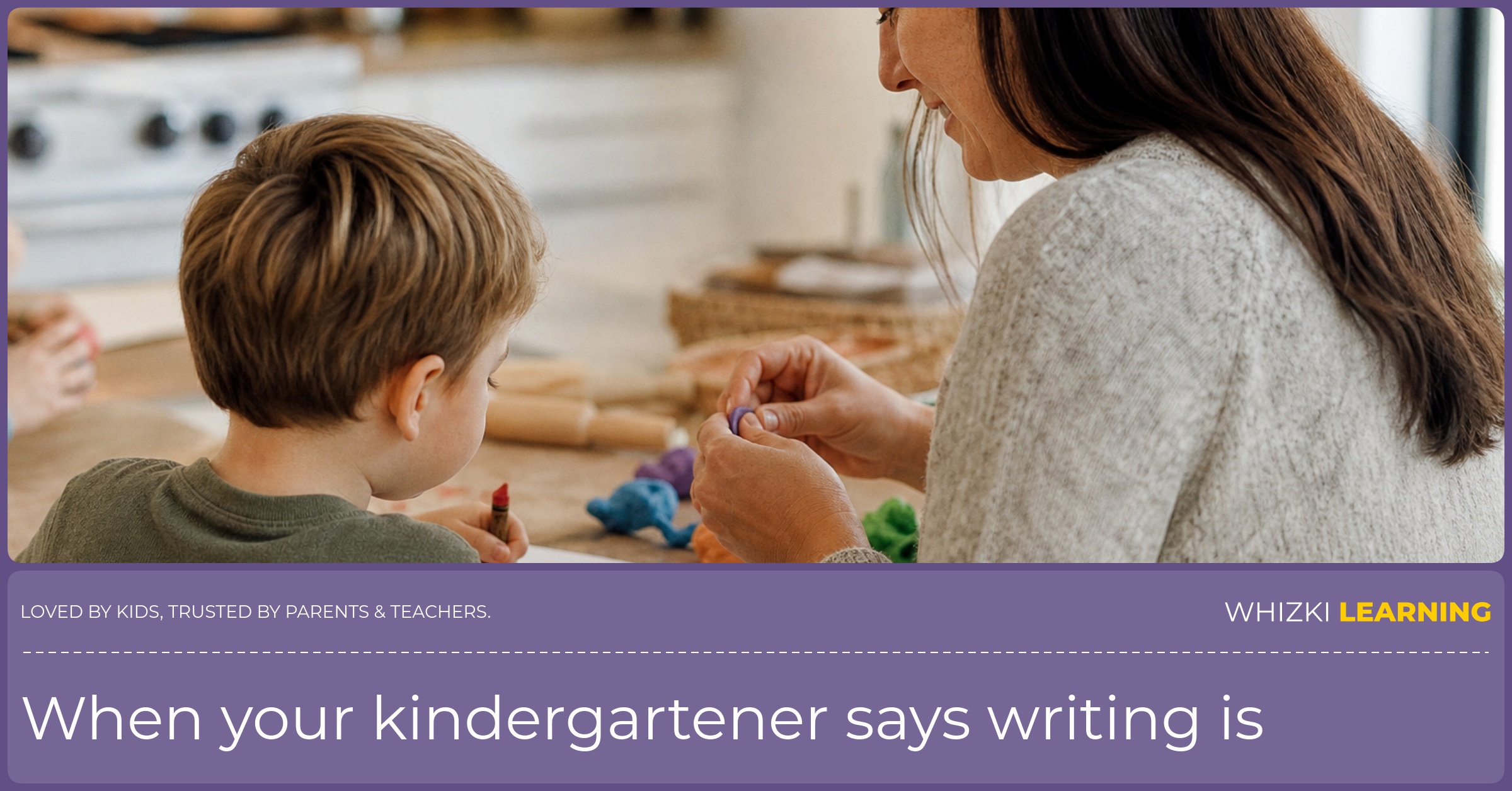
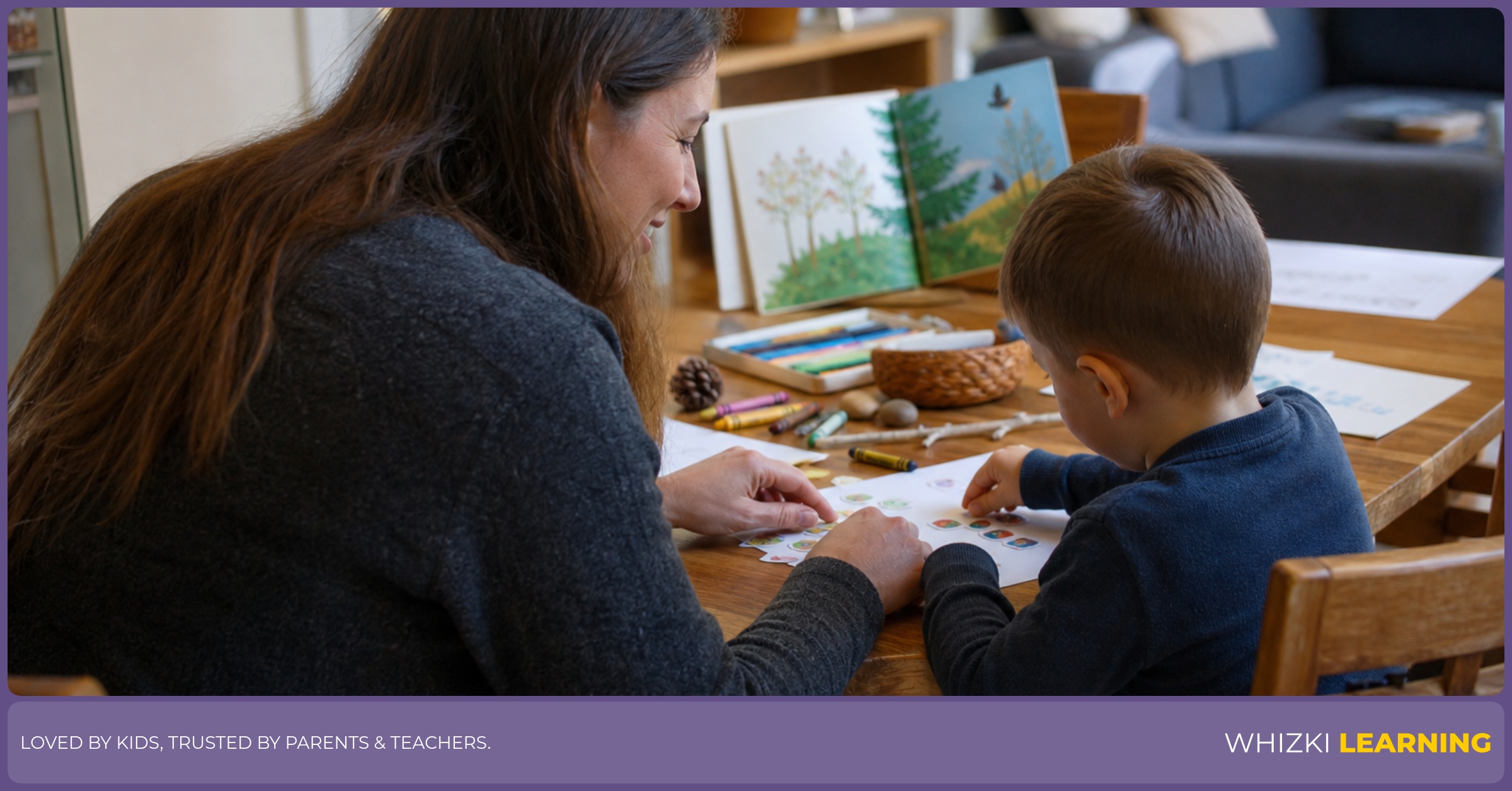
The grip-fatigue fix is to make the hand job easier before asking for more writing. Short crayons, broken chalk, small golf pencils, vertical easel paper, and play dough warm-ups often bring the fingers into a better position without a speech about pencil grip. A three-minute hand warm-up, such as pinching dough peas or peeling stickers, can prepare the hand better than ten extra minutes of tracing.
The next writing session should be tiny, because tired hands need trust-building. Ask for one name attempt, one favorite letter, or one label on a drawing, then stop while the child still has energy. The adult can write the rest of the message so the child experiences writing as communication, not hand punishment.
Culprit 2: perfectionism
Perfectionism shows up when a child erases until the paper tears, refuses to start, or says every letter is ugly. Montessori and Reggio classrooms both protect process by giving children real materials and time to revise without turning every mark into a grade. A perfectionistic child needs proof that writing can be useful before writing has to be pretty.
The perfectionism fix is shared writing with a playful purpose. The adult can write most of a grocery label, a pet sign, or a birthday note while the child adds one letter, one sticker, or one drawn detail. For more low-pressure ideas, the guide to making writing fun keeps the focus on messages, games, and real reasons to write.
The adult language matters during perfectionism. Say, "Letters get easier with practice," or "The message matters more than perfect lines today," instead of praising only neat work. The child learns that writing is a draftable skill, and the adult avoids turning the kitchen table into a judging table.
Culprit 3: the task is the wrong difficulty
The wrong difficulty can make a capable child look defiant. Orton-Gillingham teaching moves from sound to symbol to word with careful steps, because spelling a whole sentence from memory is much harder than hearing the first sound in "sun." A kindergarten worksheet that asks for invented spelling, spacing, capitals, and handwriting at once may be too many jobs for one sitting.
The wrong-difficulty fix is to lower one demand while keeping the child successful. The adult can let the child say the sentence aloud while the adult writes, trace one highlighted letter, copy a name from a model, or write only the first sound of a word. The task should feel like a stretch, not a cliff.
Speech-language practice offers another helpful move: rehearse the sentence before any pencil work. A child can tap each word, draw the idea, or tell the sentence to a stuffed animal before writing begins. Oral rehearsal lowers the memory load, which leaves more energy for pencil control and letter choices.
Try a no-writing writing week
A no-writing writing week is a short reset that protects the relationship while building the pieces underneath writing. The plan is close to the writing confidence reset, with one important rule: no forced pencil writing for seven days. The child still builds hand strength, sound awareness, story language, and confidence through play.
On day one, the adult becomes a detective and writes down when writing goes sideways. On day two, the child pinches play dough, uses tongs, peels tape, and draws with chunky chalk on a vertical surface. Occupational-therapy basics favor short, frequent hand work because quality practice beats long battles.
On day three, the adult takes dictation while the child tells a story about a drawing. On day four, the child builds letters with sticks, dough, blocks, or pipe cleaners. On day five, the child hunts for letters in books and packages, because NAEYC-aligned literacy grows from meaningful print in the child’s real world.
On day six, the adult writes a note for the child to deliver, and the child adds a mark, stamp, or drawing. On day seven, the adult offers two choices: write one letter with a favorite crayon or dictate another note while the adult writes. The week succeeds when the child comes back to the table with less dread, not when the child suddenly writes a full page.
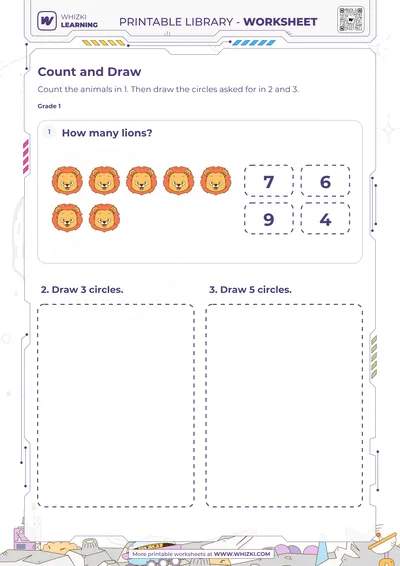
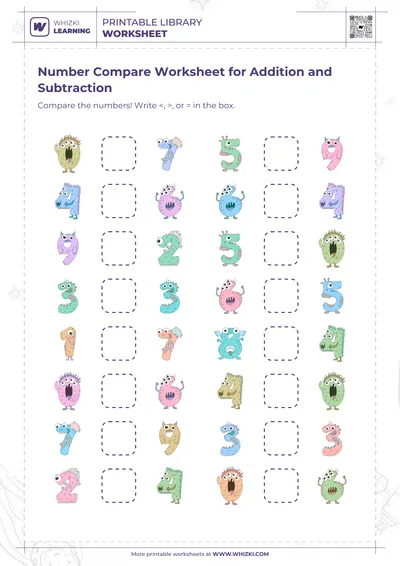
For a calm practice bin, choose one page from our printable library and pair the page with crayons, stickers, or play dough. A single page is plenty when the goal is a friendly, short visit with pencil-and-paper skills.
When to ask for extra help
Extra help is wise when writing avoidance comes with pain, a very awkward grasp, extreme fatigue, or strong frustration across many hand activities. Occupational therapists can look at hand strength, posture, bilateral coordination, and tool fit in a practical way. The goal is not to label a child from one messy worksheet, but to remove barriers early.
The kindergarten teacher can also compare writing expectations with what the class is practicing. A teacher may notice that the child writes better with unlined paper, a slant board, dictation, or a visual model nearby. A pediatrician or occupational therapist is the right call when hand pain, fine-motor delays, or daily distress keep showing up at home and school.
Reading and spelling support may be needed when the child cannot hear sounds in words, remember letter names, or connect letters with sounds after steady practice. Orton-Gillingham-informed tutoring can help some children because the instruction is explicit, multisensory, and carefully sequenced. The strongest plan is kind, specific, and boring in the best way: one barrier, one fix, one small win at a time.
A hard writing season does not mean your child is lazy or behind forever, because young writers often need a better match between the hand, the heart, and the task. If you want one calm idea in your inbox each week, come join the weekly newsletter.