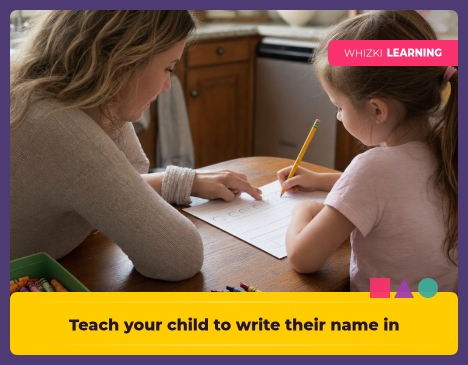
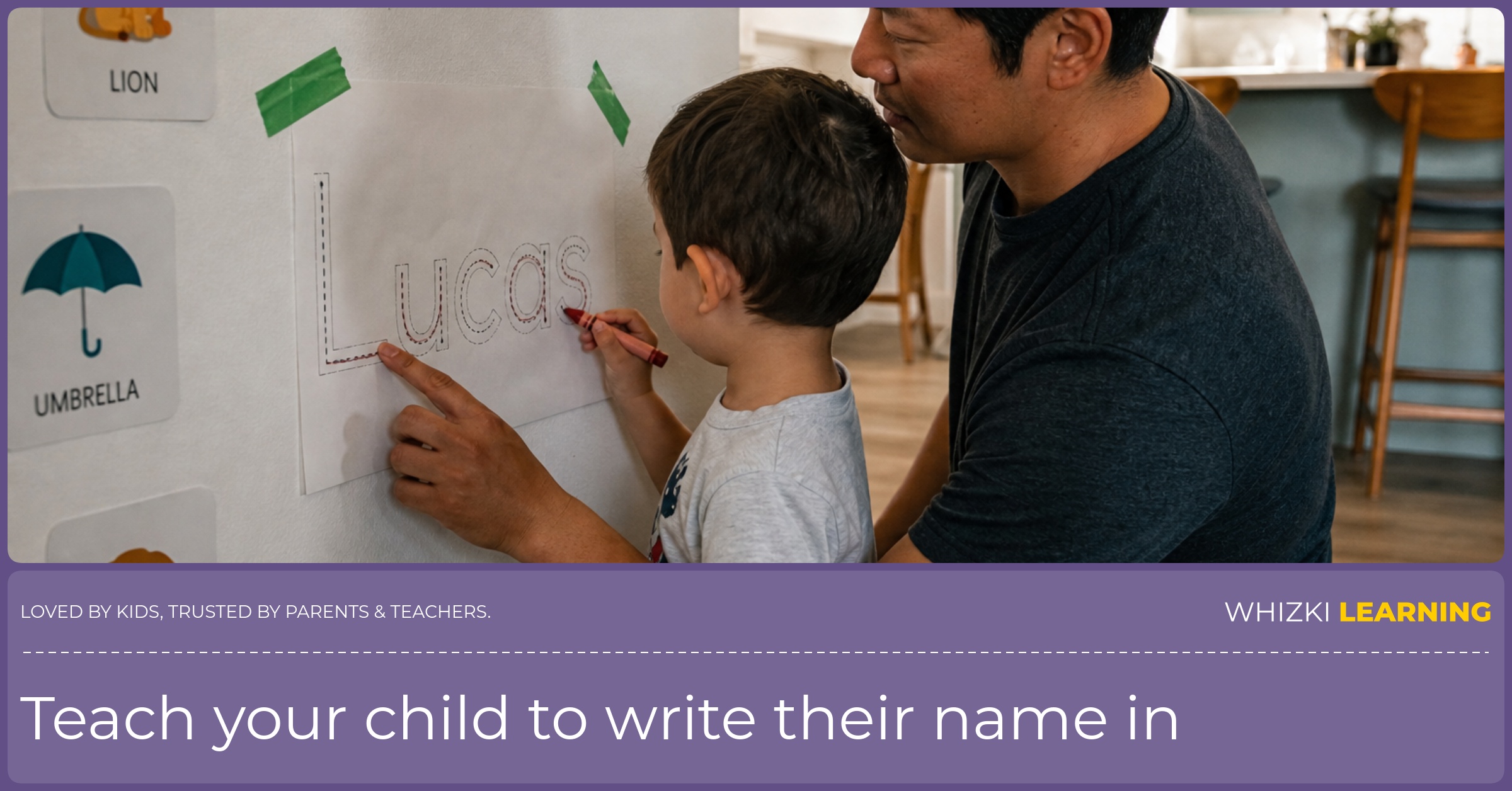
If name-writing practice turns into erased holes, stiff fingers, or a child sliding under the table, tape one big first-name page to a wall and spend 10 calm minutes tracing, copying, and trying from memory. Preschool hands get tired fast, and kindergarten readiness grows best through short, steady practice that still feels like play. A capital first letter with lowercase letters after gives your child the pattern most kindergarten teachers expect.
Reviewed by Whizki Editorial Team, Early Childhood Education Editors.
Why 10 minutes works better than a long worksheet
The 10-minute name routine fits the NAEYC view of early learning because the practice stays short, meaningful, and connected to a real word your child cares about. A child’s own name carries motivation that random handwriting rows rarely have. Short daily practice also protects the hand from fatigue, which is a common reason preschoolers start scribbling or refusing.
The occupational-therapy rule of thumb I use in classrooms is simple: build the body before demanding tiny pencil control. A vertical wall page wakes up the shoulder, wrist, and fingers in a stronger position than a flat table page. The wall position also helps children see the left-to-right path across the name without hunching over paper.
Name writing is a readiness skill, not a race, and the timing varies from child to child. If you are wondering about age expectations, the guide on when name writing clicks explains the usual preschool-to-kindergarten range. The daily goal is progress you can see, such as better starting points, clearer letter shapes, or more confidence picking up the pencil.
Set up a wall station before the pencil work
The wall station needs one page with your child’s first name, painter’s tape, a chunky crayon, and a quiet place where your child can stand with feet on the floor. The Reggio-inspired habit of preparing the environment matters here because the space sends the message that writing belongs in everyday life. A kitchen cabinet, hallway door, or low living-room wall can become the practice spot.
The name model should use one capital first letter and lowercase letters for the rest, such as Maya or Jordan. Many children learn all capitals first because block letters are easier to build, but kindergarten teachers usually want names written with one capital at the beginning. A clear adult model prevents a summer of unlearning all-caps habits in August.
The pencil basket should offer tools that match preschool hands, such as short crayons, golf pencils, or broken chalk pieces. Occupational therapists often like shorter tools because the small length encourages a more useful finger grip without a long lecture about fingers. A thick marker can be saved for tracing on a page protector, while pencil work can stay brief.
Print a name page from our printable library, write your child’s first name in large clear letters, and tape the page to the wall at chest height. The matching printable gives the routine a ready place to start, so the adult can focus on coaching instead of drawing lines from scratch.
Use the trace, copy, recall ladder
The trace, copy, recall ladder comes straight from structured literacy practice, including the Orton-Gillingham habit of moving from guided to independent work. Tracing gives the hand a path, copying asks the eye and hand to coordinate, and recall asks the brain to produce the name without the model. The ladder keeps practice organized without turning the moment into a test.
The first three minutes are tracing over a large adult-written name while saying each letter name aloud. The next three minutes are copying the name right below the model, with the adult pointing to the starting place for each letter. The last two minutes are recall on a blank line, and the final minutes are for choosing the best letter or adding the name to a drawing.
The adult language should stay concrete and kind, especially when the letters look wobbly. Say, “The M starts at the top,” or “The a has a round belly,” instead of saying the whole name is wrong. If you want ready models for the first step, name tracing worksheets can help your child feel the route before copying.
A summer week-by-week plan before kindergarten
Weeks 1 and 2 build comfort with the name on a wall, with Week 1 focused on tracing and Week 2 adding sky writing with a whole arm. The Montessori and occupational-therapy idea behind the big movement is that large muscles can teach direction before small finger muscles handle details. The adult says the letter names in order and keeps the session at 10 minutes.
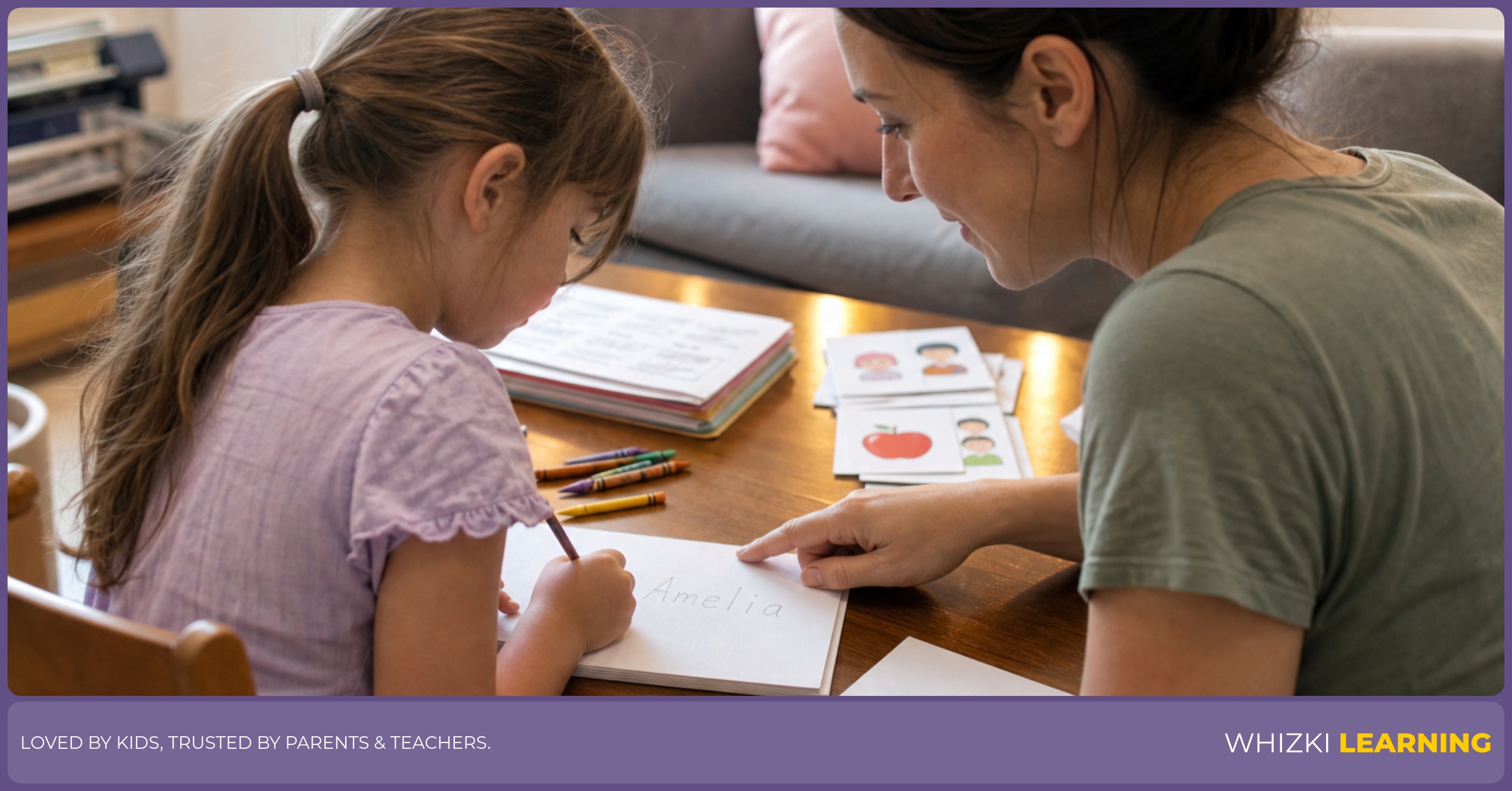
Weeks 3 and 4 move from wall tracing to wall copying, with Week 3 copying right under the model and Week 4 copying on a blank strip beside the model. The kindergarten expectation stays the same, one capital first letter and lowercase letters after. The adult praises starting at the left edge, returning to the next letter, and stopping after the last letter.
Weeks 5 and 6 add recall in tiny doses, with Week 5 asking for the first letter from memory and Week 6 asking for the first two or three letters before checking the model. The Orton-Gillingham style of see, say, touch, write works well here because the child uses eyes, voice, fingers, and movement together. A child with a long name can practice a short chunk without being asked to finish every letter.
Weeks 7 and 8 make the name useful, with Week 7 signing drawings and Week 8 signing a lunch note, card, or pretend class paper. NAEYC guidance reminds teachers and parents that writing grows through real purposes, not endless drills. If summer lasts longer, repeat the strongest week instead of adding pressure.
Handle common snags without a power struggle
Letter reversals are common from ages 3 to 7, especially for letters with sticks and bumps like b, d, p, and q. The occupational-therapy response is to give the hand more clear starts and more body-based practice, not to scold the reversal. A simple dot at the starting place can guide the pencil without making the child feel corrected all day.
A tight grip often means the writing tool is too long, the page is too flat, or the child is working past endurance. A shorter crayon, a vertical surface, and a two-minute break can change the whole tone of practice. The adult can model a relaxed grip, then move on, because repeated grip reminders can drain the joy from the name.
A child who avoids writing may need a choice, a job, or a smaller target. Speech-language pathology practice reminds early educators to pair language with action, so the adult can say, “Sign the snack card,” or “Write the first letter on the envelope,” and keep the task purposeful. If pain, extreme fatigue, or no progress after steady playful practice worries you, ask your pediatrician, occupational therapist, or early-childhood teacher for guidance.
Celebrate approximations and know what counts
Approximations count when the writing shows a real attempt at the name, such as correct first letter, letters in order, or a left-to-right sweep. Reggio-style documentation helps here because a photo every Friday shows growth that the daily eye can miss. The child sees proof of progress without needing every letter to look grown-up.
The best praise names the skill, not the child’s worth. Say, “You remembered the capital at the beginning,” or “Your letters marched across the page,” and the feedback tells the child what to repeat tomorrow. A sticker or happy face is fine, but specific words build a better writing habit.
Name writing grows through small, steady moments that respect a young child’s body and attention span. Ten minutes a day, one capital first letter, lowercase letters after, and the trace-copy-recall ladder give your child a clear path without turning the summer into handwriting boot camp. Celebrate the wobbly signature because the wobbly signature is the bridge to a confident kindergarten hello.