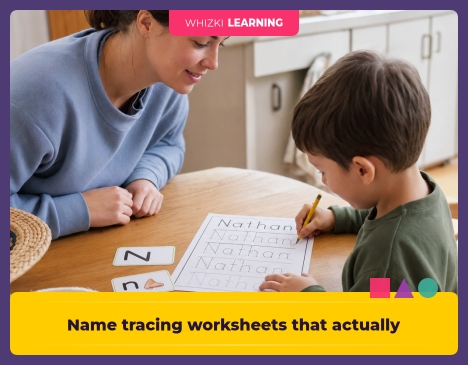
If name writing turns into pencil battles at your kitchen table, print one short name tracing worksheet, sit beside your child for five calm minutes, and stop while the page still feels doable. Name writing is powerful because the word already matters to the child, and that motivation makes practice feel less like a drill. The goal is not a perfect signature today, but a child who knows where to start, how to move the pencil, and when to try without a dotted path.
Reviewed by Emily Chen, MA, OTR/L, Pediatric Occupational Therapist.
Why name writing works so well
A child’s name is usually the first written word that feels owned, noticed, and worth reading. NAEYC guidance on early writing supports using meaningful print, and a child’s name is about as meaningful as print gets for ages 3-7. The name tracing worksheet gives the child a familiar target before the hand has full control.
Name writing also connects fine motor practice with early literacy in a natural way. The child sees letters in a fixed order, hears the adult say the name slowly, and begins to notice that print carries something personal. In Reggio-inspired classrooms, teachers often begin with names because identity, belonging, and mark making can live on the same page.
A good name tracing worksheet gives the adult an easy place to watch without overtalking. The adult can notice whether the child starts letters from the bottom, grips the pencil too tightly, skips letters, or loses interest after one line. When a family needs fresh pages without rebuilding the layout every day, our printable library is a practical place to start.
The trace, fade, free progression
The strongest name tracing worksheets move from guided letters to independent writing in a clear order: trace the model, copy with a lighter cue, then write the name on a blank space. Orton-Gillingham teaching uses explicit, step-by-step practice, and the same idea fits handwriting beautifully. The child should know exactly what the pencil path is before the support disappears.
The trace stage is for learning the route, not for filling a page. One to three careful lines can teach more than a crowded worksheet with tired scribbles at the end. The adult can say the strokes out loud, such as “down, around, and stop,” while the child’s hand learns the motion.
The fade stage is where many children gain confidence. The worksheet might use gray letters, missing letter parts, or a single starting dot so the child still has help without full tracing. The adult’s job is to praise the attempt and gently reset the starting place when the child begins from the bottom.
The free stage belongs after the child has had enough success to risk a blank line. A free-write space should be short, calm, and optional for younger preschoolers. Kindergarten children often enjoy writing the name on a pretend sign-in sheet, a drawing, or a card after tracing once.
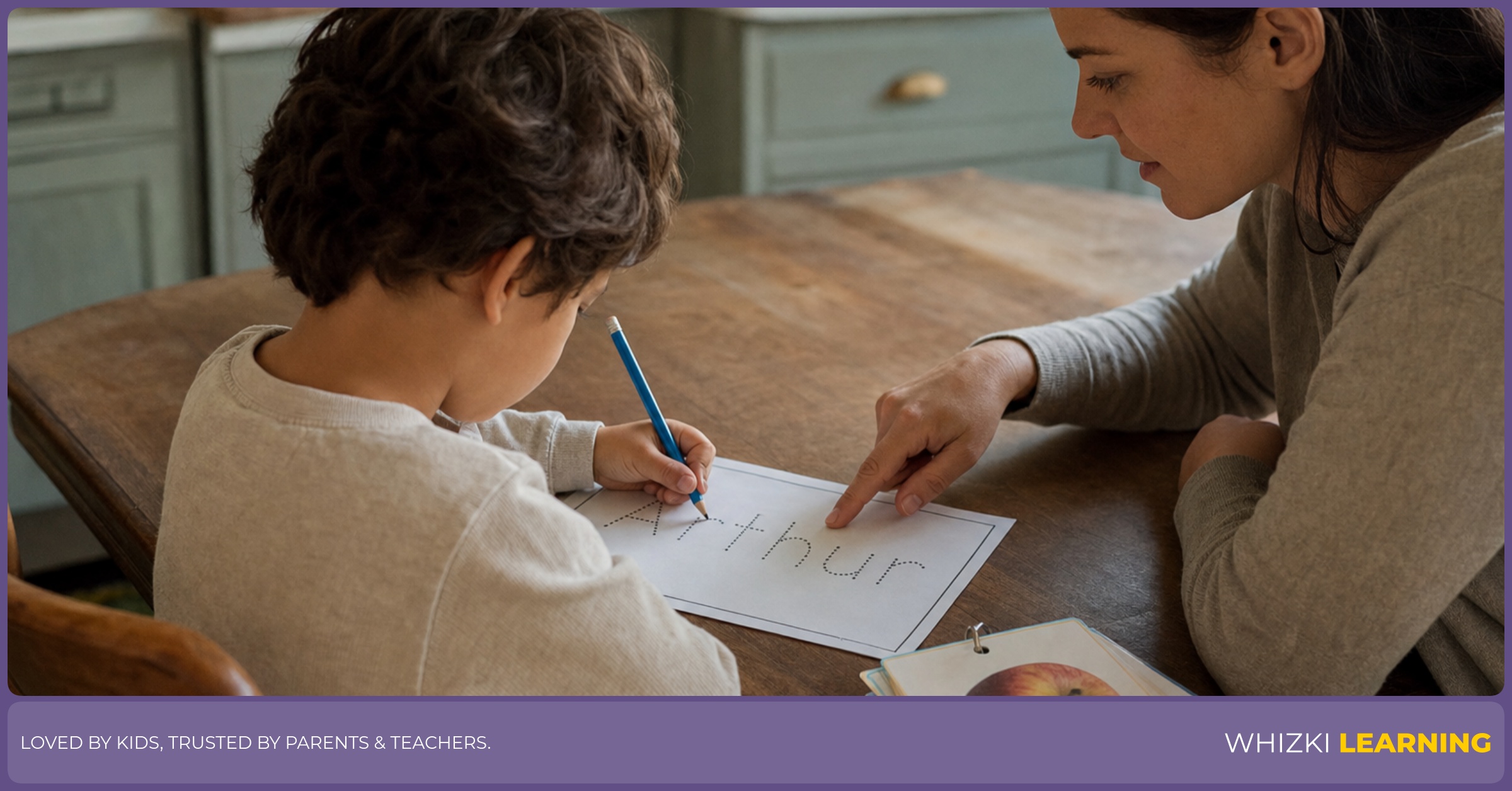
Lined versus unlined name worksheets
Lined name tracing worksheets help children who already understand that letters sit on a baseline. Occupational therapy handwriting heuristics often look at size, spacing, alignment, and pressure, and lines support alignment when the child is ready. For many 5- to 7-year-olds, a simple baseline or handwriting line can make the name look more organized.
Unlined name tracing worksheets can be better for younger preschoolers because large movement matters first. A 3- or 4-year-old may need big letters, thick paths, and open white space before small writing lines make sense. The adult can use a crayon, a short pencil, or a marker that gives enough feedback without demanding tiny control.
The best choice depends on the child’s hand, attention, and mood that day. A tired child may need one big unlined page, while a ready kindergartener may enjoy a lined page with a small “write your name” box. For more low-pressure ideas, the guide to making writing practice fun gives simple ways to keep handwriting from becoming a standoff.
What to print at each stage
Early preschool name worksheets should be big, uncluttered, and short. Montessori practical-life work reminds adults that the hand needs real movement before tiny pencil work becomes comfortable. A first page can show the child’s name once in large traceable letters, with one empty space for a brave try or a drawing.
Pre-K name worksheets can add a fade line and a copy line when the child starts to ask for more. The worksheet should still leave room for success, because small muscles fatigue faster than adult eyes expect. A picture box, sticker space, or sign-in style page can keep the name connected to real communication.
Kindergarten name worksheets can include first name, last name, mixed-case practice, and correct letter formation reminders. The child may also be ready to connect name letters to letter names and sounds, especially when practice stays brief. Families working on letter recognition alongside handwriting can pair the name page with the alphabet learning hub for sound and letter review.
A teacher, homeschooler, or caregiver can print a small stack by stage instead of printing one giant packet. Stage-based printing keeps the adult from asking for independent writing before the child has traced and copied enough times. For seasonal pages, classroom practice, and extra handwriting choices, our worksheet sets group printable practice by skill.
The premium Name Tracing and Writing Pack includes trace, fade, and free-write pages so the child can move through the stages without a new setup each day. The complete pack lives in Whizki Plus, alongside the name tracing worksheet set and other early handwriting pages.
A short routine for less pushback
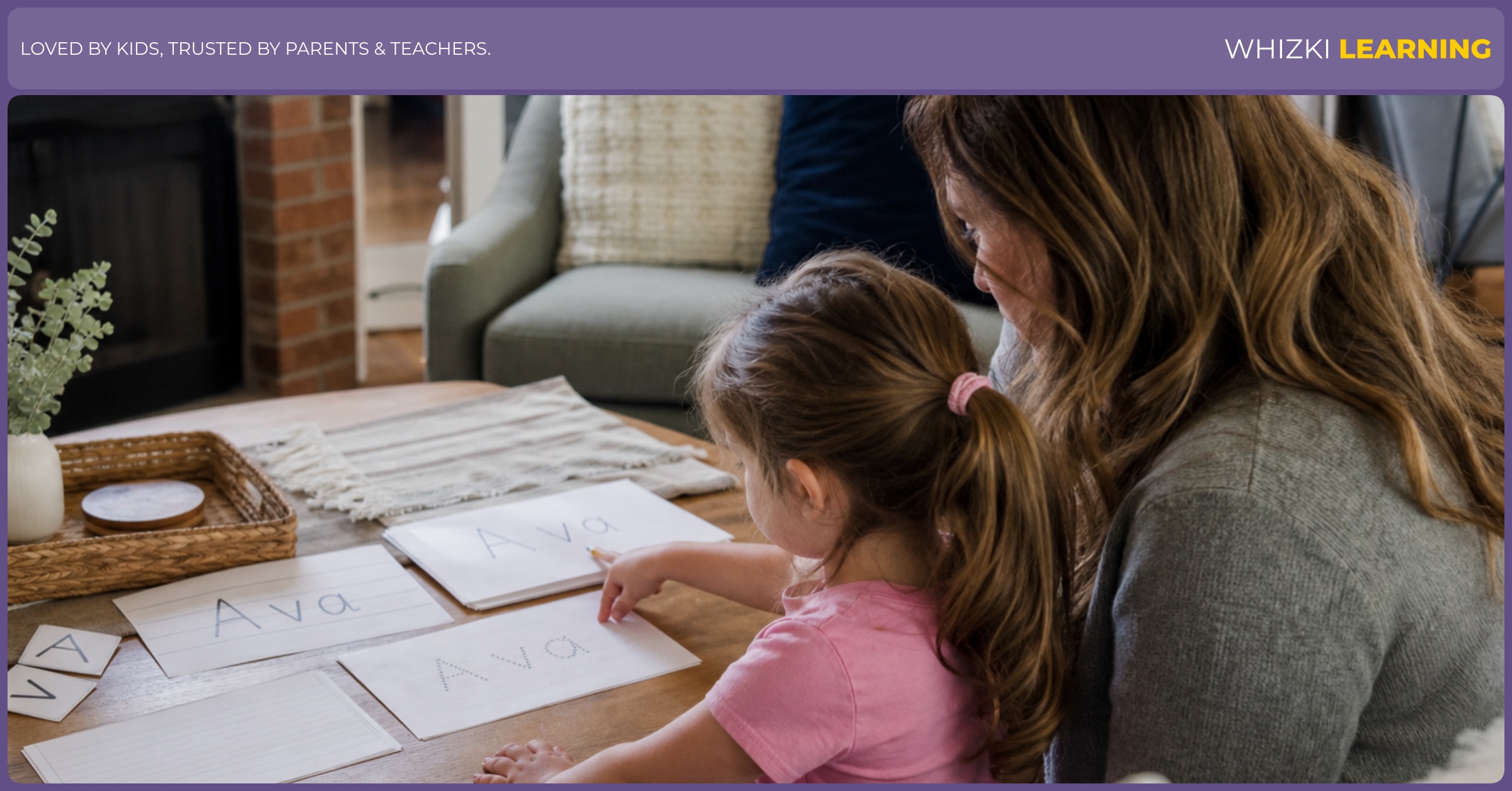
A name tracing routine should feel predictable and brief. Speech-language pathology practice often pairs spoken language with visual cues, and handwriting can use the same rhythm: say the name, point to each letter, trace slowly, then celebrate the effort. The adult can keep directions simple so the child spends energy on the pencil, not on decoding a speech.
The best practice window is usually before the child is hungry, rushed, or worn out. Five minutes after breakfast or before read-aloud time often works better than a long handwriting block after school. The adult can end with “circle your best letter” so the child learns to notice growth without rewriting the whole page.
A child who avoids name tracing may need a different tool before needing more worksheets. Occupational therapy basics favor short crayons, vertical surfaces, playdough, tweezers, and tearing paper because those activities build the hand arches and finger control that writing asks for. The worksheet can return after the hand has had a chance to warm up through play.
Name tracing worksheets are most useful when the adult treats the page as a bridge, not a test. Print the stage that matches the child today, offer a small amount of practice, and let the name become a proud mark on drawings, cards, cubbies, and pretend menus. The child’s name can become the handwriting practice that finally feels worth the effort.