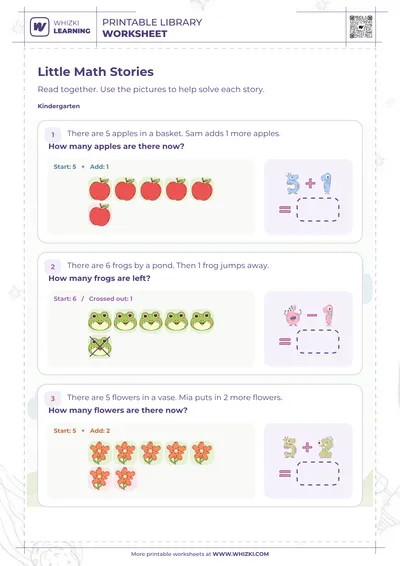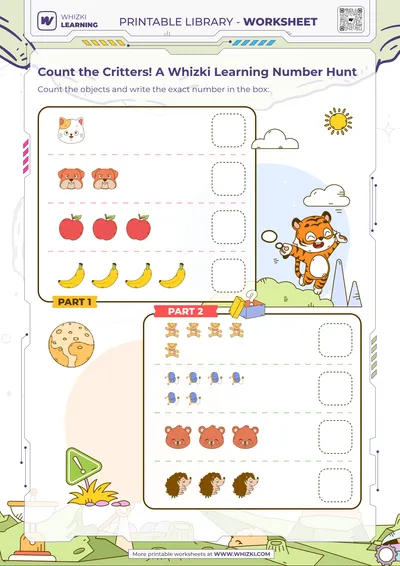
If your child chants 10, 20, 30 with confidence but stalls when a worksheet appears, start with ten small objects in a row and count one full row before picking up a pencil. Skip counting by 10s feels simple to adults, but children ages 5 to 7 are still matching spoken numbers, written numerals, and real groups of ten. A hands-on start keeps practice calm and gives the chart and worksheet a clear job.
Reviewed by Dr. Anna Klein, EdD, Early Childhood Curriculum Specialist.
What skip counting by 10s teaches
Skip counting by 10s teaches children to hear a steady counting pattern and see a growing quantity at the same time. The skill matters because a child who says 10, 20, 30 is beginning to notice that each spoken number stands for one more group of ten. Early math guidance from NAEYC supports that kind of concrete number work before long written drills.
A strong skip-counting routine uses three parts: the child says the number, the child touches a group, and the child sees the numeral. Orton-Gillingham reading lessons use the same multi-sensory rhythm, because many young learners need speech, movement, and print working together. The math version feels less like a test and more like a small chant with objects.
The numbers 10 through 100 also give children a friendly doorway into place value. For more number sense practice around counting, numeral recognition, and early quantity work, the numbers learning hub is a helpful place to gather related pages. A child who still mixes up 60 and 70 can keep using objects while the written pattern becomes familiar.
A child-friendly chart for counting by 10s
A skip-counting by 10s chart should be plain enough for a young child to read without visual clutter. A good chart shows 10, 20, 30, 40, 50, 60, 70, 80, 90, and 100 in a clear path. Montessori-style observation helps here, because the adult watches whether the child tracks left to right, skips a line, or guesses from memory.
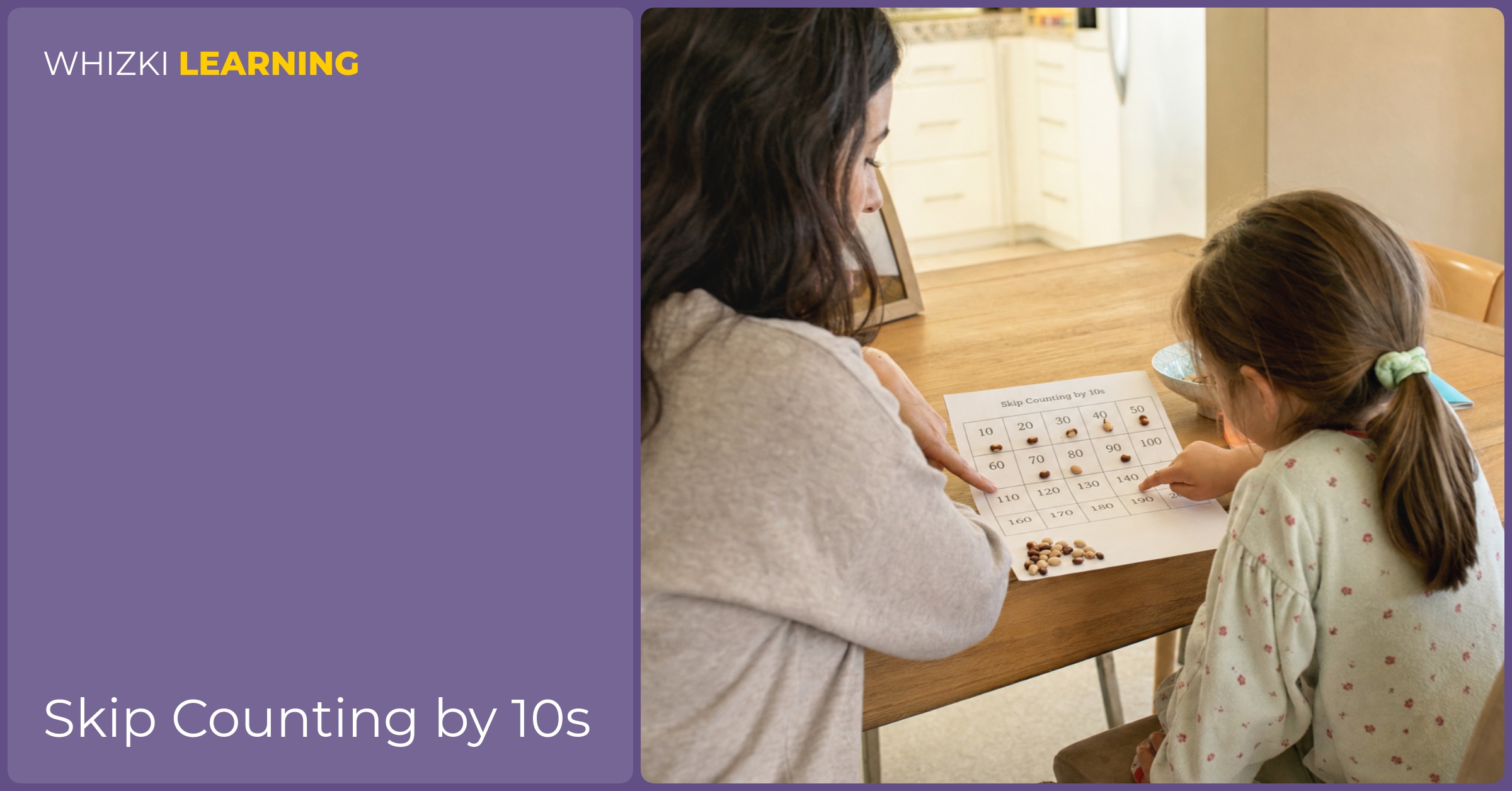
The chart routine can be short and consistent. The adult points to 10, the child says ten, and both hands tap one group of ten counters or cubes. The adult repeats the same pattern until the child can lead the pointing without rushing.
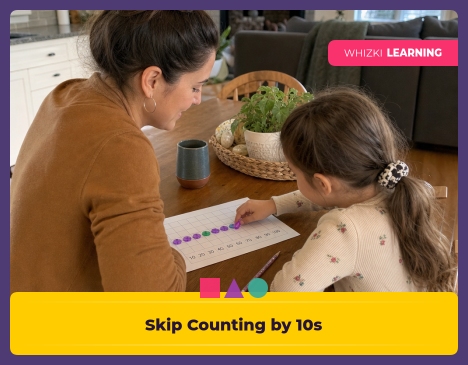
A printable chart works best when the chart is paired with something touchable. A child can place a bean on each number, move a small car along the row, or cover each decade with a sticky note after saying the number. For binder pages and quick reprints, our printable library keeps simple number practice easy to find.
Worksheets that build confidence
A skip-counting by 10s worksheet should ask for one clear action at a time. Young children often manage the pattern better when the page begins with tracing or circling before missing-number work. Occupational-therapy basics remind teachers and parents to reduce fine-motor load when the math idea is the main goal.
A first worksheet might show a 10s path with only one missing number in each row. A later worksheet can ask the child to write 30, 40, and 50 after saying the row aloud. A page connected to number 10 print practice helps children slow down and form the starting numeral with care.
A Reggio-inspired classroom habit also works well at home: save one finished worksheet and ask the child to explain the counting path. The explanation tells more than the score, because a child may know the chant while still misunderstanding the groups. A parent can write the child's words at the bottom of the page to make the learning visible.
The Skip Counting by 10s Premium Worksheet Set includes ten-frame warmups, hundreds-chart paths, dime mats, and missing-number pages for ages 5 to 7. The complete pack lives in Whizki Plus, and the store page for early math worksheet packs shows the current bundle options.
Dime and finger-flash games
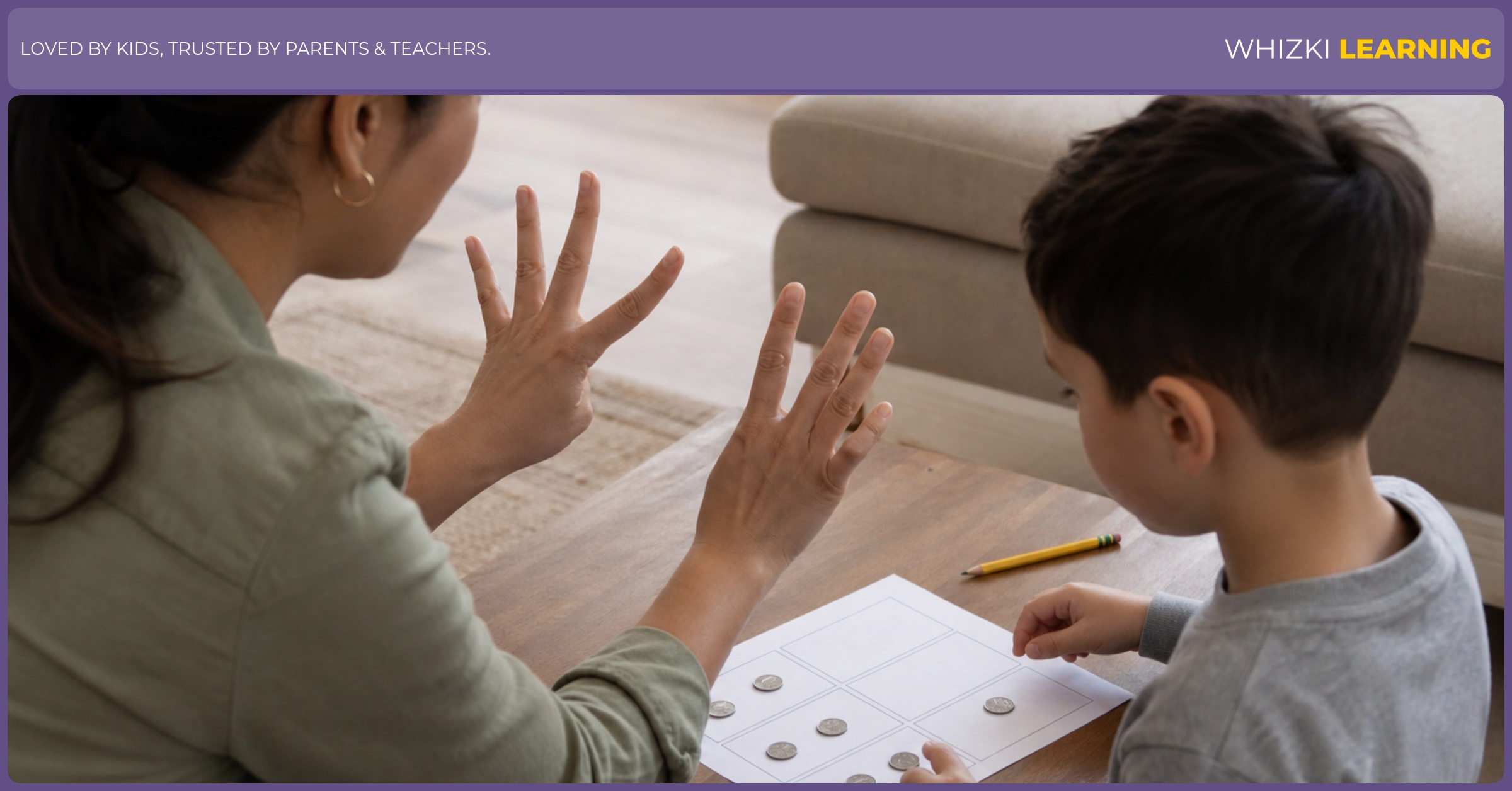
Dimes are one of the easiest real-life tools for counting by 10s. A child can line up one dime, two dimes, three dimes, and say 10 cents, 20 cents, 30 cents while touching each coin. Montessori practical-life work values real objects for exactly that reason, because the object gives the number a job.
A finger-flash game builds the same pattern without coins. The adult flashes both hands for ten, closes both hands, and flashes both hands again for twenty. Occupational-therapy warmups often use simple hand movements before pencil work, and finger flashes give children movement without turning practice into a race.
Children who recently practiced skip counting by 5s may notice that two fives make one ten. That connection is worth naming out loud during dime play and finger flashes. Families who used skip counting by 2s can also compare pairs, fives, and tens as three friendly counting patterns.
The place-value bridge
Skip counting by 10s becomes place value when children see that 40 means four groups of ten and zero extra ones. A ten-frame, a bundle of craft sticks, or a tower of ten cubes makes that idea visible. NAEYC-aligned math practice favors that kind of representation because young children need many concrete examples before a symbol feels stable.
The adult can say, forty has four tens and zero ones, while the child touches four bundles. The wording should stay steady for several days, because changing the language too quickly can make the idea feel slippery. Orton-Gillingham lesson design uses consistent wording for the same reason: the routine lowers the memory load.
A hundred chart can show the same place-value bridge in print. The child can color 10, 20, 30, and 40, then notice that every number ends in zero. The chart is doing more than helping the child recite; the chart is showing how the tens place changes while the ones place stays at zero.
A simple week of practice
A simple week can begin with objects, move to a chart, add a worksheet, and end with a dime game. The order matters less than the child's confidence, so a parent or teacher can repeat the object day when the worksheet day feels shaky. Reggio observation asks adults to notice what the child is ready to show, not push every child through the same pace.
Five minutes is enough for most children ages 5 to 7. A good session might include one oral count, one hands-on count, and one written response. Early-childhood practice works best when the adult stops while the child still has energy for tomorrow.
Skip counting by 10s is the closing piece in a friendly early skip-counting path. Start with real groups, add the chart, use one worksheet at a time, and let dimes or finger flashes bring the pattern back into daily life. When counting by 2s, 5s, and 10s all feel familiar, children have a sturdy base for the place-value work that comes next.