If your child can race through 27, 28, 29 and then yell "twenty-ten," try one calm car-counting round today: count 20 to 30 together, say "thirty" with a smile, and move on. Many 3- to 7-year-olds know more number rhythm than number structure, so a stumble at 30 does not mean your child is behind. In my preschool and kindergarten rooms, decade words have always been the speed bumps, especially for bright kids who love patterns.
Reviewed by Whizki Editorial Team, Early Childhood Education Editors.
The typical counting timeline from 3 to 7
A typical preschool goal is counting with meaning through 10 and chanting toward 20, and many children count to 20 by the end of pre-K. NAEYC guidance reminds teachers to watch playful use of number words, one-to-one matching, and interest in quantity rather than a single recital on command.
A typical kindergarten goal is counting to 100 by ones and tens by the end of the year. Some children reach 100 early in the year, and some children need many winter and spring practice rounds because the decade words, thirty, forty, fifty, and sixty, do not follow the clean teen rhythm.
Age three and four counting often sounds like a song, which is a healthy early step. If the teen words sound scrambled before the count ever reaches 20, the teaching notes in why teen numbers are hardest explain why eleven, twelve, and thirteen need extra repetition.
Quick resource note: the printable number pages inside the numbers learning hub can give a child short, pencil-and-paper practice with counting, tracing, and matching. Use one page for five quiet minutes, then put the pencil away before number work turns into a battle.
Why 29 to 30 trips up so many children
The 29-to-30 jump feels hard because a child has to leave a familiar pattern and choose a new word. Montessori observation often separates the counted objects from the spoken count, and that same lens helps adults see the problem: the child may understand "one more" while the mouth has not yet stored the next decade label.
Twenty-one through twenty-nine share a strong sound pattern, so the brain starts predicting that the next number will keep the same pattern. The word thirty breaks the prediction, and English makes the break worse because thirty, forty, and fifty are short, odd-sounding labels instead of clear "three-ten," "four-ten," and "five-ten" words.
A child who says "twenty-ten" is usually making a smart guess, not being careless. Speech-language pathology practice treats those guesses as useful clues, so a calm adult can repeat the correct phrase, "Yes, after twenty-nine comes thirty," and keep the count moving.
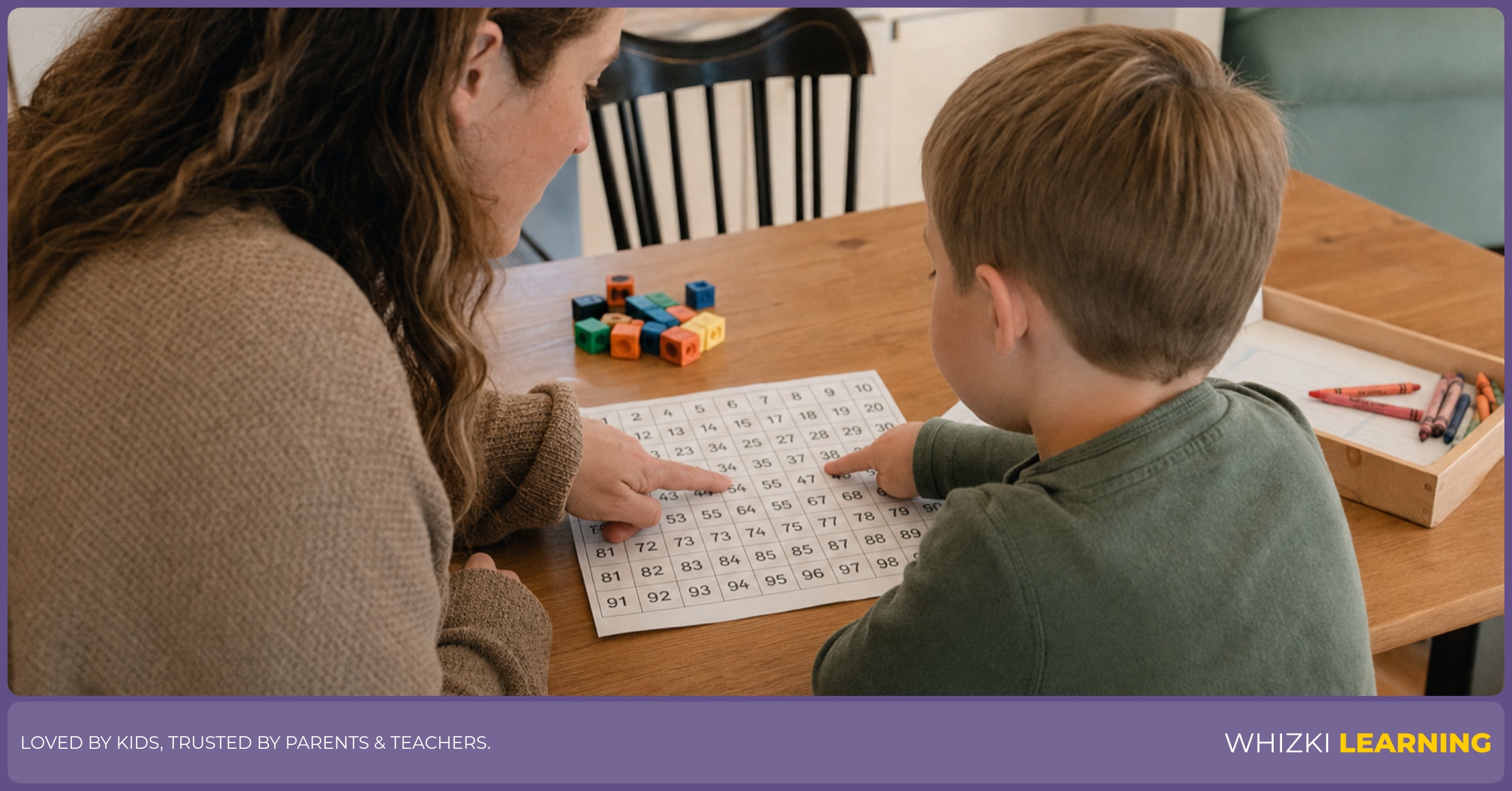
A paper the 100 chart helps because the child can see each decade row end and begin again. Reggio-inspired teaching often gives children a visible tool, watches the child's strategy, and then adds one small prompt instead of turning the moment into a quiz.
Two car games that fix decade transitions
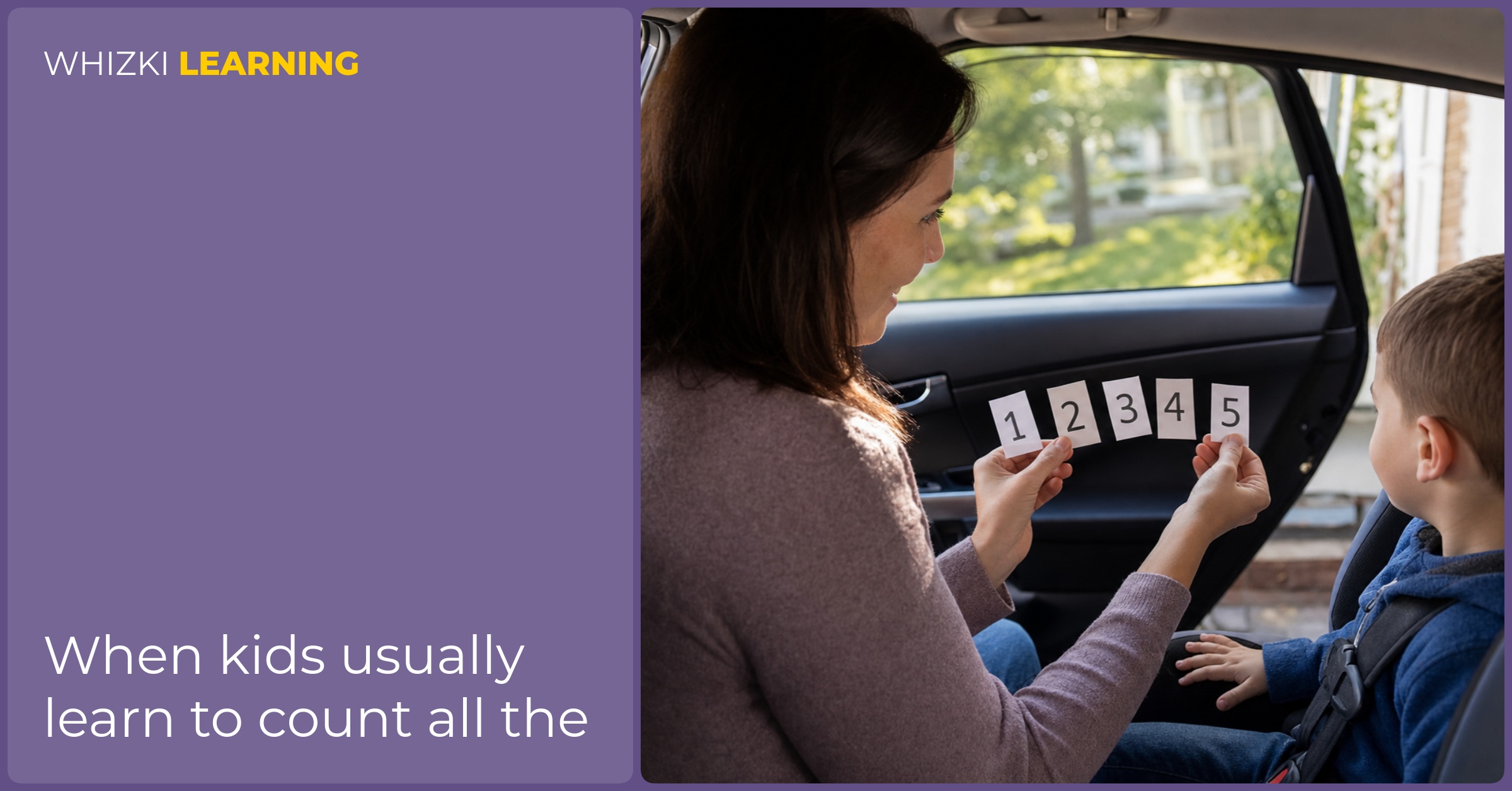
Car games work well because the adult and child can practice number words without a worksheet or a sit-still demand. Occupational-therapy basics favor short, rhythmic practice during ordinary routines because the body is settled, the voice can join the pattern, and the child does not have to manage pencil grip at the same time.
The 29 to 30 bridge game starts with the adult saying, "I will drive us over the bridge from twenty-seven to thirty-two." The adult counts 27, 28, 29, then pauses for half a beat before saying 30, 31, 32, and the child repeats the same small bridge once.
The decade detective game asks the child to listen for the secret switch word while the adult counts. The adult says 36, 37, 38, 39, 40, then the child calls out "switch" when the new decade word arrives, and the next round can use 46 to 50 or 56 to 60.
In Orton-Gillingham lessons, strong practice uses ear, mouth, eyes, and movement together, and the same idea fits early math. A child can tap the car seat for each number, say the count aloud, and lift one finger on the decade word, which gives the brain several ways to remember the transition.
When to give counting more support
A child who cannot count to 100 before kindergarten starts is not automatically behind. NAEYC-aligned early math practice looks for growth over time, playful number use, object counting, and comfort trying again after a mistake.
A 5- or 6-year-old may need more support if object counting to 10 stays confusing after steady practice, if number words disappear after earlier success, or if the child becomes unusually upset every time counting begins. An occupational therapist, speech-language pathologist, vision specialist, or pediatrician can help when counting trouble sits beside fine-motor strain, language delays, eye tracking concerns, or broad learning worries.
A kindergarten teacher can also tell the difference between a normal decade-word bump and a wider number sense gap. Reggio-style documentation, such as a few dated notes about what the child counted, what the child skipped, and what helped, gives the teacher better information than a single tense recital at home.
Counting to 100 is a long road, and most children need many friendly trips over the decade bumps before the road feels smooth. If kitchen-table number ideas help your family, come join the weekly newsletter for one small, doable tip at a time.