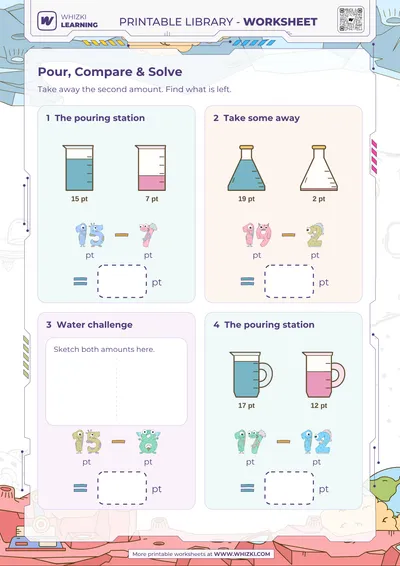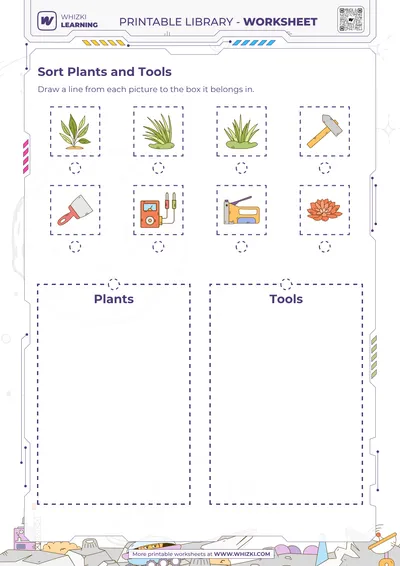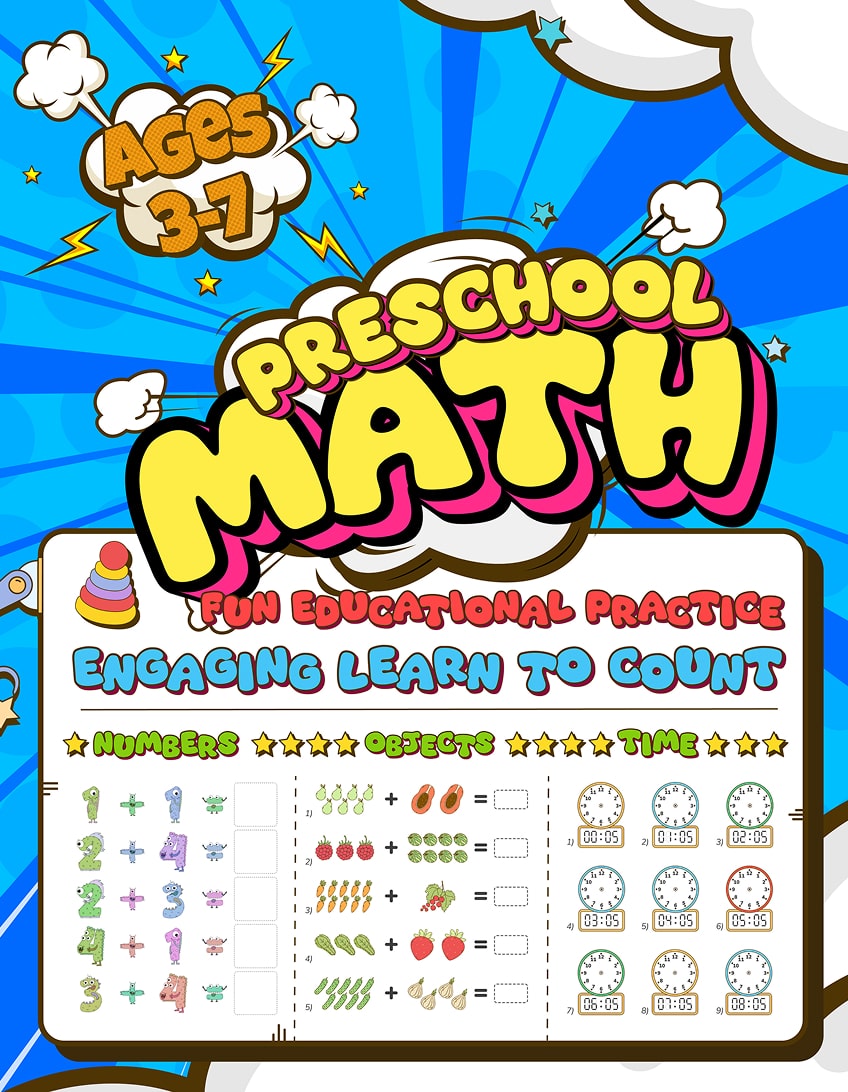
If the three-year-old is scribbling across the page while the seven-year-old calls the same page babyish, try one shared goal today and change only the page design. Pick matching, counting, or tracing, then adjust item count, white space, response mode, writing demand, and how close the adult stays. The worksheet will not fix a hard afternoon, but the worksheet can make the next ten minutes feel more doable.
Reviewed by Whizki Editorial Team, Early Childhood Education Editors.
Field note: one goal, three pages
The three-age page starts with one plain goal, such as match each sock, count each apple, or trace one curved path. The documented fact is simple: children ages 3 to 7 often need different ways to show the same early skill. NAEYC guidance keeps the design grounded in developmentally appropriate practice, which means the page should meet the child in front of the adult rather than chase a grade-level label.
A Reggio-inspired review begins by looking at what the child actually does with the materials. The page designer watches for reach, attention, language, and hand use before adding more boxes or smaller lines. The field note matters because a busy page can hide a child who understands the idea but cannot manage the layout yet.
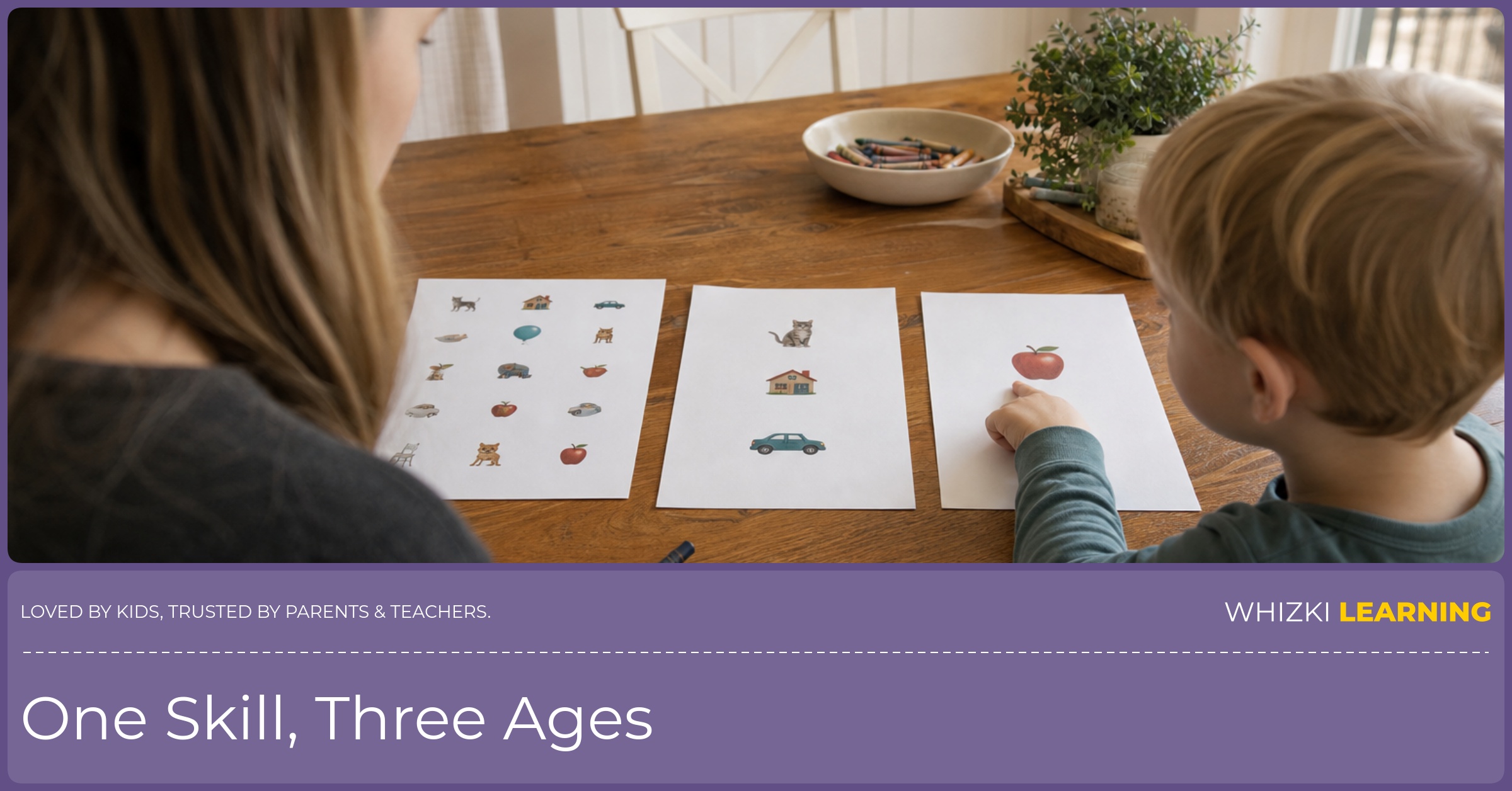
The proposed check takes about five minutes with a pencil, three crayons, and one sheet of paper folded into thirds. The adult draws a tiny version for age 3, a middle version for age 5, and a fuller version for age 7. The goal stays steady, while the page demand changes on purpose.
Age 3: low count, big response
The age 3 version needs a small item count, usually three to five choices on the page. Occupational-therapy basics point toward large movement before tiny pencil control, so the child can point, place a sticker, cover a picture with a button, or draw one big line. The page has wide spacing because visual clutter can become the task instead of matching or counting.
The age 3 tracing demand stays light and sensory when possible. A child can trace a road with a finger, drive a toy car along a line, or make one crayon mark from a duck to a pond. The adult sits close, names the goal, and stops before the page turns into a battle over pencil grip.
The documented design choice is not easier thinking; the design choice is a simpler response mode. A three-year-old may understand which objects match while still needing the adult to hold the paper still. The proposed check is to ask, “Can the child show the answer without a pencil?” before adding written work.
A low-pressure place to compare page versions is the printable library, because similar early skills sit near each other. Pick one printable, cover half the items for a younger child, or add a short explanation prompt for an older child.
Age 5: middle space, guided writing
The age 5 version can hold six to ten items when the pictures are clear and the directions are short. The Orton-Gillingham approach reminds teachers to move from sound, touch, movement, and sight together, so a tracing page may include saying the stroke aloud while the finger follows the line. The page can ask for a circle, a line match, or a copied mark, but the writing task should stay tied to the main skill.
The age 5 page can include more visual density than the preschool page, but the design still needs clean rows and obvious start points. A kindergarten-ready counting page may ask the child to count pictures and write one numeral in a box. The adult can stand nearby, read the direction once, and give a prompt such as “Start at the top” rather than solving the item.
The design review compares related pages in the worksheet sets when a teacher or homeschooler wants a cleaner sequence. The documented fact is that sequence helps adults notice whether the page changed the skill or just added decoration. The proposed check is to cover the directions and ask whether the child can tell where to begin.
Age 7: more choice, less adult talk
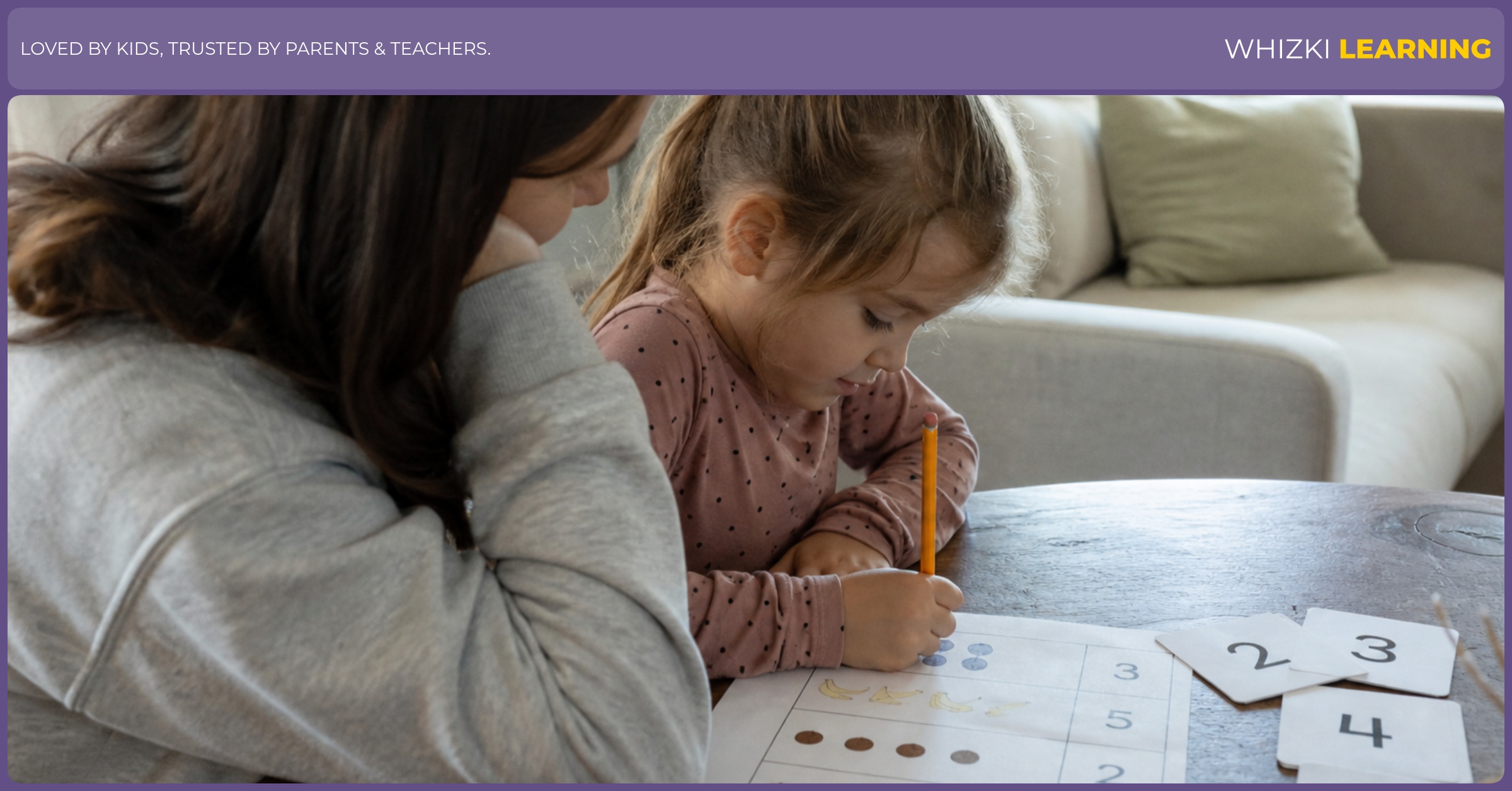
The age 7 version can include ten to sixteen items if the layout still gives the child room to think. Montessori practice often protects concentration by giving the child a clear work space and then stepping back. The page may ask the child to match, count, trace, and add a short label, but the page should not pile on decoration just because the child is older.
The age 7 response mode can shift from showing to explaining. A child might count a group, write the numeral, and tell why two groups match. Speech-language pathology practice values the child’s explanation because oral language often reveals whether the child understands the category, quantity, or letter feature.
The writing demand can grow to a word, a numeral, or one short sentence, but the handwriting load should not swallow the math or reading goal. An older child with a tired hand may still need fewer written answers and more oral response. The adult support can move to a quick start check, a midpoint glance, and a closing conversation.
A five-minute print review
The five-minute print review separates documented facts from the next step. The documented facts are the visible design choices: item count, spacing, response mode, writing load, and adult support. NAEYC guidance and classroom practice both keep the adult focused on fit, not on making the child hurry through a page.
The proposed review begins with one question: “What is the one skill on the page?” The adult then marks anything that competes with that skill, such as extra pictures, tiny boxes, or directions that require too much reading from a young child. The previous field notes guide shows the same kind of page-by-page review on a seasonal pack.
The honest limit is that a worksheet is practice, not a full readiness plan. A child still needs talk, play, movement, books, blocks, pretend play, and time with an adult who notices effort. When handwriting pain, vision concerns, speech clarity, or attention worries keep showing up, a pediatrician, occupational therapist, speech-language pathologist, or classroom teacher can help decide the next right step.
The field note takeaway is gentle and practical: keep the goal steady, then change the page around the child. A good page for ages 3, 5, and 7 is not one magic worksheet, but three thoughtful versions of the same small learning moment.