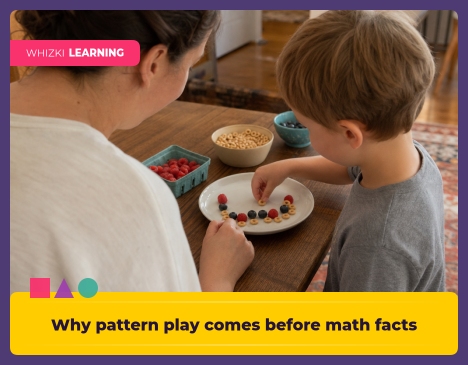
When your child can count to 20 but melts down over 3 plus 2, put the flashcards away for five minutes and build an AB snack pattern together. Pattern work gives a young child a calmer path into math facts because the child sees order before memorizing answers. A simple red-blue-red-blue row can become the next right step at the kitchen table.
Reviewed by Dr. Anna Klein, EdD, Early Childhood Curriculum Specialist.
Why patterns come before facts
Patterns are early math because a pattern has a rule, and a young child can see that rule with eyes and hands. NAEYC guidance for ages 3 to 7 often points teachers toward playful, concrete math before paper-only answers. An AB row of cracker, berry, cracker, berry is a child-friendly start to pre-algebra.
An AB, AAB, or ABC pattern asks the child to notice the repeating unit. The repeating unit is the small part that comes back again and again, such as red-blue or clap-clap-stomp. The same noticing helps later when a child sees that 2 plus 1 has a steady structure instead of being a random fact to recite.
Math facts ask for memory, language, attention, and number sense at the same time. The Orton-Gillingham approach reminds teachers to teach in a direct, multisensory order, from touch and talk to symbols and recall. Pattern play follows that order by letting the child build the idea before the child has to name the answer.
The developmental order: copy, extend, create
The developmental order usually goes copy, extend, create, and the order matters. Reggio-inspired classrooms watch the child closely before adding a harder demand, while Montessori shelves often isolate one skill at a time. Pattern work grows best when the adult changes one part of the task, not the whole activity.
Copying means the child matches an adult-made pattern exactly. Copying is not babyish busywork because the child is learning to scan left to right, compare objects, and control small hand movements. Occupational therapy basics call that visual-motor practice, and the same practice supports later writing and number work.
Extending means the child adds the next piece to a pattern that has already started. Extending is harder than copying because the child must hold the rule in mind and apply the rule to a new space. A good teacher waits for steady copying before asking, “What comes next?”
Creating means the child invents a pattern and can show the rule to another person. Creating is the pre-algebra moment because the child is making a structure, checking the structure, and explaining the structure. A child who can create a simple pattern is already practicing the thinking used later in equations.
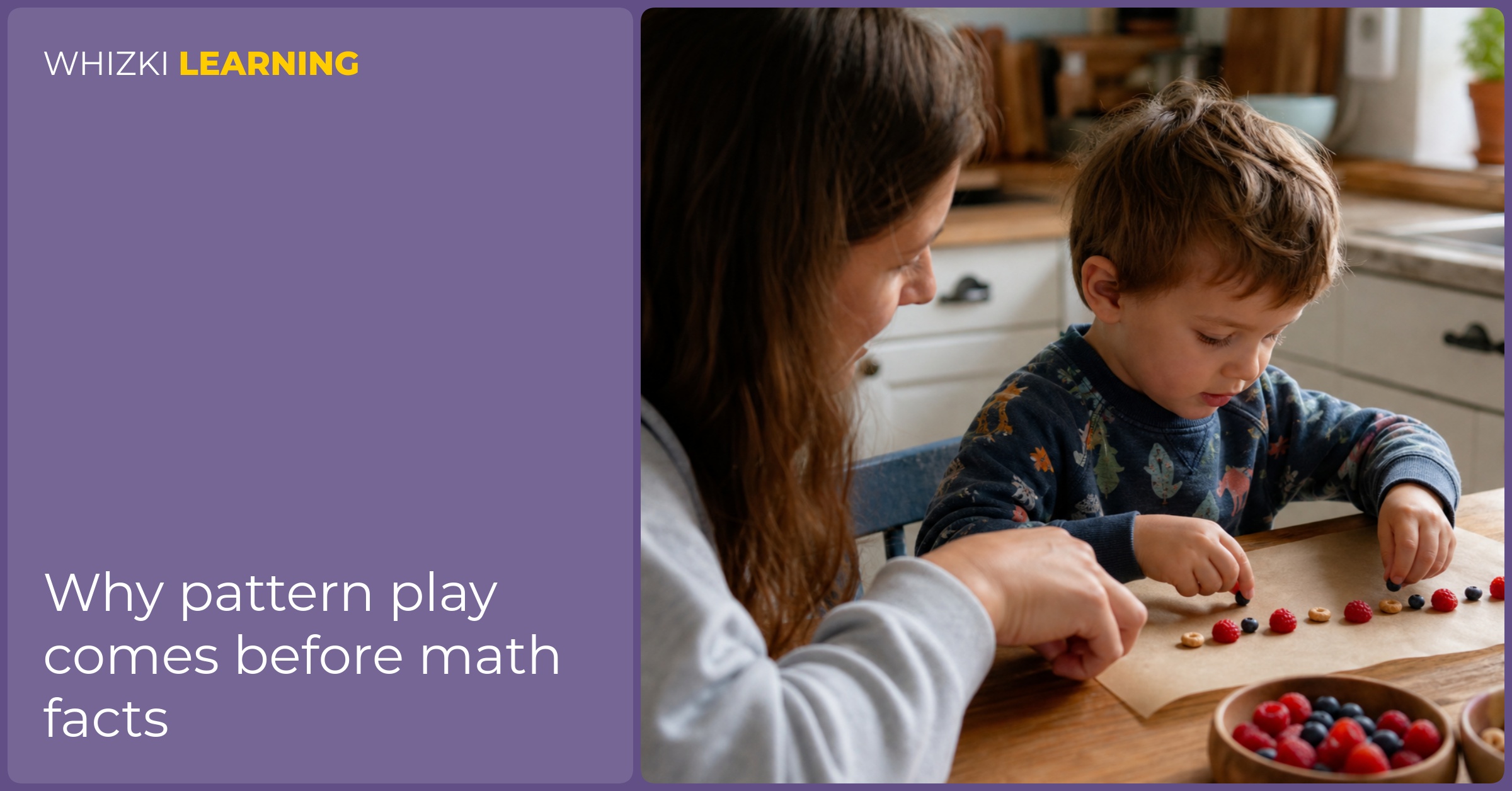
Three snack pattern games for the kitchen table
Snack pattern games work because the materials are concrete, familiar, and motivating. Occupational therapy basics also favor small, safe pieces because the child practices pincer grasp, crossing the midline, and careful placement. Choose allergy-safe foods, cut choking-risk foods for younger children, and stay close while snacks are on the table.
Copy my snack train starts with two foods, such as cereal ring, raisin, cereal ring, raisin. The adult builds the first train and says the pattern slowly while pointing to each piece. The child copies the train underneath, and the adult keeps the row short enough for success.
Finish the snack row starts with a nearly complete pattern, such as cracker, cheese cube, cracker, cheese cube, cracker. The adult asks the child to choose the next food and place the food at the end. The adult can say, “I hear cracker, cheese, cracker, cheese, cracker, so the next part is cheese.”
Chef makes the rule gives the child control after copying and extending feel comfortable. The child chooses two or three snack foods, builds a pattern, and teaches the adult the rule. The adult follows the child’s rule, then gently checks the row by naming each piece from left to right.
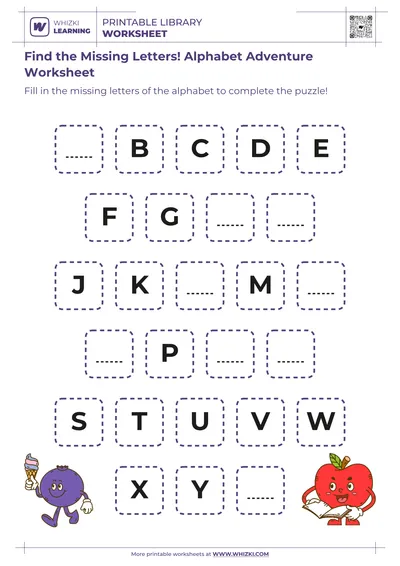
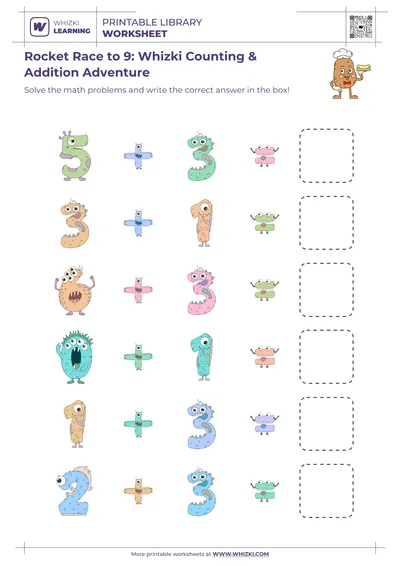
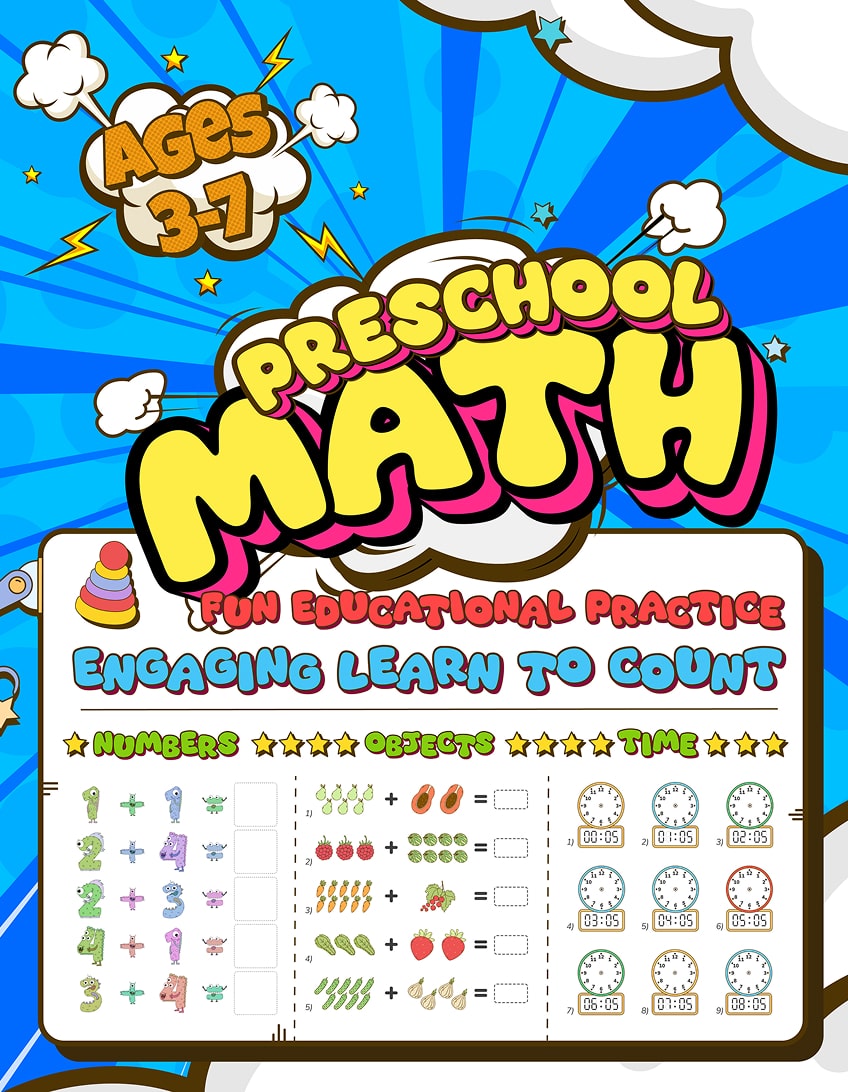
Print one page of Whizki Learning pattern worksheets and tape the page to the wall near the snack table. The printable gives the adult a quick AB, AAB, and ABC model when the child asks, "What comes next?"
When to move from copying to extending
The move from copying to extending should happen when copying looks easy and relaxed. NAEYC practice asks adults to match the challenge to the child’s current level, which means the adult watches the child more than the clock. A child who copies three short patterns without guessing is usually ready for one missing piece at the end.
Copy-to-extend readiness sounds like the child naming the pattern while pointing, such as red, blue, red, blue. Copy-to-extend readiness also looks like the child checking the row after placing a piece. A child who grabs random pieces still needs more copying with fewer choices.
Extend-to-create readiness appears when the child can finish several patterns and explain the choice in simple words. Reggio-style observation treats that explanation as important thinking, even when the grammar is messy. A child might say, “cracker next because cracker, berry, cracker,” and that sentence is enough.
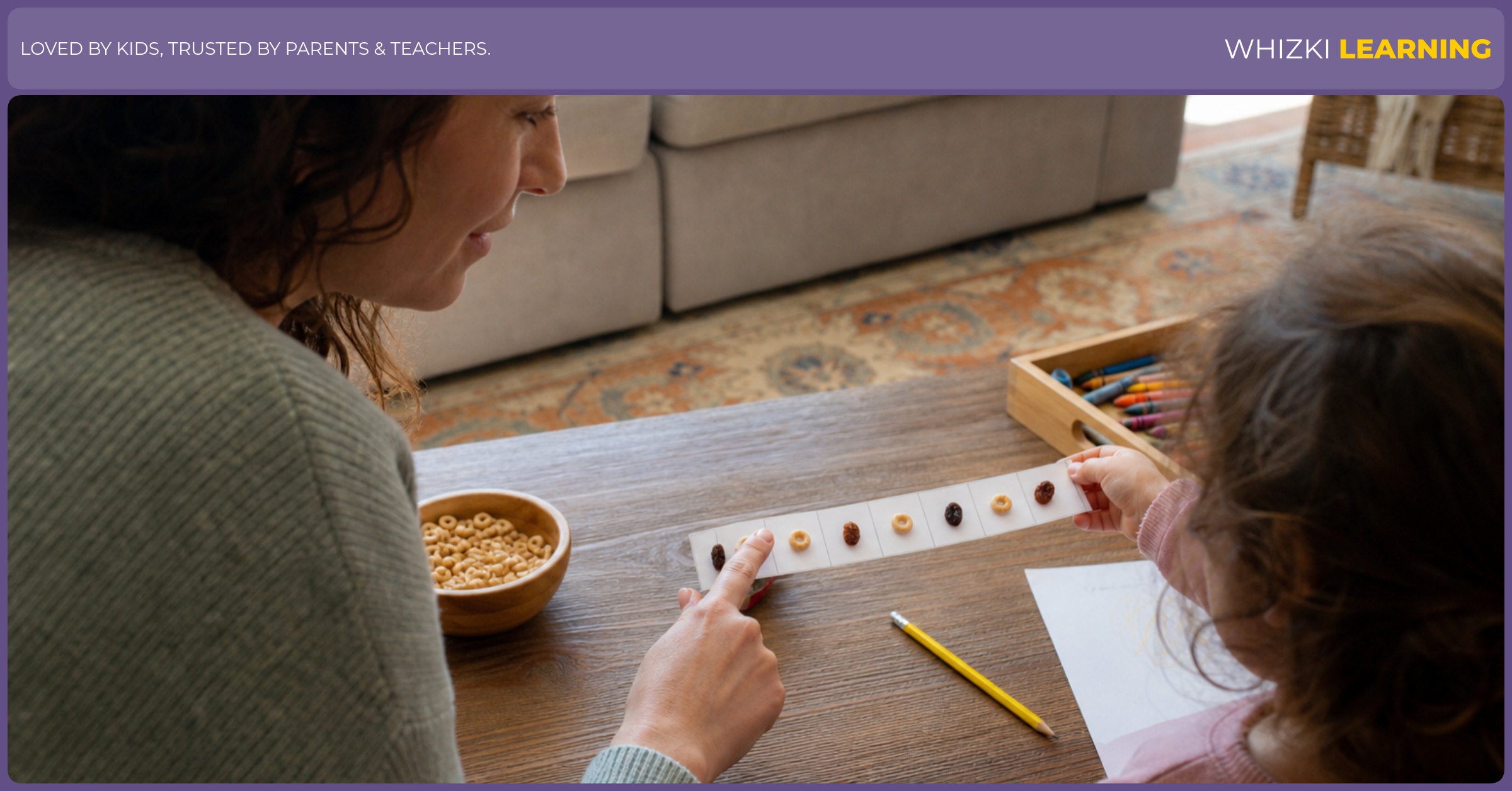
How patterns help number facts later
Pattern work helps number facts later because the child learns to expect order in math. The Orton-Gillingham habit of moving from concrete practice to spoken language to symbols fits early math well. A child who builds red-blue rows can later see 1 more, 1 more, 1 more on a number path.
Number facts become easier when a child can notice what stays the same and what changes. In 2 plus 1, the 2 stays, the 1 more changes the total, and the child has to track that tiny shift. Pattern play trains the same noticing without the pressure of a timed answer.
Number-symbol practice still matters, and a child can pair pattern work with the numbers learning hub when the child is ready for numeral work. The strongest routine is concrete first, language second, paper last. A child can build three snack pieces, say “three,” then match the numeral after the amount feels real.
Quick troubleshooting for pattern practice
Pattern refusal often means the task is too long, too abstract, or too adult-led. NAEYC-aligned teaching gives young children choice inside clear limits, so the adult can offer two snack choices and keep the pattern to four or six pieces. Short success beats a long lesson that ends in bargaining.
A child who keeps making random rows may need bigger contrast and fewer pieces. Occupational therapy heuristics often start with clear visual differences, such as a round cereal piece beside a square cracker. After the child sees the difference easily, the adult can bring in closer matches like two colors of the same food.
A child who copies a visual pattern but cannot say the pattern may need the adult to model a short sentence. Speech-language pathology practice often uses simple repeated language, such as “red then blue,” while the child points. You can also keep one matching page from our printable library in a clipboard so practice is ready without a screen.
Pattern play does not have to look like school to count as math. A row of snacks, blocks, socks, or crayons can give a 3- to 7-year-old the order and rule-making that math facts need later.
When facts feel stuck, return to copy, extend, and create for a few days. The slower route often becomes the steadier route because the child is building meaning, not guessing answers.