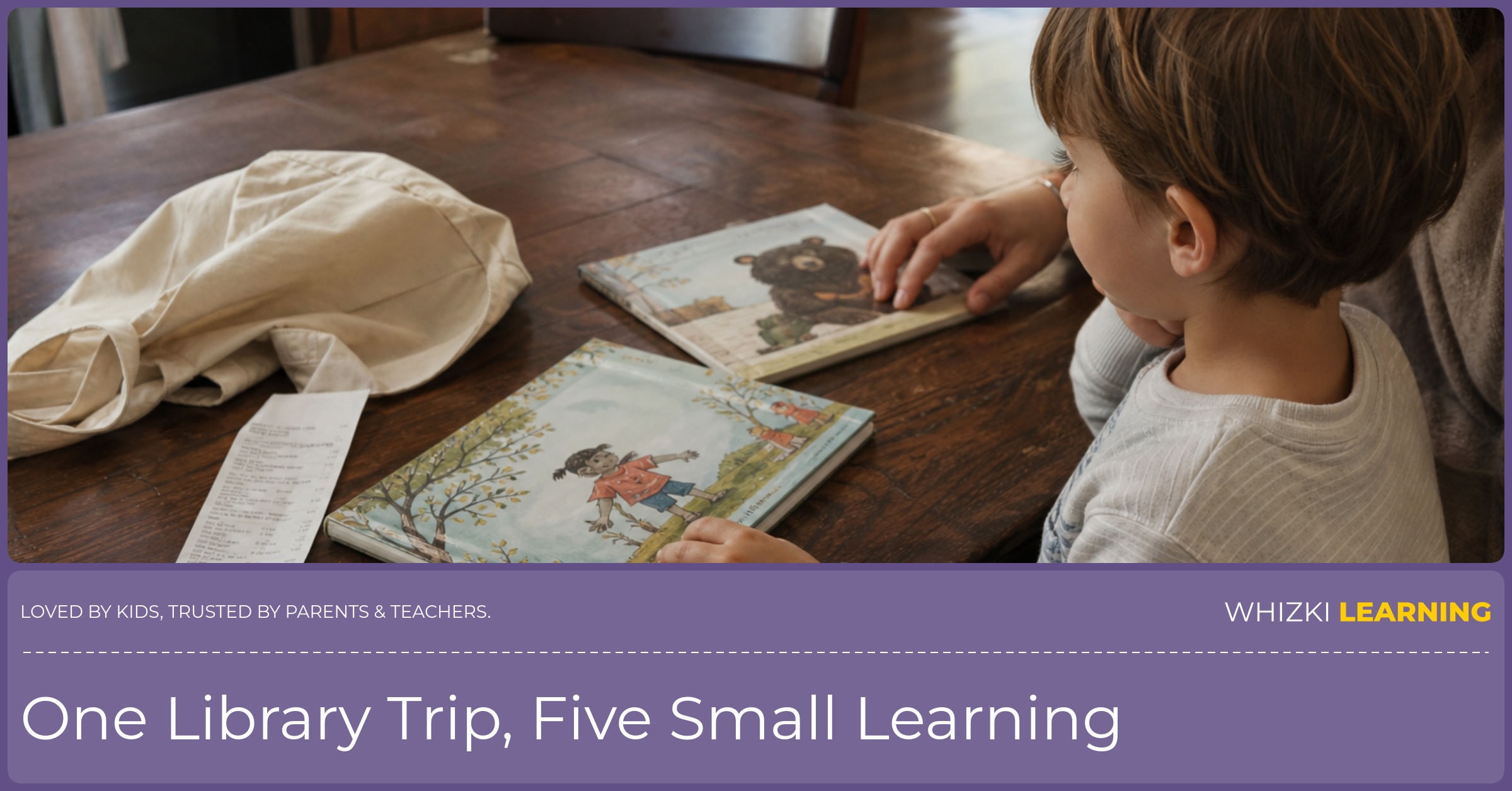
If your library trip turns into a cart, coat, and overdue-book negotiation, choose one book today, tuck the receipt inside the front cover, and tell your child that the book has five tiny jobs before return day. A borrowed book does not need a worksheet stack to matter. A short plan gives the book enough repetition for language, counting, memory, and responsibility without making family reading feel like homework.
Reviewed by Whizki Editorial Team, Early Childhood Education Editors.
The five-day shape, keep the book doing one job at a time
The library-week plan works best when each moment stays under ten minutes. NAEYC guidance reminds early-childhood educators to build learning through play, choice, and family routines, so the plan gives a child a real role without turning the borrowed book into a test.
The five small moments are choose, carry, reread, draw, and return. A preschool child may do each moment for three to five minutes, while a kindergarten child may last closer to eight or ten minutes. A tired child can skip a day and still gain from the next read-aloud.
The materials are simple: one borrowed picture book, the library receipt or due-date slip, a tote bag, two crayons, one sheet of paper, and a small return basket near the door. A family that wants a printable calendar can use the family learning planner as a place to mark library day, reread day, and return day.
Day 1, choose and carry the book
The choosing moment starts before checkout, not after the adult has already gathered ten books. Reggio-inspired practice treats a child as a capable decision-maker, so offer two or three books and say, choose one book that our family can really get to know this week.
The carrying moment builds responsibility through a small physical job. Occupational-therapy basics often use purposeful carrying, lifting, and placing to support body awareness and planning, so the book can go into a tote, ride home on a lap, and land in the same reading spot each day. A three-year-old may carry a light board book, while a seven-year-old can carry the book and receipt together.
Day 2, reread for language without stopping every page
The reread moment is where language grows because the child already knows part of the story. Speech-language pathology practice often uses repeated books, predictable phrases, and wait time, so read the same book again and pause before one familiar phrase to let the child fill in a word or sound.
The adult job is to model rich talk without quizzing every picture. Try one comment, one open question, and one repeat of the child’s words, such as the dog is hiding, where could the dog be, yes, the dog is under the bed. A child who resists questions can point, act out a page, or choose a favorite picture instead.
The book can also connect to a short parent routine that already exists. If mornings are tight, pair the reread with the same calm pattern from the previous parent systems guide, and stop while the book still feels pleasant.
Day 3, count and remember a tiny detail
The counting moment should come from the actual illustrations. The Orton-Gillingham approach is known for multisensory, explicit, and repeated practice, and the same plain pattern works here: see the objects, touch each picture, say each number, and stop after one small set.
The memory moment can be as simple as closing the book and asking what happened first, next, and last. A three-year-old may remember one animal, color, or action, while a six- or seven-year-old may retell three events with the book open for support. Memory practice is strongest when the adult accepts approximations and rereads the page instead of correcting from across the room.
The counting job should stay short because picture books are for pleasure first. Count three red apples, two boots, or four windows, then return to the story. A child who starts guessing wildly may need the adult to place a finger on each picture and count together.
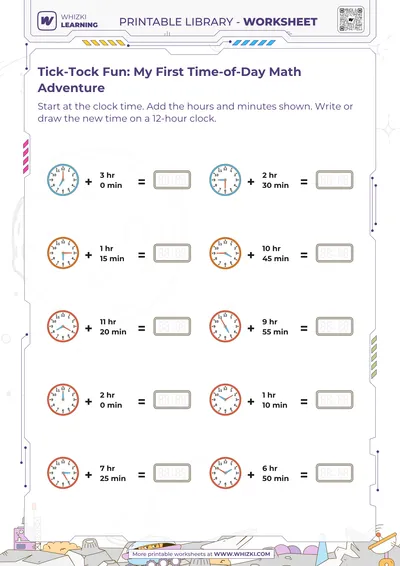
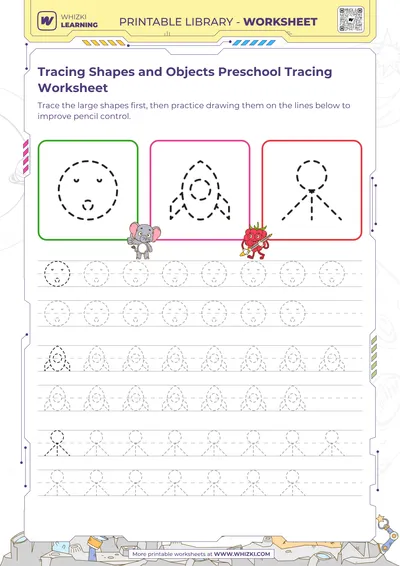
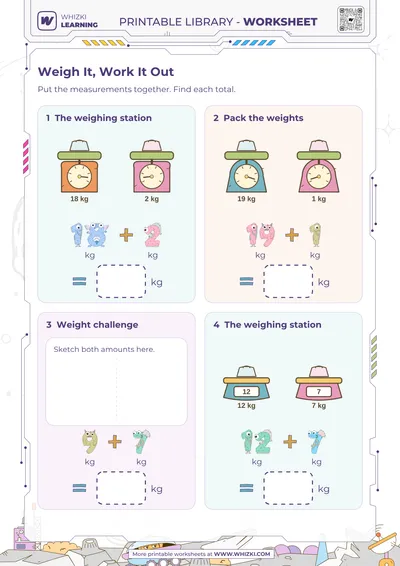
If a child wants a paper job, the Learning Hub has simple pages that can become a one-minute cover sketch, picture hunt, or return-day mark. Keep the printable optional, because the borrowed book is already carrying most of the learning.
Day 4, draw one memory from the book
The drawing moment gives the child a way to show understanding before writing is easy. Reggio and Montessori classrooms both value child-made representation, so a quick drawing of a character, setting, or favorite part can tell the adult what the child noticed.
The adult can set out one sheet of paper and two crayons, then keep the time window small. Occupational-therapy heuristics favor comfortable posture, a stable surface, and short fine-motor tasks, so a clipboard, floor cushion, or kitchen table may be better than a wobbly lap. A younger child may scribble and tell the story aloud, while an older child may add a beginning letter or invented spelling.
The drawing should not become a neatness lesson. Say, tell me about your picture, and write the child’s words at the bottom if the child wants adult help. The book can sit open nearby so the child can look back without being told to copy.
Day 5, return the book with a real job
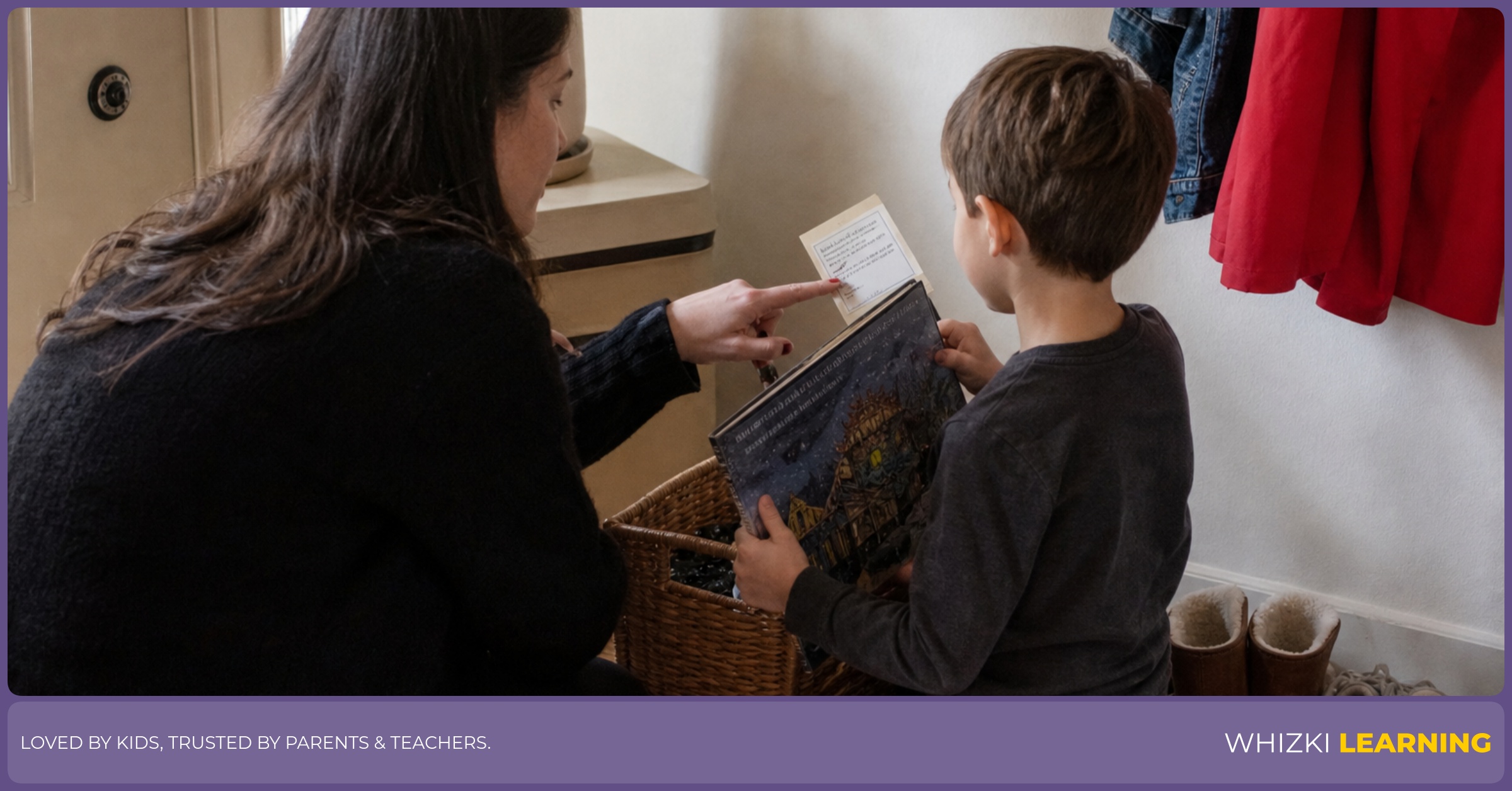
The return moment matters because borrowed books teach shared care. Montessori practical-life work often uses real tasks with real materials, so the child can check the due-date slip, place the book in the return basket, and carry the tote to the car, stroller, or library bin.
The adult can use return day for a calm review rather than a lecture. Ask the child to name one favorite page, one thing the family counted, and one place where the book rested during the week. A child who feels sad about returning a favorite title can take a photo of the cover, draw the cover, or add the title to a family wish list.
When the week goes sideways
The honest limit is that library routines collide with nap changes, work calls, late dinners, and missing shoes. NAEYC-aligned practice does not require a perfect week, so one rich reread and one responsible return can still count as family learning.
The library-week plan should flex for attention, language, and motor needs. A child with a short attention span may need one page and one picture talk, a child with speech delays may need pointing or gesture options, and a child with fine-motor frustration may need stickers or dictation instead of drawing. A parent or teacher can ask a pediatrician, speech-language pathologist, occupational therapist, or early-childhood specialist for support when daily routines feel unusually hard across many settings.
A borrowed book is small enough to fit in a tote, and the learning can stay just as small. Choose one book, give the book one job each day, and let the return trip finish the routine with care.
The best library week is not the busiest library week. The best library week is the one your child can remember, carry, talk about, and return with a little pride.