
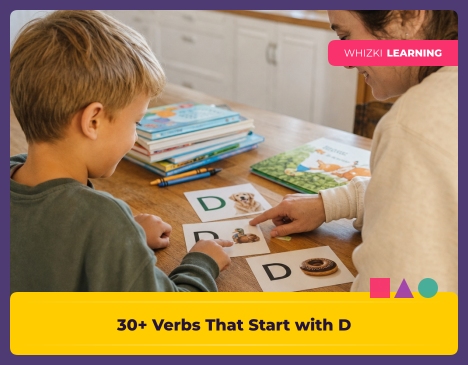
If your child can name a dog but freezes when asked what the dog can do, pick three D action words, say each word, and act each word with your whole body. A short movement round lowers the friction because preschool and kindergarten children learn verbs best through real motions, not long explanations. The goal is ten calm minutes, not a perfect lesson.
Reviewed by Whizki Editorial Team, Early Childhood Education Editors.
How to teach D verbs without a worksheet battle
Kindergarten D verbs work best when the letter sound, the mouth movement, and the body movement happen close together. The Orton-Gillingham approach calls that multisensory practice, and in real classrooms the routine can be very simple. Say the /d/ sound, tap one finger, then perform the action word once.
The D verb list in this guide stays with action words children can actually show with a body, toy, or household object. For naming words, use first words starting with D instead. For describing words, use describing words starting with D so nouns, adjectives, and verbs do not get mixed together.
NAEYC guidance reminds teachers to connect new words to meaningful play and daily routines. The letter D sound practice can sit beside our letter D learning page when a child is ready for more sound work. Keep the adult voice warm, keep the turn short, and stop while the child still wants one more round.
Print a quick vocabulary page from our sight-words printables and tape the page to the wall near the breakfast table. Point to one word during a normal routine, say the word together, and let the child show the action before the day gets busy.
Body action D verbs
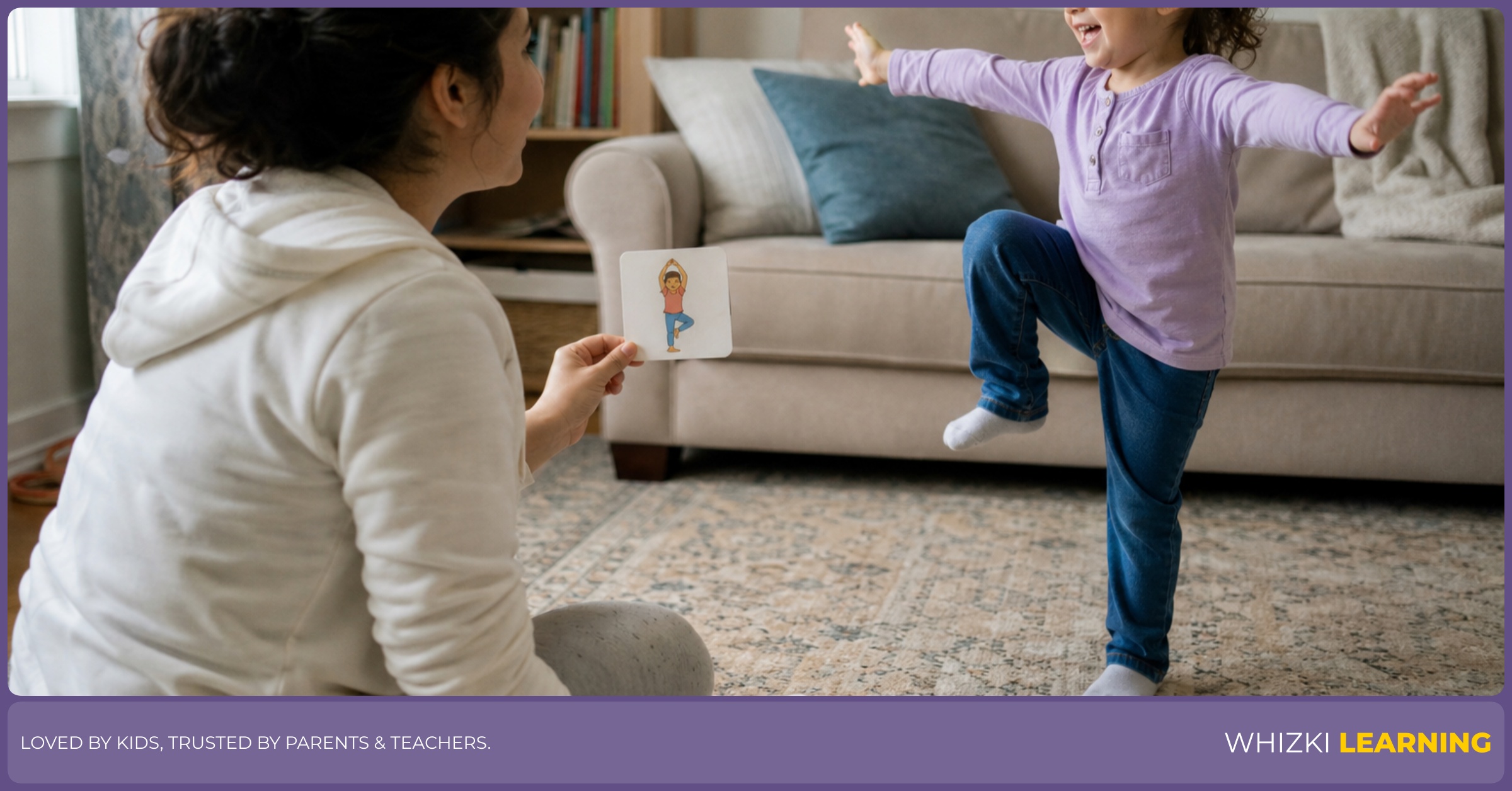
Body action verbs are the easiest D words to teach first because the child can feel the meaning right away. Occupational-therapy basics often start with big body movement before pencil work because large muscles help children organize attention and direction. A carpet square, hallway, or open kitchen spot is enough space.
Before any child reads the body list, say the word and model the movement once. The child can copy the movement, then say the word back. The body action practice should feel like a quick warm-up, not a test.
- Dance: Dance in one spot.
- Dash: Dash to the rug.
- Duck: Duck under the scarf.
- Dip: Dip your knees low.
- Dodge: Dodge the soft pillow.
- Dangle: Dangle your hands down.
- Drag: Drag one foot slowly.
- Drop: Drop to the floor.
- Doze: Doze on the couch.
- Drift: Drift across the room.
- Dab: Dab your elbow gently.
- Drum: Drum on your knees.
Household action D verbs
Household action verbs turn daily jobs into language practice without adding another lesson to the day. Montessori and Reggio classrooms both value real work with real materials because children learn vocabulary through purposeful hands. A sponge, towel, basket, or napkin can become a D verb prop.
The household list is useful during cleanup, snack, bath setup, or laundry. The adult can choose one action, show the motion, and give the child a safe turn. The word becomes easier to remember because the word belongs to a real family routine.
- Dust: Dust the low shelf.
- Dry: Dry the red cup.
- Dump: Dump socks in basket.
- Dress: Dress your teddy bear.
- Drain: Drain water from cup.
- Drape: Drape towel over chair.
- Deliver: Deliver napkins to Dad.
- Dampen: Dampen the blue cloth.
- Decorate: Decorate the paper bag.
- Detangle: Detangle the doll's hair.
- Display: Display art on fridge.
- Dunk: Dunk sponge in bucket.
Play action D verbs
Play action verbs belong with blocks, puppets, sand, toy cars, and art supplies. Reggio-inspired observation starts by noticing what the child already chooses during play, then adding language beside that interest. A child who loves trucks may learn a D verb faster with a toy road than with a flashcard.
The play list gives parents and teachers quick phrases to say while children are already busy. Say the verb, pause, and let the child try the action. Keep the sentence short so the verb remains the main word the child hears.
- Draw: Draw a big circle.
- Doodle: Doodle tiny curly lines.
- Dig: Dig in the sandbox.
- Drive: Drive the toy truck.
- Deal: Deal cards to friends.
- Design: Design a block bridge.
- Defend: Defend the pillow castle.
- Discover: Discover a hidden shell.
- Direct: Direct the puppet show.
- Drill: Drill pretend wooden boards.
- Dock: Dock the toy boat.
- Dribble: Dribble the orange ball.
A D-verb charades game and tracing tip
The D-verb charades game gives children a reason to listen, move, and talk. Speech-language pathology practice often pairs a word with a gesture because the gesture gives the child another path to the meaning. Use only six cards at first so the game stays light.
The adult can write one D verb on each small paper card before play begins. Picture clues are fine for younger preschoolers, but the adult should still say the printed word clearly. A mixed-age group can take turns being the actor, guesser, and helper.
- Choose six cards from one group and place the cards face down.
- A child picks one card while the adult whispers the word.
- The child acts without talking while everyone guesses the D action.
- The actor checks the card, says the word, and tries the motion once more.
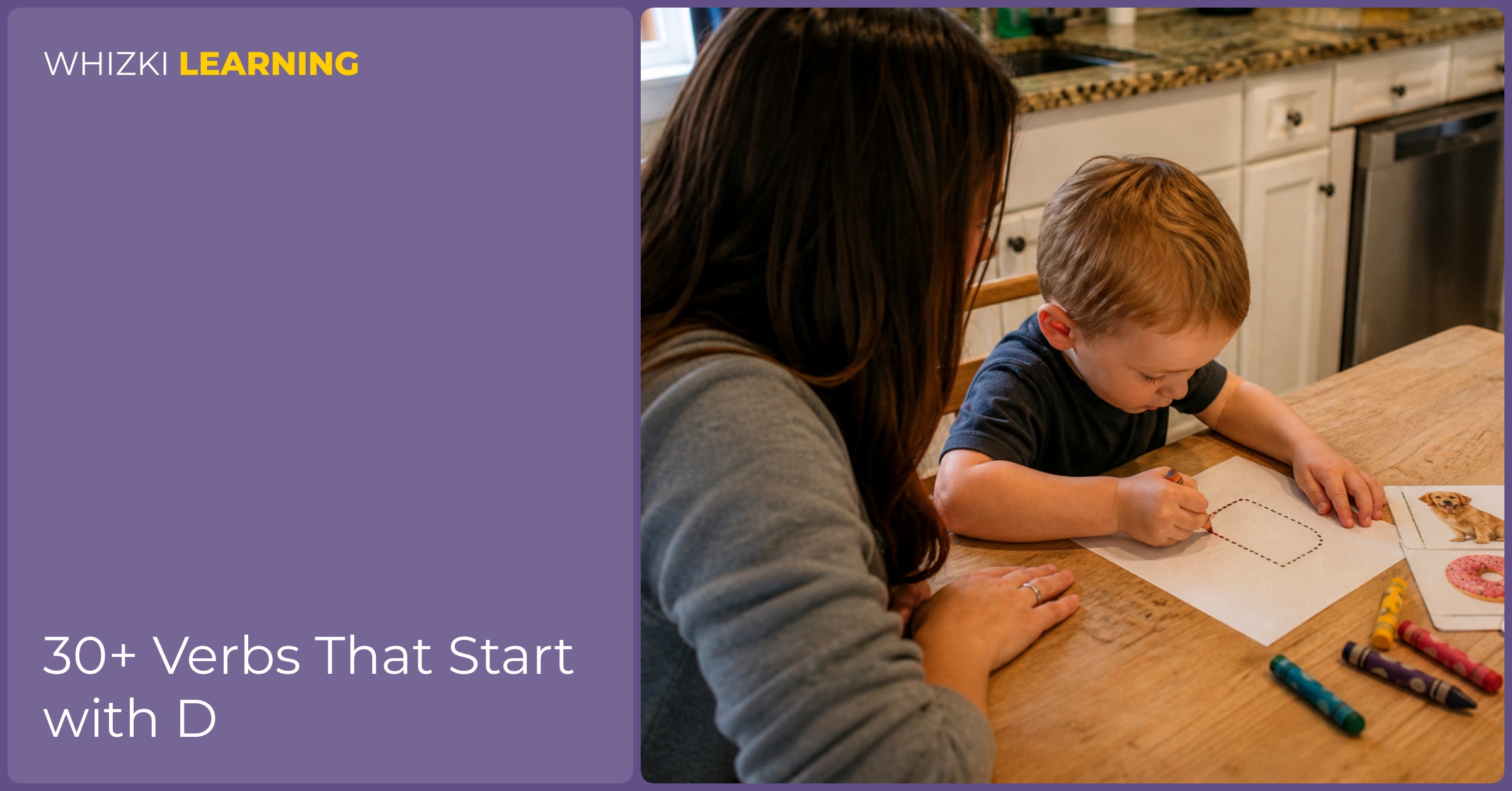
The trace-the-word tip is to pair one spoken sound with one slow finger path. Occupational-therapy handwriting basics favor large, simple strokes before tiny pencil work, so start with a finger on a page, tray, or placemat. Say /d/, trace the first letter, then trace the whole word with a crayon when the child is ready.
D action words do not need a long lesson plan. Choose one body word, one household word, and one play word today, then let the child move, say, and trace just enough to end with a grin.