When a child can sing the alphabet song but gets stuck naming an E action word, pick three verbs from the list below, act each one out, and save the pencil work for after movement. Early readers need a word to feel like something real, not just marks on a page. A small routine at the kitchen table can turn letter E practice into a quick body-and-language game.
Reviewed by Whizki Editorial Team, Early Childhood Education Editors.
How E action words help early readers
Letter E practice works best when a child hears the sound, says the word, and moves the body. The Orton-Gillingham approach uses that kind of multisensory loop because young children remember a word more easily when speech, hearing, touch, and movement work together.
The letter E can stand for the short sound in egg and the long sound in eat, so keep the first lesson simple and concrete. For a sound-and-letter warm-up before the verb list, visit our letter E learning page and say one sound at a time with your child.
This guide stays with verbs because action words are easiest to act out with children ages 3-7. If your child needs objects first, start with first words starting with E; if your child is ready for describing words, use describing words starting with E on another day.
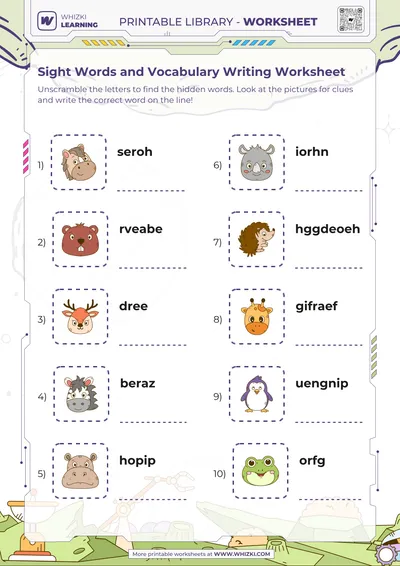
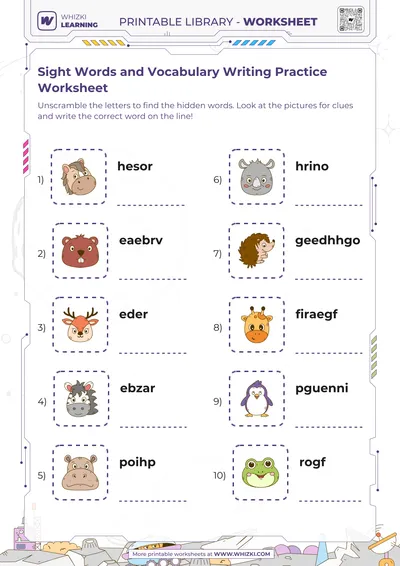
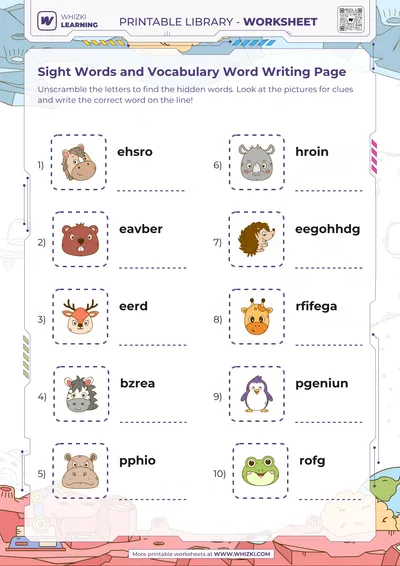
Print a matching action-word page from our sight-words printables and tape the sheet near the breakfast table or classroom door. A visible printable makes the routine easy: point to a verb, act the word, trace the word, and move on.
Body actions that start with E
Body verbs are the easiest place to begin because children can feel the word right away. Occupational-therapy basics often use heavy work, crossing the midline, and big movement before fine-motor tasks, so a quick act-it-out round can help a child settle before tracing.
Say one verb, model the action, and invite the child to copy the movement. Keep the pace playful and short because young children learn more from three good turns than from a long drill with tired hands.
Body verbs
- Eat: Eat a crunchy carrot.
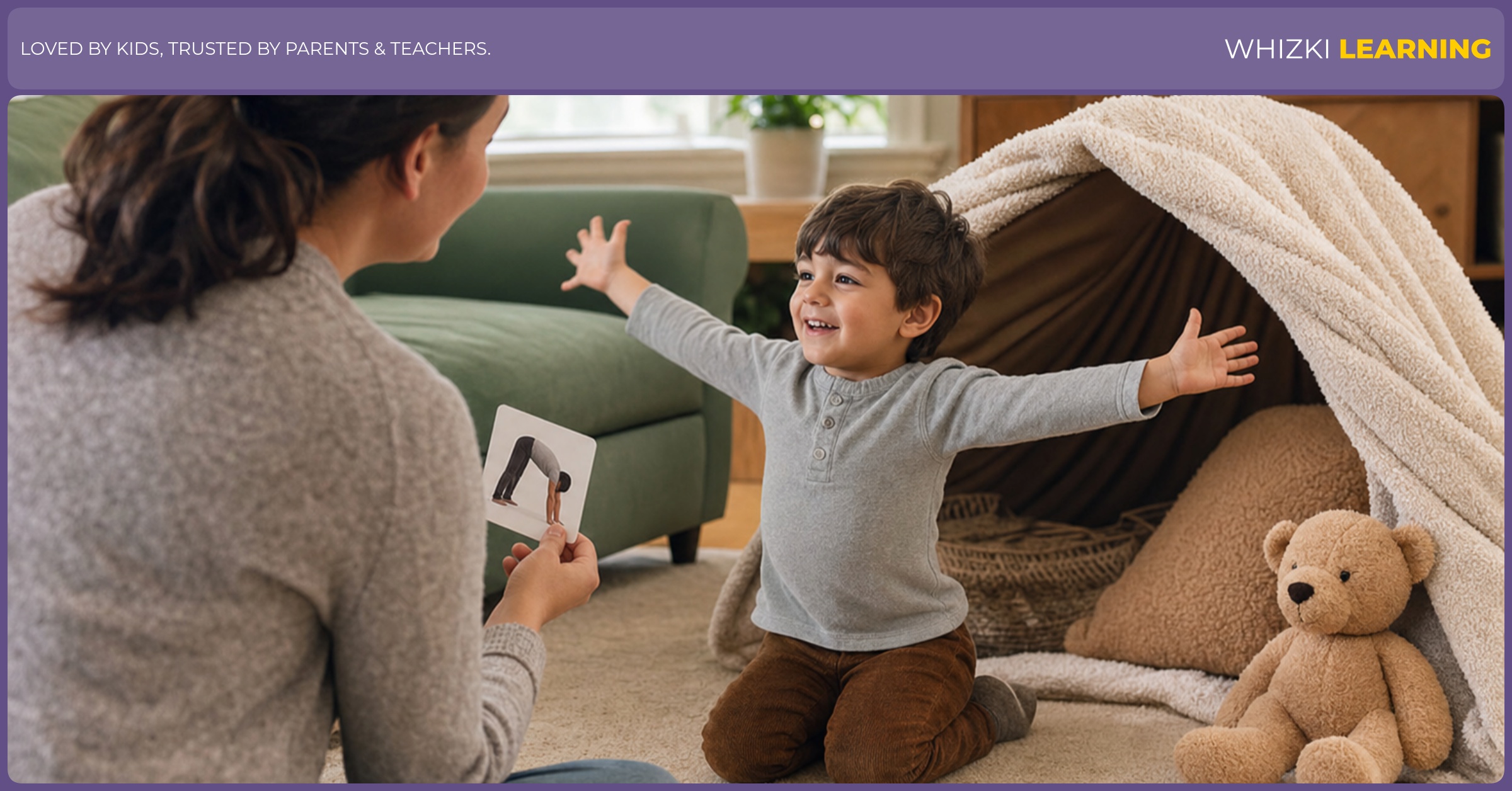
- Enter: Enter the cozy tent.
- Exit: Exit through the doorway.
- Exhale: Exhale like a dragon.
- Exercise: Exercise with tiny hops.
- Extend: Extend both arms wide.
- Edge: Edge along the tape.
- Ease: Ease onto the cushion.
- Escape: Escape from blanket cave.
- Embrace: Embrace your stuffed bear.
- Escort: Escort teddy to bed.
- Emerge: Emerge from the tunnel.
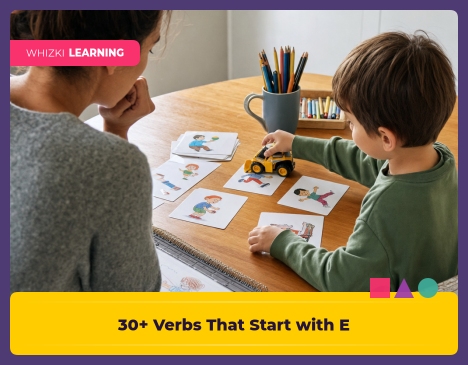
The body list can become a two-minute transition between play and reading. A kindergarten teacher might choose three verbs, place picture cards on the rug, and let each child act one word before sitting down with a book.
Household actions that start with E
Household verbs make vocabulary feel useful because the child hears the word during a real job. Montessori practice and NAEYC guidance both value child-sized participation, which means a small task like empty or erase can build language without turning home life into a worksheet hour.
Choose one safe chore and say the verb before, during, and after the action. The adult can say, “You empty the basket,” then pause long enough for the child to connect the spoken word with the hand motion.
Household verbs
- Empty: Empty the toy basket.
- Erase: Erase the chalk line.
- Exchange: Exchange two clean towels.
- Enclose: Enclose the note carefully.
- Earn: Earn one helper sticker.
- End: End the cleanup song.
- Enjoy: Enjoy a warm muffin.
- Equip: Equip your little backpack.
The household list works well during snack, cleanup, or backpack time because the materials already sit nearby. A parent does not need a special lesson plan, only a clear word, a clear action, and a little patience when the sock drawer takes longer than expected.
Play actions that start with E
Play verbs are powerful because pretend play gives children a reason to use new words. Reggio-inspired teaching treats play as a language-rich lab, so a block tower, blanket cave, or puppet can carry a lot of vocabulary practice.
Speech-language practice often pairs a model sentence with a child’s own turn. The adult can say the sentence first, then the child can repeat the action in a silly voice, a whisper, or a puppet voice.
Play verbs
- Echo: Echo my silly sound.
- Explore: Explore the pillow cave.
- Erupt: Erupt like a volcano.
- Excavate: Excavate buried toy dinosaurs.
- Entertain: Entertain the sock puppet.
- Experiment: Experiment with soft blocks.
- Exclaim: Exclaim a happy hooray.
- Express: Express a sleepy face.
- Encircle: Encircle the red block.
- Expand: Expand the rubber band.
- Eject: Eject the paper ball.
- Embark: Embark on pirate ship.
- Enact: Enact a bear story.
- Evade: Evade the rolling ball.
The play list gives preschool and kindergarten children permission to be loud, quiet, tiny, giant, slow, or silly. A caregiver can still keep the game calm by naming the space, naming the rule, and naming the next verb before movement begins.
Charades game and tracing tip
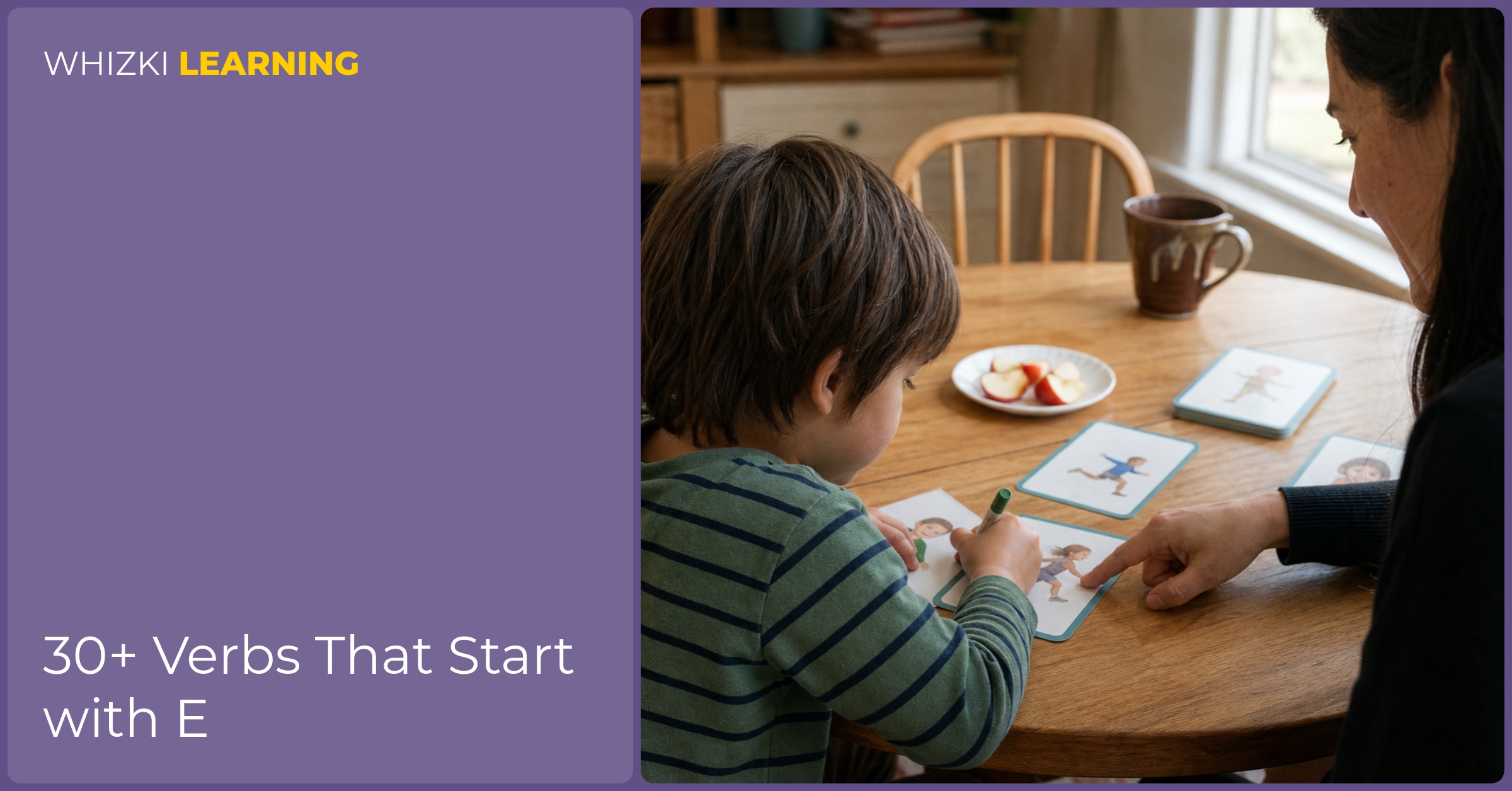
A simple charades game helps a child connect meaning, movement, and print before formal reading. The Orton-Gillingham sequence of hear, say, tap, trace, and read fits nicely with action words because the child can act first and trace after the word has meaning.
Write six E verbs on small cards, using only words from one category at a time. Place the cards face down, let the child choose a card, whisper the word to the actor, and invite everyone else to guess the action.
- Choose three easy cards for a first round.
- Act the word without talking.
- Say the word after guessing.
- Trace the word with one finger.
- Try a faster round later.
The trace-the-word tip is simple: have the child trace the first letter E from top line to bottom line, then trace the whole word while saying the action. Occupational-therapy pencil-grip basics remind adults to keep the wrist relaxed, the paper steady, and the practice short enough that the child finishes with a good hand feeling.
E verbs do not need to become a giant vocabulary lesson. One small routine, act the word, say the word, trace the word, gives young children a clear path from movement to print.
Parents and teachers can repeat the same three verbs for several days before adding new words. Repetition can feel boring to adults, but repetition gives children the confidence to read, write, and use the word without guessing.