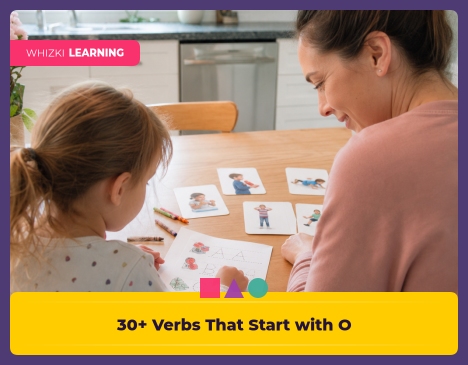
When a child is wiggly, tired, or finished with another worksheet, verbs that start with O can still work if you say one word, act the word together, and let the pencil wait. Next, choose three O verbs from the lists below and act each word before asking your child to read or trace the word. A short movement break can turn letter practice into a game that still builds print awareness.
Reviewed by Whizki Editorial Team, Early Childhood Education Editors.
What counts as an O action word?
An O action word is a verb that names something a child can do, copy, or pretend. NAEYC guidance reminds early-childhood teachers to connect new words with real experiences, so the best O verbs for ages 3-7 are words children can move, touch, or act out.
This guide stays with verbs, not naming words or describing words. If your child wants object names, visit first words starting with O, and if your child is ready for qualities like old or orange, use describing words starting with O.
How to teach O verbs with movement
The Orton-Gillingham approach often pairs sound, sight, movement, and speech, and O verbs fit that routine beautifully. Say the word, clap the syllables if the word is long, act the word, and then point to the printed word so the child links the action with the letters.
The letter O can make a short sound in words like ox and a long sound in words like open, so young readers need plenty of calm exposure. For letter-sound practice alongside these action words, keep our letter O learning page nearby and return to the sound before reading the verb list.
Print one O action-word page from our sight-words printables and tape the page near the snack table, block shelf, or hallway. During cleanup or transition time, ask your child to pick one verb, act the sentence, and trace the word with a finger before moving on.
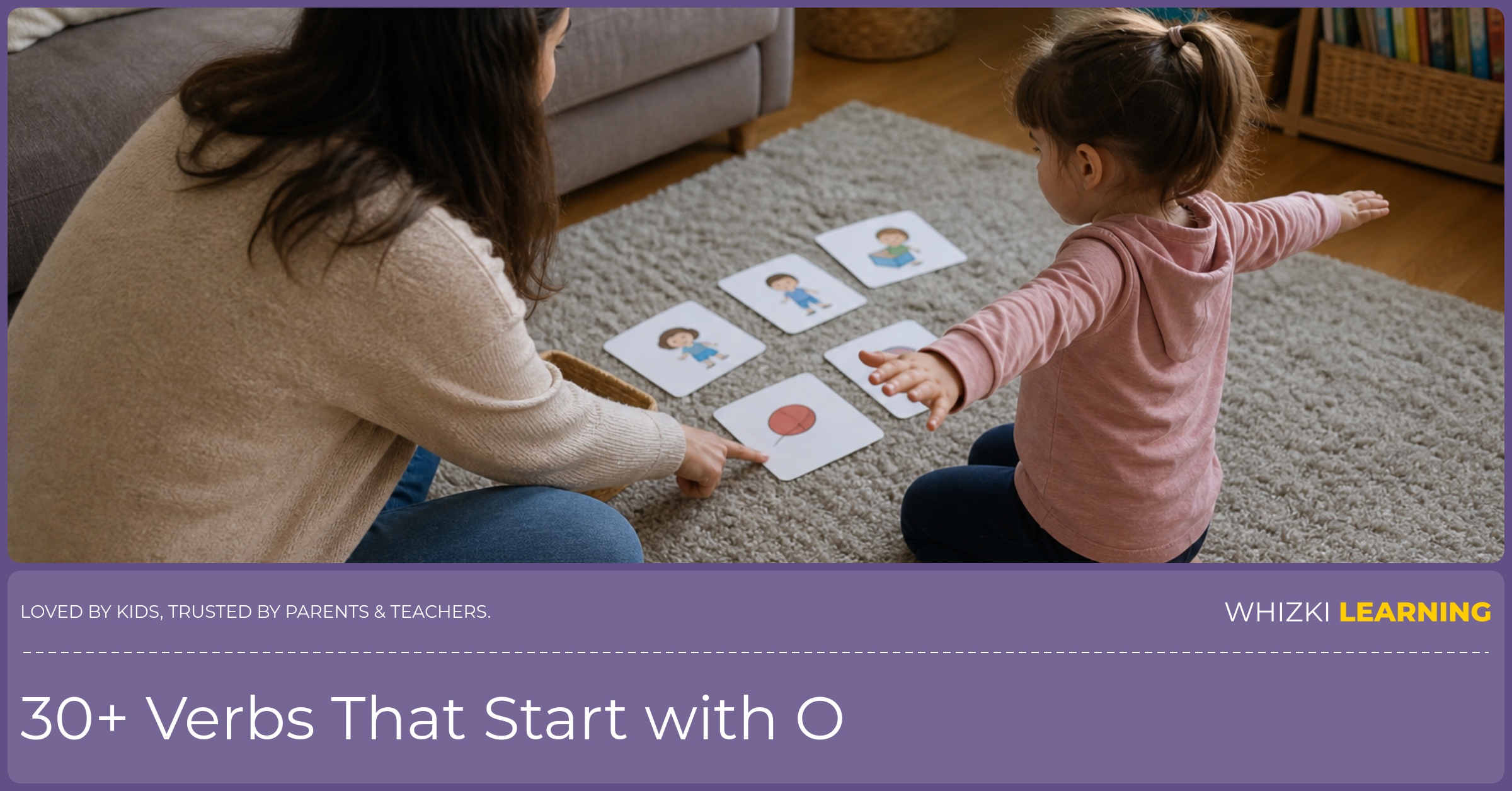
Body actions that start with O
Body-action verbs are usually the easiest O verbs to teach because the child can feel the word right away. Occupational-therapy basics use big-body movement before fine-motor work because children often write and trace better after safe, purposeful movement.
Kindergarten teachers can use these verbs during line-up, circle time, or a two-minute movement break. Parents can read one sentence at a time and invite the child to act the sentence exactly as spoken.
- Open: Open your arms wide.
- Offer: Offer a soft high-five.
- Outstretch: Outstretch both sleepy arms.
- Overstep: Overstep the blue tape.
- Overreach: Overreach for the scarf.
- Overbend: Overbend like a noodle.
- Orbit: Orbit the chair slowly.
- Ooh: Ooh at the bubbles.
- Ouch: Ouch, then rub your knee.
- Outpace: Outpace me to the rug.
- Outjump: Outjump the paper stripe.
- Overbalance: Overbalance, then stand tall.
Household actions that start with O
Household verbs work well because daily routines already carry meaning for children. Montessori and Reggio-inspired classrooms value real tools, real order, and careful observation, so these words can fit naturally into snack, cleanup, and helping jobs.
Adult guidance matters for household verbs because some actions need supervision or pretend materials. A child can oil a toy hinge with an empty dropper, operate a toy vacuum, or overfill a pretend basket without creating a real mess.
- Organize: Organize the spoon drawer.
- Order: Order socks by color.
- Oil: Oil the squeaky hinge.
- Operate: Operate the toy vacuum.
- Offload: Offload blocks from basket.
- Overturn: Overturn the empty cup.
- Overlap: Overlap two clean napkins.
- Orient: Orient the picture upright.
- Observe: Observe the timer ring.
- Obey: Obey the cleanup song.
- Omit: Omit the broken crayon.
- Overfill: Overfill the pretend basket.
Play actions that start with O
Play verbs help children use O words in pretend scenes, construction play, and art. Speech-language pathology practice often builds vocabulary through short, repeatable phrases, so each sentence below is brief enough for a child to copy and act.
Play-action verbs also give teachers a quick way to hear whether a child understands the word. Ask the child to act the sentence first, and then ask the child to tell you which O word matched the action.
- Outline: Outline a giant O.
- Ornament: Ornament the craft crown.
- Outfit: Outfit the teddy bear.
- Outwit: Outwit me in peekaboo.
- Overthrow: Overthrow the foam tower.
- Overshoot: Overshoot the target hoop.
- Overtake: Overtake the toy train.
- Occupy: Occupy the pillow fort.
- Oppose: Oppose with gentle thumbs.
- Outrace: Outrace the rolling ball.
- Outclimb: Outclimb the play mat.
- Oar: Oar the cardboard boat.
- Outdance: Outdance your stuffed bear.
- Ooze: Ooze slime through fingers.
Act-it-out charades and tracing tip
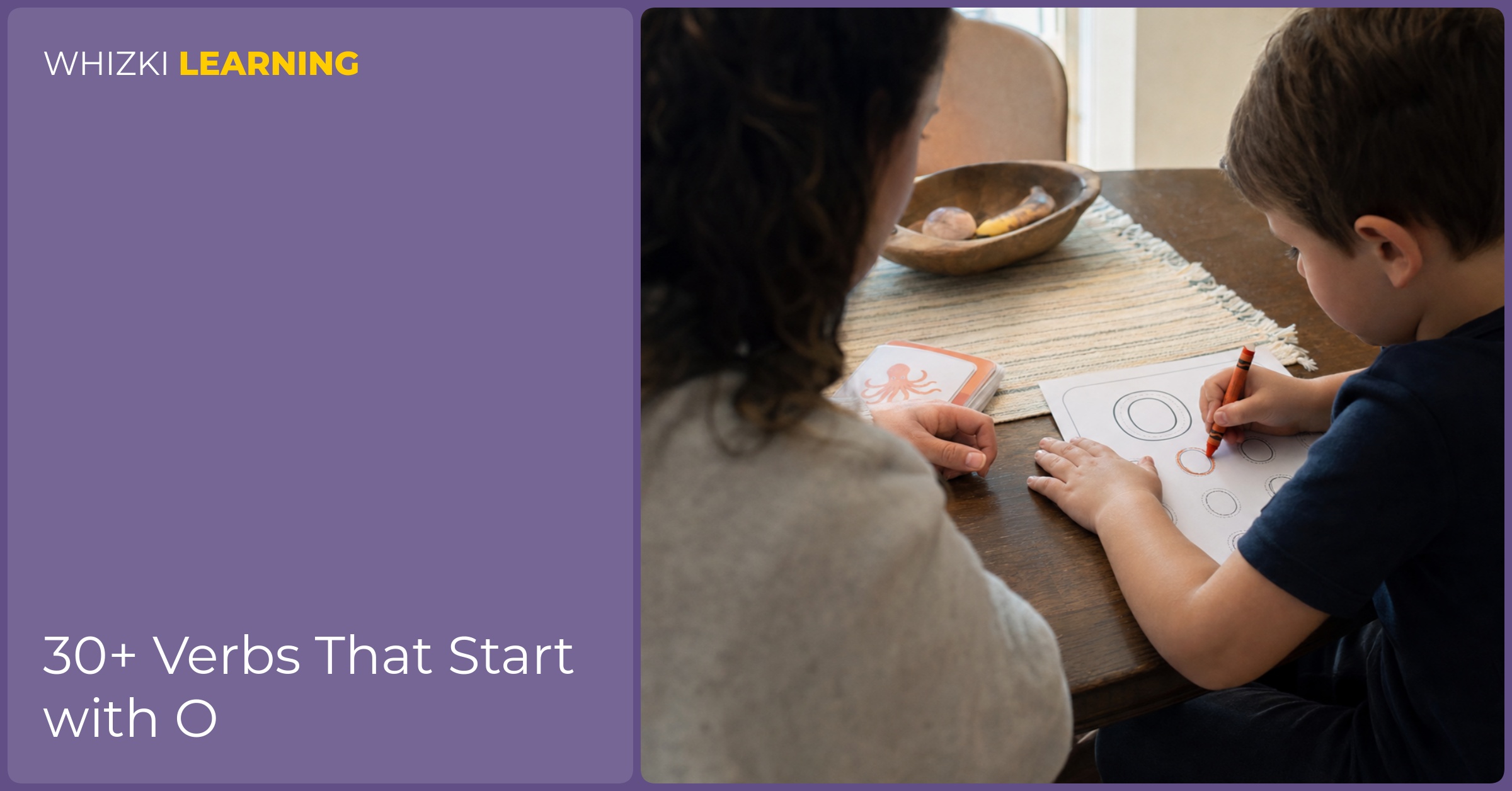
An act-it-out game gives young readers a reason to listen closely and move with purpose. Orton-Gillingham routines support saying, seeing, and doing the word, and occupational-therapy basics remind adults to keep the movement safe, slow enough, and matched to the child’s body.
Trace-the-word tip: write one O verb in large lowercase letters, place the paper on a wall or easel, and let the child trace the word with two fingers before using a crayon. Vertical tracing often helps preschool and kindergarten hands because the wrist and shoulder can work together instead of forcing tiny pencil control too soon.
- Pick six O verb cards from the lists above.
- Place the cards face down in a small stack.
- Invite the child to draw one card and act without talking.
- Ask the watcher to say the O verb and repeat the action.
- Finish by tracing the winning word three slow times.
O verbs can feel tricky at first because many common action words begin with other letters, but a small set is enough for real practice. Start with body actions, add household helpers, and then bring the play verbs into blocks, dolls, art, or pretend cooking.
The best next step is simple: choose three verbs, act three tiny sentences, and trace one word before the child gets tired. Short, happy practice repeated often usually beats a long lesson that everyone has to push through.