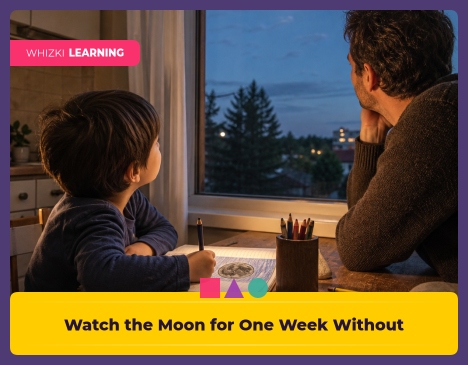
If bedtime already has pajamas, water cups, and one more story competing for attention, keep the moon watch tiny: tonight, choose one window or porch spot, look for thirty seconds, and draw only what your child can see. A one-week record gives a young child a real reason to notice the sky without asking for perfect phase names. The family goal is a repeatable habit, not a science fair display.
Reviewed by Whizki Editorial Team, Early Childhood Education Editors.
Make a seven-night moon field note
A moon field note is a small record made from direct observation. Reggio-inspired teaching values careful looking, child language, and revisiting a record later, which fits a seven-night sky notebook beautifully for ages 3 to 7.
The best viewing time is a time your family can repeat most nights, such as after dinner, before bath, or right before pajamas. A consistent time helps children compare one night with the next, though real family life may require a weekend afternoon check when the Moon is visible in daylight.
Keep the moon watch under five minutes for preschoolers and closer to ten minutes for older kindergarten children who want more detail. If the Moon sits behind a roofline or tree, record the location anyway because place is part of the observation.
Set up the page and viewing spot
The moon page needs plain paper, a pencil or crayon, a clipboard or book for support, and one spot where your child can safely stand. Occupational therapy basics remind teachers and parents that young hands often work better with thicker crayons, short pencils, and a stable surface than with tiny writing tools.
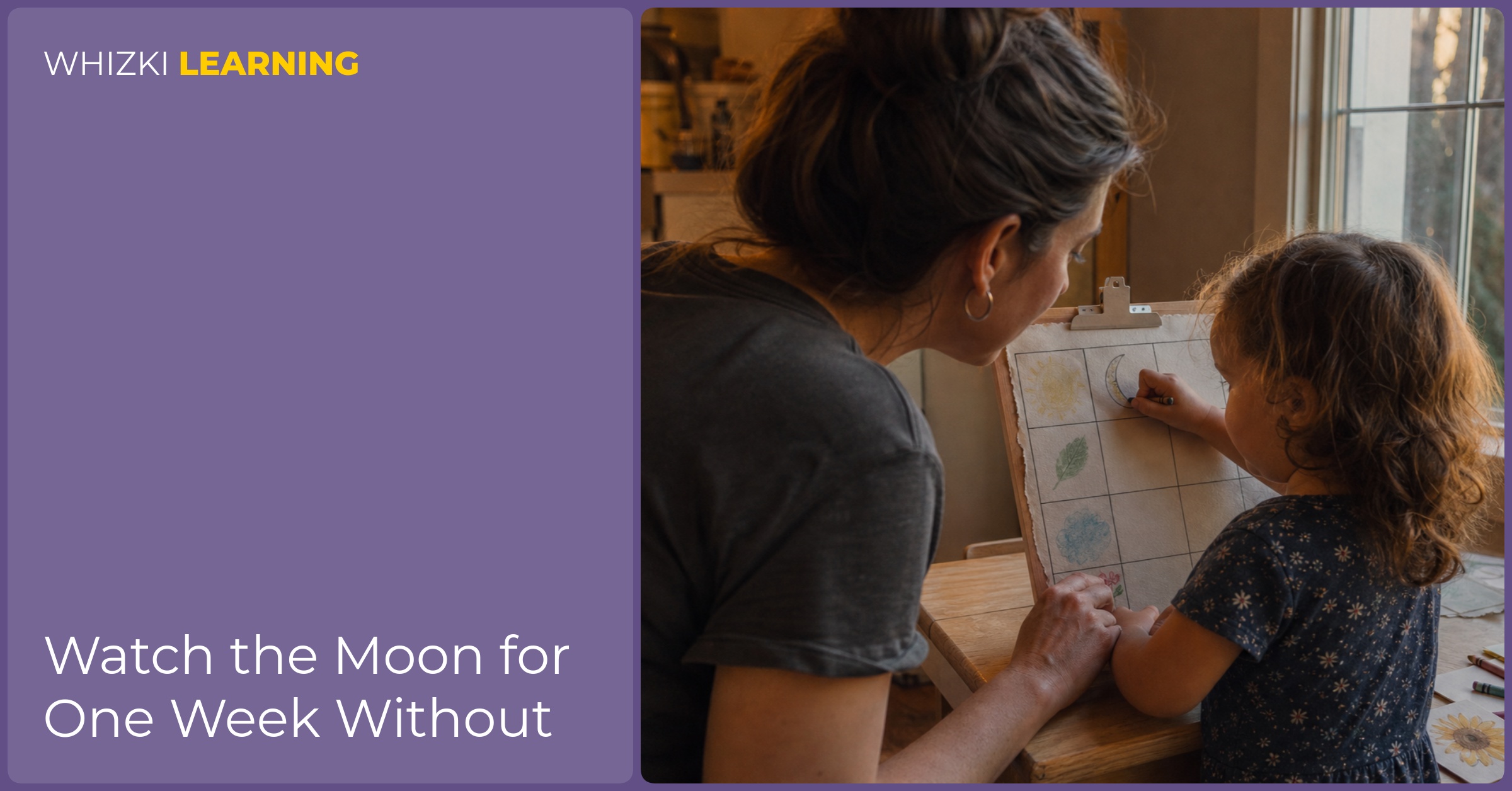
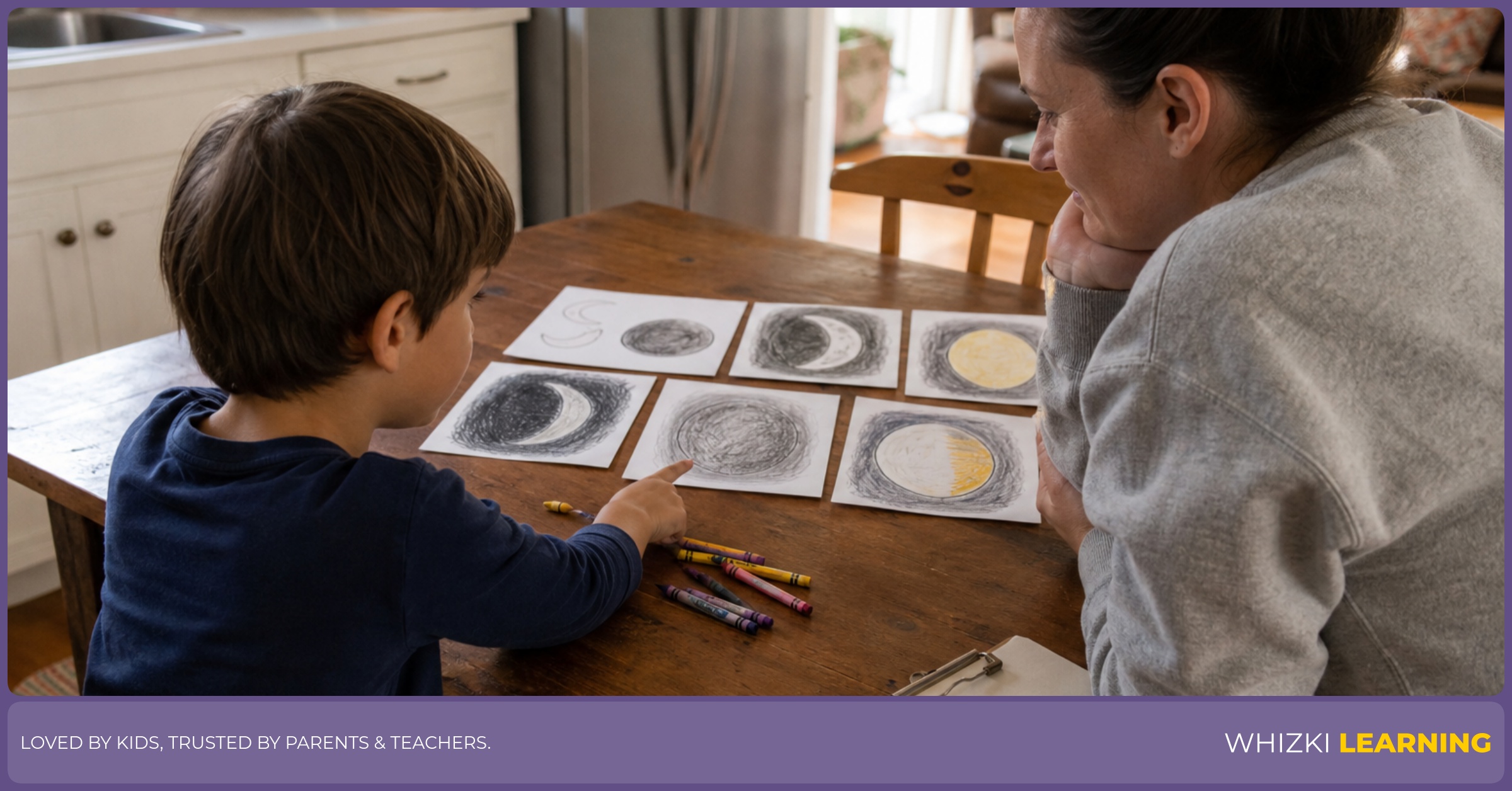
Draw seven boxes on the page before the first night, and write one date at the top of each box. For ages 3 and 4, an adult can draw a big circle and invite the child to shade the visible part, while ages 5 to 7 can sketch the outline and add one location mark such as window left, above tree, or near roof.
The location mark can be simple because early childhood science grows from repeated noticing. A child can draw a house edge, a tree line, or an arrow showing where the Moon appeared in the sky from the same viewing spot.
Handle clouds and missed nights
A cloudy night belongs in the record because weather is a real part of sky watching. NAEYC guidance supports honoring process over perfect products, and a cloud mark teaches children that scientists record limits instead of pretending every observation was clear.
If the sky is covered, help your child draw a cloud, add the words no Moon seen, and move on with the night. If your family forgets a night, leave the box blank or write missed, because a skipped box tells the truth and keeps the notebook useful.
A weather gap should not be treated as failure. A one-week moon record is only one piece of the Moon’s longer cycle, which takes about a month to return to a similar visible shape.
For families who like a ready place to jot small observations, the family learning planner can hold a moon-watch page beside reading, art, and outdoor notes. The printable can support the routine, but the best learning still comes from standing together, looking up, and talking about the real sky.
Compare the week without quizzing
Comparison is the learning heart of the moon watch. The Orton-Gillingham approach reminds me to connect spoken language with what a child can see, touch, and mark, so moon words should come from the drawings rather than a memorized chart.
Use simple comparison language such as thinner, wider, higher, lower, brighter, or harder to see. A child may say banana moon, smile moon, half moon, or nearly round moon, and those everyday descriptions are a healthy bridge toward later vocabulary.
Invite your child to place the seven boxes in order and look for one change across the row. Kindergarten children may notice the shape growing or shrinking, while preschool children may notice that the Moon moved from one part of the window view to another.
Connect the week to a bigger cycle
A one-week moon journal shows a slice, not the whole lunar pattern. Montessori observation habits often begin with the real object first, then naming later, so the child’s own sketches are enough for a first pass.
The Moon changes visible shape over about 29 and a half days, which is longer than most young children can hold in memory without repeated records. Tell your child, “Our week shows part of the story, and the Moon keeps changing after our page is full.”
If your child enjoyed building and observing with the previous world lab guide, the moon watch uses the same early science habit: look closely, make a simple mark, and compare later. For more off-screen observation ideas, the Learning Hub can help you connect sky notes with nature, language, and family routines.
The moon watch can stay simple enough for a tired Tuesday. One clear drawing, one cloudy box, and one honest missed night still give your child a real record of the world. When the week ends, save the page and try again another month if curiosity is still warm.