
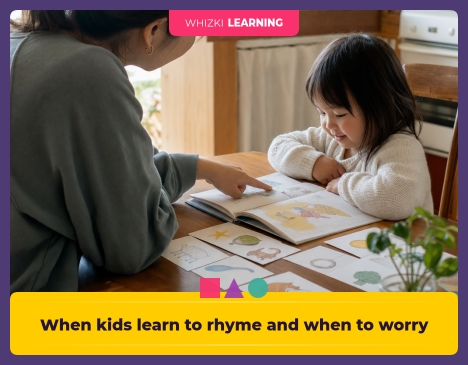
If your child cannot think of a word that rhymes with cat while every other kid at circle time seems to shout one out, take a breath and try one playful rhyme together tonight instead of turning dinner into a quiz. Rhyming often grows unevenly between ages 3 and 5, and quiet watching can be part of learning. A good next step is to read a rhyming picture book, pause before the second rhyming word, and let your child hear the match without pressure to perform.
Reviewed by Whizki Editorial Team, Early Childhood Education Editors.
The usual 3-to-5 rhyming timeline
The rhyming timeline for ages 3 to 5 is a range, not a race. Many 3-year-olds enjoy silly rhyming books and repeated chants before the child can produce a rhyme on request. NAEYC guidance reminds early-childhood educators to watch development over time, because young children often show a skill in play before showing the same skill when an adult asks directly.
A 4-year-old may begin to notice that moon and spoon have the same ending sound, especially when the words are in a song or a familiar story. A 4-year-old may still give a meaning match, such as fork for spoon, because meaning is easier to grab than sound at first. The adult response can be simple: “Fork goes with spoon. Spoon also rhymes with moon because the ending sound is the same.”
A 5-year-old in pre-K or kindergarten usually gets more steady with rhyming, although some children still need many models. The kindergarten teacher may check whether a child can hear a rhyme, choose a rhyme from two choices, and later make a rhyme. A 6- or 7-year-old who still never hears rhymes may need closer observation, especially if letter sounds and beginning sounds are also hard.
Why rhyming helps reading
Rhyming is a pre-reading skill because rhyming teaches children to listen to the sound structure of words. The Orton-Gillingham approach builds reading from speech sounds upward, and rhyming gives children a friendly way to notice endings before print becomes the main task. Rhyming is not a party trick, because a child who hears that hop and pop share a sound is starting to compare spoken words by ear.
Phonemic awareness is the bigger umbrella for hearing and working with sounds in spoken words, and rhyming is one early doorway into that skill. Parents who want the plain version can read phonemic awareness explained before worrying about worksheets. For quick examples during play, our rhyming word lists can help adults choose simple pairs without scrambling for ideas.
What to try when rhymes do not click
The best home plan is expose, do not test. Speech-language pathology practice often starts with modeling, because a child learns the sound pattern through many clean examples before a correct answer appears. Instead of asking “What rhymes with log?” ten times, say “log, frog, jog” with a smile and move on.
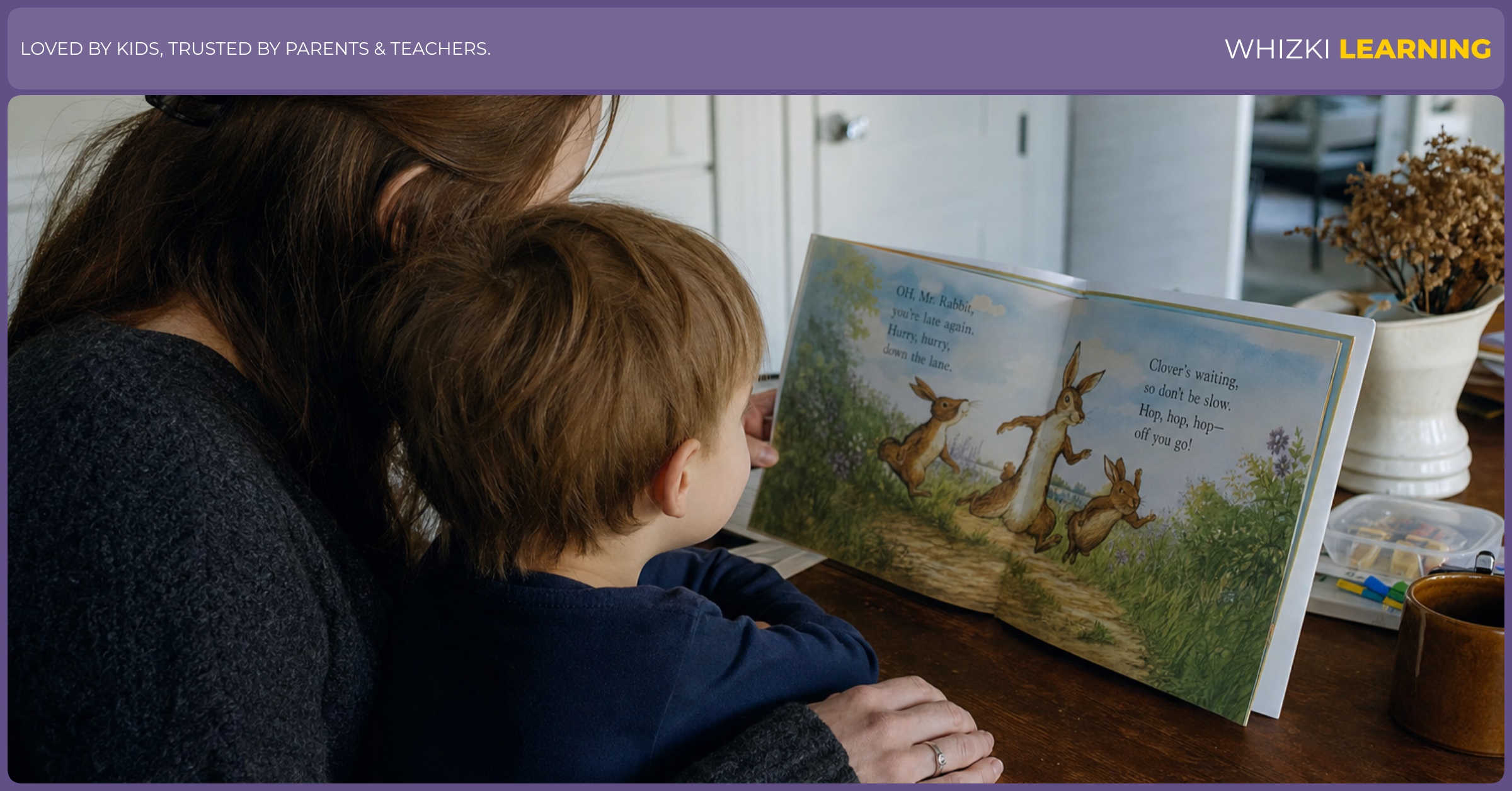
A read-aloud routine can carry most of the work. Choose one rhyming book, read the same page several nights, and lightly stretch the rhyming words with your voice. The pause before the rhyme can be short, because a long silence can make the moment feel like a spelling test.
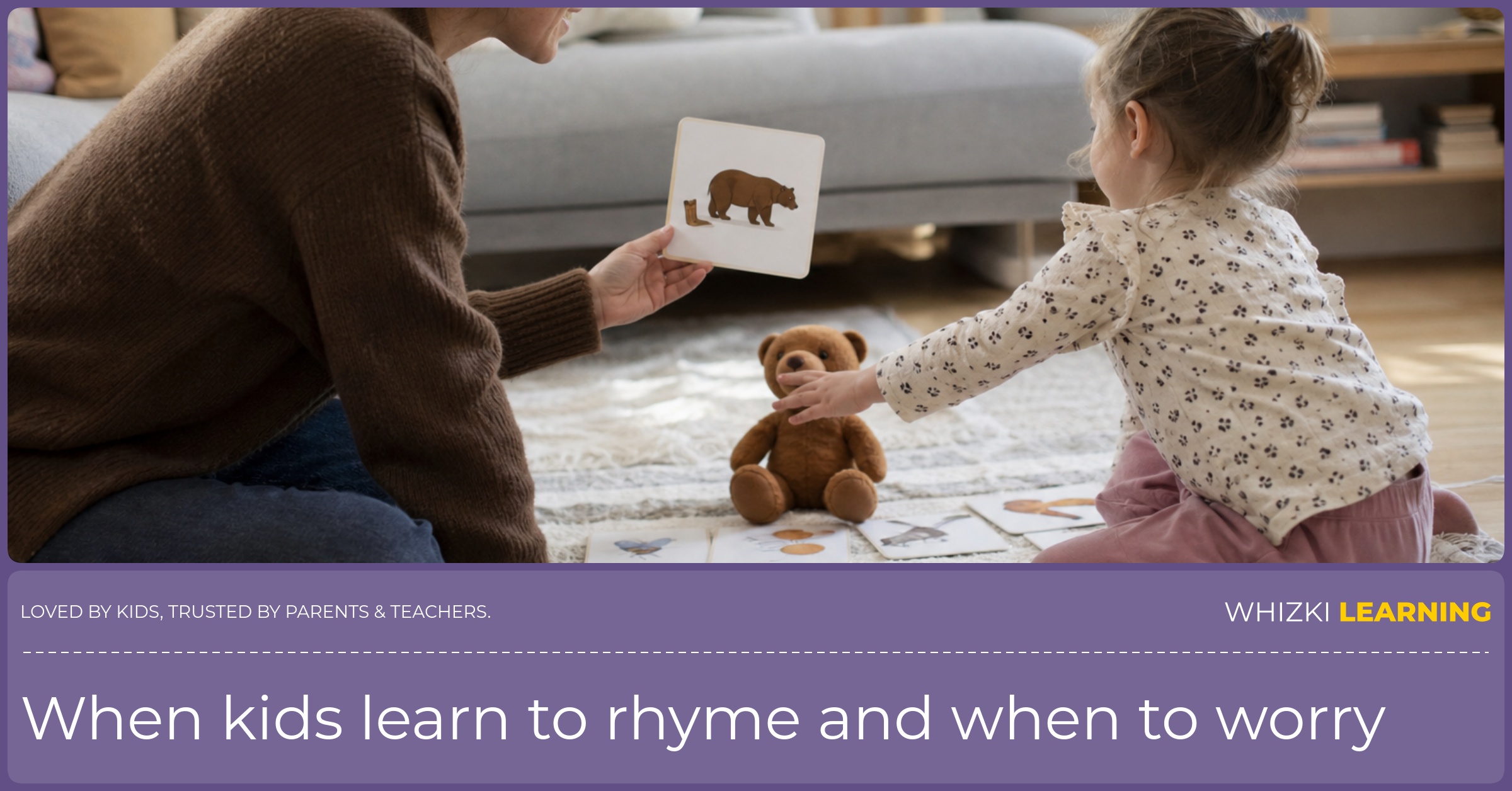
A play routine can make rhyming physical and funny. Put a toy on your head and say, “bear on hair,” or roll a ball back and forth while saying two words that sound alike at the end. A Reggio-inspired lens helps adults treat the child’s grin, imitation, and invented nonsense word as useful evidence of learning, not as mistakes to correct.
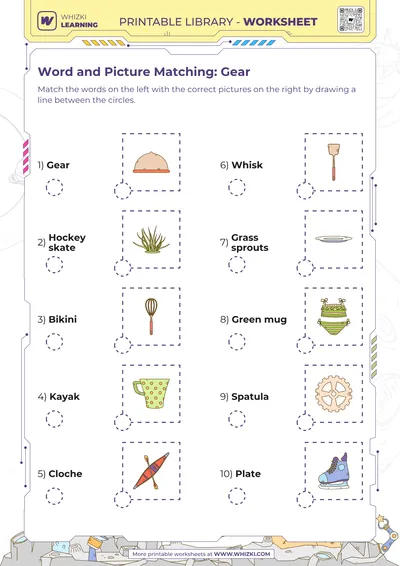
For a low-pressure table activity, the printable library has simple early-literacy pages that pair well with read-aloud time. Choose one page, use crayons or small counters, and stop while your child still wants another turn.
How to make practice easier for busy bodies
Rhyming practice works better when the body has a job. Occupational-therapy basics tell educators to match a young child’s attention to movement, touch, and posture before expecting long verbal focus. A child can clap for each rhyming pair, jump when two words match, or tap the table while listening to a short chant.
A pencil task is not required for a child to learn rhyming. Finger play, blocks, toy animals, bath foam, and snack talk can all carry sound play without adding fine-motor strain. Montessori-style practice also favors one clear skill at a time, so the adult can keep the goal on hearing the ending sound rather than naming letters, writing words, and sitting still all at once.
When to mention rhyming to a teacher
A parent should mention rhyming to the preschool teacher or kindergarten teacher when the child rarely notices rhyme after many weeks of playful exposure. The conversation can be calm and specific: “My child loves stories, but rhyming words still do not seem to sound alike to my child.” Teachers can compare the concern with classroom observation, which is exactly the kind of practical information NAEYC encourages families and educators to share.
A teacher note is especially useful when rhyming difficulty travels with other sound-awareness struggles. The teacher may notice trouble hearing the first sound in a name, clapping syllables, remembering nursery rhymes, or connecting a few letter sounds. Speech-language pathologists and reading specialists often look at the whole sound-awareness picture rather than one missed rhyme.
A parent does not need to wait for panic before asking. A Reggio-style observation note can include what the child enjoys, what the adult tried, and what the child did next. The teacher can suggest classroom-aligned practice or recommend a screening if the pattern is still present around kindergarten age and is getting in the way of early reading work.
Rhyming grows through warm repetition, silly language, and adults who keep the pressure low. For more calm literacy ideas you can use at the kitchen table, join our weekly newsletter.