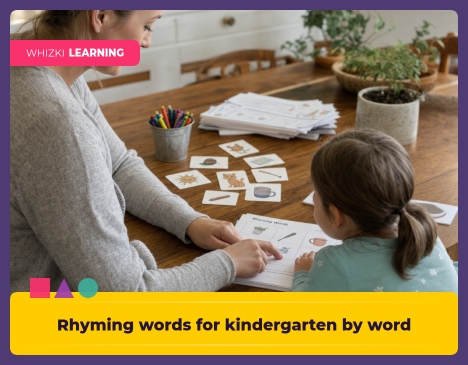
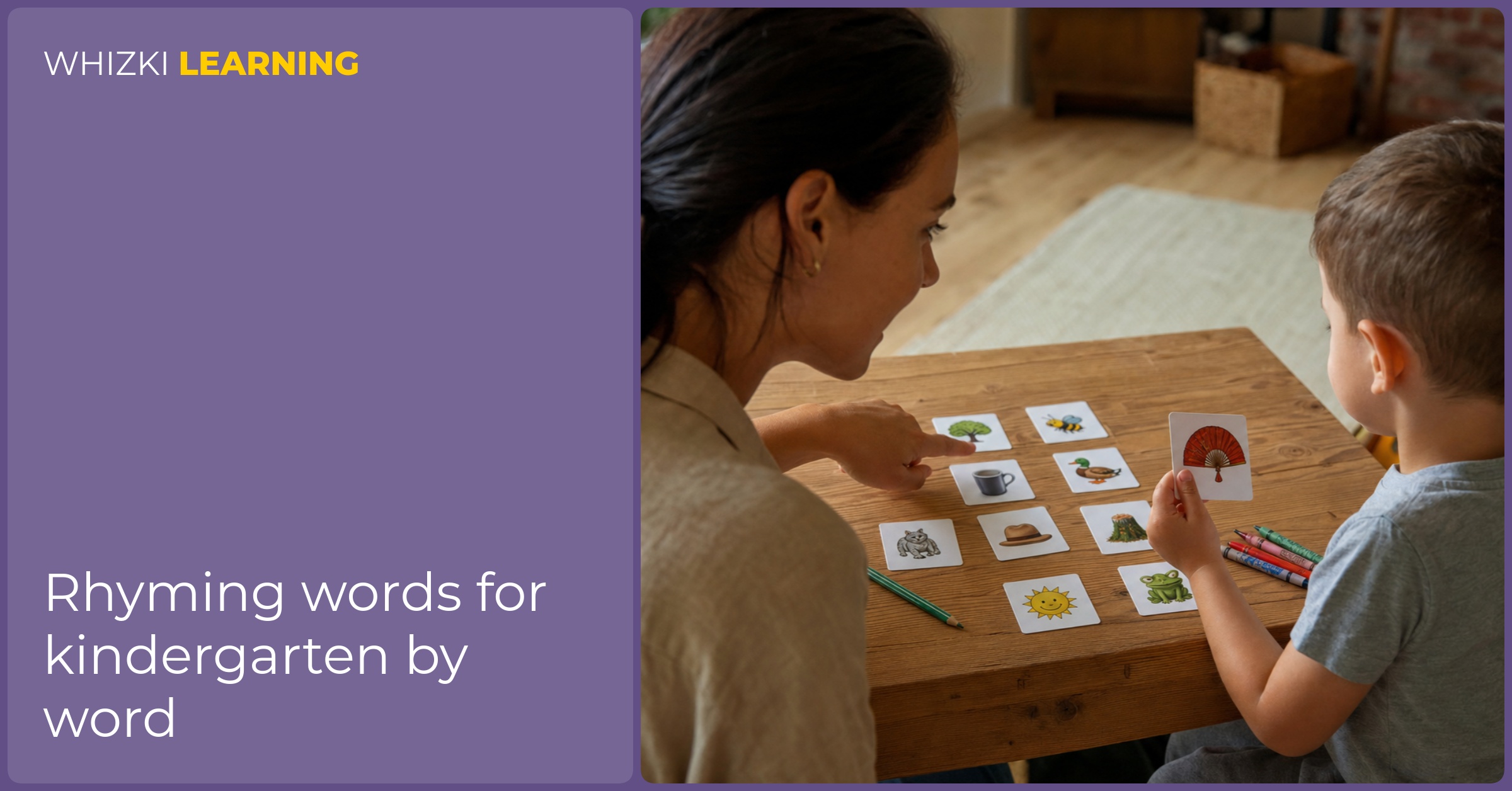
Rhyming practice can turn prickly fast when a child guesses wildly, chants nonsense, or shuts down, so start with two picture cards and ask, "Do these sound the same at the end?" Rhyming is phonological awareness doing push-ups, small reps that help children hear word parts before print gets demanding. A calm five-minute round at the table is enough for preschool and kindergarten practice.
Reviewed by Whizki Editorial Team, Early Childhood Education Editors.
How rhyming builds early reading
Rhyming words for kindergarten teach children to notice the ending sound in words, which is one piece of phonological awareness. Speech-language pathology practice and Orton-Gillingham lessons both treat sound play as an oral skill first, before asking a young child to write letters.
The phrase what phonemic awareness is helps families separate listening skills from pencil skills. A child can rhyme aloud with eyes closed, clap a beat, or point to two pictures without reading the printed words yet.
NAEYC guidance reminds early-childhood teachers to keep literacy playful, brief, and tied to real language. A parent can say two words, pause, and let the child decide whether the endings match, because the listening decision matters more than a perfect answer.
Kindergarten rhyming words by family
The word-family list below is grouped by common ending patterns so a child can hear and see the shared rime. Orton-Gillingham teachers often move from sound to print in that order, so say each pair aloud before showing the letters.
The reference list includes simple CVC words, consonant-blend words, and a few longer words for children who enjoy a challenge. A kindergarten teacher can choose three or four pairs for a small group, while a homeschool parent can circle one family for the week.
-at family
- bat / cat
- hat / mat
- rat / sat
- pat / flat
- chat / splat
- gnat / scat
- spat / vat
- slat / drat
-an family
- fan / pan
- man / ran
- tan / van
- plan / clan
- bran / flan
- scan / span
- ban / gran
- Dan / Stan
-ap family
- cap / map
- nap / tap
- lap / sap
- gap / rap
- clap / flap
- trap / scrap
- snap / strap
- wrap / yap
-ag family
- bag / rag
- tag / wag
- sag / lag
- gag / nag
- brag / drag
- flag / snag
- stag / swag
- crag / jag
-ad family
- bad / dad
- mad / sad
- glad / pad
- had / lad
- clad / grad
- rad / plaid
- shad / Chad
- add / Brad
-am family
- ham / jam
- ram / yam
- Sam / slam
- clam / gram
- swam / tram
- cram / pram
- dam / wham
- scam / scram
-ed family
- bed / red
- fed / led
- wed / shed
- fled / bred
- thread / spread
- dread / shred
- Fred / Ned
- stead / said
-en family
- den / hen
- men / pen
- ten / wren
- then / when
- Ben / Glen
- Ken / Jen
- yen / fen
- Len / wen
-et family
- bet / get
- jet / net
- pet / wet
- set / vet
- met / yet
- fret / threat
- sweat / debt
- let / upset
-ig family
- big / pig
- dig / fig
- wig / jig
- rig / twig
- sprig / brig
- prig / swig
- gig / zig
- trig / whig
-in family
- bin / fin
- pin / win
- tin / spin
- grin / skin
- twin / chin
- thin / shin
- begin / within
- kin / din
-ip family
- dip / hip
- lip / rip
- sip / tip
- zip / flip
- chip / ship
- clip / drip
- grip / slip
- skip / trip
-it family
- bit / fit
- hit / sit
- kit / lit
- pit / wit
- quit / split
- grit / knit
- flit / skit
- admit / permit
-og family
- dog / fog
- hog / log
- jog / cog
- bog / frog
- smog / blog
- clog / flog
- agog / sprog
-op family
- cop / hop
- mop / pop
- top / stop
- drop / shop
- crop / flop
- plop / prop
- slop / chop
- lop / swap
-ot family
- cot / dot
- hot / pot
- lot / not
- got / spot
- plot / shot
- trot / knot
- blot / clot
- slot / Scot
-ug family
- bug / rug
- dug / hug
- jug / mug
- pug / tug
- snug / plug
- slug / shrug
- lug / chug
-un family
- bun / fun
- run / sun
- spun / stun
- begun / outrun
- none / done
- one / won
- ton / shun
- pun / undone
-ell family
- bell / shell
- fell / smell
- tell / well
- cell / sell
- spell / yell
- dwell / swell
- quell / dell
- Nell / knell
-ill family
- bill / hill
- fill / mill
- pill / will
- chill / drill
- grill / frill
- skill / still
- thrill / spill
- quill / Phil
-ock family
- block / clock
- dock / rock
- flock / sock
- lock / shock
- knock / stock
- crock / frock
- mock / jock
- smock / hock
-ake family
- bake / cake
- lake / make
- rake / take
- fake / snake
- shake / flake
- wake / quake
- drake / stake
- brake / steak
-ame family
- came / game
- name / same
- flame / frame
- blame / shame
- tame / lame
- claim / aim
- fame / dame
- became / rename
-ite sound
- bright / light
- night / right
- kite / bite
- white / quite
- write / height
- slight / fight
- fright / tonight
- polite / excite
-ay family
- bay / day
- hay / may
- pay / play
- ray / say
- stay / tray
- way / clay
- gray / spray
- sway / stray
-ice family
- dice / ice
- mice / nice
- price / rice
- slice / spice
- twice / advice
- lice / thrice
- device / precise
- entice / sacrifice
-oat and long o sound
- boat / coat
- goat / float
- moat / oat
- throat / gloat
- bloat / stoat
- quote / tote
- wrote / remote
- vote / note
-eep family
- beep / deep
- keep / peep
- sheep / sleep
- steep / sweep
- creep / weep
- cheep / jeep
- seep / bleep
- asleep / oversleep
-ore family
- bore / score
- core / more
- store / shore
- snore / chore
- before / explore
- floor / door
- roar / soar
- four / pour
Three rhyme games that work
Rhyme games work best when the child can move, point, and laugh a little. Occupational-therapy basics tell teachers to pair listening with body movement when attention is wobbly, because large-muscle action can help a young child stay organized.
Reggio-inspired teaching also treats the child as a careful observer, so a parent can watch which sounds catch attention and which sounds need more modeling. The adult does not need a script, because a small repeated routine usually beats a long lesson.
Game 1: Rhyme thumbs
Rhyme thumbs asks the adult to say two words, then the child shows thumbs up for a match and thumbs sideways for no match. The teacher can keep the pace gentle by using only five pairs, then ending while the child still wants another turn.
Game 2: Find the partner
Find the partner uses picture cards from a table, floor, or pocket chart. The child picks one picture, hunts for a word that ends the same way, and says both words aloud before placing the cards together.
Game 3: Rhyme hop
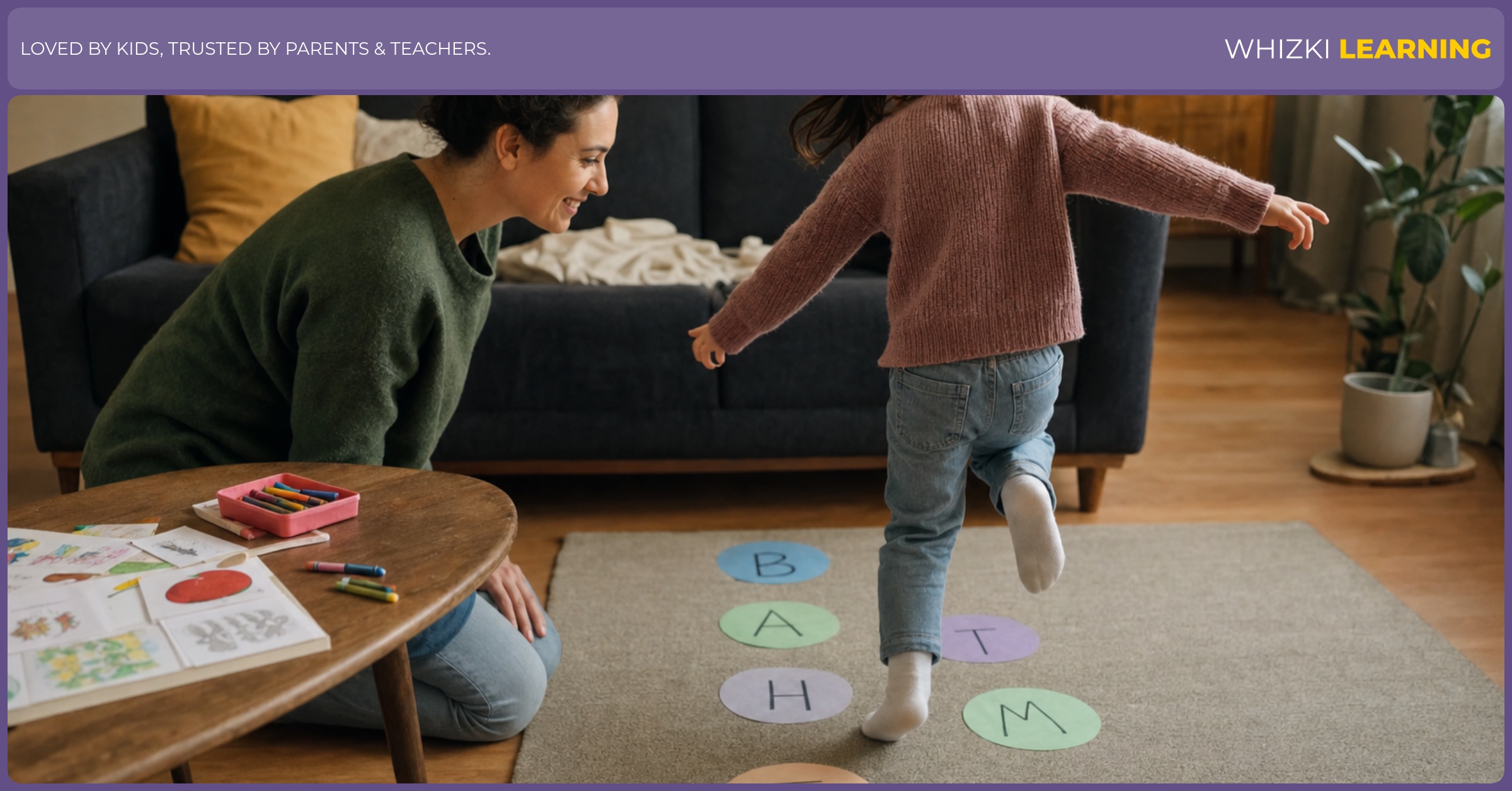
Rhyme hop puts three paper spots on the floor, with one adult word spoken for each spot. The child hops to the spot that matches the target rhyme, and the movement gives busy bodies a job while ears do the listening work.
Using printables with rhyming practice
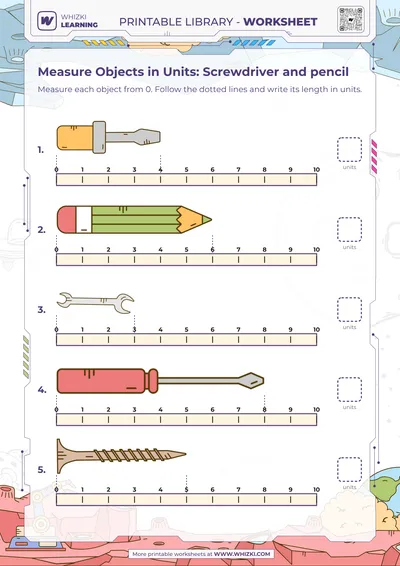
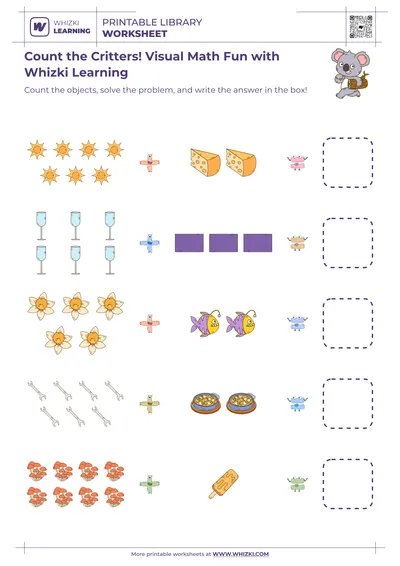
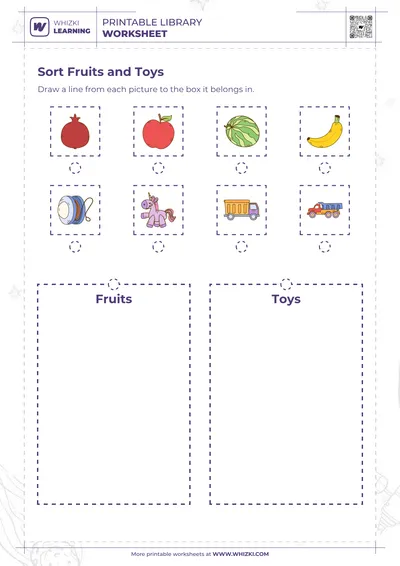
Printable rhyme work should stay short for ages 3-7, with one clear job on each page. NAEYC guidance favors meaningful, age-fit literacy tasks, so a worksheet should invite matching, circling, cutting, or saying words aloud rather than filling a page with drill.
A parent can pair rhyme practice with our sight-words printables after the child has warmed up with sound play. A teacher who wants more choices can browse our printable library for letter, vocabulary, and early reading pages that fit the same short-session rhythm.
The Rhyming Words and Word Families printable set gives children picture sorting, matching, and cut-and-paste practice for the same sound patterns in this guide. The complete pack lives in Whizki Plus, and related literacy pages sit with our worksheet sets.
Montessori practice often moves from concrete objects to symbols, and rhyming printables can follow the same path. The child can match toy or picture pairs first, then mark the printed pair after the ear has already heard the match.
When rhyming feels hard
Rhyming can feel hard when a child is still learning to hear separate parts inside spoken words. In Orton-Gillingham tutoring, the adult models the sound, gives a small choice, and reduces the demand before asking the child to produce a rhyme alone.
A preschool teacher can say, "I hear the same ending," and stretch the last chunk gently without making the child repeat ten times. Speech-language pathology practice also values close listening, so an adult should notice whether the child confuses beginning sounds with ending sounds.
A child who cannot hear rhyme after steady playful practice may need more observation from a teacher, pediatrician, or speech-language pathologist. The goal is not panic, because many young children need time, but a professional can check hearing, language, and sound awareness when progress stays stuck.
Rhyming words for kindergarten work best in tiny, cheerful doses: two words, one listening choice, and a quick celebration when the ending sounds match. Pick one word family from the list, play one game for five minutes, and stop before the fun runs out.