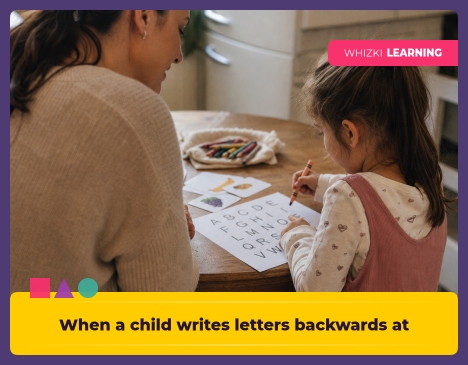
If your child writes b, d, or s backward and handwriting time turns into erasing, sighing, and a broken pencil tip, start today by praising the sound your child knows and asking for one slow "start-at-the-top" try. Letter reversals are very common in preschool, pre-K, kindergarten, and early first grade, and many children sort the direction out through age 7. The page can look messy while the child is still learning left, right, top, bottom, sound, and pencil movement at the same time.
Reviewed by Whizki Editorial Team, Early Childhood Education Editors.
What backward letters usually mean
Backward letters usually mean the child is still building a mental map for direction. In Reggio-inspired and Montessori classrooms, teachers watch the whole writing process before judging the page, because the child may know the letter sound and still flip the shape during pencil work.
Letter direction is harder than many adults remember because the child must hold the pencil, start in the right place, move the hand the right way, and remember the letter name. NAEYC guidance for early childhood reminds teachers to match expectations to development, so a 4-year-old who reverses s is not failing handwriting.
The alphabet practice plan works best when the child gets many calm looks at the same letter in books, labels, songs, and hands-on play. If the child wants more letter-sound practice, the alphabet learning hub can give you a simple place to choose one letter at a time instead of jumping around the whole alphabet.
Why reversals alone do not mean dyslexia
The dyslexia myth is that backward letters automatically point to a reading disorder. Occupational therapists and reading specialists often use a practical heuristic: reversals alone, especially before age 7, are not a dyslexia marker without other reading and language concerns.
Dyslexia is more about how the child processes sounds in words, connects sounds to letters, remembers letter patterns, and reads new words. Orton-Gillingham teachers and speech-language pathologists often watch phonological awareness, rapid naming, letter-sound recall, and word reading rather than judging one backward b.
A bigger concern is a pattern that keeps showing up across reading, speech sounds, memory for letter names, and family history. The pediatrician, kindergarten teacher, occupational therapist, or reading specialist can help when the child avoids print, cannot remember several letter sounds after steady practice, or seems far behind classroom expectations after age 7.
Reassurance does not mean ignoring the handwriting. Reassurance means correcting with a small cue, practicing with the body and senses, and keeping the child willing to try again tomorrow.
Two multisensory fixes that help
Multisensory handwriting practice gives the child more than a flat worksheet. The Orton-Gillingham approach pairs what the child sees, says, hears, and feels, while occupational therapy basics add body movement and touch to help the hand remember the path.
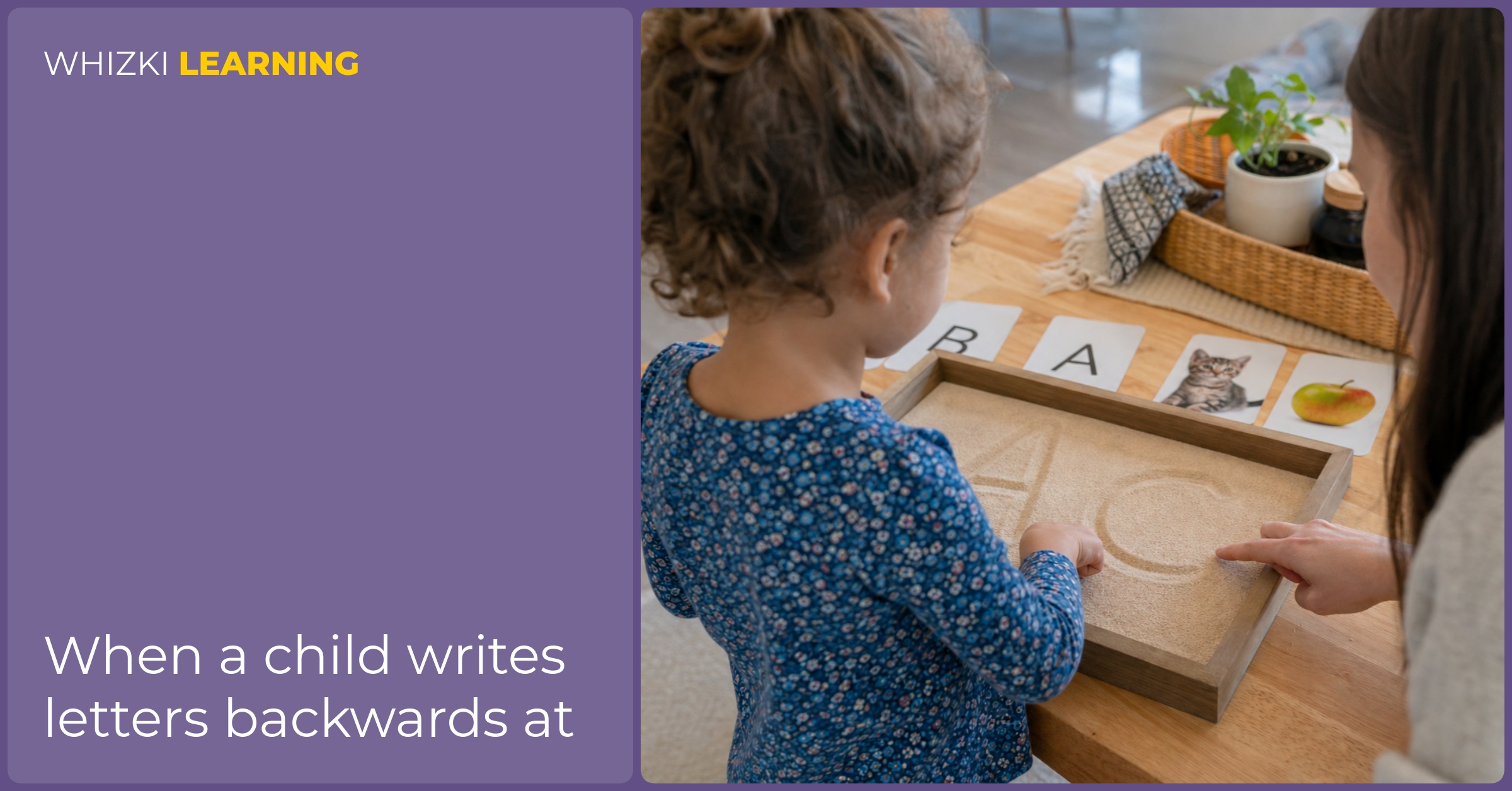
The first fix is a tactile letter path. Put sand, salt, shaving cream, or a rough fabric card on the table, say the letter sound, name the start point, and have the child trace the letter with two fingers before the pencil comes out.
The second fix is a keyword and movement cue for the most common reversals. For b, say "line first, then belly"; for d, say "curve first, then line"; for s, make a big air-writing snake from top to bottom before drawing a small s on paper.
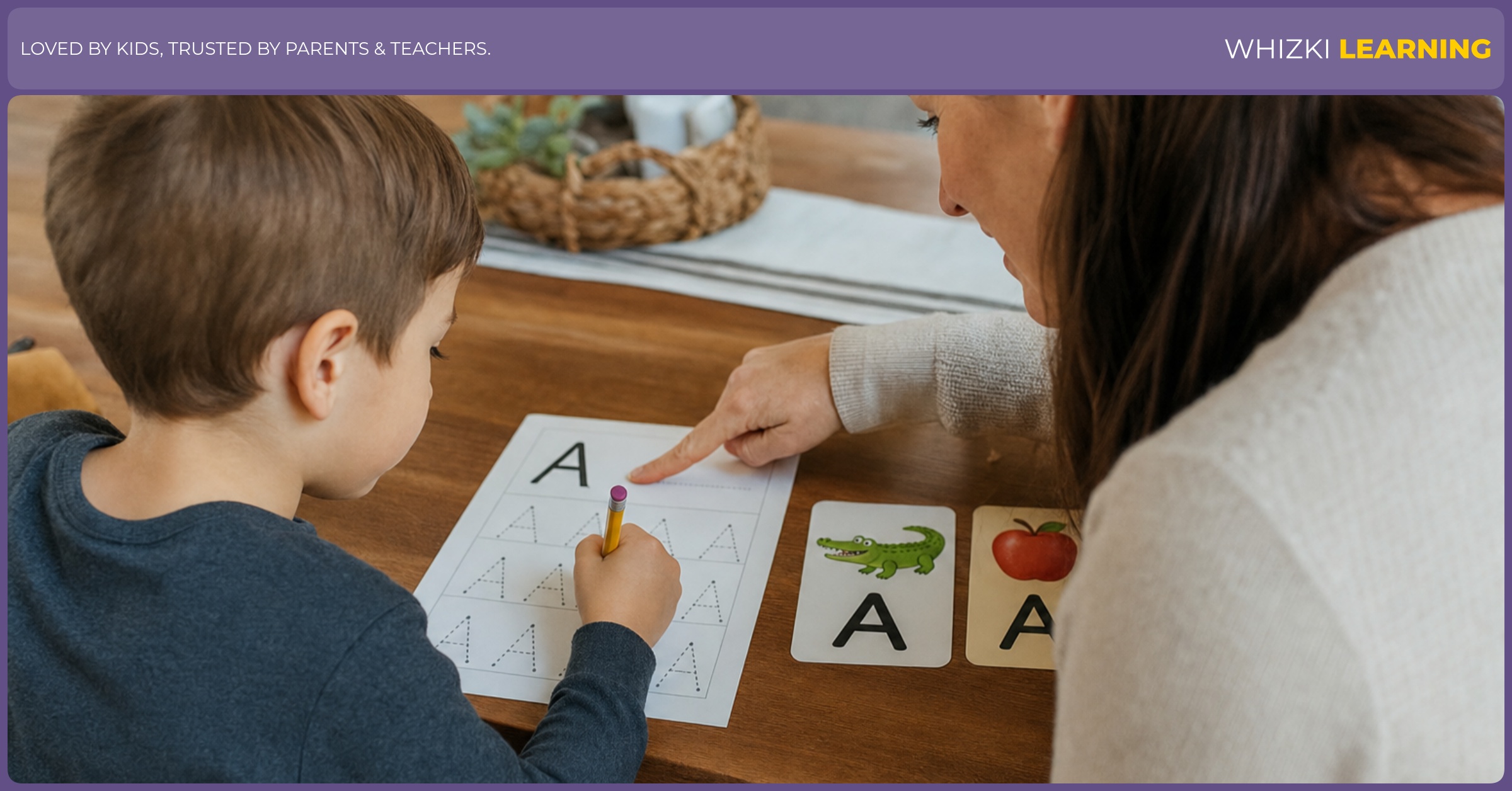
The pencil page should come after the body has practiced the motion. If handwriting keeps getting crowded, reversed, or started from the bottom, review the five most common letter formation mistakes and choose one kind fix for the week.
When to ask for extra help
Extra help is worth asking for when reversals continue past age 7, when the child cannot remember letter sounds after steady practice, or when reading new words feels unusually hard. NAEYC-aligned teachers look for a pattern over time, not one rough worksheet after a long day.
The kindergarten teacher can compare classroom writing samples across several weeks and notice whether the reversals are fading. An occupational therapist can look at pencil grip, hand strength, midline crossing, posture, and visual-motor skills, while a reading specialist can look at sound awareness and letter-sound mapping.
The home practice plan should stay short and predictable. Five minutes of sand tracing, air writing, and one pencil line is usually better than a long worksheet that ends with tears, bargaining, or a child hiding under the table.
For extra paper practice, our printable library has alphabet pages that pair well with sand-tray writing and pencil cues. Choose one page, circle three letters to practice, and stop before small hands get tired.
For families who like a ready page after hands-on play, the printable alphabet pages can keep practice simple and off-screen. Pick one letter, add a start dot, and let the child trace, say the sound, and write only a few careful tries.
Letter reversals are usually a normal stop on the early writing road, not proof that something is wrong. If kitchen-table ideas like these help, join the weekly Whizki newsletter for gentle practice notes and printable-friendly routines.