If your child proudly counts to 20 in the car but freezes when a worksheet asks for 7, the mismatch can feel confusing and a little maddening; tonight, play one five-minute matching game with three numerals, three dot cards, and three tiny snacks. The number gap is common because counting words can be memorized like a song long before written numerals make sense. The goal is not more pressure, the goal is more matches between what the child says, sees, touches, and counts.
Reviewed by Dr. Anna Klein, EdD, Early Childhood Curriculum Specialist.
Why counting and recognizing numbers are different
Rote counting is the spoken number chain: one, two, three, four, and onward. A 3- to 7-year-old child may recite the chain from memory without knowing that the symbol 4 stands for four crackers on the table. NAEYC guidance reminds early-childhood teachers to treat math language, objects, and symbols as connected skills that grow with repeated, playful practice.
Numeral recognition means the child sees a written symbol, names the symbol, and links the symbol to a quantity. The Orton-Gillingham approach makes a similar point in reading: children benefit when a symbol is tied to a sound, a movement, and meaning instead of being treated as a picture to memorize. Early math works the same way when the numeral 6 is said aloud, traced with a finger, and matched to six blocks.
The numbers learning path can help parents see the pieces in order, especially when counting, one-to-one matching, and numeral names feel tangled together. I like keeping the numbers learning hub nearby because the sequence helps adults choose one small skill instead of grabbing random worksheets.
Why the gap is usually normal
The counting-and-recognition gap is usually normal for preschool and kindergarten children. Some children love the rhythm of counting, while written numerals still look like squiggles with names. NAEYC-aligned classrooms expect uneven growth because early math depends on language, vision, attention, memory, and hands-on experience.
Occupational-therapy basics also matter here because young children learn best when the hand and eye are working together. A child who moves a button onto the numeral 5 gets more information than a child who only stares at a flashcard. The movement gives the brain a reason to notice the curves, straight lines, and amount.
The normal gap should slowly shrink when practice is short, concrete, and repeated across daily life. The kindergarten teacher, homeschool parent, or caregiver can watch for growth over weeks instead of judging the child from one tired afternoon. The best sign is not perfect speed, the best sign is more accurate matching with familiar numerals.
Game one: number hunt with real objects
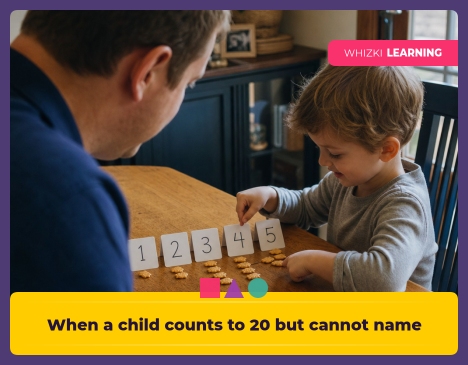
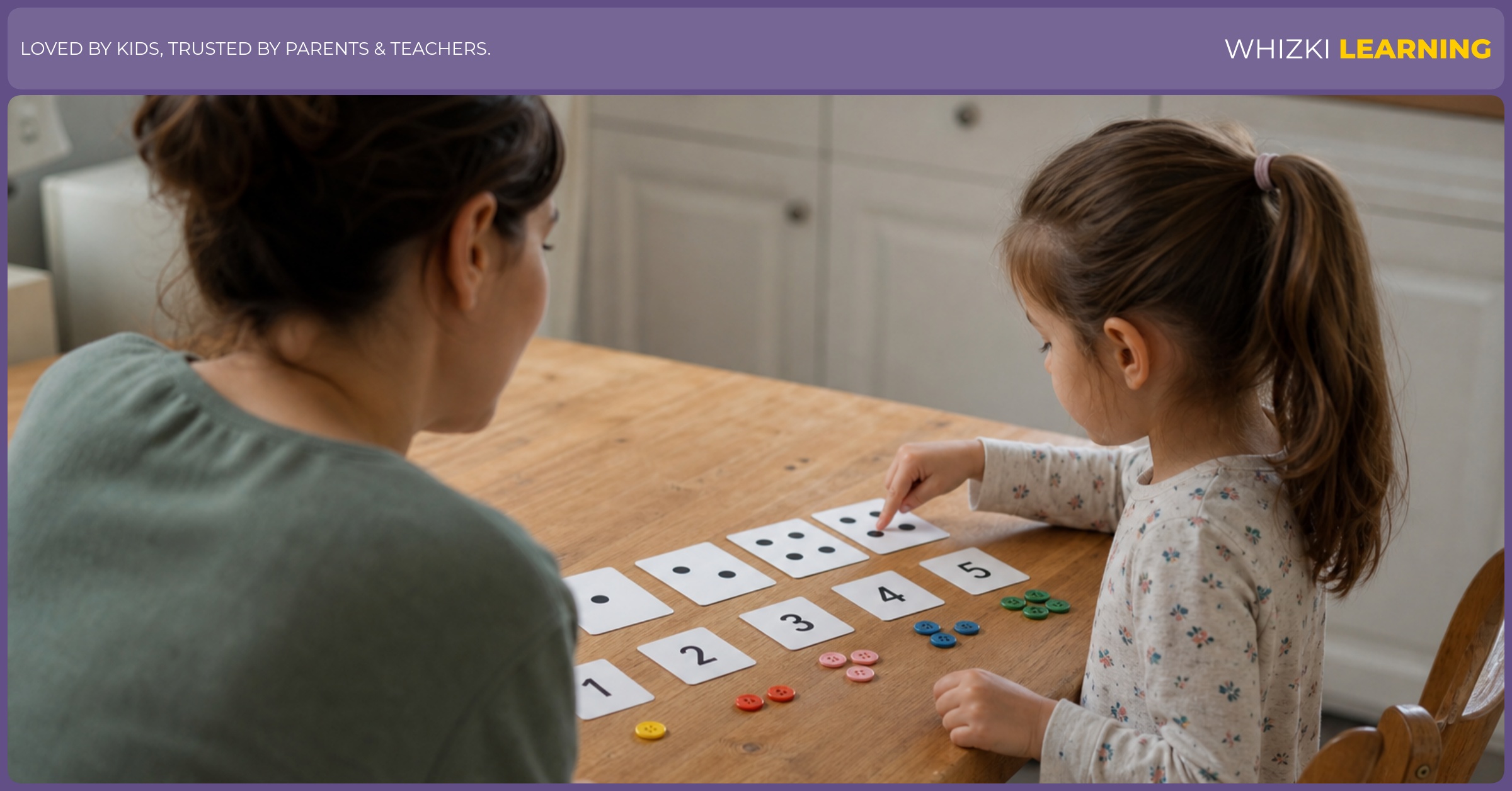
The number hunt uses a Reggio-inspired idea: children build meaning from real materials in the room. Write 1, 2, and 3 on separate paper squares, then put the squares on the table beside spoons, blocks, or crackers. The adult says, “Can you park two spoons under 2?” and the child moves the objects into place.
The number hunt should stay tiny at first because success teaches the child what to look for. Three numerals are plenty for a child who is new to recognition, and familiar objects make the task feel like play instead of a test. When the child can match 1, 2, and 3 with ease, the adult can swap in 4, then 5, without using every number at once.
The kitchen is a perfect math shelf because counting can happen while real life keeps moving. For more low-prep ideas with cups, fruit, and snack pieces, I often point families to these kitchen number games because the activities fit ordinary evenings.
Game two: dot-card memory
Dot-card memory builds the bridge between a symbol and an amount. Make three numeral cards and three matching dot cards, then place the cards face up before trying any face-down memory play. Montessori practice often begins with concrete quantity before abstract symbols, and dot cards give the child a clear quantity to see.
The adult can ask the child to match 4 with a card showing four dots, then touch and count each dot after the match. The counting touch matters because one-to-one correspondence is the habit of saying one number word for one object. A child who rushes through the word chain may need many calm chances to slow the finger down.
Dot-card memory works best when the adult keeps the correction gentle and visible. If the child puts 5 beside three dots, the adult can say, “Let’s count the dots together,” then move the card after counting. The game teaches the child to check quantity, not to guess from shape alone.
Game three: trace, say, build
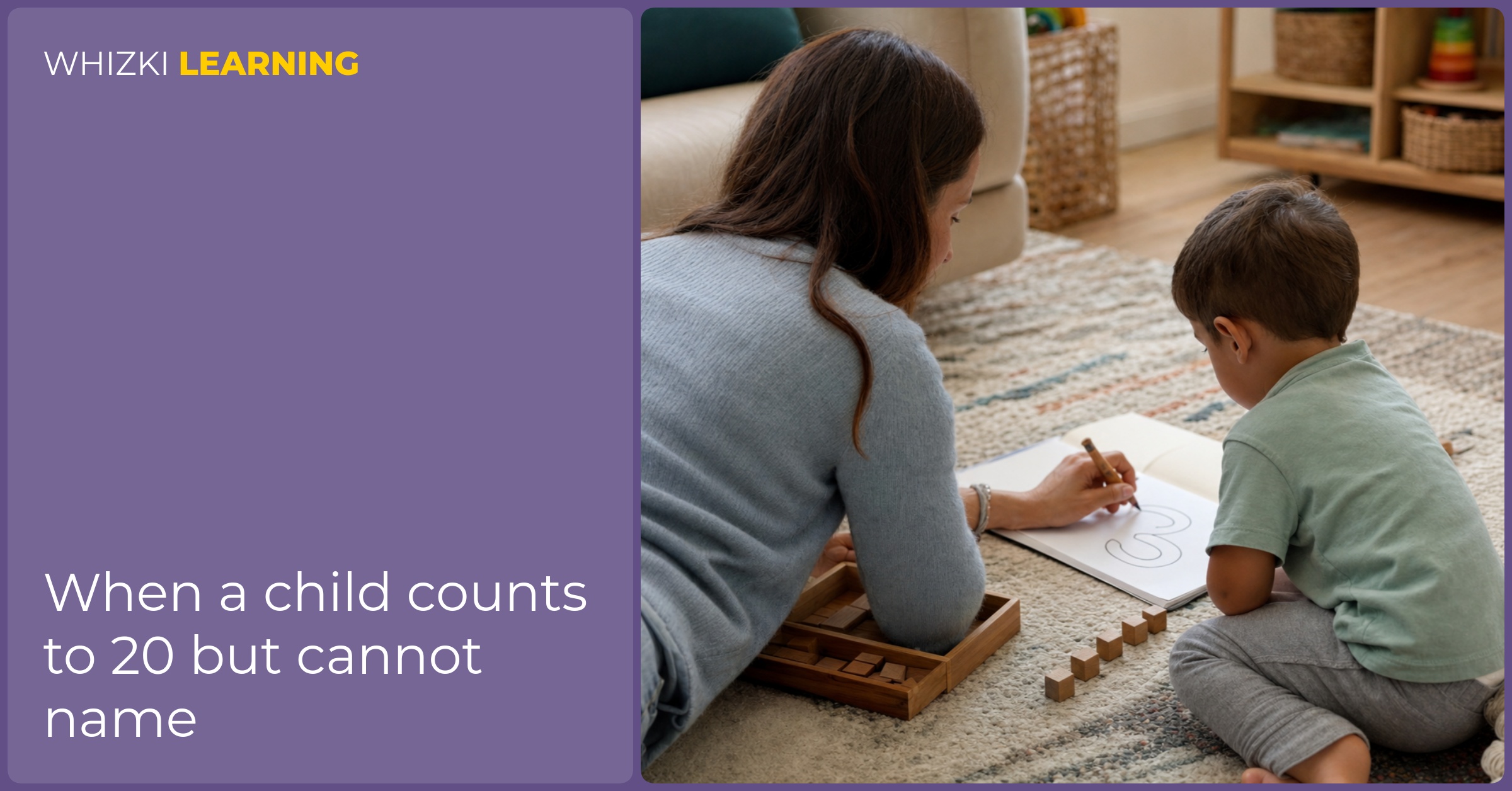
Trace, say, build gives the child three paths into the same numeral. The child traces the numeral 6 with a finger or crayon, says “six,” and builds a set of six blocks, beans, or buttons. Orton-Gillingham routines use multisensory practice for symbol learning, and early numerals benefit from the same clear, repeated pattern.
The adult should model the numeral formation first, especially for children who reverse 2, 3, 5, or 7. Occupational-therapy basics suggest large motor paths before tiny pencil work, so a child can trace a numeral in the air, on a tray of dry rice, or on a big piece of paper. The goal is clean awareness of the shape, not perfect handwriting.
The trace, say, build routine should end before the child is tired. Two or three numerals in one sitting is better than a full page of marks made with frustration. Short practice protects attention and keeps the math relationship warm.
When a blank page stalls the activity, Whizki Learning keeps numeral cards and dot pages in our printable library. The printable can sit beside coins, crackers, or blocks so the child matches symbol, word, and amount by hand.
When to ask for extra help
Extra help is reasonable when a child near 6 has had steady playful practice and still cannot recognize any common numerals. Speech-language pathology practice reminds adults to look at the whole communication picture because number words, direction words, and memory for sequences can overlap. The kindergarten teacher can compare the child’s number understanding with classroom expectations and suggest a next step.
A pediatrician, vision professional, occupational therapist, or school support team can help when numeral recognition concerns appear alongside other patterns. The concern may include frequent eye rubbing, trouble tracking print, very weak pencil control, difficulty following simple directions, or strong avoidance of all tabletop tasks. The request for help should sound practical: “My child counts aloud, but written numerals are not sticking, and I would like another set of eyes.”
For a calm weekly note with early math ideas from real classrooms, join the weekly Whizki newsletter.