Let's explore the nimble and neat number Nine! It looks like the number 6 flipped upside down and is the last of the single-digit numbers. Let's learn about this final and powerful number before we get to the big ten!
Getting to Know the Number 9:
9, spelled nine, represents a group of nine objects. 9 has 0 tens and 9 ones. 0 × 10 + 9 = 9.
The number nine is a number of near-completion and abundance. Representing it in different ways helps your child manage larger quantities with confidence. Here are a few ways we can show what 'nine' really means.
The Numeral
This is how we write the number nine. It's a circle on top with a straight line attached, like a balloon on a string.
The Word
nine [naɪn]
This is how we read the number. The word 'nine' helps us talk about groups of this size, like the nine players on a baseball team.
On a Ten-Frame
Nine dots on a ten-frame show that the frame is almost full, with just one empty space. This is a powerful visual for understanding 'one less than ten'.
With Your Fingers
You can show 'nine' with your hands by holding up all five fingers on one hand, and four fingers on the other.
Practice the Number 9 at Home (No Screens Needed!)
The best learning happens through play. Here are a few simple, screen-free ideas to continue your number 9 adventure together and celebrate this powerful number.
Nine-Pin Bowling
~1 This is a fantastic gross motor and counting activity that is fun for the whole family. You can use empty plastic bottles or stacked paper cups as your nine 'pins'. Set them up in a triangle formation at one end of a hallway or room. Then, take turns rolling a soft ball to see how many pins you can knock down. After each turn, count the fallen pins together. This game is a super fun, hands-on way to practice counting, simple subtraction ('We started with nine, and knocked down four, how many are left?'), and taking turns. It brings the fun of the bowling alley right into your home.
A 'Cloud 9' Daydream
~2 This is a calm, creative, and social-emotional activity that connects the number nine to the happy phrase 'to be on cloud nine'. This phrase means to feel incredibly happy and joyful. Sit together in a cozy spot and talk about what 'cloud nine' would look like. What makes you feel that happy? Is it a special treat, a hug from a loved one, or playing a favorite game? You can then draw pictures of yourselves on your own personal 'cloud nine'. This activity is a wonderful way to build emotional vocabulary and to talk about and appreciate the things in life that bring us the most joy.
The Nine-Square Game (Tic-Tac-Toe)
~3 This is a classic strategy game that is a perfect, quiet activity for practicing the number nine. The game board for tic-tac-toe is made of nine squares (a 3x3 grid). Draw the grid on a piece of paper. One player uses 'X's and the other uses 'O's. Take turns placing your mark in one of the nine empty squares. The goal is to get three of your marks in a row—horizontally, vertically, or diagonally. This simple game is a fantastic introduction to strategic thinking, planning ahead, and spatial reasoning. All you need is a pencil and paper to play this timeless game.
Practice Number 9
Download free printable worksheets to master this number!
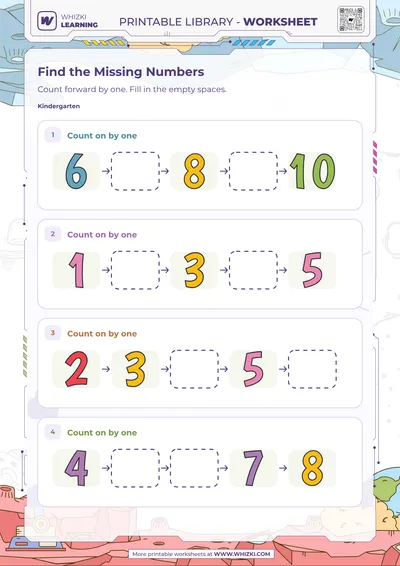
Kids often pause when a counting pattern has holes, even when they can count out loud. This Whizki Learning printable gives your kindergartener four short trails and simple equations to complete together.
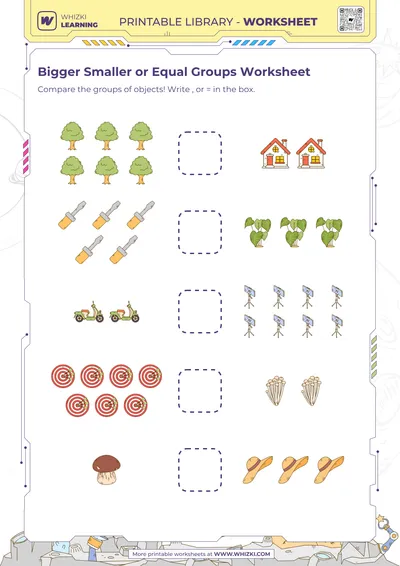
Kids often know “more” in real life but stall when two printed groups look close. Use this page to count each group together, then choose bigger, smaller, or equal.
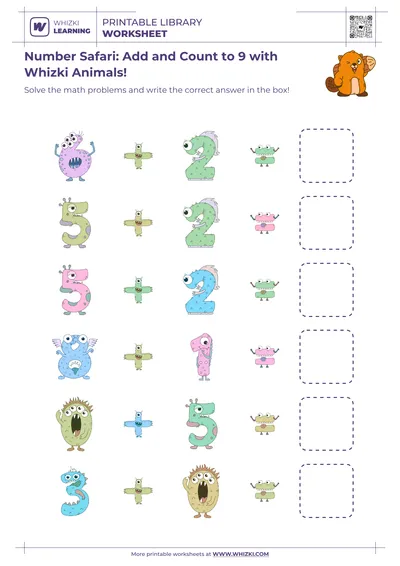
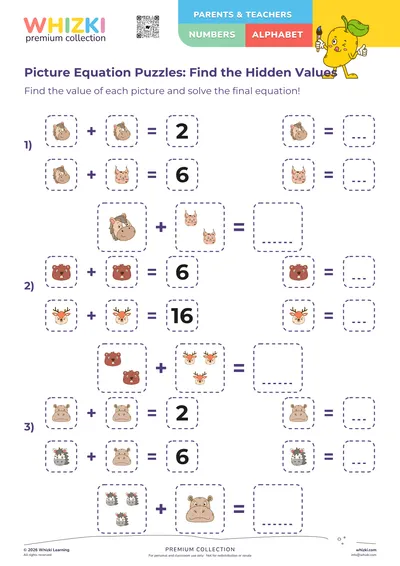
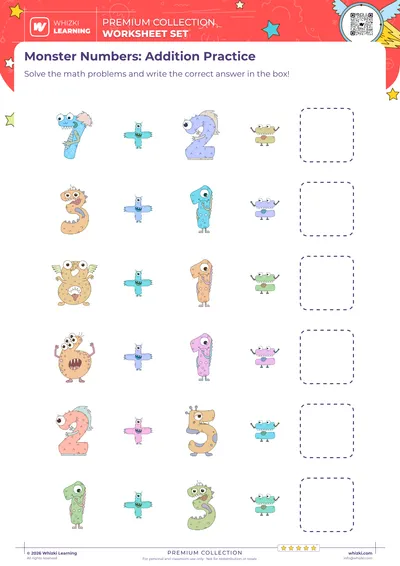
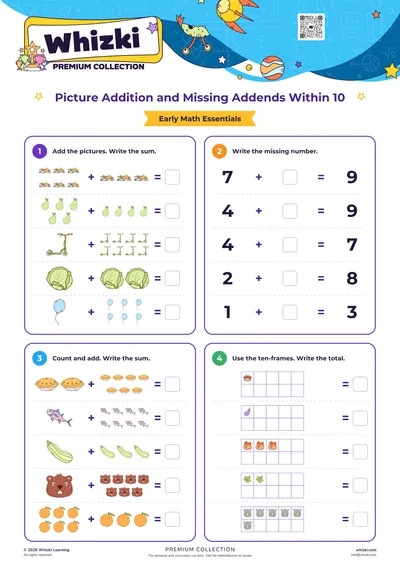
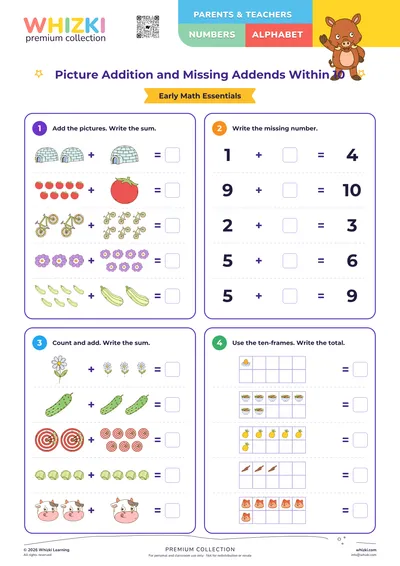
Addition and subtraction become easier to discuss when children can connect symbols with quantities. This pack combines picture arithmetic, number equations, short story problems, and making-ten activities. It also includes counting and comparison pages that can support a child who needs more practice before working with equations. The previews show several distinct formats. Some pages ask for a sum or difference, some compare two quantities, and picture-value puzzles ask children to infer a hidden value from clues. Choose a page that practices the operation you are working on, and introduce the picture-value puzzles after familiar equations feel manageable. Choose a task based on its number range and reasoning demand. Let a child model an equation with counters, explain what a story says happened, or check a comparison by counting. Picture-value puzzles can involve larger totals and several reasoning steps, so they may be a later choice even when their illustrations look playful. Return to Early Math Essentials when quantities and numerals need more work. For arithmetic involving measurement units, explore the Measurement Workshop set . Work through one example together, then ask your child to explain a method on the next instead of relying only on a written answer.
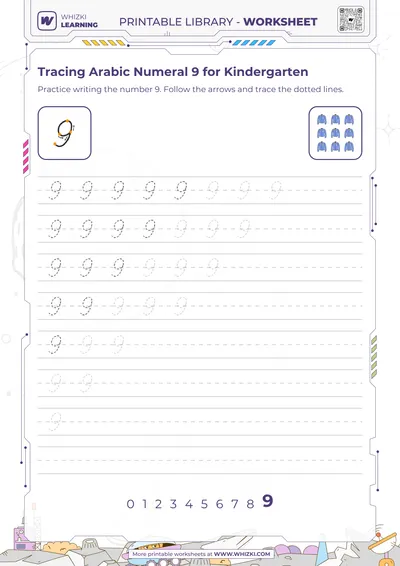
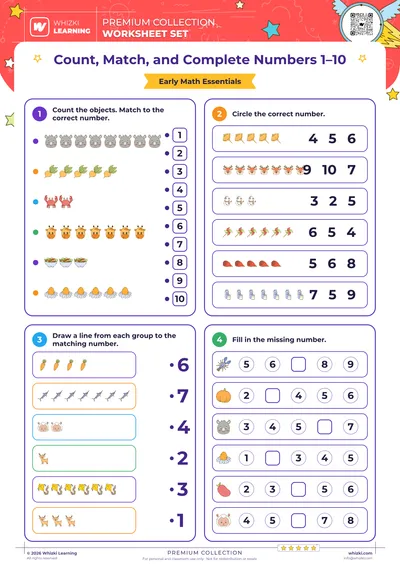
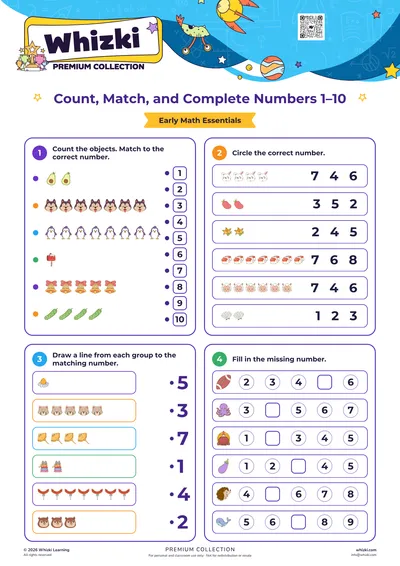
A child can count familiar objects before written numbers begin to make sense. This collection gives adults several ways to connect quantities with numerals: counting picture groups, choosing or writing a number, tracing numerals, and completing number sequences. Start with a page that matches what your child can already count comfortably. The published collection also includes comparing groups, addition within ten, number names, missing numbers, and introductory place value. These formats ask for different skills. The pages are choices for practice rather than a lesson sequence in which every worksheet is easier than the next. Model counting by touching each object once and saying that the last number tells how many there are. When a page introduces addition, use counters to show two groups joining. For comparison, check each quantity before choosing a symbol. Save tens-and-ones work for a child ready to connect grouped objects with a two-digit numeral. The number reference library can help explain a particular numeral. When your child is ready for more arithmetic, explore the Addition and Subtraction Pack . A few careful examples are enough for one sitting; use the rest when another short practice opportunity comes along.
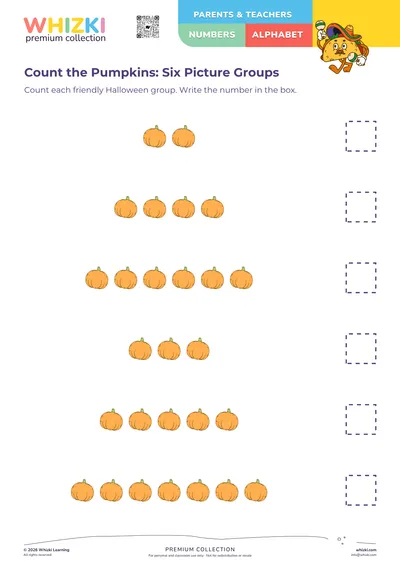
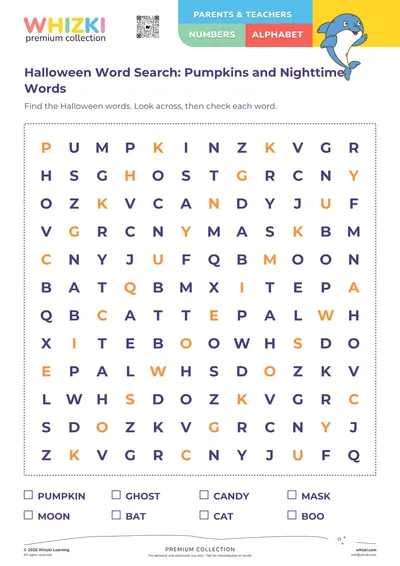
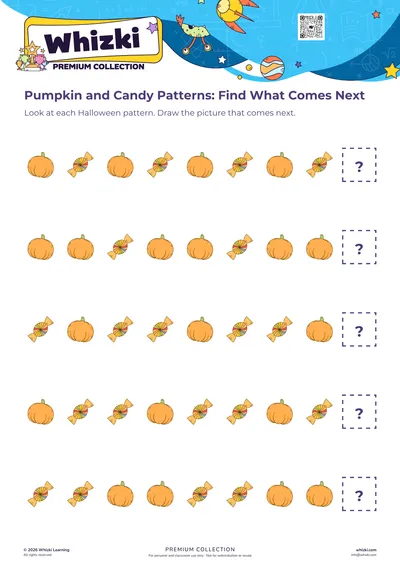
Halloween themes can give a familiar practice task a reason to come back to the table. This collection uses pumpkins, candy, and friendly seasonal pictures in counting, word-search, pattern, and handwriting activities. Choose the format your child is ready to use rather than expecting the theme to make every task equally easy. The counting pages ask children to attend to objects and quantities. Word searches use a printed bank of Halloween vocabulary, pattern pages ask what repeats or comes next, and handwriting pages provide words to trace and write. Check the actual preview for the words, number range, or pattern rule on that page. An adult can read the directions and name unfamiliar seasonal words. For a word search, model matching the first letter and checking the remaining letters in order. For a pattern, say the repeating unit aloud. A child who is ready to count objects may still need substantial help reading a longer word such as costume. Use Early Math Essentials for more counting practice beyond the theme. The Spelling and Word Building Pack provides other word activities. Print a single page for a short seasonal session, or choose several suitable activities from the published collection.
Save the worksheet on its page, or add an activity to your learning planner for another day. Compare Free, Plus, and Pro if you need more saved materials or planning tools.
A Parent's Guide to Arabic Numerals (0-20)
You're doing a great job exploring the world of numbers! Each number has its own unique story. Use this guide as your adventure map to jump to another number you're curious about, or to see how they all fit together in one big, amazing family.