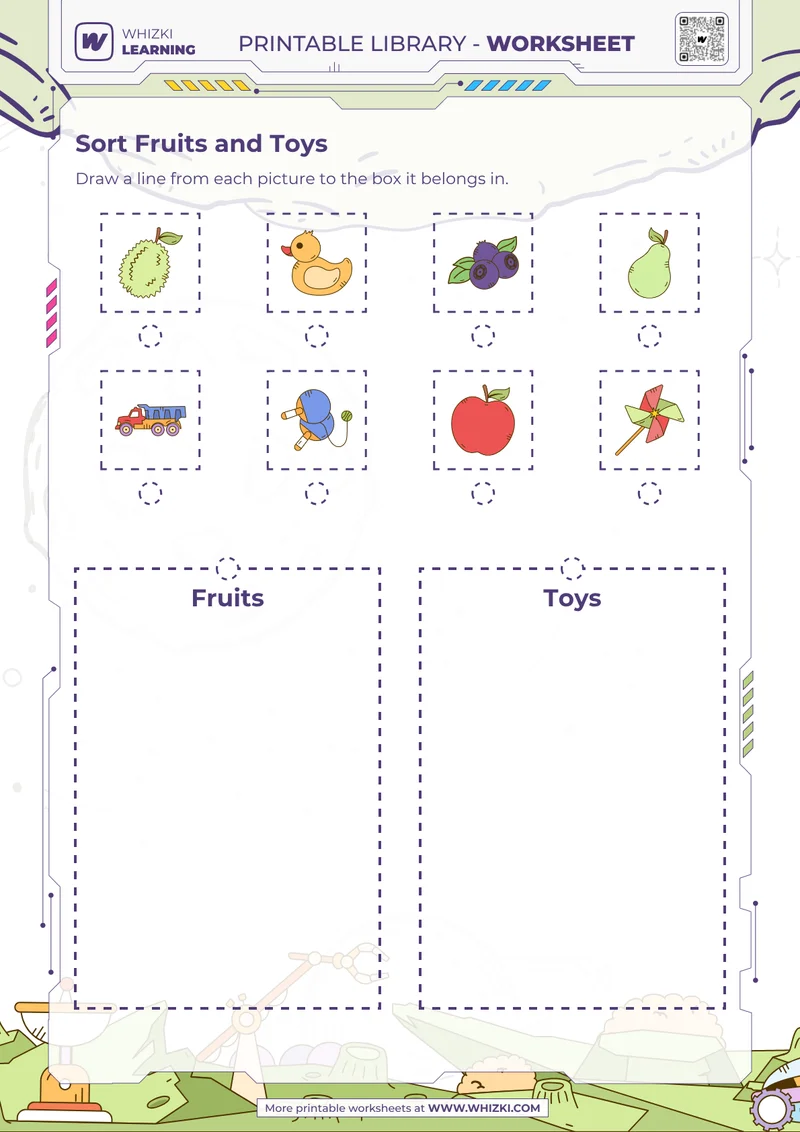
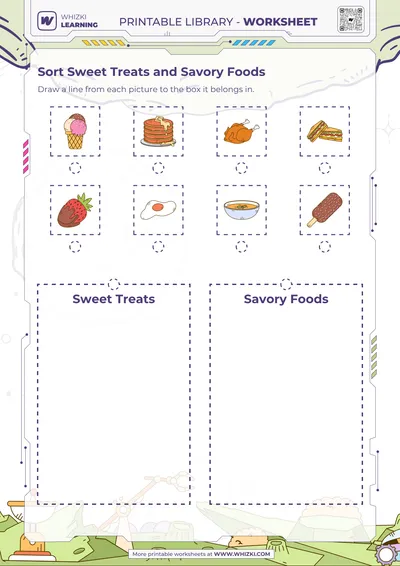
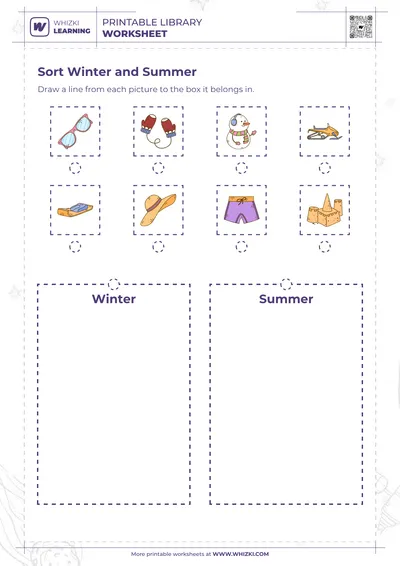
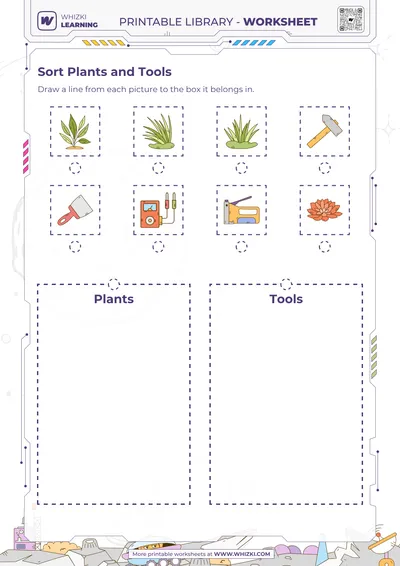
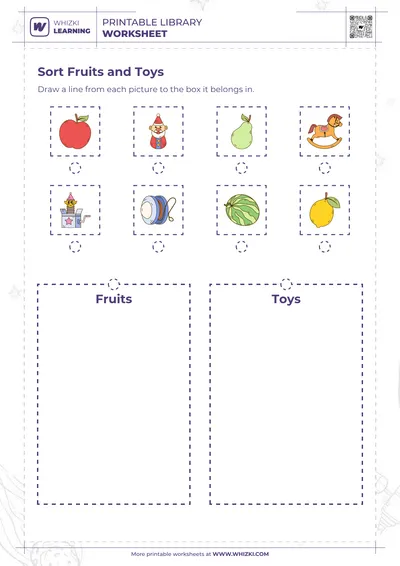
This picture category sorting worksheet shows eight mixed pictures above two destination boxes labeled Fruits and Toys. Draw one line from each picture to the box where it belongs. Read both labels aloud before starting, then find one example for each group together. The child can make the category choice by pointing before using a pencil to record the connection.
The Fruits group contains blueberries, durian, apple, pear. The Toys group contains rubber duck, ball and cup, dump truck, pinwheel. There are four pictures for each box. Begin with the blueberries and explain why it fits Fruits; then find the rubber duck as an example of the other group. Name an unfamiliar picture before expecting a decision, and compare each new choice with the same two labels.
This page uses familiar fruit names, including some that children may not know yet. Name each fruit together. The other group contains toys, so compare what the pictured object is rather than its color or size. Trace a route with a finger before drawing its line, especially when another line is already in the way. Crossing lines can still reach the correct boxes. Check each connection from its picture to its endpoint, rather than judging the answer by how tidy the lines look. Pause after a few pictures if your child needs a shorter session.
The Picture Sorting and Logic Pack offers more grouping activities. Save a suitable follow-up in the Family Learning Planner when it fits your week. After the page, name one additional example for each printed category and explain why it belongs. Keep today’s two labels while checking the idea, then introduce a different sorting rule on another occasion. This makes the follow-up a chance to explain a choice rather than repeat the same pictures.