Learning Outcomes
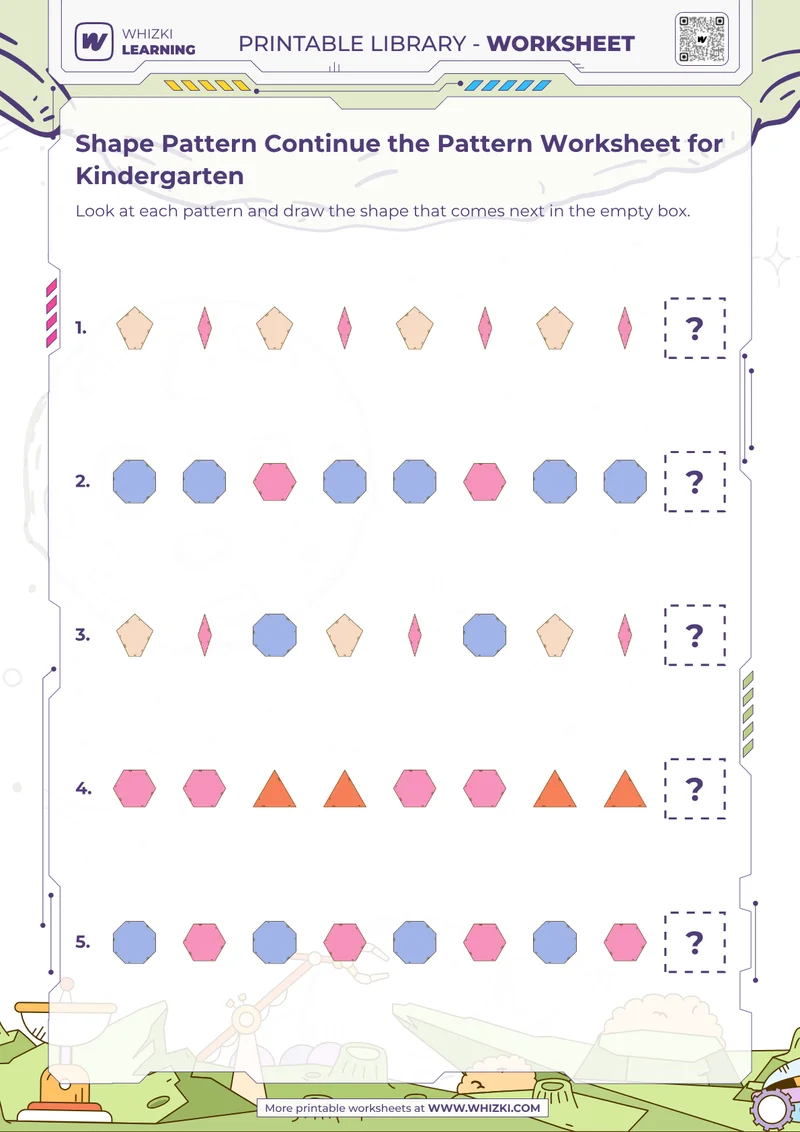
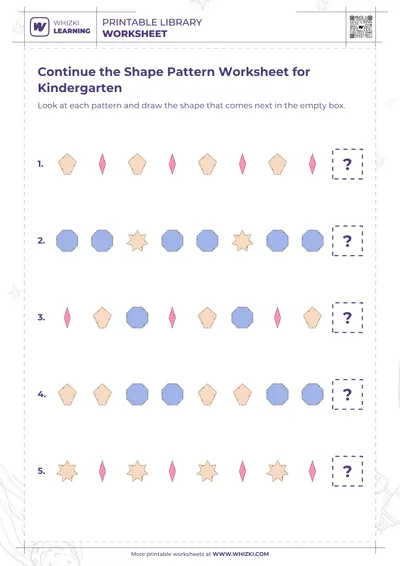
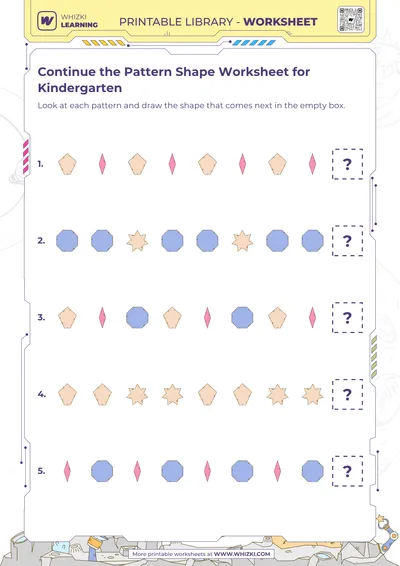
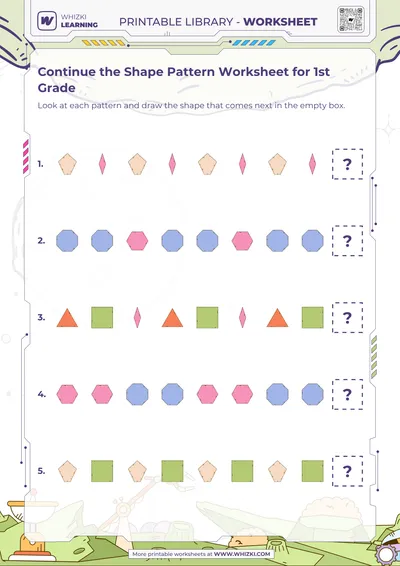
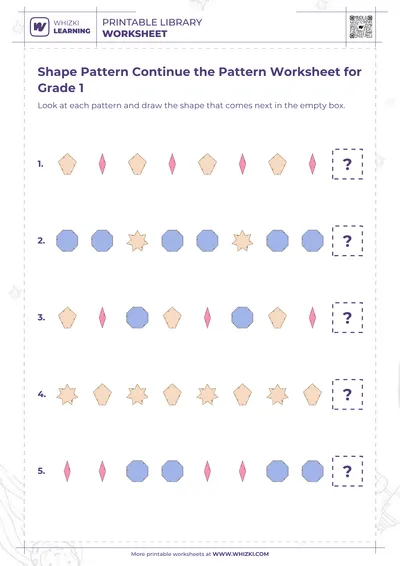
Shape pattern Continue the Pattern worksheet, spotting repeating shape order, helps kindergarteners choose the next shape correctly for three blanks per row.
Shape pattern Continue the Pattern worksheet, comparing what appears first and second in a sequence, helps children predict the rule for new rows.
Shape pattern Continue the Pattern worksheet, using a point-and-say step-by-step routine, builds logical thinking and reduces guessing when filling missing shapes.

Shape Pattern Continue the Pattern Worksheet for Kindergarten
Five-year-olds get bored fast when shape practice feels like a long drill, and many children stall on deciding what comes next. The Shape Pattern Continue the Pattern worksheet helps the child keep attention by spotting the rule in each row and choosing the next matching shape.
Shape pattern practice matters because noticing repeating order is the start of bigger math thinking, like making sense of rules and comparisons. Continuing shape patterns builds logical thinking through simple steps: look, spot the pattern, and find what belongs next.
To use the Shape Pattern Continue the Pattern worksheet, ask the child to point to each shape in a row, say the pattern out loud, and then fill the blank with the next shape from the sequence. Pause after every row to confirm the rule before moving on to the next one.
This Pattern Worksheet uses short repeating sequences in different forms across five rows, including AB, AAB, ABC, and AABB shape patterns. Each row stays quick, so kindergarteners get steady practice continuing shape rules instead of repeating one pattern type all page.
Limited Time Sale
Kids’ Workbooks!
Boost your child’s skills with our discounted workbooks. Engaging activities for preschool, kindergarten, and grade 1 - now at special sale prices!


Fast shipping
Secure Payment
Licensed Teachers
For the planet
Printed in the USA
Find fresh ideas
To help your little learners grow!
Helpful guides for parents and teachers, and tips for making learning at home super fun.

Getting an energetic preschooler to sit still for handwriting practice often results in frustrating power struggles. This educator-approved playbook provides 10 screen-free, proprioceptive calm-down activities designed to regulate a dysregulated nervous system. Learn how heavy work, fine motor warm-ups, and breath control prepare a child's body and mind for successful, tear-free tracing and writing.
Sunny Hedge
When a preschooler complains of boredom, parents often feel immediate guilt and offer digital entertainment. This educator-approved guide explains the psychological mechanism of unstructured time and why boredom is the ultimate catalyst for independent play. Learn how to survive the initial complaining phase and utilize high-quality printed workbooks to bridge the gap between digital stimulation and deep, analog focus.
Sunny Hedge
Many parents panic when their preschooler cannot sit still for more than two minutes, fearing the child is not ready for formal schooling. This educator-tested guide explains why early attention spans are naturally short and provides a step-by-step plan to gently stretch cognitive stamina. Learn how to build a reliable 15-minute focus habit using screen-free, analog activities before the first day of kindergarten.
Sunny Hedge
The kitchen provides a natural, highly engaging mathematics classroom for preschoolers. This educator-approved playbook details 10 easy, screen-free number games using everyday pantry items and snacks. Learn how sorting pasta, measuring water, and counting blueberries builds foundational counting skills, one-to-one correspondence, and deep number recognition without any formal preparation.
Sunny HedgeJoin the Screen-Free Movement.
Get exclusive activities, expert tips, and inspiration for a more meaningful, offline family life.