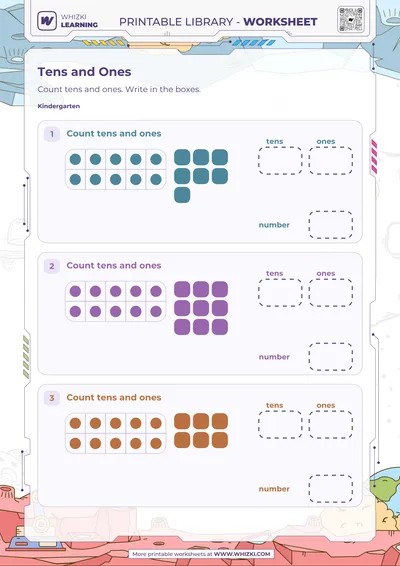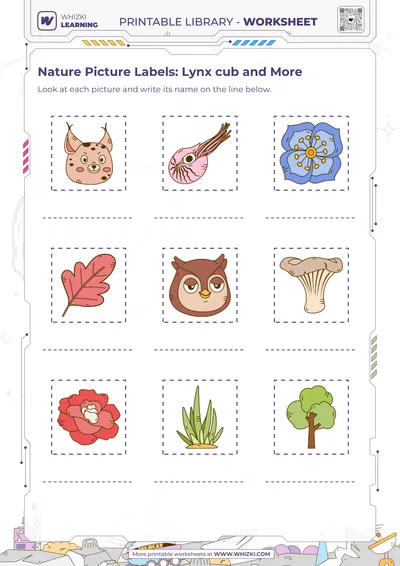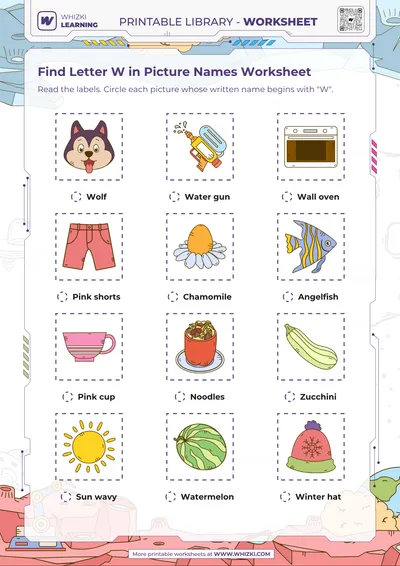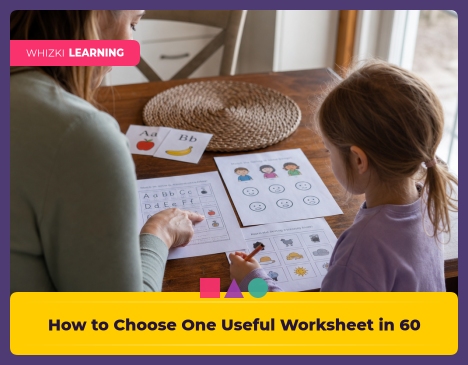
When the backpack folder, printer tray, or download folder offers ten cute pages and one tired child, choose the page that matches today's real child, not the page with the most boxes. For a 60-second choice, say out loud, one skill, one way to answer, one stopping point. The worksheet that fits the child's body, attention, and current skill will usually give better practice than a crowded page meant to do everything.
Reviewed by Whizki Editorial Team, Early Childhood Education Editors.
The 60-second worksheet filter
The worksheet filter is a tiny decision tree for a real kitchen-table moment: name the skill, match the response mode, check age fit, preview the directions, and decide the stopping point. NAEYC guidance on developmentally appropriate practice starts with the child in front of the adult, and the same idea works for paper practice. The worksheet is useful when the task lines up with the child's current development, attention, and available help.
The first ten seconds belong to the skill. The next fifteen seconds belong to the response mode, because saying an answer, pointing to a picture, tracing a line, and cutting a square ask for different body skills. The final thirty-five seconds belong to age fit, directions, materials, and the adult's plan for when to stop.
The worksheet filter works with a printed page, a workbook page, a page copied for a small group, or a homemade sheet drawn with a marker. The worksheet filter does not make the page a complete lesson, and the worksheet filter cannot replace play, read-alouds, conversation, movement, or teacher observation. The worksheet filter simply helps the adult pick one page that has a fair chance of going well today.
Step 1: Name the skill
The worksheet needs one main job. An Orton-Gillingham approach would name the exact sound, letter, pattern, or movement before practice begins, because clear language lowers guessing and gives the child a target. A useful page might practice the /m/ sound, counting three objects, sorting by color, tracing a vertical line, or listening for the first sound in a word.
The adult can test the page quickly by covering the title and asking, "What skill would my child practice here?" If the answer is "a little of everything," the worksheet may be too busy for a short session. For ages 3 and 4, a page with one obvious action often works better than a page with several mini tasks.
The skill can come from the child's current routine rather than a long plan. A child who notices signs on a walk may be ready for letter matching, while a child who counts crackers may be ready for one-to-one counting on paper. If the family already uses a weekly rhythm, the previous parent systems guide can help connect one worksheet to books, talk, and simple home practice.
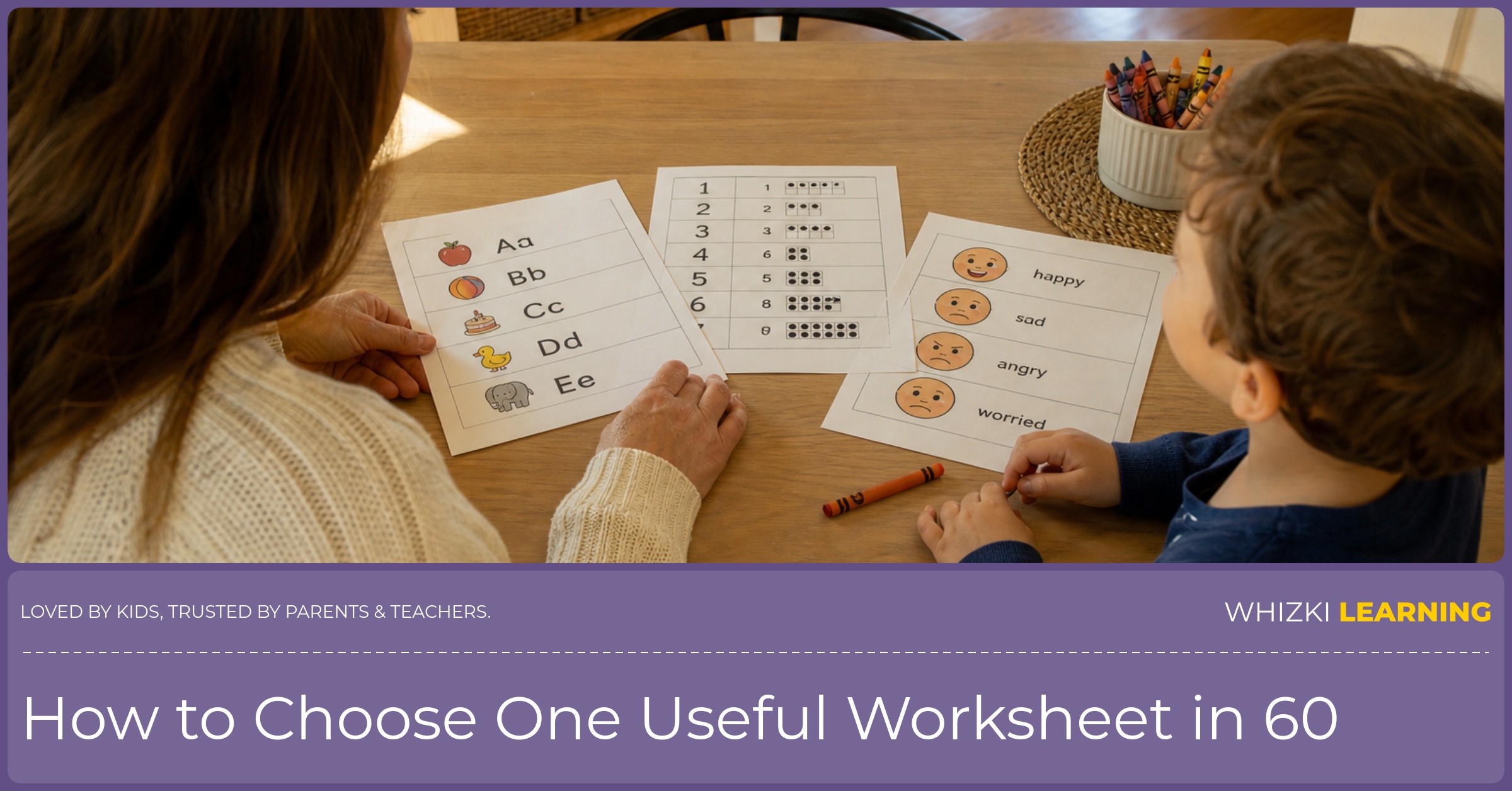
Step 2: Match the response mode
The response mode is the way the child answers. Occupational therapy basics remind teachers and parents that pencil control, scissor use, posture, and hand strength can change how hard a page feels. A child may know the answer and still struggle if the page demands tiny writing, long cutting, or careful coloring.
The worksheet can ask for pointing, saying, matching, circling, tracing, drawing, stamping, cutting, or gluing. Speech-language pathology practice often separates what a child understands from how a child responds, and that separation helps adults choose kinder paper tasks. If the goal is vocabulary, pointing to a picture may be enough; if the goal is handwriting, tracing or copying may be the practice.
The age adjustment is simple. For ages 3 and 4, choose pointing, matching, sticker placing, or a thick crayon mark. For ages 5 and 6, choose circling, tracing, short cutting, or a small amount of copying. For age 7, choose independent directions only when the child has already practiced the format with an adult.
When printer choice is the hard part, the printable library can act like a calm shelf instead of a giant pile. Pick one page by skill and response mode, then save the extras for another day.
Step 3: Check age fit and directions
The worksheet should look readable before the child starts. Montessori and Reggio-inspired observation both ask the adult to notice the child's materials, pace, and independence instead of forcing a preset script. A page fits better when the print is large enough, the pictures are clear enough, and the amount of work feels possible.
The directions deserve a quick preview. If the adult needs to reread the directions twice, the child will probably need modeling before working. A good direction for young children uses familiar action words such as circle, match, color, trace, count, say, draw, cut, or glue.
The worksheet set can also reduce decision fatigue when pages share a format. The worksheet sets page is useful when the adult wants related pages with a similar rhythm, while the same 60-second filter still decides which single page comes out today. A set is a supply cabinet, not a promise that every page should be finished in order.

Step 4: Decide the stopping point
The stopping point belongs in the plan before the pencil touches the paper. Occupational therapy heuristics often watch for fatigue signs such as a tight pencil grip, slumped posture, rushed marks, or hand switching that seems new for the child. A planned stop keeps practice from turning into a power struggle.
The worksheet can stop after a number of items, a number of minutes, or one clean try. For ages 3 and 4, three minutes or three answers can be plenty. For ages 5 and 6, five to eight minutes often gives useful practice, and age 7 may manage ten minutes when the task is familiar.
The adult can mark the stopping point with a sticky note or a small star drawn halfway down the page. The child can finish the rest later, use the back for drawing, or put the page away without losing the learning. If fine-motor strain, language confusion, or big frustration appears often, the worksheet is information to share with a teacher, pediatrician, speech-language pathologist, or occupational therapist.
Why the best page fits today
The best worksheet is the page that fits today's child, today's time, and today's goal. Reggio practice treats the child's response as information, and that mindset helps adults stop chasing the page with the most activities. A smaller page can give cleaner feedback because the adult can see exactly what the child understood.
The full page with six boxes may look efficient, but the full page can hide the real skill. A child might spend energy coloring borders, hunting for tiny pictures, or waiting for help with directions instead of practicing the target. A plain page with one sound sort or one counting task can be the stronger teaching choice.
The worksheet also needs a good place in the day. A page after outdoor play may work better than a page during hunger, bedtime, or a sibling argument. The adult is allowed to choose the shorter page because good timing is part of good teaching.
The 60-second filter gives the adult a calm way to choose without making worksheets the center of childhood. Name the skill, match the response mode, check age fit and directions, and set the stopping point before the child begins. One useful page today is enough.