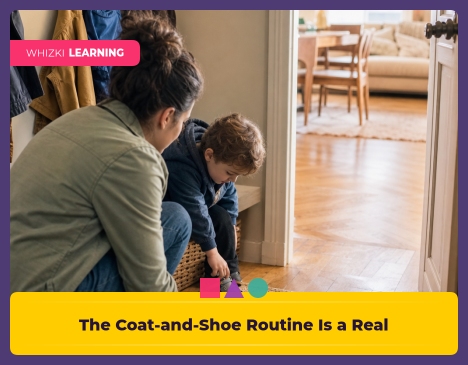
If the coat-and-shoe moment turns into one child hopping, one missing boot, and an adult watching the clock, put a simple three-picture cue card by the door today and practice the routine when nobody has to leave. The routine is not a tiny adult errand for a preschooler or kindergartener. The routine is a real learning task with order, body awareness, hand strength, language, and repair built in.
I have taught many children who could name letter sounds in a small group but still needed patient practice to find sleeves, match shoes, and start a zipper. The same calm teaching stance used in Orton-Gillingham lessons, Reggio observation, NAEYC guidance, and occupational-therapy routines works beautifully at the door.
Reviewed by Whizki Editorial Team, Early Childhood Education Editors.
What the routine teaches
The coat-and-shoe routine teaches order because the child has to remember what comes first, what comes next, and what marks the job as finished. The Orton-Gillingham approach uses clear sequence language during reading practice, and the same language fits the hallway: first coat, next shoes, last basket. Sequence words help a child age 3 to 7 hear the plan before the body has to act.
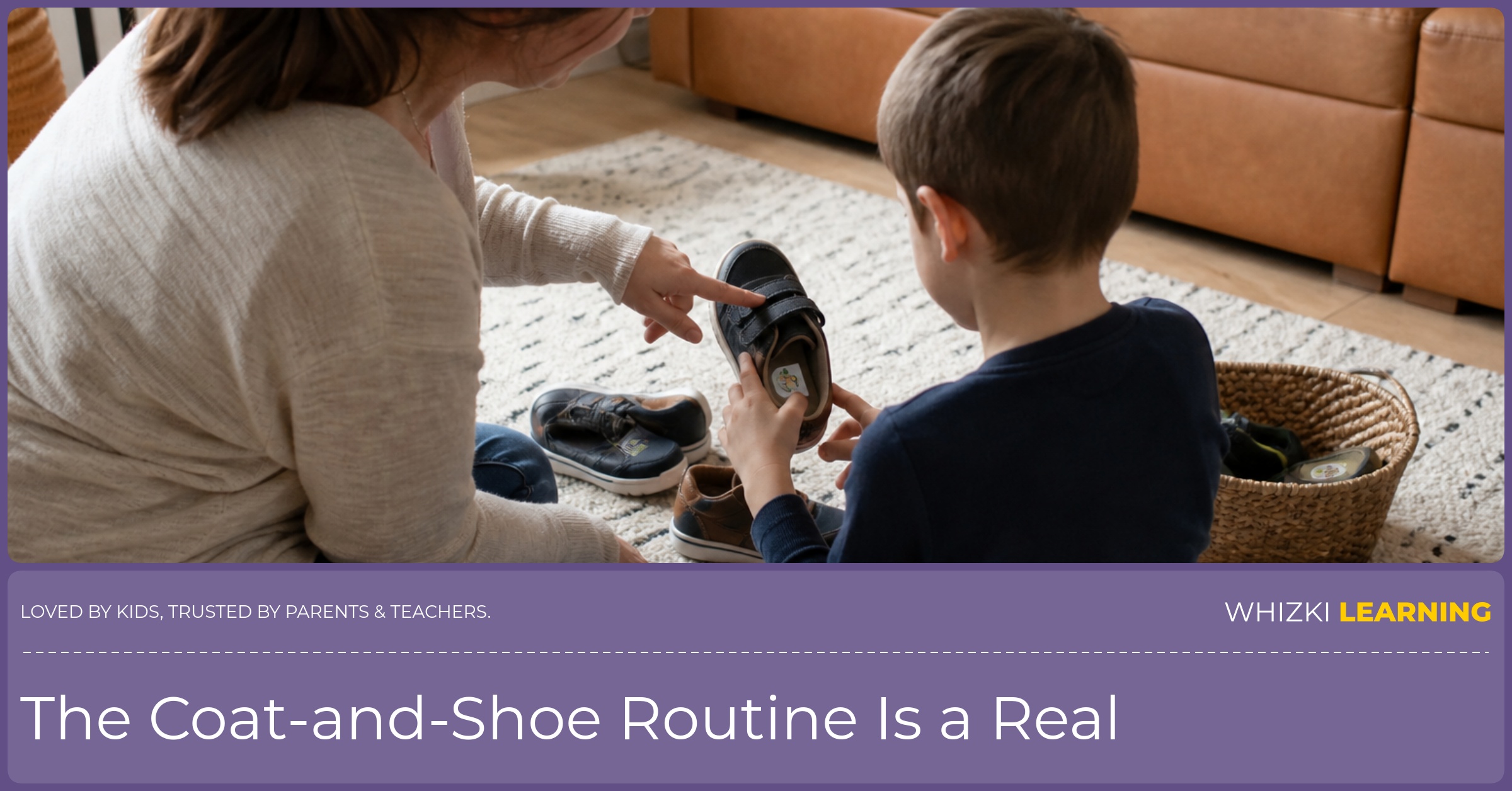
The shoe step teaches left-right awareness without a worksheet or a lecture. The adult can place a tiny sticker inside each shoe so the stickers make one picture when the shoes are side by side. The child checks the picture, points to the left shoe and right shoe, and then tests the fit by standing with toes forward.
The fastener step builds fine motor work that many occupational therapists watch closely in daily routines. Zippers, snaps, toggles, and buttons ask for two hands, steady shoulders, finger pinch, and patience. The goal is not a perfect buttoned coat every morning, but a child who gets a real chance to try the movement before the adult finishes the job.
Make one visual cue card
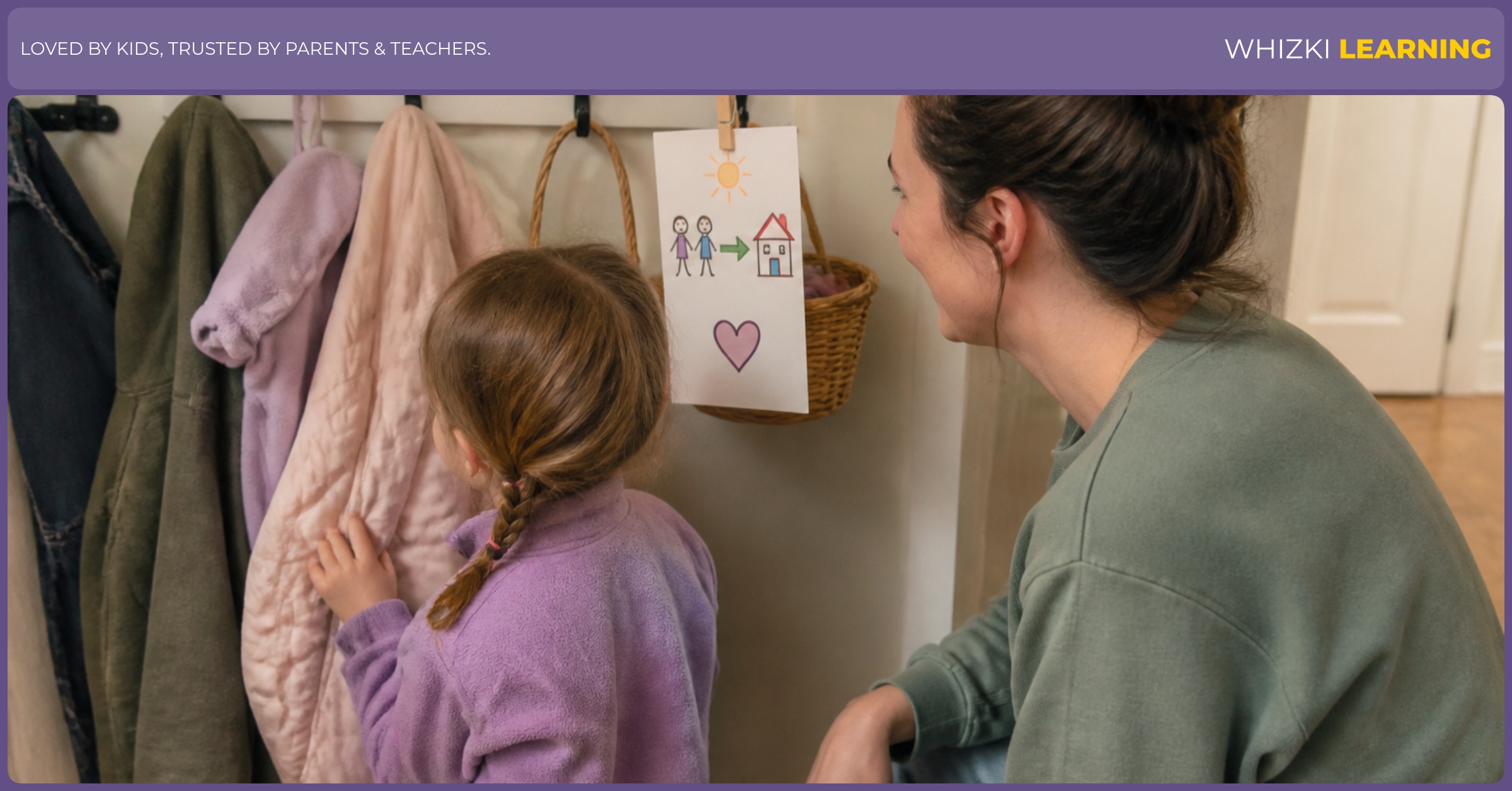
The visual cue card can be one index card, not a packet. Draw or tape three pictures in a row: coat, shoes, basket. A Reggio-inspired classroom often makes the environment speak clearly to children, and a picture card by the door gives the child a quiet reminder without another adult command.
The cue card takes about five minutes to make with an index card, a marker, tape, and one clothespin. Put the card at the child’s eye level near the coats, then move the clothespin along the pictures as each step is finished. For a child who loves ownership, invite the child to color the shoe picture or add a small photo of the family’s actual basket.
The cue card should say less, not more. Use one spoken line for each picture: coat on, shoes matched, gear away. Speech-language pathologists often use simple visual supports with short language because young children process the picture and the words together more easily when the adult does not keep talking over the task.
Use a decision tree for practice
The decision tree begins with one honest question: are we practicing, or are we leaving? Practice time can be ten calm minutes after snack, before pretend play, or after lunch. Leaving time is different because a tired adult and a fixed appointment do not make the best teaching partners.
If the answer is practice, the adult gives the child real turns with low stakes. The child can try the zipper for twenty seconds, flip a shoe around, or carry the hat to the basket. Montessori practical-life work uses repeatable daily actions because children learn independence through meaningful movement, not through being rushed through every step.
If the answer is leaving, the adult can name the job and help sooner. The adult might say, “I will start the zipper, and you pull the tab,” or “I will put the boots in front, and you choose the first foot.” The NAEYC view of developmentally appropriate practice gives room for adult support when time, weather, or safety matters.
If the routine keeps falling apart at the same point, treat the snag like a small investigation. If shoes are always missing, park one low basket by the door. If mittens disappear, clip mittens to the coat sleeves for a week and see whether the cleanup step becomes easier.
For families who like a paper helper, the printable practice pages in the Learning Hub can sit beside the door cue card for short, hands-on review. A printable can support the routine, but the real learning still happens when the child touches the coat, turns the shoe, and solves the next small problem.
Adjust by age and time
The age adjustment should match the child in front of the adult, not a chart on the wall. A 3-year-old may only put a hat in the basket and push arms into sleeves. A 7-year-old may read a short written cue, check the weather, and pack gloves without much talking.
The practice length should stay short. Three-year-olds often do best with two or three minutes and one target, such as shoes side by side. Five- to 7-year-olds can usually handle five to eight minutes with a challenge, such as zipping halfway and checking the left-right sticker picture.
The family plan can live in the family learning planner if the door routine needs a place on the weekly rhythm. One small note, such as “practice zipper after lunch on Tuesday,” keeps the plan realistic. NAEYC guidance reminds adults to use routines as learning chances while still protecting play, rest, and warm relationships.
Make cleanup part of the task
The cleanup step closes the learning loop because the child sees where each item belongs. In Reggio and Montessori settings, order in the environment helps children act with less adult correction. A low hook, a shoe tray, and one basket give the child a simple map for the next attempt.
The cleanup step also builds sorting and counting in a natural way. The child can count two shoes, match two mittens, or sort dry socks away from wet snow pants. If your family enjoyed collecting leaves and acorns in the previous fall season guide, the same hands-on sorting habit fits boots, hats, and outdoor gear.
The honest limit is that cleanup will not look tidy every day. A child may drop a coat under the hook after a long morning, and the adult may choose connection over correction. The teaching move is to reset later with the cue card, name the next step, and let the child repair one part of the space.
The coat-and-shoe routine becomes easier when the adult stops treating every doorway moment as a test. Practice during calm minutes, help during rushed minutes, and let the cue card carry some of the reminding. A child learns order, left-right awareness, fasteners, problem-solving, and cleanup through the ordinary work of getting ready to go outside.