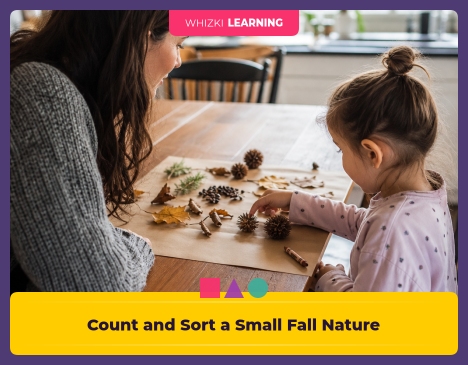
When your child wants to bring home every crunchy leaf and you are picturing dirt on the table, choose five safe pieces or five photo cards and make one small sorting mat today. A tiny fall collection gives preschoolers and kindergarteners enough real math to touch without turning the afternoon into a cleanup project.
Reviewed by Whizki Editorial Team, Early Childhood Education Editors.
Start with one small, legal collection
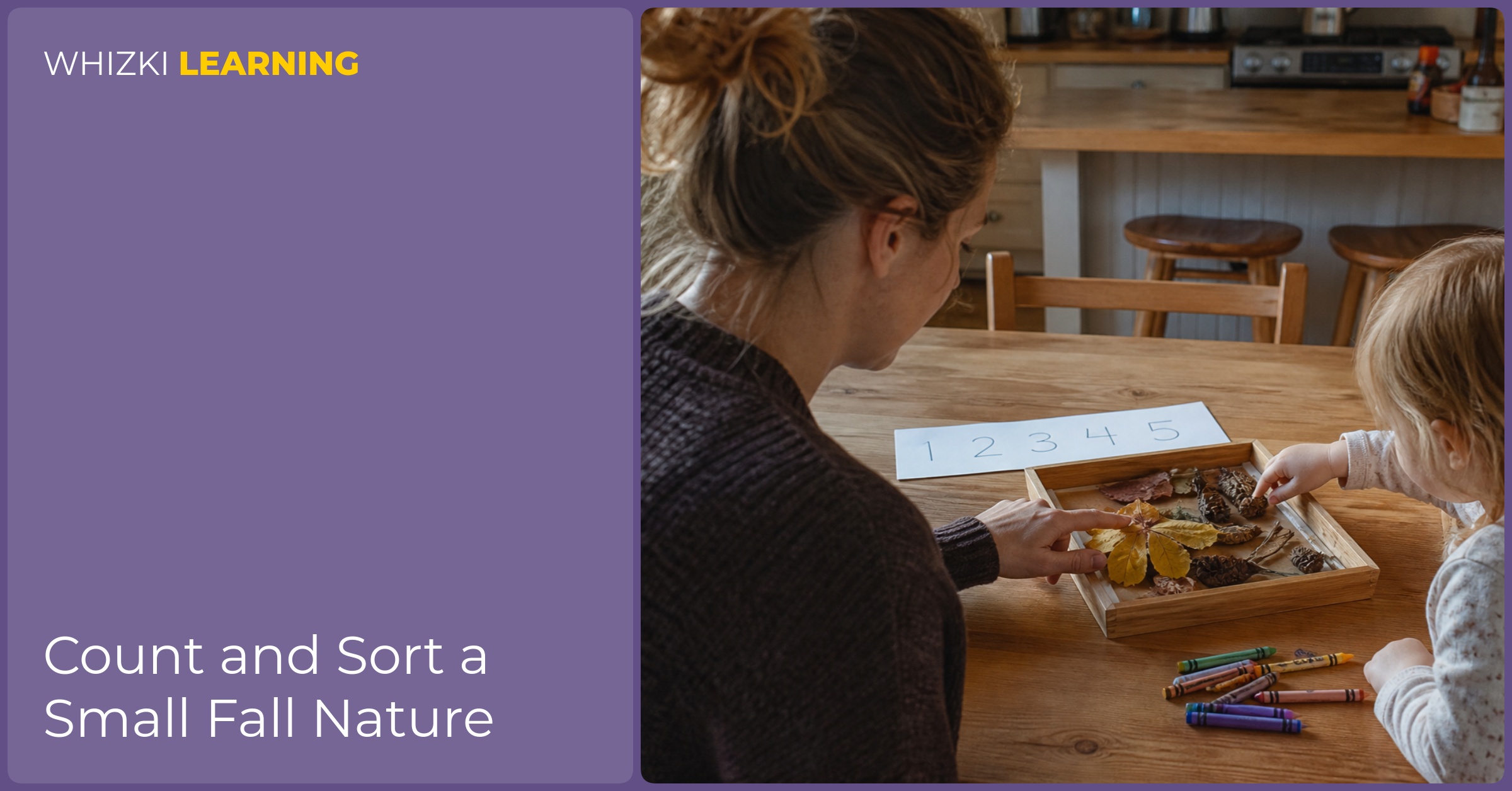
The fall nature collection should fit in one small bowl, lunch bag, or paper plate. The best starter set is five to ten permitted items, such as fallen leaves, empty seedpods, short twigs, pine needles, or nature photo cards from home.
The legal part matters because parks, school gardens, preserves, and apartment grounds may have rules about removing natural material. The NAEYC guidance I use in preschool planning favors respectful, hands-on exploration, so the child can observe natural objects closely and return the material when local rules require leaving the area as found.
The adult job is to set a clean boundary before the child starts hunting. Say, The collection is for looking, counting, and sorting, and the collection goes back outside after the game if the place has that rule.
Use one rule, then change only one rule
The sorting rule should stay simple at first because young children are still learning how to hold one idea in mind. Start with one visible rule, such as color, size, shape, edge feel, or whether the item is a leaf or not a leaf.
The Reggio Emilia habit of careful observation fits beautifully here because the child gets time to notice before the adult names every answer. Ask, What do you see that could go together, and wait long enough for the child to touch, compare, and decide.
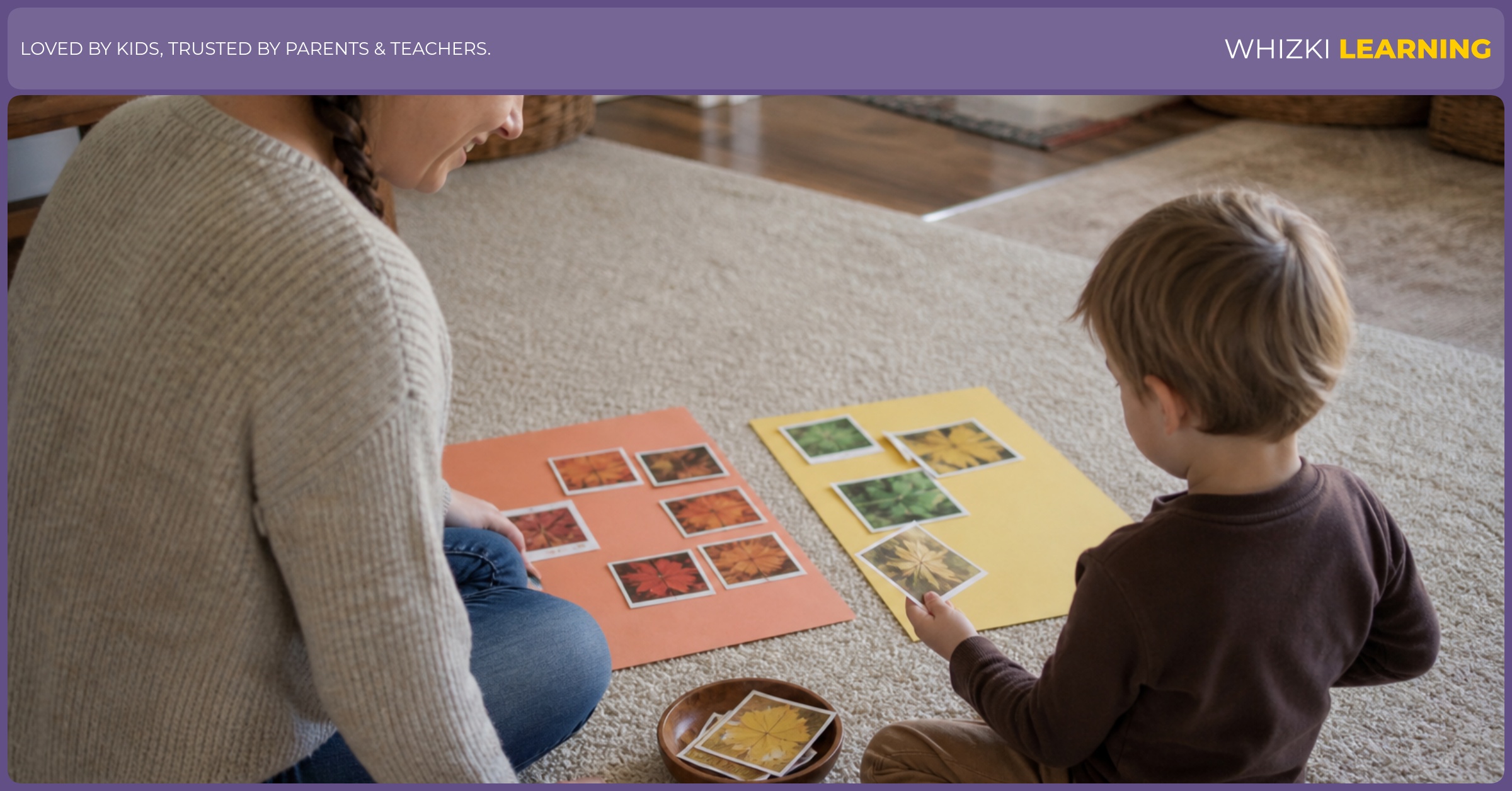
The one changing rule is the heart of the activity. After the child sorts by color, mix the same collection and sort by size, so the child learns that the same objects can belong to different groups when the rule changes.
A printable number strip or fall counting page can help when the child wants a paper marker for each item. The counting ideas in the numbers learning hub pair well with a small bowl of leaves, but a scrap of paper and a crayon work too.
Run the routine in 20 minutes
The 20-minute routine keeps the math alive without wearing out the child. Spend five minutes gathering or choosing cards, five minutes counting, five minutes sorting by the first rule, and five minutes mixing and sorting by a new rule.
The occupational therapy basics I use in classroom centers start with stable hands and a clear work space. A tray, placemat, muffin tin, or two pieces of paper gives the child a boundary, and the boundary reduces sweeping arms, lost pieces, and table clutter.
The counting step should include one touch for one number word. Move each leaf from the left side of the mat to the right side while counting aloud, because the movement helps the child match one object to one spoken number.
The age adjustment is small but important. A 3-year-old may count three objects and sort big or little, while a 6- or 7-year-old may count ten objects, record the total with tally marks, and explain why one tricky twig belongs in a chosen group.
Use a no-collection version
The no-collection version protects fragile spaces, rainy afternoons, and families who do not want natural material indoors. Take quick photos on a walk, use old calendar pictures, draw leaf cards, or print simple fall picture cards before the child starts sorting.
The speech-language practice of modeling category words helps the no-collection version feel like real learning instead of busywork. Use words like smooth, bumpy, long, short, curled, pointed, brown, and yellow while the child places each card.
The no-collection version can connect to seasonal conversations without turning math into a holiday lecture. If the family is comparing fall traditions, holiday and culture printables can sit beside the nature cards for gentle language practice after the counting game.
Try decision checks for tricky moments
The decision checks keep the activity from becoming a battle over correct answers. If the child grabs too many pieces, reduce the set to five and save the rest for another day.
The Orton-Gillingham approach often uses see, say, touch, and move routines for early literacy, and the same multisensory rhythm helps early math. Let the child see the leaf, say the counting word, touch the leaf, and move the leaf into the group.
The tricky object is useful because the child has to explain a choice. A curled brown leaf could go with brown pieces during the color rule, and the same curled brown leaf could go with curled pieces during the shape rule.
The honest limit is attention span. If the child starts tossing pieces, eating seedpods, or arguing over every rule, stop after one good count and call the activity complete.
Connect the walk to more fall math
The fall walk can become a bigger pattern hunt when the family has time. The previous fall season guide shows a neighborhood leaf color map, which is a natural next step after a child has practiced sorting one small set.
The Montessori tradition treats real objects as a bridge from hand to mind, and fall materials give that bridge a familiar feel. A child who sorts five leaves by color today may be ready to compare two trees, two sidewalks, or two photo piles later in the week.
The return step can be part of the math language. Count the pieces back into the bowl, walk the collection outside, and count the pieces out again where local rules or family choices say natural material should go back.
A small fall collection is enough for real early math because the child can count, compare, explain, and change a rule without needing a worksheet stack. Keep the set tiny, keep the rule clear, and let the child handle the pieces as long as safety and local rules allow.
The best version is the version the adult can repeat without dread. Five leaves, one tray, one changing rule, and a calm return outside can become a weekly fall routine for ages 3 to 7.