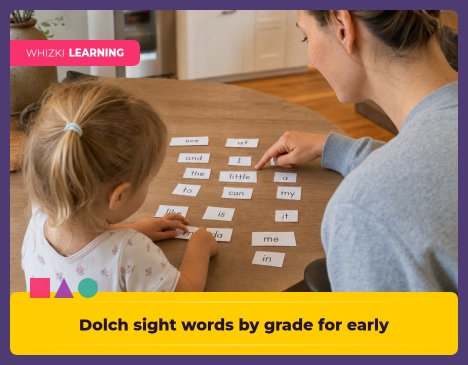
If a sight-word list is sitting on your counter while dinner burns and your child guesses every word, print one small grade list, circle five words, and practice those five for three minutes today. Sight words feel less messy when the list is sorted by reading level and the practice stays short. A calm, repeatable routine beats a long flashcard session almost every time with ages 3 to 7.
Reviewed by Whizki Editorial Team, Early Childhood Education Editors.
What Dolch sight words are
The Dolch sight word list is a set of high-frequency English words gathered by educator Edward William Dolch in the 1930s and 1940s. Early readers meet many Dolch words before phonics alone can carry the whole job, so teachers often teach a small group of words by sight while continuing sound work. The NAEYC guidance on developmentally appropriate practice fits that balance, because young children need reading instruction that is playful, brief, and matched to the child in front of the adult.
The Orton-Gillingham approach reminds teachers and parents to connect sight-word practice with seeing, saying, tracing, and using the word in a real sentence. A child may remember a word faster when the child says the sounds that are regular, notices the tricky part, and writes the word with a finger or pencil. Sight-word practice should never replace phonics, because phonics gives children a way to read new words instead of memorizing every page.
The Dolch list is an older collection of common words sorted into grade bands and a separate noun list, with many words chosen because young children see those words in early books. The Fry list is a larger ranked list of high-frequency words across school reading, so Fry is broader while Dolch is especially handy for preschool through early elementary practice.
Pre-primer Dolch sight words
The pre-primer list is the best starting place for many preschool and early kindergarten readers. Montessori and Reggio-inspired observation both ask adults to watch the child first, so a child who is still building letter names can touch, match, and read only a few words at a time. The goal is recognition in a playful context, not a race through a stack.
Pre-primer Dolch words: a, and, away, big, blue, can, come, down, find, for, funny, go, help, here, I, in, is, it, jump, little, look, make, me, my, not, one, play, red, run, said, see, the, three, to, two, up, we, where, yellow, you. The pre-primer list fits short practice because many words show up in picture books, labels, and morning messages.
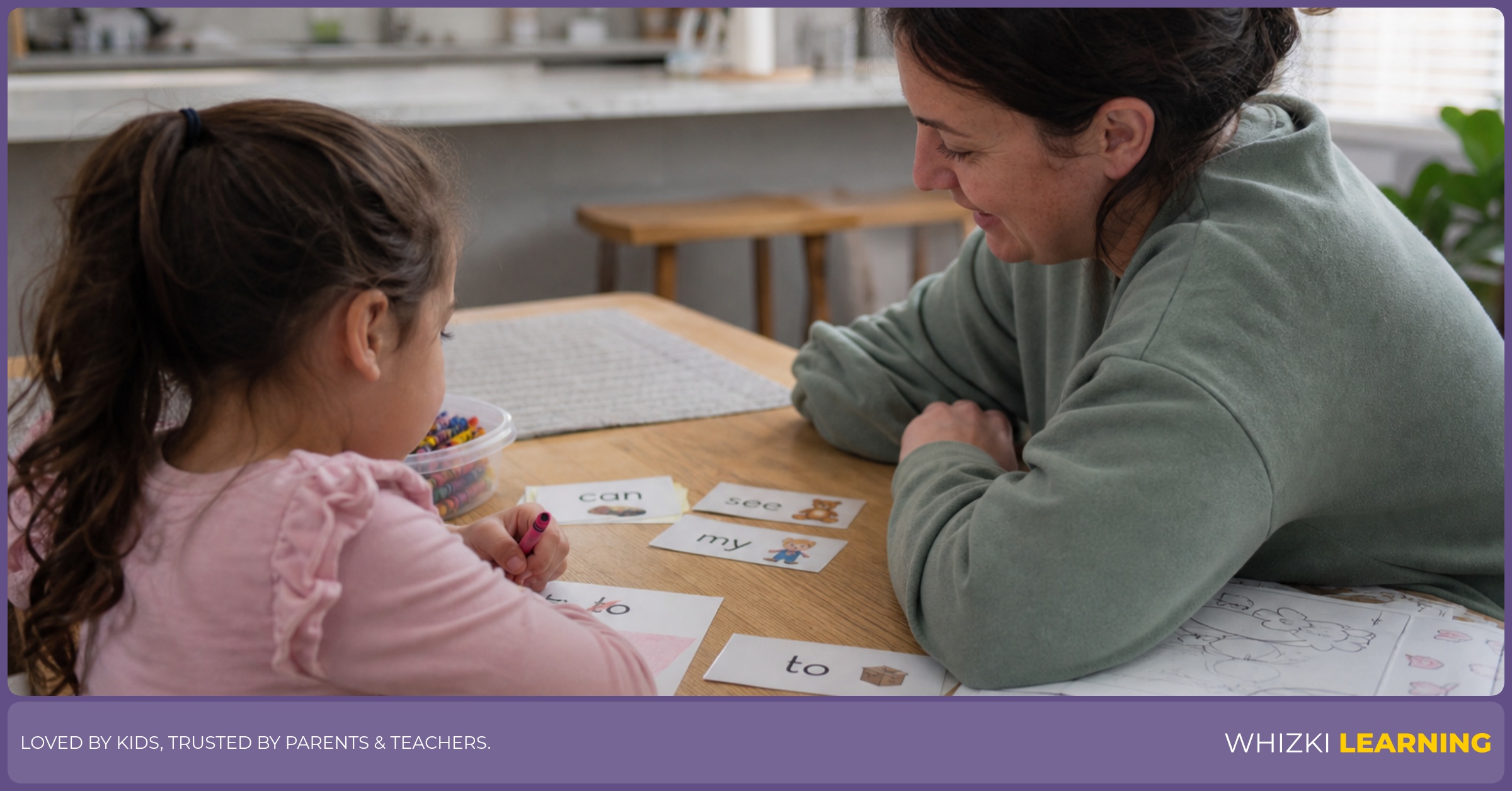
Pre-primer practice works best when the adult names the word, the child repeats the word, and the child finds the word on a page or card. Occupational-therapy basics also matter here, because a thick crayon, a slant board, or a finger trace in sand can make practice easier for small hands. For ready-to-print pages, our sight-words printables keep the work hands-on and screen-free.
Primer Dolch sight words
The primer list usually fits kindergarten readers who know many letters and can sit for a short reading routine. The Orton-Gillingham habit of reading, spelling, and using a word in a sentence helps primer words move from guessing into real recognition. A speech-language pathology practice I use in classrooms is to ask for a short oral sentence, because spoken language supports the printed word.
Primer Dolch words: all, am, are, at, ate, be, black, brown, but, came, did, do, eat, four, get, good, have, he, into, like, must, new, no, now, on, our, out, please, pretty, ran, ride, saw, say, she, so, soon, that, there, they, this, too, under, want, was, well, went, what, white, who, will, with, yes. The primer list has several words that children hear all day, so the adult can tuck practice into snack labels, shared reading, and quick sentence building.
Primer practice should stay small enough for success. Five known words and one new word make a better lesson than twenty mixed cards for a tired child. If kindergarten is the main focus, the kindergarten list gives a classroom-friendly view of the same early-reading stage.
The premium sight-word worksheet set in our worksheet sets pairs tracing, read-and-find pages, and sentence practice for preschool through first grade. The complete pack lives in Plus for families who want the whole sight-word sequence in one place.
First-grade Dolch sight words
The first-grade list fits children who are beginning to read short books with more independence. The Orton-Gillingham approach still matters, because many first-grade Dolch words have regular sound parts that children can map instead of memorizing as whole shapes. The adult can say, “Which part can the child sound out, and which part needs extra attention?”
First-grade Dolch words: after, again, an, any, as, ask, by, could, every, fly, from, give, going, had, has, her, him, his, how, just, know, let, live, may, of, old, once, open, over, put, round, some, stop, take, thank, them, then, think, walk, were, when. The first-grade list belongs in real reading as soon as possible, because isolated cards do not show whether the child can use the word inside a sentence.
Grade 2 and grade 3 Dolch words can wait for most children in the 3 to 7 age band unless an advanced reader is asking for more books. NAEYC guidance would still put the child’s readiness ahead of a calendar target, especially for a young kindergartner or a first grader who is still building confidence. A teacher or reading specialist can help when a child knows letter sounds, receives steady practice, and still cannot recognize common words after repeated review.
How to print and practice the list
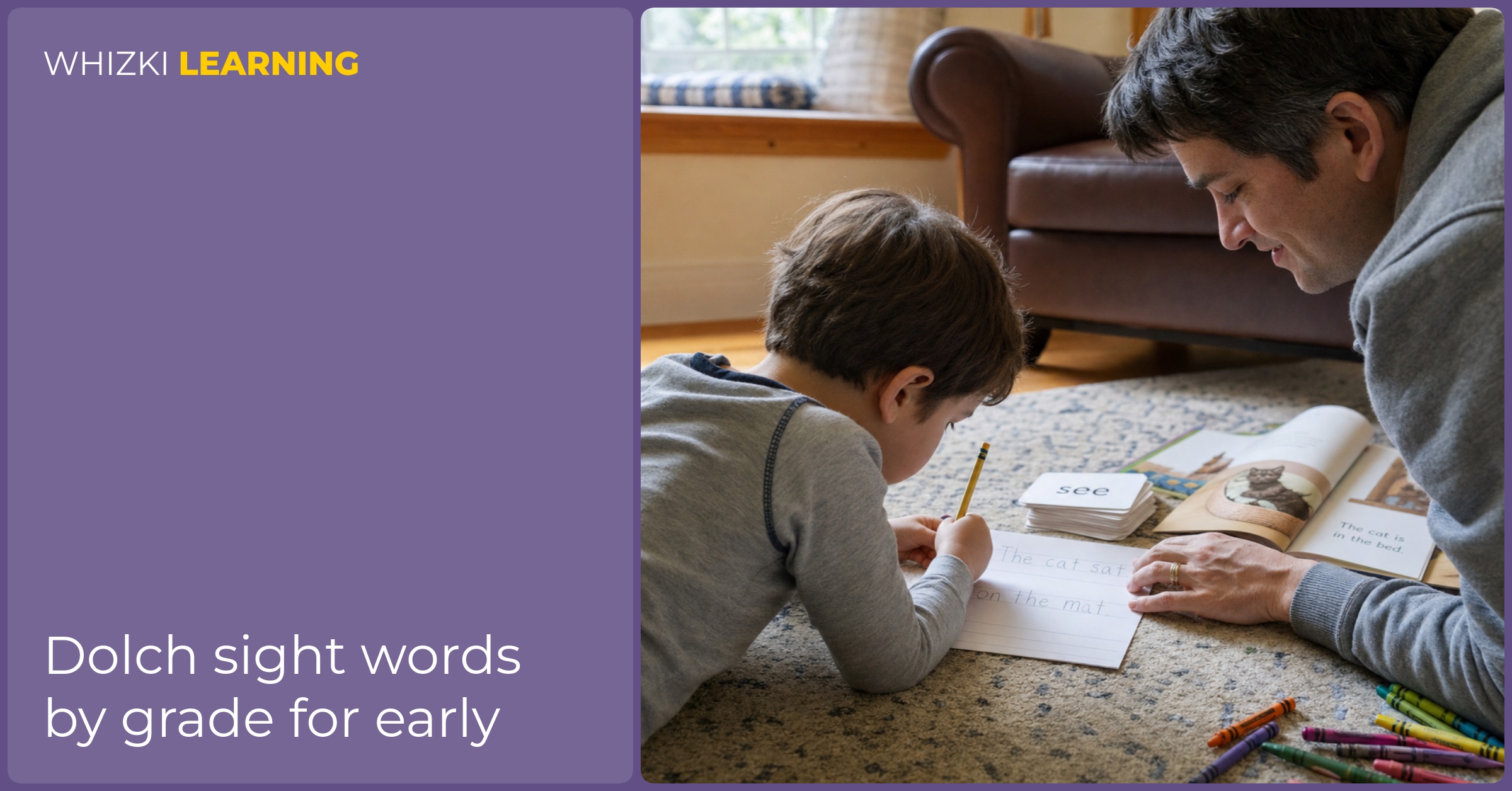
A printable Dolch list works best when the adult treats the paper as a planning tool, not a test sheet. Reggio-style observation helps here, because the adult watches which words the child notices in books, signs, and play materials. The adult can mark known words with a dot, choose a tiny practice group, and save the rest for another week.
Occupational-therapy basics make printing practice more comfortable for young children. Large print, open spacing, and a short pencil or broken crayon can support a steadier grip and better attention. A child can also trace a word in rice, build a word with letter tiles, or tap the word on the table before writing the word on paper.
A simple routine is enough for most homes and classrooms. The adult reads the word, the child repeats the word, the child traces the word, and the child reads the word inside a short sentence. The whole routine can take three to five minutes, which is often the sweet spot before a young reader starts bargaining for a snack, a toy, or anything except another card.
Dolch sight words are useful when the list stays child-sized and connected to real reading. Pick one grade band, choose a few words, and let the child see those words in books, labels, and playful writing all week. Small, steady practice is the plan I trust most at the kitchen table and in the classroom.