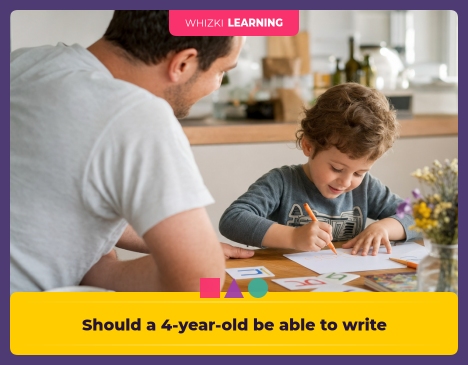
If preschool pickup left you worrying because another child signed a card and your 4-year-old made loops, take a breath: some 4-year-olds can write their name, many 4-year-olds cannot, and both are normal, so tonight’s next step is simply five relaxed minutes with the first letter. Name writing grows from hand strength, letter memory, attention, and confidence, and those pieces do not arrive on the same Tuesday for every child.
Reviewed by Whizki Editorial Team, Early Childhood Education Editors.
The short answer for age 4
A 4-year-old does not need to write a full name to be on track for preschool or kindergarten readiness. NAEYC guidance reminds early-childhood teachers to look at the whole child, which means a child who builds, draws, talks about stories, and joins play may be growing beautifully even without a readable signature.
Name writing often appears in uneven pieces before a full name appears on paper. A child may recognize the first letter, copy a few shapes, write from right to left, use giant letters, or mix uppercase and lowercase, and all of those attempts can be part of normal early writing.
The Orton-Gillingham approach starts with clear, multisensory links between a letter name, a letter sound, and the hand motion for forming the letter. For a wider age view, my companion guide on when name writing typically clicks explains why many children settle into name writing closer to 5 than 4.
Readiness signs matter more than the birthday
Readiness for name writing usually shows up in the body before the pencil shows a neat name. Occupational-therapy basics look for steady sitting, shoulder stability, finger strength, and the ability to use one hand for the crayon while the other hand holds the paper.
A child who enjoys playdough, stickers, beads with supervision, chalk, tongs, blocks, and short coloring bursts is building the same small-muscle control needed for letters. A child who avoids every mark-making tool may need more sensory-friendly choices before formal handwriting feels fair.
Reggio and Montessori observation both ask adults to watch what a child is already trying, rather than rush the child into a finished product. A 4-year-old who traces circles in flour, labels a drawing with one letter, or pretends to write a grocery list is showing early writing interest worth honoring.
Start with the first letter only
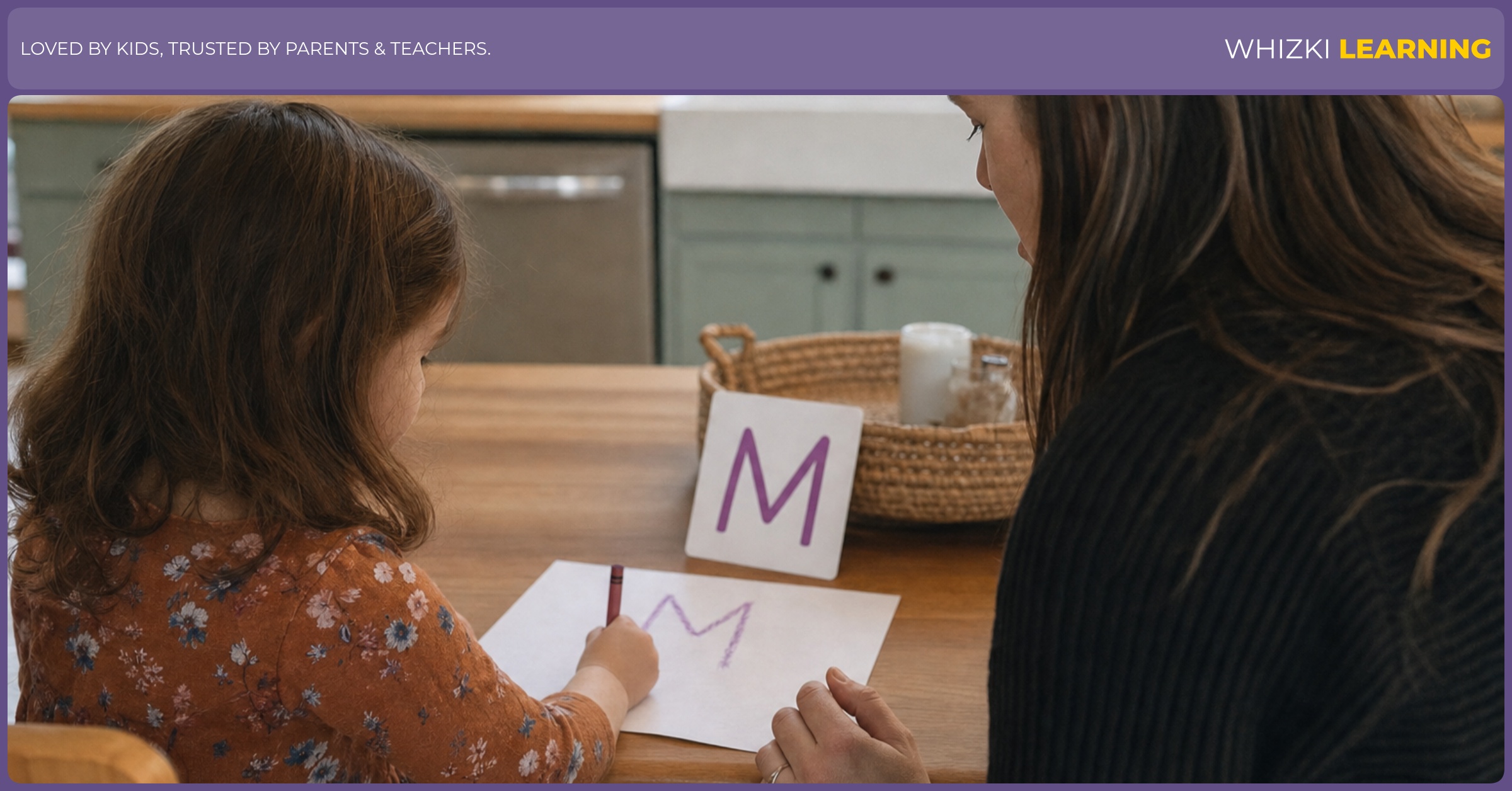
The first letter is enough for a 4-year-old starting name writing. The first letter gives the child a real piece of ownership without asking for five or eight separate motor plans in a row.
An Orton-Gillingham style mini-routine can be very simple at home. Say the child’s name, say the first sound if the name has a clear one, trace the capital letter with two fingers, and let the child make the letter big with a crayon, chalk, or finger paint.
The adult’s tone matters as much as the paper. Use language such as, “That is the first letter in your name,” or “Your hand made the tall line,” because specific noticing builds confidence better than a vague “good job.”
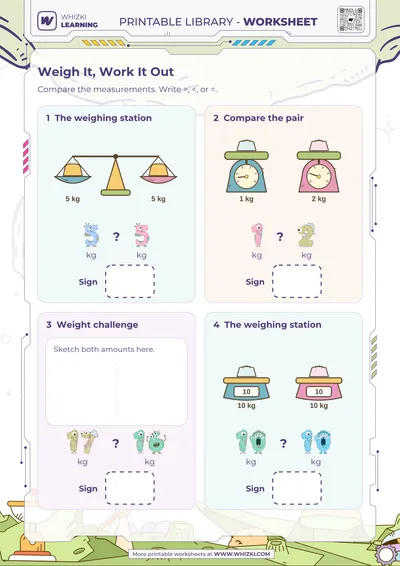
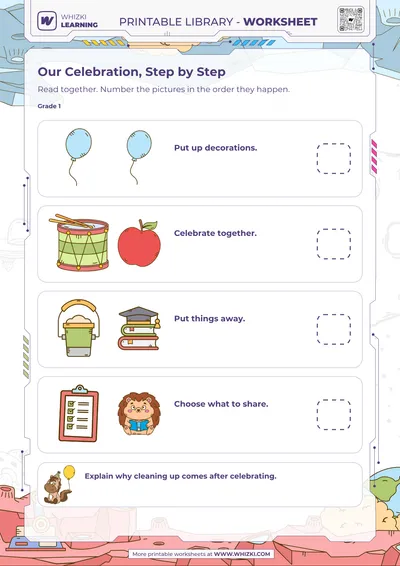
For a low-prep option, our printable library has simple early-learning pages that can support short, calm practice with letters and pencil control. Choose one page, stop while the pencil still feels friendly, and save the rest for another day.
How tracing can help without pressure
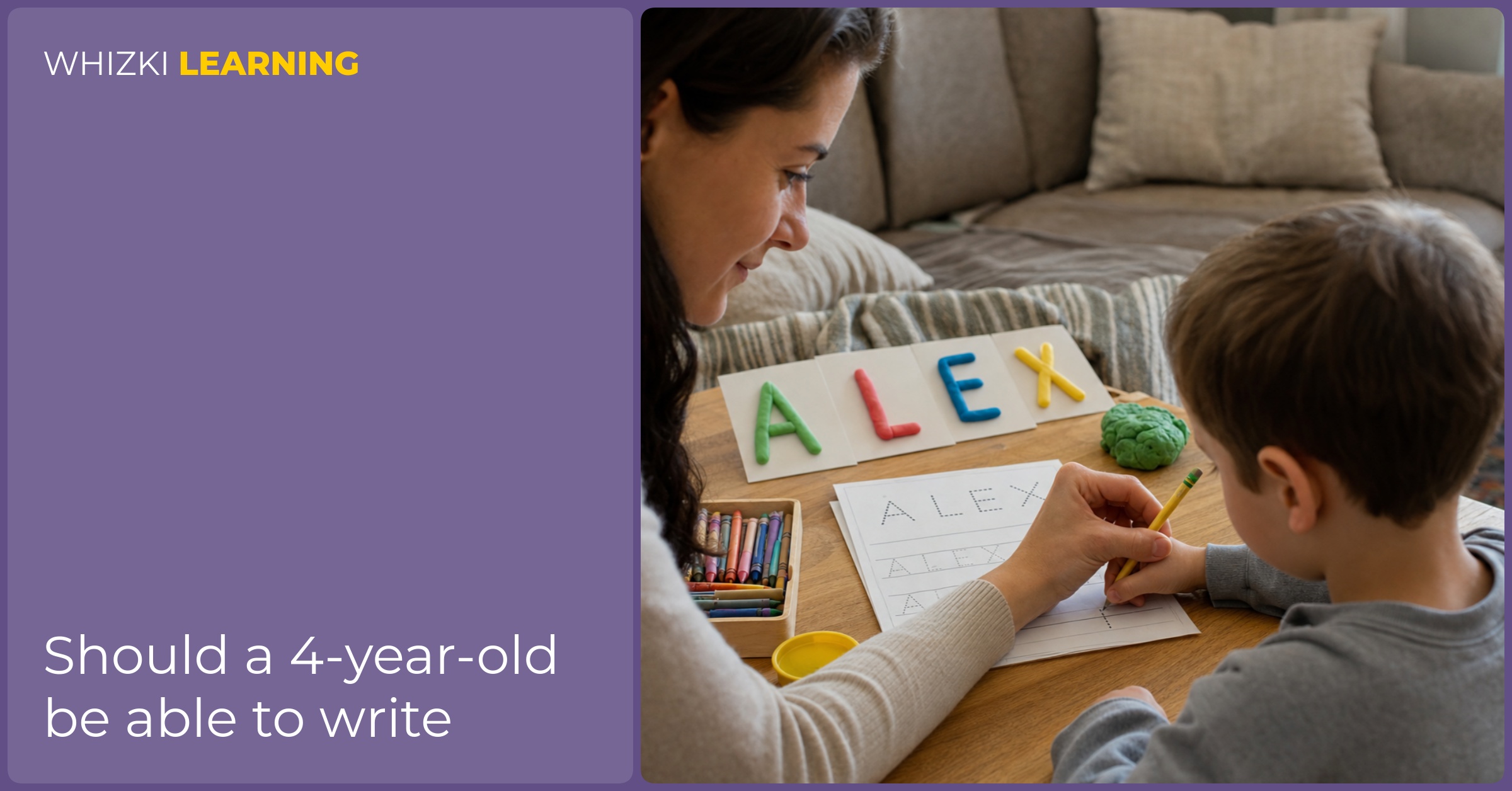
Name tracing can help when tracing stays short, personal, and connected to the child’s real name. Occupational-therapy practice usually favors warm-up movement first, so a few squeezes of playdough or wall drawing with chalk can prepare the hand before a pencil touches paper.
Good name tracing worksheets use large letters, clear spacing, and just a few lines rather than a crowded page. A worksheet should feel like a small invitation, not a test of whether a 4-year-old is ready for school.
Montessori-inspired handwriting work often begins with feeling the shape before writing the shape. Sandpaper letters, a finger path in a tray of rice, or a giant sidewalk-chalk letter can give the child feedback that a flat pencil line cannot always give.
When to ask for extra help
Extra help is worth asking about when a 4-year-old seems frustrated by all drawing tools, cannot make simple marks after many playful chances, or has trouble using one hand to steady paper. NAEYC-informed teachers usually look for patterns over time, not one rough afternoon after a long day.
An occupational therapist can look at grip, posture, hand strength, visual-motor coordination, and sensory comfort with writing tools. A speech-language pathologist or early-childhood teacher may also notice whether the child recognizes the letters in the name and hears the sounds in spoken words.
The kindergarten teacher is a helpful partner when a child is close to school entry. A short note such as, “My child recognizes the first letter but does not write the whole name yet,” gives the teacher useful information without turning name writing into a family battle.
Name writing is a milestone, not a race, and the first letter is plenty for many 4-year-olds. If you want one gentle early-learning idea each week, join the weekly newsletter and bring the next small step to the kitchen table.