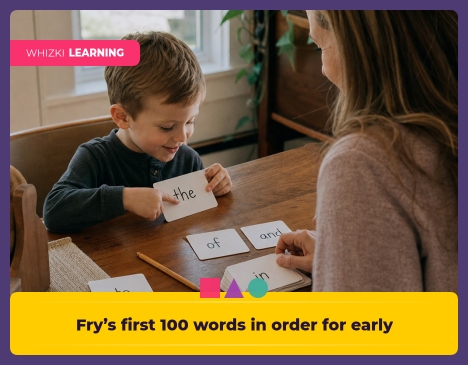
If your child freezes on tiny words like “the” and “was,” start today with the first ten Fry words on five-minute flashcards, then stop while practice still feels manageable. Fry’s first 100 words can feel like a lot at the kitchen table, especially when a preschooler wants to wiggle or a kindergartener says “I already know that.” The sequence below keeps the work small, predictable, and easy to print.
Reviewed by Whizki Editorial Team, Early Childhood Education Editors.
Why Fry order helps beginning readers
Fry’s first 100 words are high-frequency words, which means beginning readers see the words again and again in simple books, labels, and classroom directions. Edward Fry’s frequency work gives families a practical order instead of a random stack of cards. In Orton-Gillingham lessons, I still connect many Fry words to sounds and spelling patterns whenever the word allows that connection.
The frequency order works because the earliest words pay off quickly in real reading. A child who recognizes the first few Fry words can read more of a shared sentence without stopping at every step. NAEYC guidance reminds early-childhood teachers to keep literacy meaningful, playful, and tied to real books, and Fry order fits that gentle rhythm well.
Beginning readers do best when adults keep practice brief and successful. In Reggio-inspired observation, the adult watches the child’s attention, grip, posture, and mood before adding more cards. The goal is not a giant memorized pile, the goal is a child who notices useful words and feels willing to try again tomorrow.
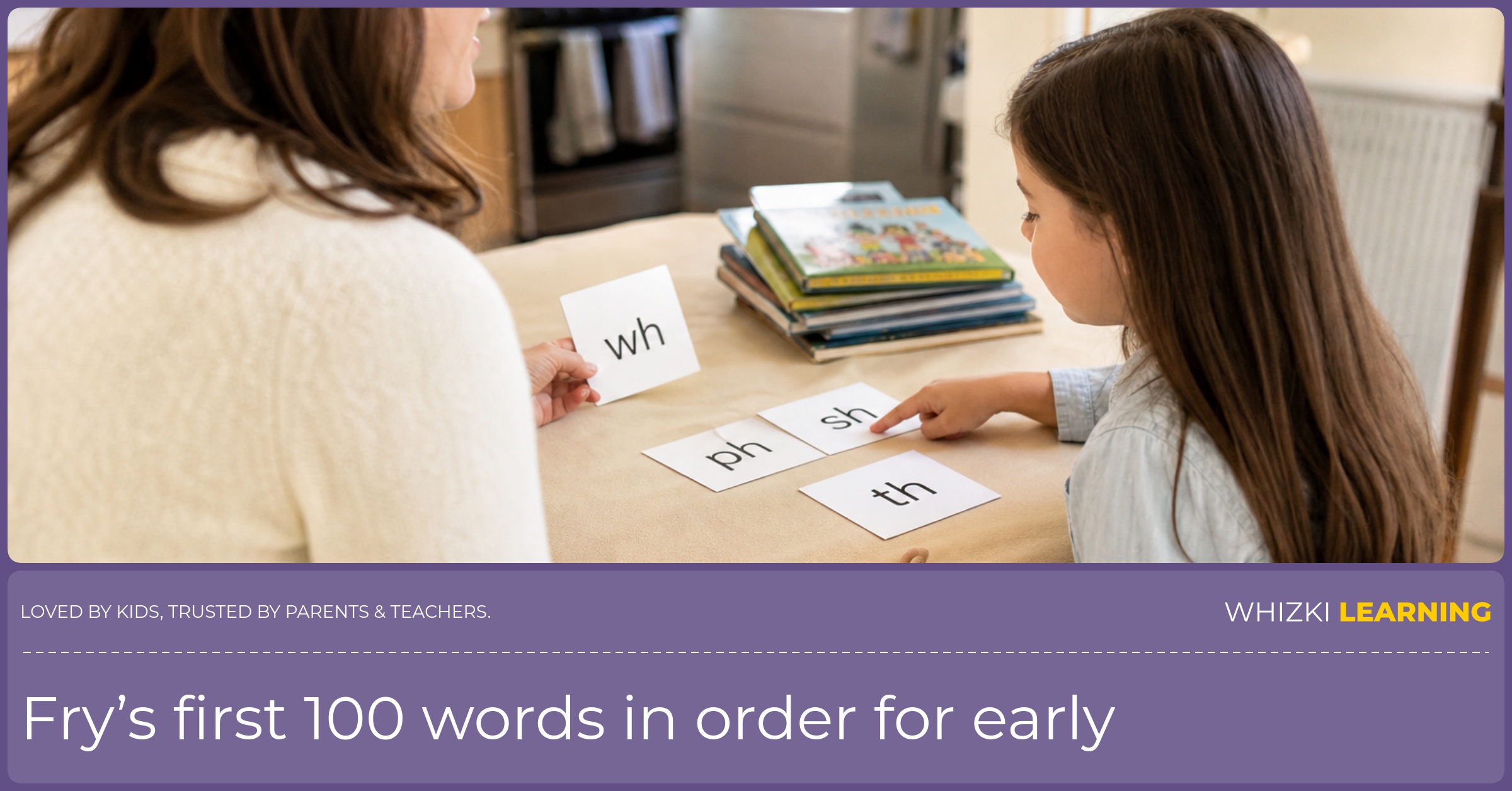
Fry’s first 100 words in ten groups of ten
The Fry list below follows the official frequency order for the first 100 words. Reggio practice has taught me to present one small collection, watch how the child handles the collection, and adjust the next day’s practice before frustration builds.
The ten-word chunks give a child a clear beginning and ending point. Montessori-style control of error also helps here, because a small set lets a child compare cards, notice patterns, and feel the difference between familiar and new words.
- Group 1: the, of, and, a, to, in, is, you, that, it
- Group 2: he, was, for, on, are, with, as, I, his, they
- Group 3: be, at, one, have, this, from, or, had, by, hot
- Group 4: but, some, what, there, we, can, out, other, were, all
- Group 5: your, when, up, use, word, how, said, an, each, she
- Group 6: which, do, their, time, if, will, way, about, many, then
- Group 7: them, would, write, like, so, these, her, long, make, thing
- Group 8: see, him, two, has, look, more, day, could, go, come
- Group 9: did, my, sound, no, most, number, who, over, know, water
- Group 10: than, call, first, people, may, down, side, been, now, find
How to practice with printable flashcards
Printable flashcards work best when the cards are large enough for easy tracking and plain enough for quick recognition. An occupational-therapy heuristic I use is simple: feet supported, paper steady, and hand work short enough that the body stays organized. A child who is sliding off the chair needs fewer cards, not a longer speech.
Speech-language practice also gives a helpful cue: say the word clearly, use the word in a short sentence, and let the child say the word back without rushing. The adult can model tricky words, then mix one hard card between two easy cards. The easier cards keep confidence in the routine.
Printable framing matters because busy borders can pull attention away from the word. Our sight-words printables give families simple pages for matching, tracing, and reading practice without turning the table into a craft explosion.
Sight-word printables should be handled like a tool, not a test. Place ten cards face up, ask the child to find a named word, read two cards together, then tuck the stack away while the child is still willing to come back later.
The premium Fry 100 Read, Build, Write worksheet set is grouped with our worksheet sets for quick table work. The complete pack lives in Plus.
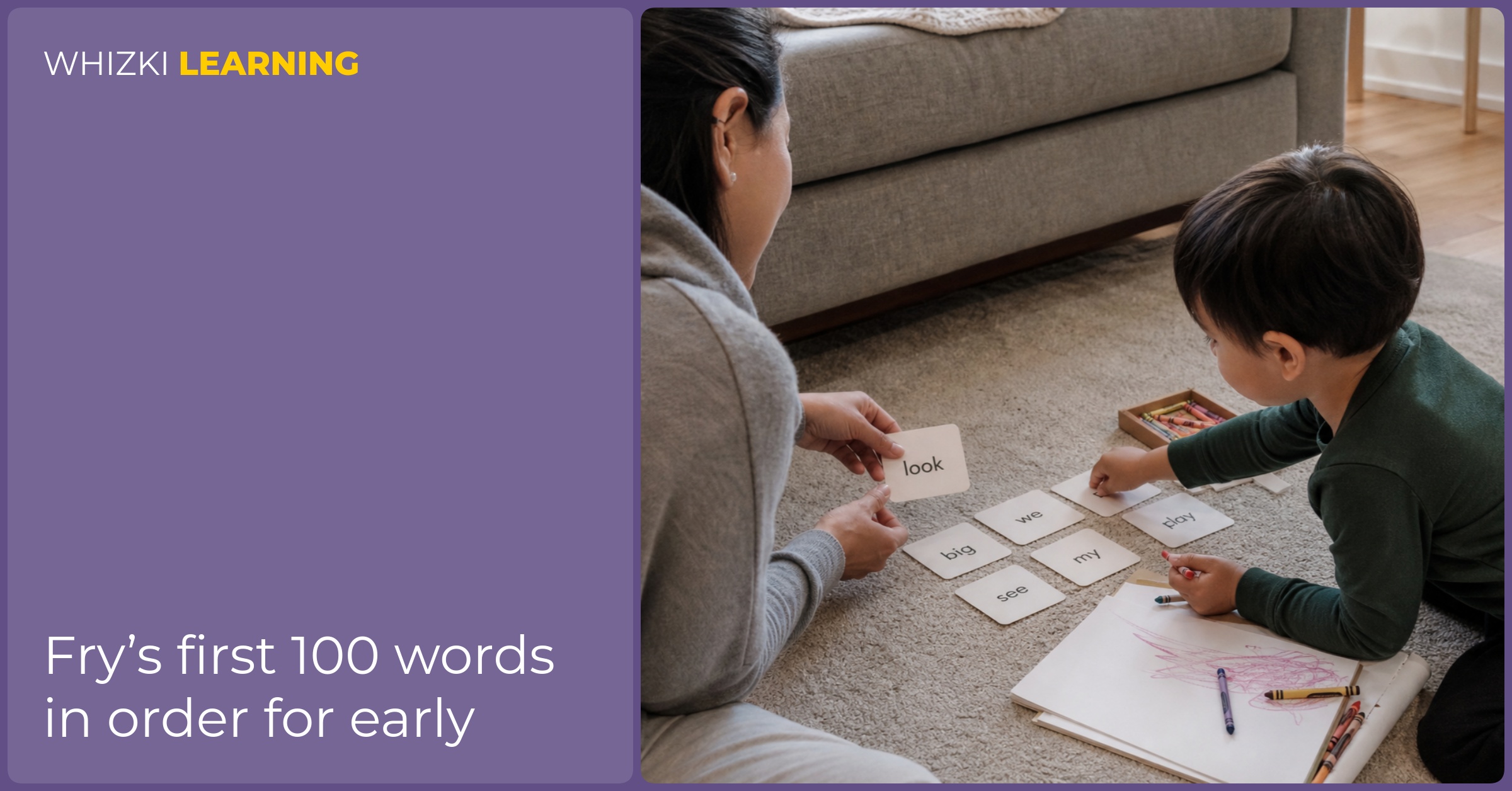
How Fry and Dolch lists fit together
Fry words and Dolch words overlap because both lists come from words children meet often in early reading. Fry order is frequency-based across a larger word collection, while Dolch sorting is often used by grade band. Families comparing lists can check the Dolch lists by grade when a teacher sends home a Dolch packet.
The Dolch grade bands can help a classroom plan, and Fry order can help a parent decide which card to teach next. NAEYC-aligned practice keeps the focus on meaningful reading, so either list should be paired with real books, songs, labels, and child-made sentences.
A practical classroom choice is to follow the teacher’s required list and use Fry order for extra practice at home. Orton-Gillingham teaching still matters during sight-word work because many so-called sight words contain regular sound patterns that children can map instead of guessing.
A small weekly plan for ages 3 to 7
A weekly plan should begin with one ten-word group and repeat the group across several short sessions. Orton-Gillingham practice favors review before new learning, so Monday can be show-and-say, Tuesday can be match-and-read, and Wednesday can be trace-and-read. Thursday and Friday can be real-book spotting with only two or three cards nearby.
Monday practice can last three minutes for a preschooler and five to seven minutes for many kindergarten children. The adult names the word, the child touches the card, and both readers say the word in a sentence. The session ends with an easy card so the child leaves practice feeling capable.
Preschool practice should stay playful because ages 3 and 4 are still building attention, hand strength, and print awareness. Occupational-therapy basics support big movements first, so a child can step on a floor card, tap a table card, or place a toy beside a known word before pencil work begins.
Kindergarten practice can add writing when the child’s grip and stamina are ready. Montessori and Reggio classrooms both remind adults to watch the child in front of us, because a neat page means less than a child who can read the word later in a real book.
Fry’s first 100 words become kinder when adults treat the list as a small routine rather than a race. Ten words, a pencil, and one calm reading turn can carry a child farther than a long stack of cards after bedtime patience is gone.