
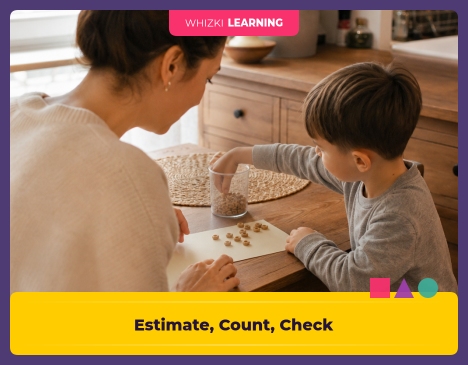
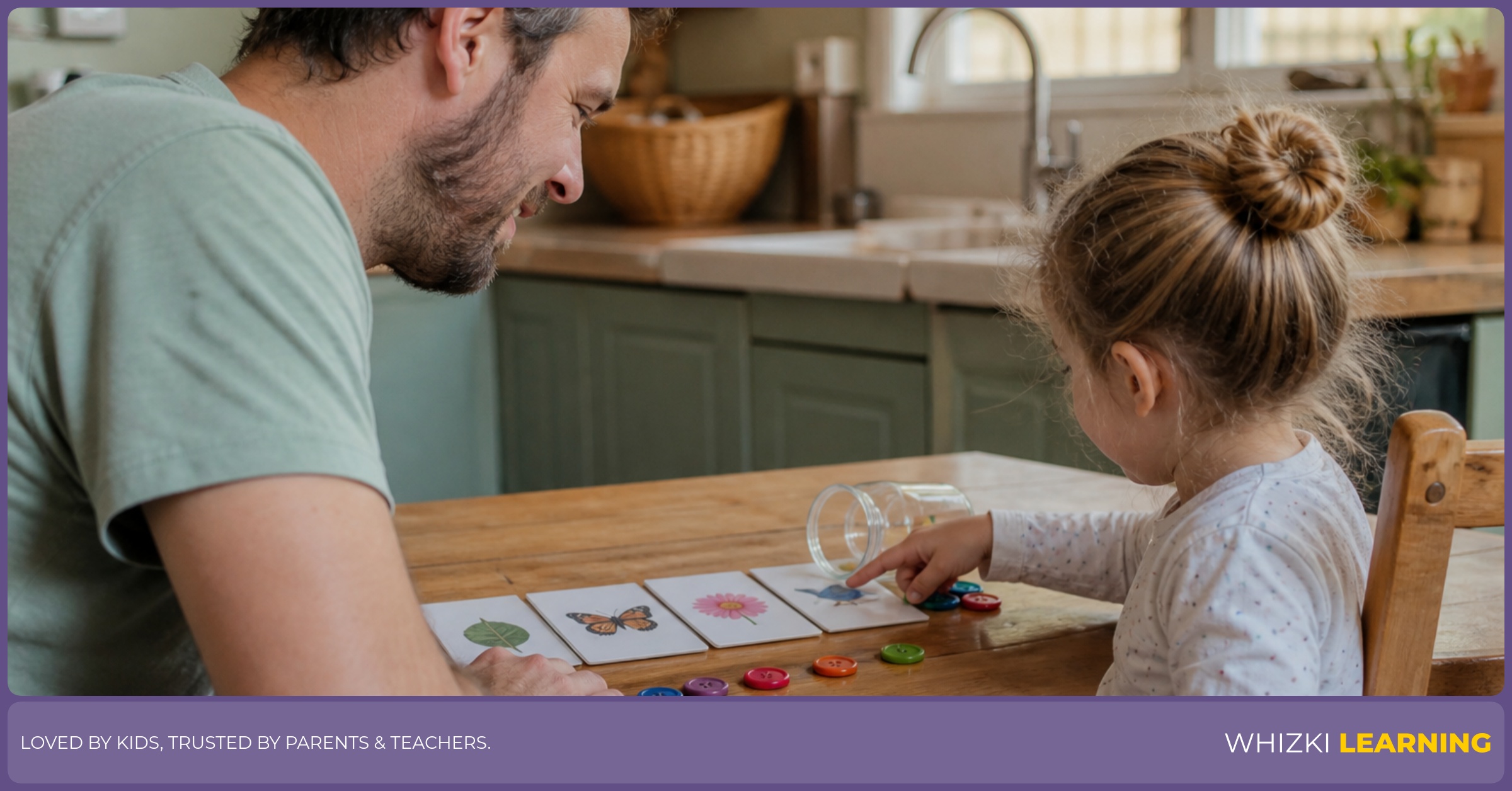
When dinner is almost ready and a child is bargaining for one more snack, pour a small transparent cup of buttons, dry pasta, or cereal and ask, "About how many do you think are in the cup?" before you count together. The next step is simple: accept a reasonable guess, count each object with one touch per number word, then compare the estimate and the count without calling the estimate wrong. The whole routine can take two minutes and still feel like real math.
Reviewed by Dr. Anna Klein, EdD, Early Childhood Curriculum Specialist.
What the routine needs
The estimate-count-check routine needs a small transparent cup, 5 to 20 matching objects, and a calm adult voice. NAEYC guidance reminds early-childhood teachers to build math from meaningful play, and a cup of snack crackers or buttons feels more useful to a young child than a worksheet page. A clear cup matters because children can scan the amount before counting.
The adult says, "Take a careful look. About how many?" and then waits long enough for the child to think. A reasonable guess is any number close enough to show that the child looked at the group, not a wild number shouted for a laugh. For a child age 3 or 4, a reasonable guess for 6 objects might be 4, 5, 6, 7, or 8.
The routine pairs nicely with subitizing, which is the skill of seeing small groups without counting one by one. If your child is still building that visual sense, the previous math at home guide gives a gentle warm-up before estimating a larger cup. Subitizing is not required for the cup routine, but subitizing can make the first guess less random.
How to count and check
The adult empties the cup onto the table and lines up the objects from left to right. I borrow the same explicit, multisensory teaching habit used in Orton-Gillingham lessons: model the action, say the language, then let the child try the next turn. The counting goal is one-to-one correspondence, which means one touch, one object, one number word.
The child points, slides, or taps each object while saying the numbers in order. If the child rushes and says two number words on one object, the adult can reset with, "Let's give every piece its own number." The correction stays about the counting job, not about the child's effort or intelligence.
The check sounds like, "You estimated 8. We counted 10. The estimate was 2 away from the count." The adult can add, "A closer estimate next time might be 9 or 10," while keeping the first estimate as useful information. The language teaches difference without turning the moment into a right-or-wrong quiz.
Age adjustments for three to seven
A 3-year-old often needs only 3 to 6 objects and a wide answer range. Occupational-therapy basics remind adults that sitting position, reach, and hand control affect attention, so keep the objects close and use larger pieces such as blocks, shells, or chunky pasta. The adult can do most of the comparison language while the child handles the pieces.
A 4- or 5-year-old can estimate 6 to 12 objects and count with a finger, a small spoon, or gentle sliding. Montessori math practice often isolates one difficulty at a time, so the adult should use matching objects before mixing colors, sizes, or shapes. Mixed objects add sorting demands that can hide the counting skill.
A 6- or 7-year-old can estimate 10 to 20 objects and talk about the difference more directly. Speech-language pathology practice often values clear comparison words, so use phrases such as more than, fewer than, close to, and far from during the check. A child who enjoys writing can record only three numbers: estimate, count, difference.
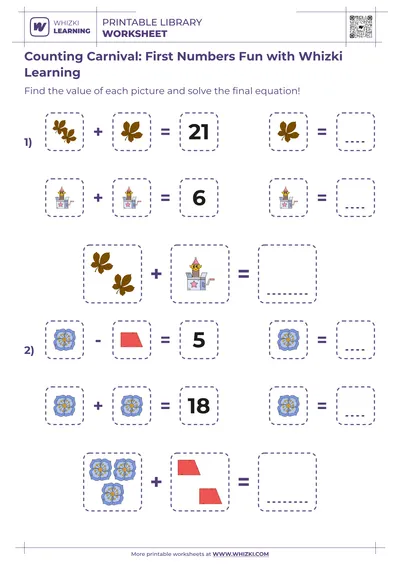
A printable number mat can give the cup routine a landing place for estimate, count, and difference without turning the activity into a stack of worksheets. You can find simple number practice ideas in the Whizki Learning Hub when your child wants a paper record after the hands-on counting.
What to do when the guess is far off
A far-off guess usually means the child is still learning how a quantity looks, or the child is playing with the adult's reaction. Reggio-inspired observation helps here because the adult watches the strategy before judging the answer. The useful question is, "Did the child look, scan, touch, or simply blurt?"
The adult can respond with, "That was a big estimate. Let's count and see what the cup was holding." The phrase keeps the mood light while still protecting the math. If the child guessed 100 for a cup with 9 beans, the adult can say, "One hundred would fill a much bigger container."
The routine should stop when the child starts grabbing, dumping with force, or laughing through every number word. NAEYC's developmentally appropriate practice supports short, joyful learning experiences for young children, and two good turns are better than ten tense turns. A parent can say, "Math cup is done for now. We can try again after snack."
A five-day household plan
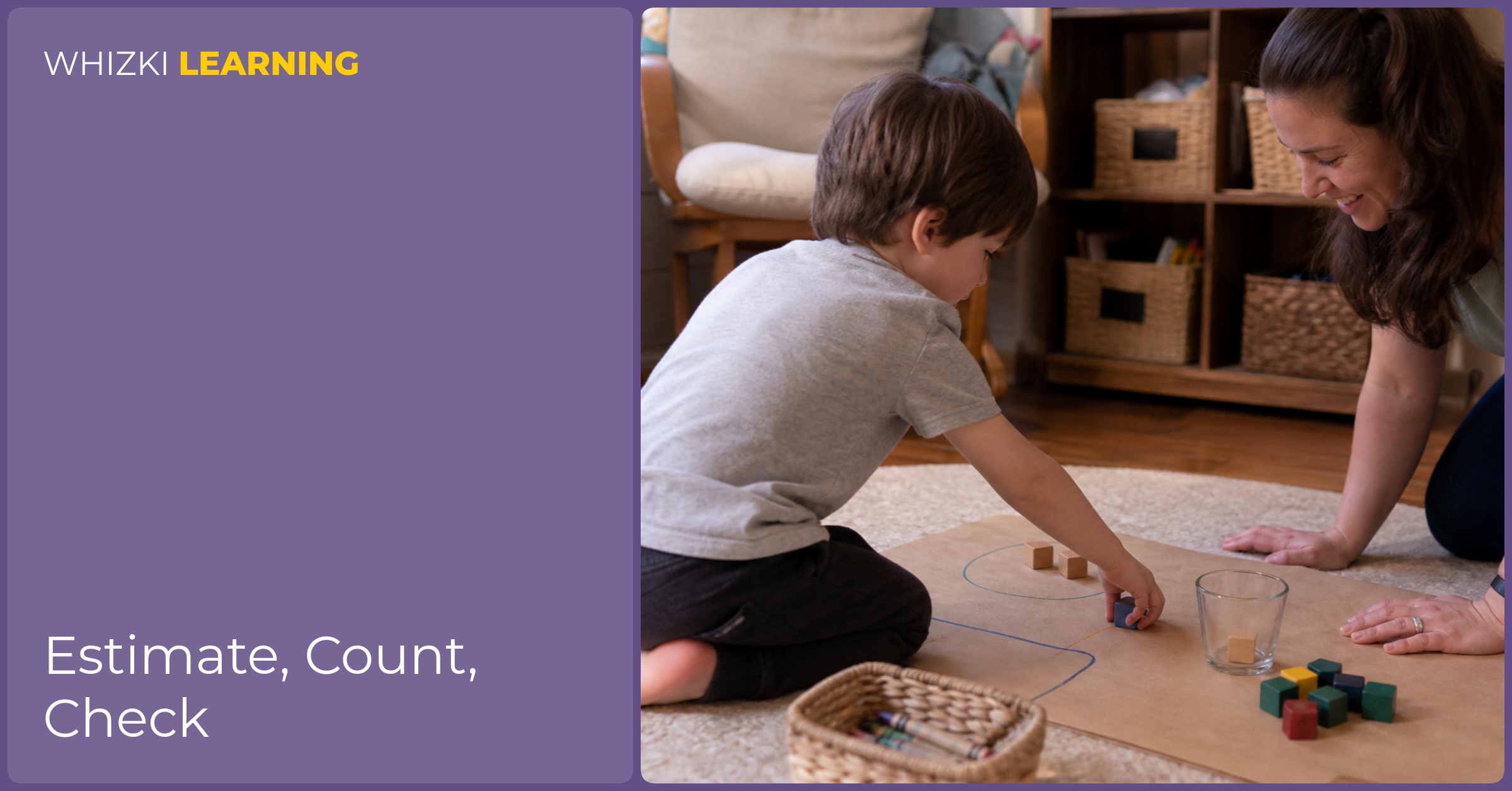
The five-day plan keeps the routine fresh without adding prep. On Monday, use cereal pieces at breakfast; on Tuesday, use toy animals; on Wednesday, use buttons; on Thursday, use small blocks; on Friday, let the child choose the object group. The plan follows the early-childhood teaching principle of repetition with small changes.
The adult should keep a steady script across the week: "Estimate, count, check." Consistent language works the same way a Montessori three-period lesson uses predictable wording to reduce confusion. The object changes, but the thinking pattern stays familiar.
The adult can visit the numbers learning hub for more number ideas when the cup routine starts feeling easy. A child who is still guessing wildly does not need harder numbers yet. A child who is counting carefully can try a taller cup, a wider bowl, or two small cups to compare.
The estimate-count-check habit is small on purpose. A clear cup, a handful of objects, and respectful language can give a child real practice with quantity, attention, and flexible thinking. The best part is that the estimate never has to be called wrong for the counting lesson to land.