If first grade sight word practice turns into guessing, bargaining, or a pencil rolling across the table, start with five words your child almost knows and read each word in a quick two-minute routine. First grade reading asks children to hold more words in memory while still learning phonics, so a little friction is normal. A small, repeatable plan works better than a giant stack of cards.
Reviewed by Whizki Editorial Team, Early Childhood Education Editors.
What first grade sight words are
First grade sight words are high-frequency words children are expected to recognize quickly in early books, directions, and writing. In an Orton-Gillingham lesson, I still teach phonics first, then I mark the unusual part of a word that does not follow the pattern a child already knows. Fast recognition grows from repeated, meaningful reading, not from guessing at a shape.
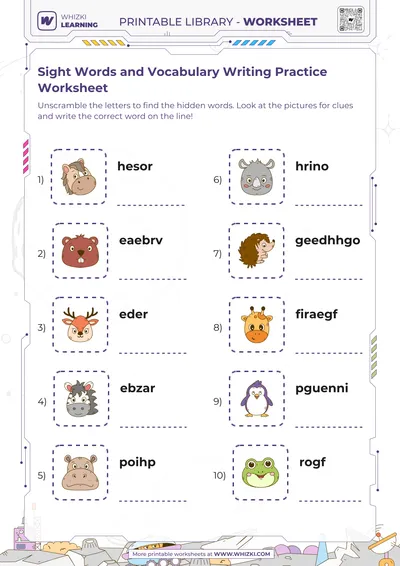
The first grade sight words list often blends Dolch grade 1 words with Fry words 51-100 because both collections show up in classroom readers. Families who want paper practice can pair the list in this guide with our sight-words printables for simple cards, matching pages, and read-and-trace work. The printable should support a short lesson, not become the whole lesson.
NAEYC guidance for young children points teachers toward playful, developmentally appropriate literacy practice. First grade learners still need movement, talk, choice, and adult modeling during word work. A calm five-minute practice block is usually more useful than a long session that ends with a child shutting down.
Complete first grade sight words list
The list below combines the Dolch grade 1 list with Fry words 51-100 and removes repeated entries. A district, homeschool plan, or classroom reader may shift a few words earlier or later, so treat the list as a reference rather than a race. The goal is steady recognition in real reading.
I group the first grade sight words by difficulty because children usually learn short, clear words before longer or less predictable words. The Orton-Gillingham habit of moving from known to new keeps practice manageable and gives the child a pattern for success. Move a word forward only when the child can read the word in a sentence, not just on a flashcard.
- Green: all, an, as, ask, by, can, do, go, had, her, him, his, how, if, let, like, look, of, old, one, or, out, put, see, she, so, up, we.
- Blue: about, after, again, any, but, could, each, from, give, has, into, make, many, may, more, not, once, open, other, over, said, some, take, them, then, there, these, time, two, use, walk, were, what, when, will, word, would, your.
- Gold: every, fly, giving, just, know, live, round, stop, thank, their, think, which, write.
How first grade words differ from kindergarten words
Kindergarten sight words tend to be shorter and tied to predictable books, classroom labels, and simple shared reading. If your child is still working through the kindergarten list, first grade practice can wait for a slower bridge. First grade words add more endings, more pronouns, more question words, and more irregular spellings.
Montessori and Reggio-inspired observation both remind adults to watch the child before adding more materials. A child who can read a word on a card may still miss the same word inside a book because the page has pictures, punctuation, and a full sentence to manage. The difference between card reading and book reading is normal in early literacy.
NAEYC guidance also asks adults to honor variation in young children. A six-year-old may know every short word and still stumble on a longer word with an unexpected spelling. A first grade list should help you notice the next step, not label a child as ahead or behind at the kitchen table.
A printable routine that works at home
A printable routine works best when the paper gives the child something to touch, move, and mark. Occupational-therapy basics favor short bursts with a comfortable seat, feet supported when possible, and a pencil or crayon that fits the child’s hand. A child reads better when the body is not fighting the chair, the page, or a tired grip.
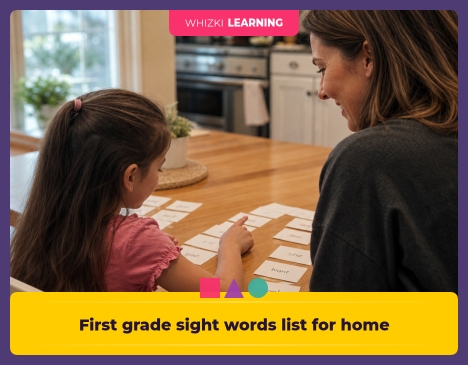
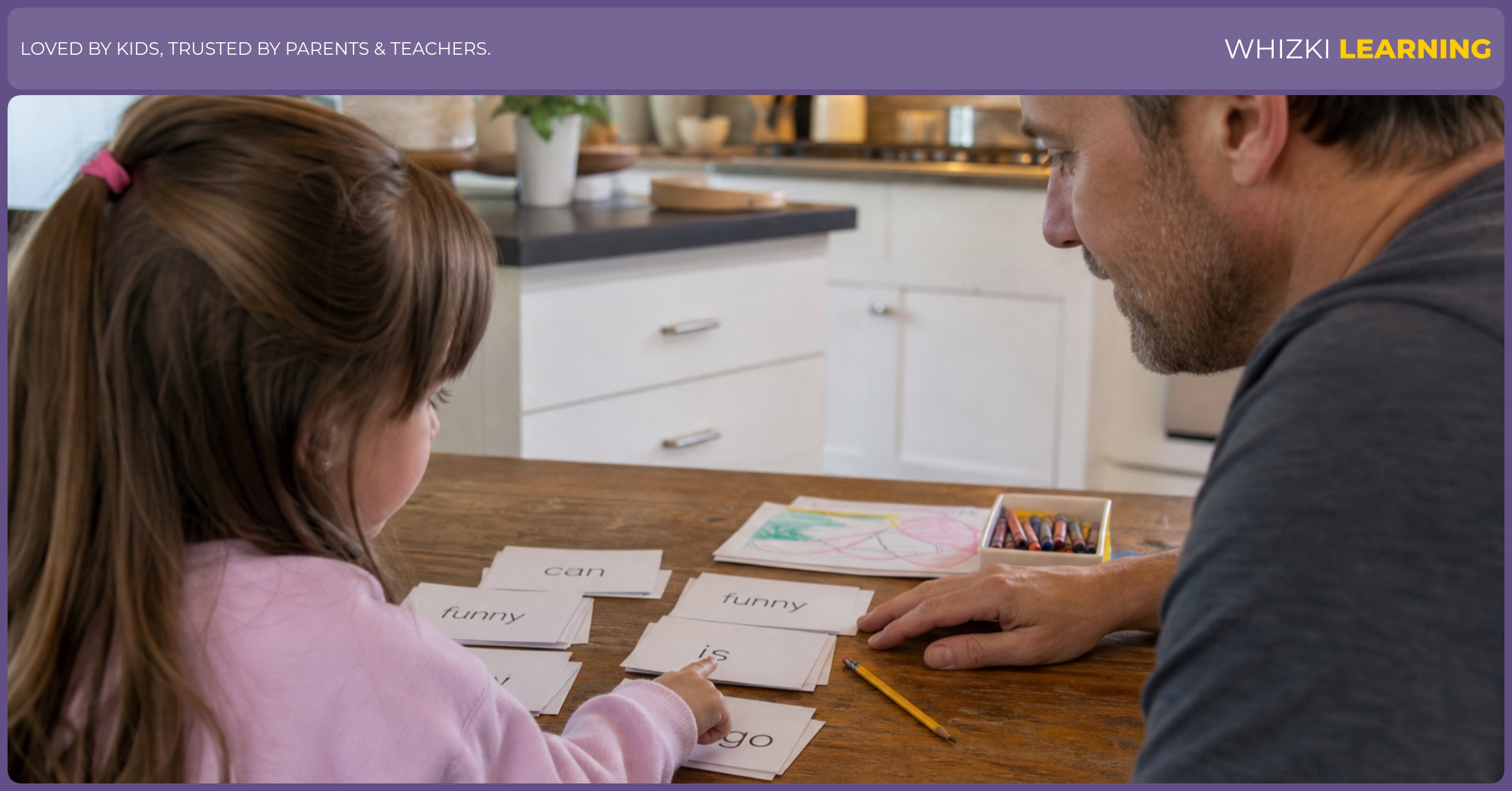
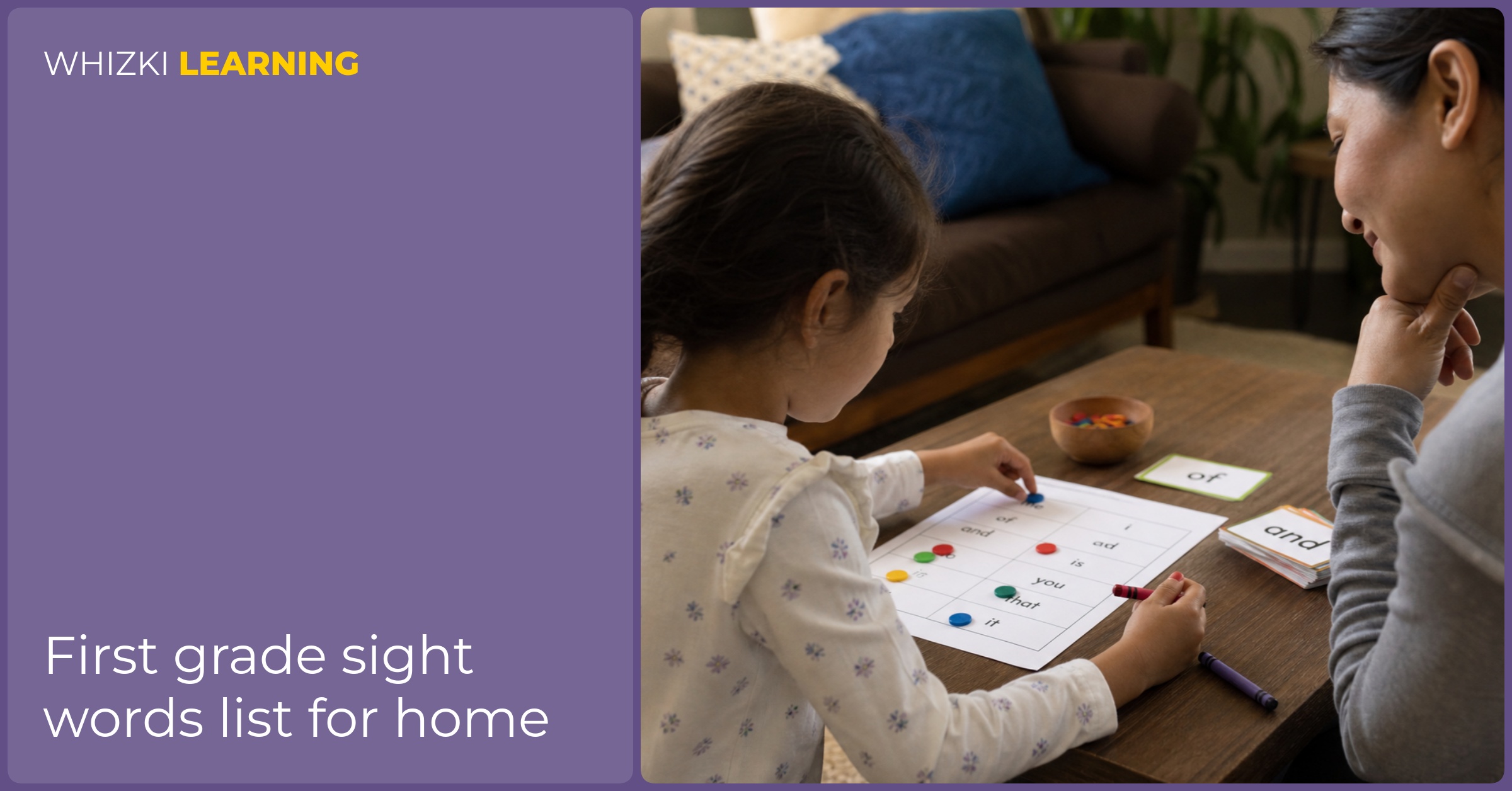
Start by choosing five cards from the current group and placing the cards in a row facing the child. The adult reads the word first, the child reads the word, and the child covers the word with a small counter after a correct read. The adult can finish by asking the child to find one word inside a real book or a simple sentence.
For families building a paper basket, our printable library can help you rotate sight-word pages with alphabet, handwriting, and vocabulary work. The routine should stay predictable, but the page can change every few days so practice feels fresh. Keep the same five words until the child reads the words with less effort.
If a ready-made path helps, the First Grade Sight Word Practice premium worksheet set in our worksheet sets gives sorted word pages, tracing, read-and-cover practice, and quick checks. The complete pack lives in Whizki Plus. Choose the pages that match your child’s current five words rather than printing the whole stack at once.
Teaching moves for readers who guess
Guessing usually means the child is using one clue and ignoring the rest of the word. In an Orton-Gillingham-style correction, I point to the first letter, slide a finger under the word, and ask for a slow reread before I say the answer. The prompt teaches the child to look through the whole word.
Speech-language pathology practice often builds accuracy by connecting what the child hears to what the child sees. Say the word clearly, stretch the first sound, and ask the child to notice the last sound with you. The sound check keeps the word from becoming a random picture on a card.
Occupational-therapy basics can also reduce guessing during written practice. A child who is gripping too hard, leaning far over the page, or rushing to finish may need fewer words and bigger writing spaces. Good sight-word practice should feel focused and doable, not like a handwriting endurance test.
How to check progress without pressure
A simple progress check should show what the child can read today without turning practice into a test. NAEYC assessment guidance favors observation across real activities, so listen during books, morning messages, labels, and short printable pages. One fast card run is useful, but one fast card run is not the whole reading picture.
Use two piles called known today and practice again, and keep the tone neutral. Reggio practice has taught me to document small moments, so I jot the date on the back of a card when a child reads the word in a sentence. The note helps adults see growth that might be missed during a busy week.
First grade sight words are ready for review when the child reads a word quickly in three places, on a card, in a sentence, and in a book. A word that disappears after a weekend is not a failure, because memory strengthens through return visits. Bring the word back for a few days and then check the word again in a real reading moment.
The best first grade sight word plan is small, steady, and connected to real reading. Choose five words, practice for a few minutes, and let a book, a printable, or a quick note from the teacher guide the next choice.