If your child pushes sight-word cards away, put the stack in a drawer tonight and tape one useful word where your child already walks, the bedroom door, the snack shelf, or the bathroom mirror. Flashcards can feel like a test to a 3- to 7-year-old who wants movement, choice, or a real reason to read. The goal for tomorrow is one calm minute with one word, not a full lesson at the kitchen table.
Reviewed by Whizki Editorial Team, Early Childhood Education Editors.
Start with words your child already notices
Environmental print is the print your child sees in real life, like a stop sign, a cereal box, a favorite book title, or the word on a bedroom door. Reggio-inspired teaching starts with careful observation, so begin by watching which labels and signs your child already points to without being asked. The best first sight words at home are often words with a real job in your child’s day.
The kindergarten teacher may have a list for school, and you can use the kindergarten sight words list as a quiet reference instead of a stack to drill. Pick one word that shows up in books or around the house, then place that word where your child can use the word for a reason. A word like go works near shoes, while a word like up works near stairs or a bunk bed ladder.
The Orton-Gillingham approach reminds teachers to connect eyes, ears, voice, and hands whenever possible. For a sight word, point to the letters, say the word, trace the word with a finger, and use the word in a short sentence. A young child does not need a speech about memory; a young child needs repeated, calm contact with the same printed word.
Turn doors and cabinets into tiny reading stops
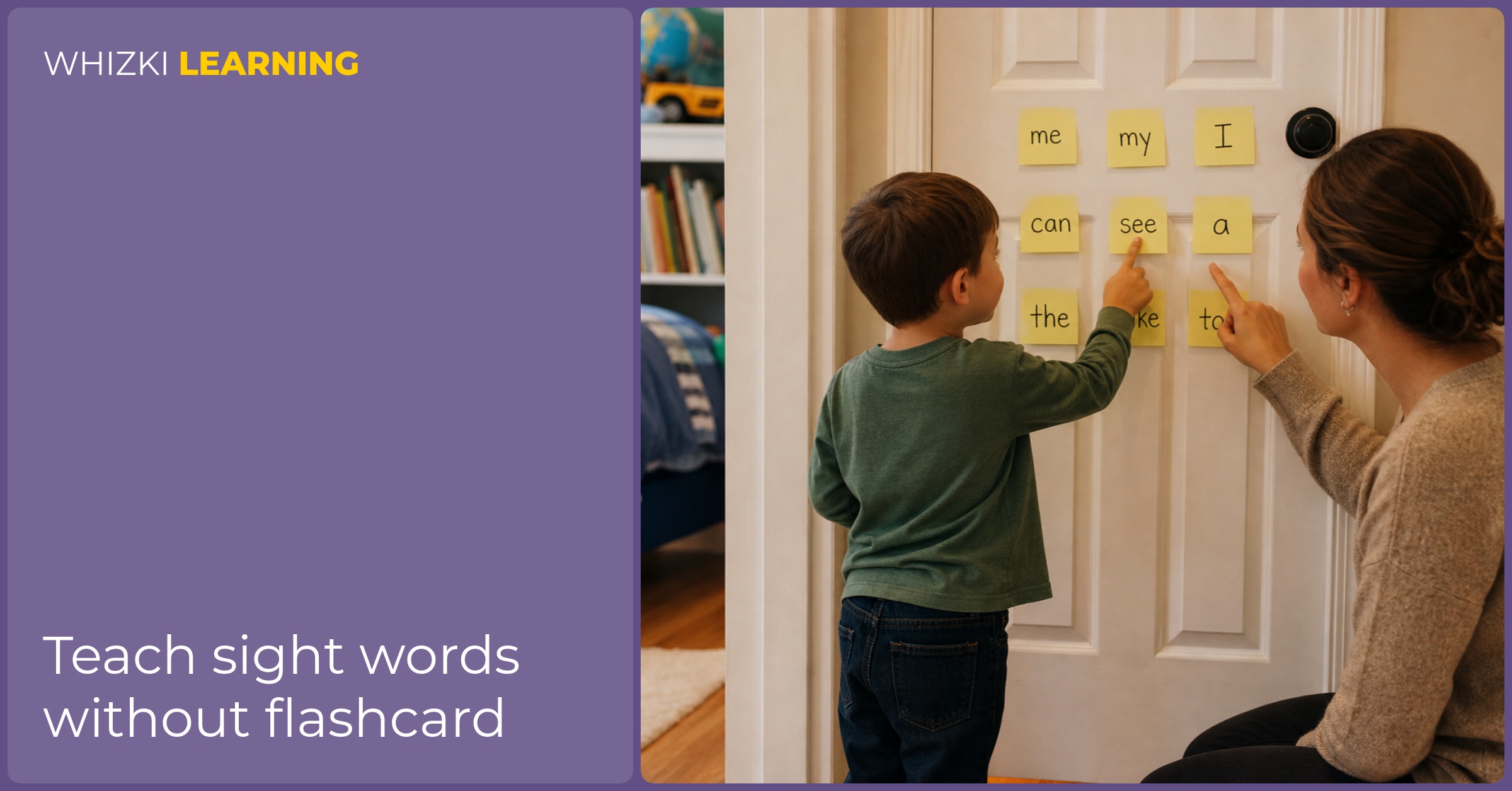
Door and cabinet words work because the reading moment is short, useful, and tied to movement. Occupational-therapy basics often use tiny motor tasks to support attention, and a door tap, finger trace, or gentle sticker peel gives the body something to do while the eyes look at print. The sight word becomes part of getting through the day, not a separate demand.
A sticky-note door routine can take less than ten seconds. Write one word in thick marker, place the note at your child’s eye level, and say, “Tap the word, say the word, open the door.” If your child only taps the note and listens to you say the word, the practice still counts.
The best door words are words your child can act on right away. Put in on a toy bin, out on the back door, me near a coat hook, or we near a family photo. Change the word only after your child has seen the word across several days without pressure.
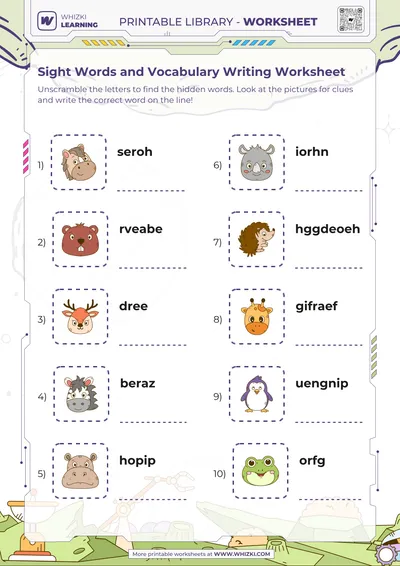
For a ready-to-tape set, print our sight-words printables and choose three words for the week. Tape the page near the door or fridge so the routine stays visible when the afternoon gets busy.
Make word hunts feel like play
A word hunt turns sight-word practice into noticing, which is closer to how many 3- to 7-year-olds learn best. Montessori observation teaches adults to prepare the space and then step back, so place the target word in two or three places and let your child discover the word. The adult’s job is to celebrate the find, not quiz every letter.
A simple word hunt starts with one target word written on a card. Carry the card through the kitchen, hallway, or reading basket and ask, “Can the card find a match?” When your child finds the match, read the word together and move on before the game gets stale.
Picture labels, book baskets, and printable cards can make word hunts easier for a child who needs a visual cue. If you want extra labels for doors, shelves, or morning routines, browse our printable library and choose one page that fits the room you are already using. One page on the wall beats six pages scattered across the table.
Use a two-minute bedtime review
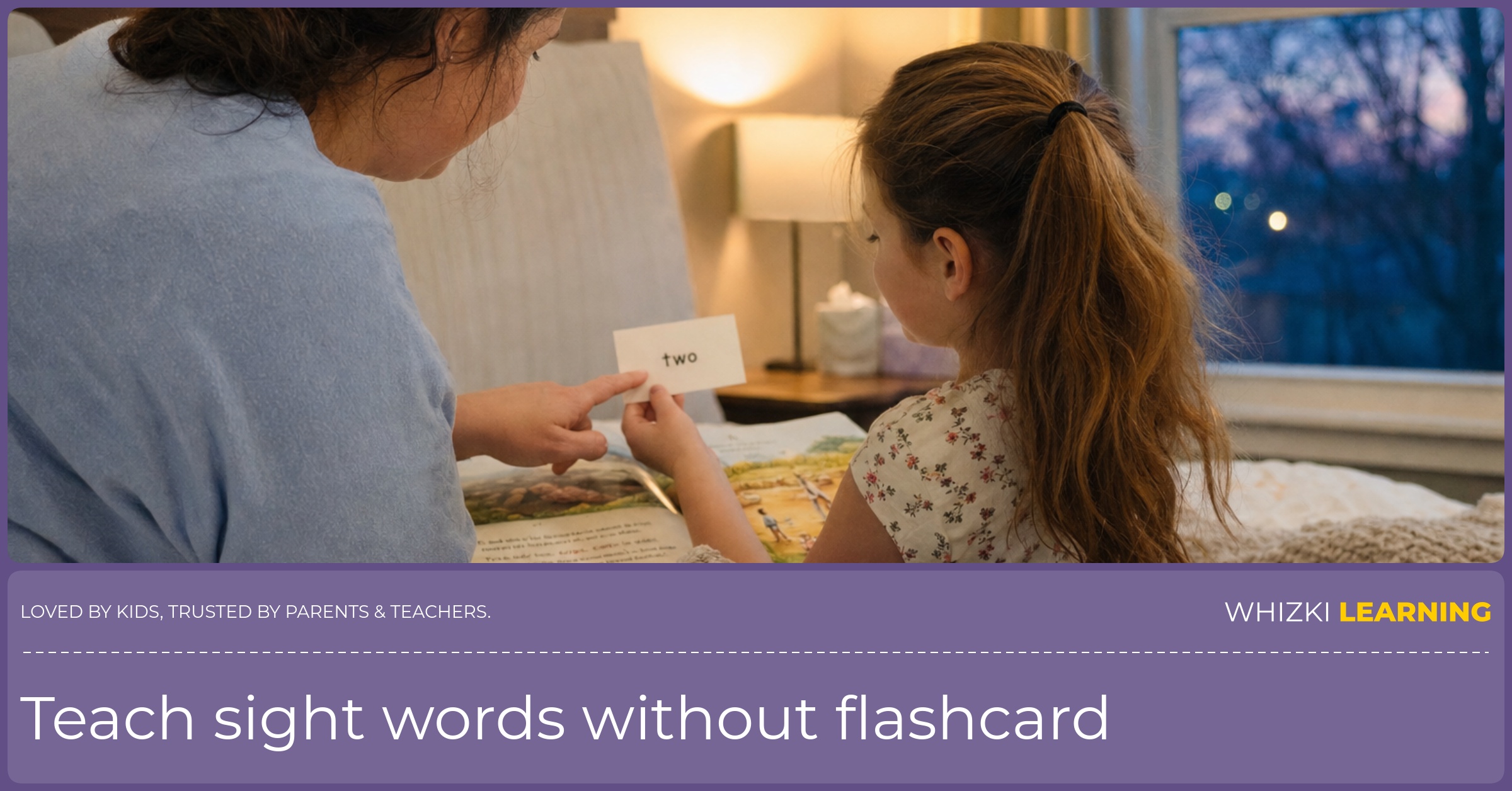
A bedtime review works best when the review feels like a closing ritual, not a surprise test. NAEYC guidance supports predictable routines for young children, and a tiny reading repeat can fit naturally after pajamas and before the last story. Keep the same two or three words for several nights so your child can feel successful.
The two-minute bedtime review is simple. Place one word card on top of the bedtime book, read the word together, trace the letters once with a finger, and use the word in a silly sentence about the story. End the review while your child is still willing, because stopping early protects tomorrow’s practice.
Speech-language pathology practice often uses warm modeling before expecting a child to respond. If your child is tired, you can say the word and invite your child to echo, whisper, or point. A quiet point is still participation, and participation is the habit you are building.
Handle refusal without turning reading into a standoff
Refusal is information, not a character flaw. NAEYC behavior guidance encourages adults to look at the setting, the timing, and the size of the request before adding more pressure. A child who refuses flashcards may be saying the task is too long, too public, too still, or too disconnected from real life.
A calm reset sounds like, “Cards are done; we will try one door word later.” The reset keeps the relationship safe and keeps reading from becoming the family argument of the day. Offer a choice next time, such as tracing the word with a crayon, tapping the word with a toy car, or finding the word in a book.
Occupational-therapy basics can help when your child needs movement before print. Try wall pushes, animal walks to the door word, or standing at the counter instead of sitting at the table. Ask the teacher, pediatrician, speech-language pathologist, or occupational therapist for guidance if sight-word practice is paired with ongoing letter confusion, sound confusion, vision concerns, or frequent distress around books.
Sight words do not have to live on a flashcard ring. A child can learn high-use words through labels, hunts, short routines, and a grown-up who stops before the mood turns sour. Start with one useful word today, tape the word where life already happens, and let the next small success carry the practice forward.