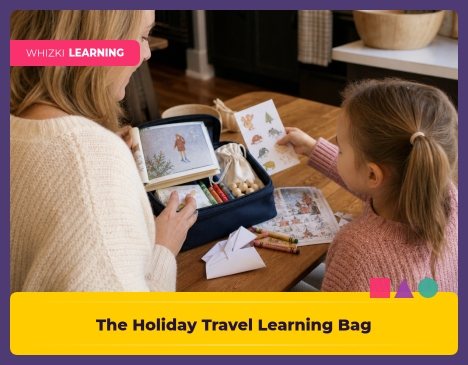
If your holiday packing moment is becoming a tug-of-war between “bring something educational” and “please do not make me carry another tote,” put six quiet items into one zip pouch tonight: a paperback, folded paper, eight crayons, a small card set, one manipulative set, and one printed page. Holiday travel asks young children to sit still in places that were not built for wiggles, so the learning bag is a helper, not a school day in disguise. The learning bag gives a child something familiar to touch when car seats, airport lines, and waiting rooms start to feel long.
Reviewed by Whizki Editorial Team, Early Childhood Education Editors.
The six-piece rule keeps the bag parent-sized
The six-piece rule is a packing limit, not a learning standard. NAEYC guidance reminds early-childhood adults that young children learn through play, choice, and relationships, so a small travel bag should offer calm invitations rather than a full lesson plan. A child can pick one item at a time while the adult keeps the rest zipped away.
The six items are a book, paper, crayons, cards, one small manipulative set, and one printed activity. Put the six items in a gallon zipper pouch, a pencil case, or a soft packing cube that fits under a stroller, airplane seat, or front car pocket. The whole packing job takes about ten minutes once the adult stops trying to cover every possible travel mood.
Age adjustments keep the bag useful for ages 3-7. For ages 3-4, choose chunky crayons, board books, and large picture cards because little hands need grip and clear images. For ages 5-7, choose a short paperback, simple word cards, and a printed page with more drawing or matching because older children usually want a little more control.
Choose the six items with real travel limits in mind
The book should be familiar, sturdy, and short enough for a child to revisit without adult help. A predictable picture book, a seasonal story, or a favorite early reader works better than a brand-new title that needs constant explanation. In a car, the book may be for looking only because motion sickness is real for some children.
The paper and crayons carry most of the flexible play. The Orton-Gillingham approach uses touch, sound, and movement together, so a child can draw a bumpy road for the /r/ sound, trace a letter in crayon, or make a quick map of the airport gate. Cards can be alphabet cards, picture cards, color cards, or a tiny set of family-made “find something red” cards.
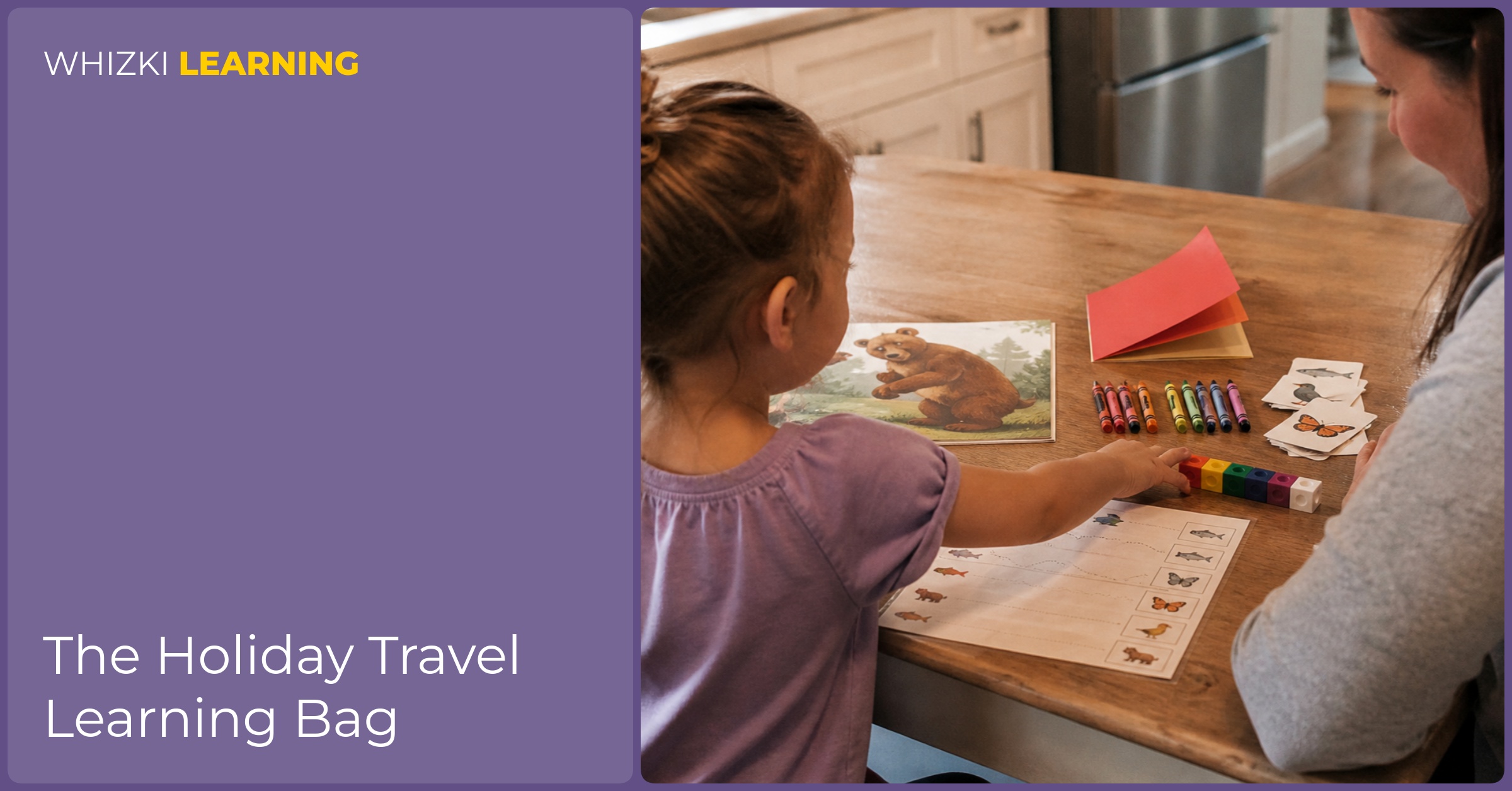
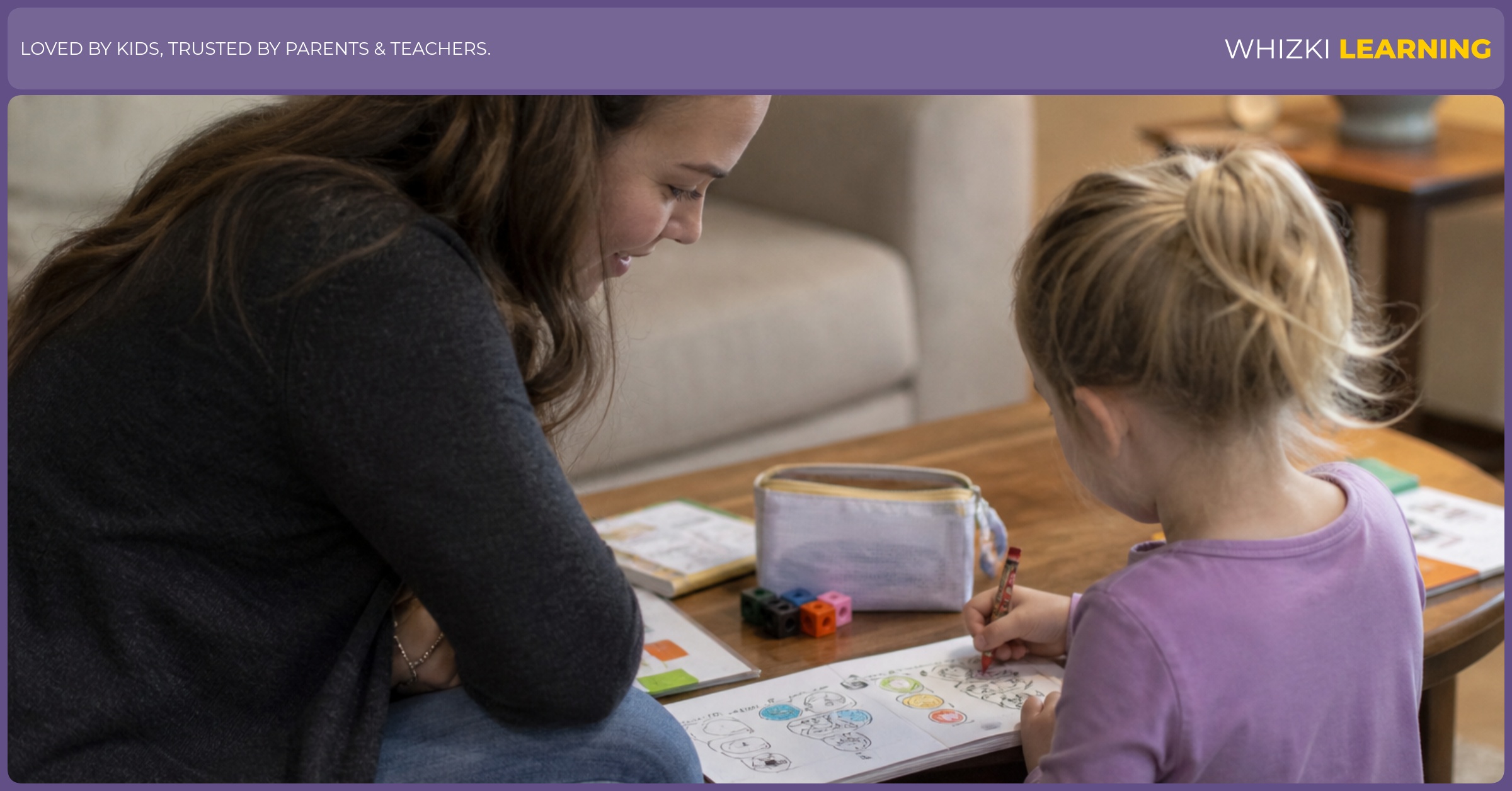
The manipulative set should have fewer than twenty pieces and no rolling parts. Occupational-therapy basics favor items that give small hands real work, such as linking cubes, soft counters, pattern blocks, or a mini bag of interlocking shapes. A tiny linking cube set can become a train, a pattern, a counting line, or a quiet fidget without taking over the seat tray.
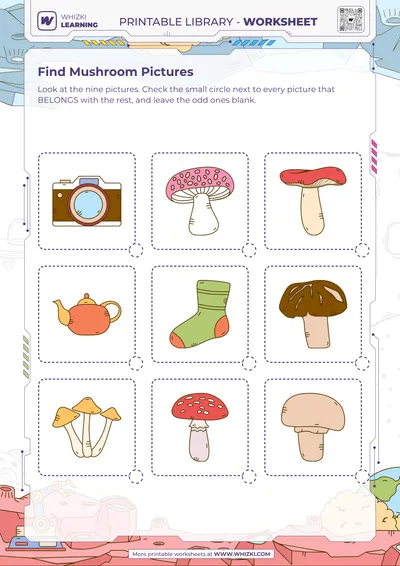
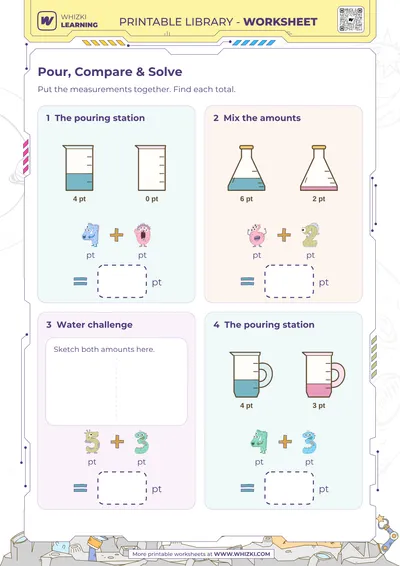
The printed activity should be one page from the printable library, folded in half with a crayon tucked inside the pouch. A picture scavenger hunt, simple matching page, or trace-and-draw sheet gives enough structure for a waiting room without turning the whole visit into desk time. For holiday feelings and family manners, the previous fall season guide pairs well with drawing a thank-you picture instead of forcing a speech.
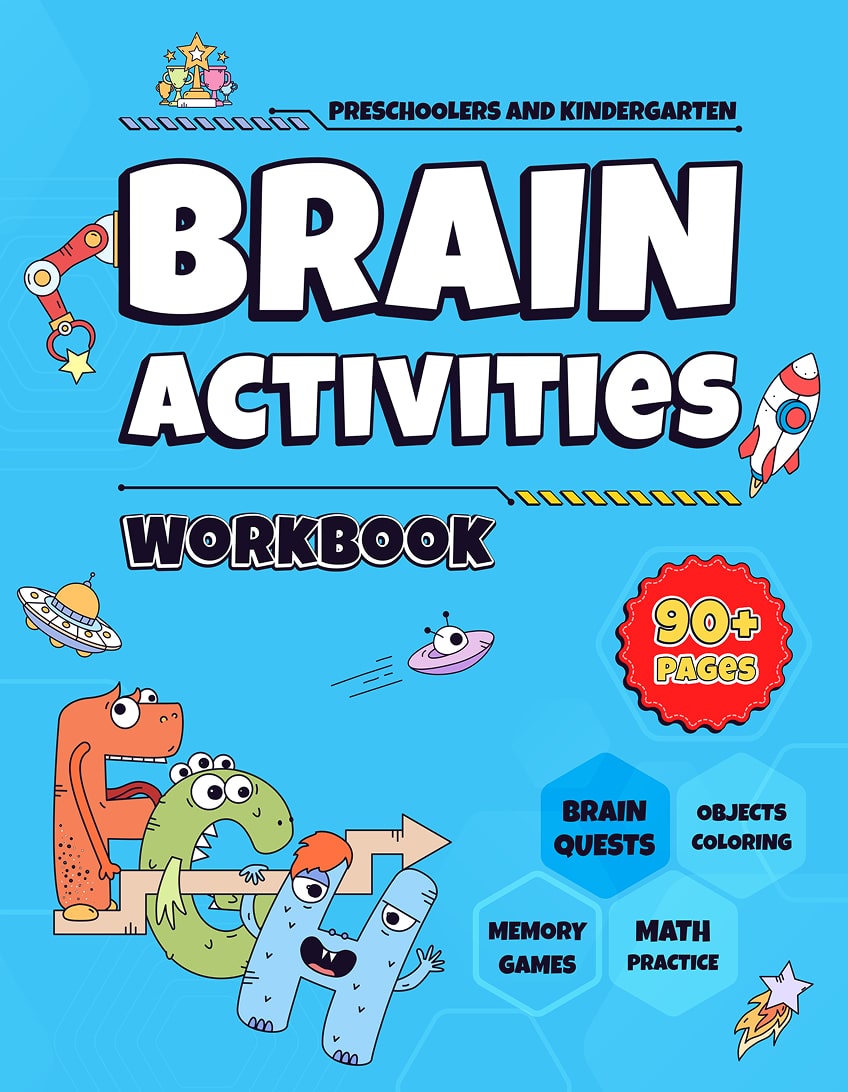
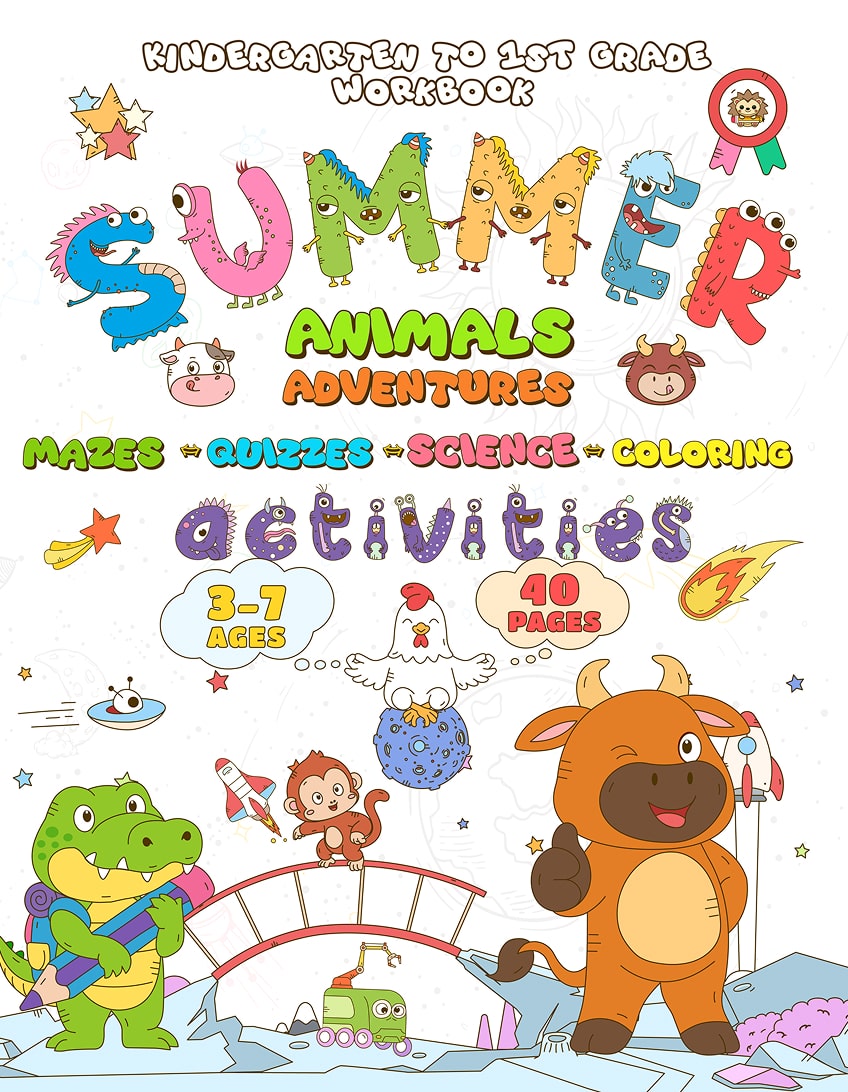
If your holiday week already has enough cutting and copying, a small set of printed workbooks can stand in for the paper-and-printable part of the bag. Pick only one workbook page for travel, because a workbook is a backup material, not a plan for every quiet minute.
Use a place decision tree instead of a packed schedule
The travel decision tree starts with the space, not with the skill. Montessori and Reggio observation both ask adults to notice the child, the materials, and the room before offering the next activity. The adult asks, “Can pieces fall, can voices get loud, and can my child move?” before opening the pouch.
The car choice should be the book, cards, or verbal games unless another adult can safely help. A driver should not manage dropped counters or sharpened pencils from the front seat. A good car rhythm is ten quiet minutes with a book, five minutes of looking out the window for colors or signs, and then a snack or music break.
The plane choice should be flat, low-mess, and easy to pause when trays go up. Cards, folded paper, crayons, and one printed page usually work better than loose cubes during boarding and landing. The waiting-room choice can include manipulatives because a lap, chair, or small table gives the child a safer place to build, sort, and count.
Make one twelve-minute routine, then stop
A good travel routine has a beginning, a middle, and an end. Speech-language pathology practice often uses short, predictable turns because young children can join more easily when the adult language stays simple. The routine can run for about twelve minutes and then the bag can rest.
The first round is “look and name.” The adult reads one page, names three pictures, or shows three cards while the child points, echoes, or adds a silly detail. The child can answer with a word, a gesture, or a drawing because travel is not the time to demand perfect performance.
The second round is “make and show.” The adult can say, “Draw one thing from the story,” “Build a tiny gate,” or “Circle something you might see today.” The stop signal matters because children ages 3-7 often do better when the adult closes the pouch before the activity falls apart.
Know when the bag is enough for the day
The travel bag cannot solve hunger, tired bodies, delayed flights, or adult stress. NAEYC guidance puts relationships first, and occupational-therapy basics remind adults that posture, sensory noise, and fatigue change what a child can manage. If the child is rubbing eyes, hiding face, or tossing materials, the best learning choice may be a snack, a lap, or quiet.
Screen use can sit beside the learning bag without shame. The learning bag is for small pockets of connection, and a show or game may help a family get through a long delay or a hard drive. A parent, teacher, or caregiver can return to the pouch later when the child has more space for hands-on play.
The six-piece bag is a practical promise to yourself: enough materials to offer choice, and few enough materials to carry without resentment. Pack the book, paper, crayons, cards, manipulatives, and printed page before the suitcase, then stop adding extras. Holiday travel will still have messy minutes, but the learning bag can give the family a calm place to begin again.