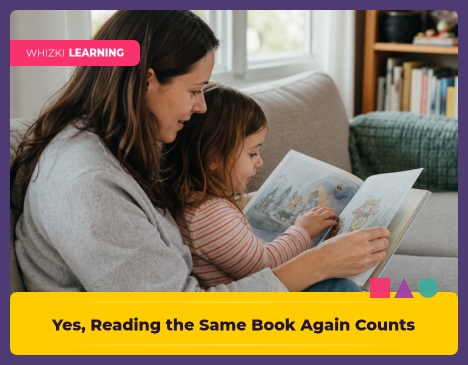
The bedtime decision can feel ridiculous: the child wants the same book again, the adult wants any other story, and one useful move for tonight is to reread the familiar book while asking, “What part do you think is coming next?” A repeated book is not wasted time for ages 3 to 7, because the child is using memory, language, attention, and courage in a safe little loop. The adult can keep the routine cozy by asking one playful prompt and then getting back to the story.
Reviewed by Sarah Mitchell, M.S., CCC-SLP, Speech-Language Pathologist.
A field note from the read-aloud rug
Rereading looks small from the couch, but rereading feels active from the child’s side of the book. In Reggio-inspired classrooms, teachers watch what a child returns to because repetition often shows a real question, a loved pattern, or a skill under construction. The NAEYC guidance I trust also treats choice and joyful repetition as part of developmentally appropriate practice, not as a problem to fix.
Anticipation is usually the first change across rereads. The child starts leaning forward before the silly page, whispering the repeated line, or pointing before the adult turns the page. The child is not memorizing in a shallow way, the child is practicing prediction with a story that feels safe enough to manage.
The familiar book also lowers the social risk of speaking. A child who stays quiet with a brand-new story may call out a repeated phrase on the fifth night because the words are known and the timing is predictable. The read-aloud rug has taught me that confidence often arrives before perfect pronunciation, and the adult’s smile matters more than a correction.
What changes across rereads
Vocabulary changes because the same word lands in the child’s ear more than once, with the same picture, gesture, and feeling attached. Speech-language pathology practice often builds language through repeated models, and a favorite book gives the adult a natural way to model without drilling. A parent can pause on one useful word, such as enormous, whisper the word, and move on before the read-aloud starts feeling like a lesson.
Story sequence changes because the child begins to hold beginning, middle, and ending in order. The child may first remember the funny ending, then later explain the problem before the ending appears. Story order is a quiet readiness skill for retelling, writing, and classroom listening.
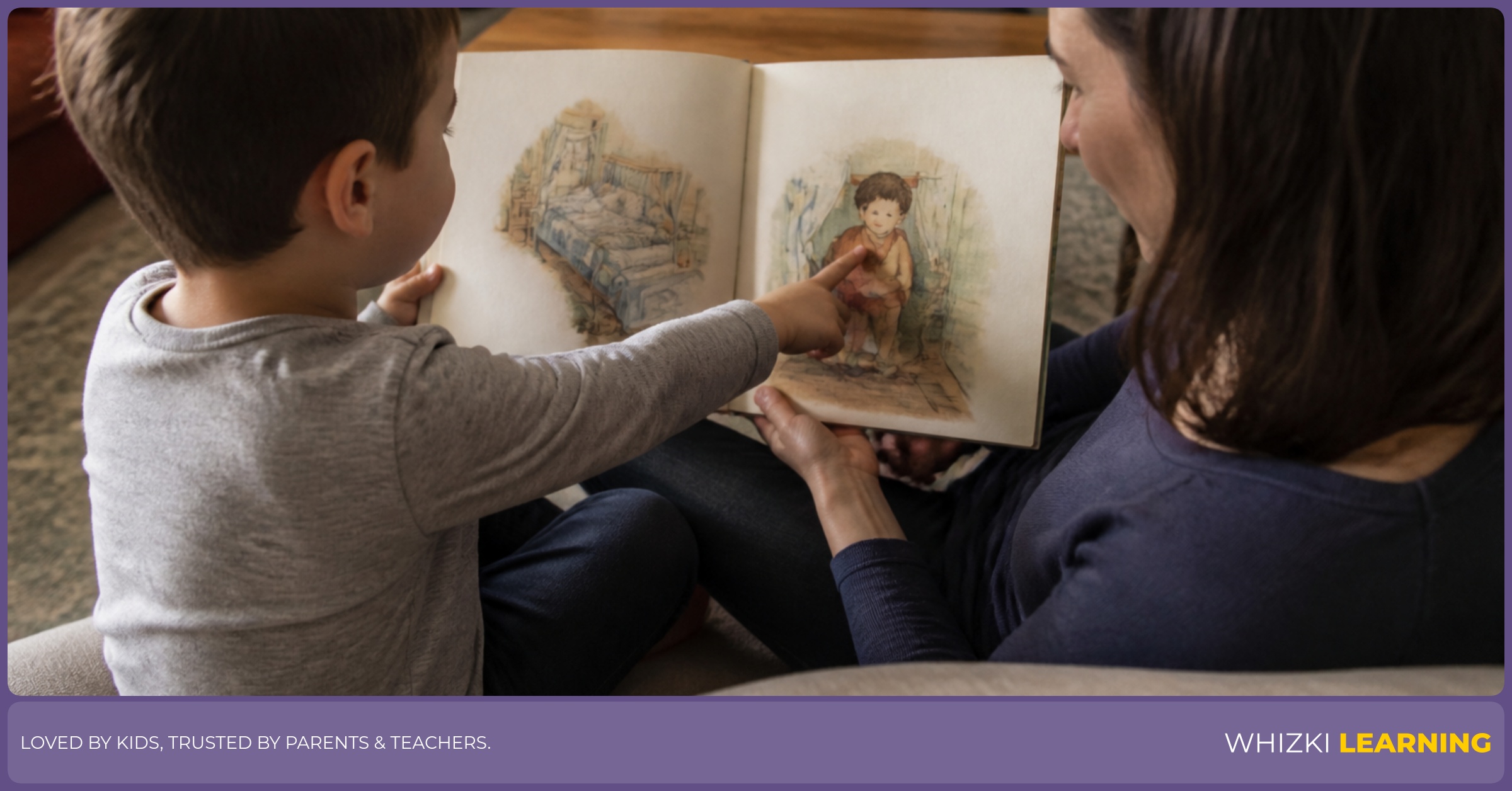
Print attention changes when the adult gently points to a title, a speech bubble, or one repeated word without stopping the flow. The Orton-Gillingham approach values clear, multisensory links between what a child sees, says, and hears, and a picture book can offer that link in a low-pressure way. The adult might trace under a repeated word once with a finger, then return to expressive reading.
Confidence changes because the child gets to feel like an expert. The same-book expert may correct the adult’s silly mistake, announce the next line, or take over a page. That sense of ownership is real literacy fuel for preschool, kindergarten, and early first-grade readers.
Prompts for the first, third, and tenth reading
The first reading prompt should protect the story. Try, “Look at the cover with me. What do you notice first?” That Reggio-style observation prompt invites the child into the picture without turning the book into a quiz.
The third reading prompt can lean on memory and sequence. Try, “I’m going to stop before the page turn. Tell my finger when to turn.” The child gets to anticipate the next event, and the adult still carries the reading load.
The tenth reading prompt can hand over a little performance. Try, “You be the voice for this line, and I’ll be the page turner.” Montessori practice often respects a child’s independence inside a prepared routine, and a very familiar book gives the child a manageable job.
The adult tone matters more than the exact words. A warm prompt sounds like shared noticing, while a quiz sounds like the adult has a hidden answer sheet. If the child shrugs, the adult can say, “I was thinking about the tiny dog on this page,” and keep reading.
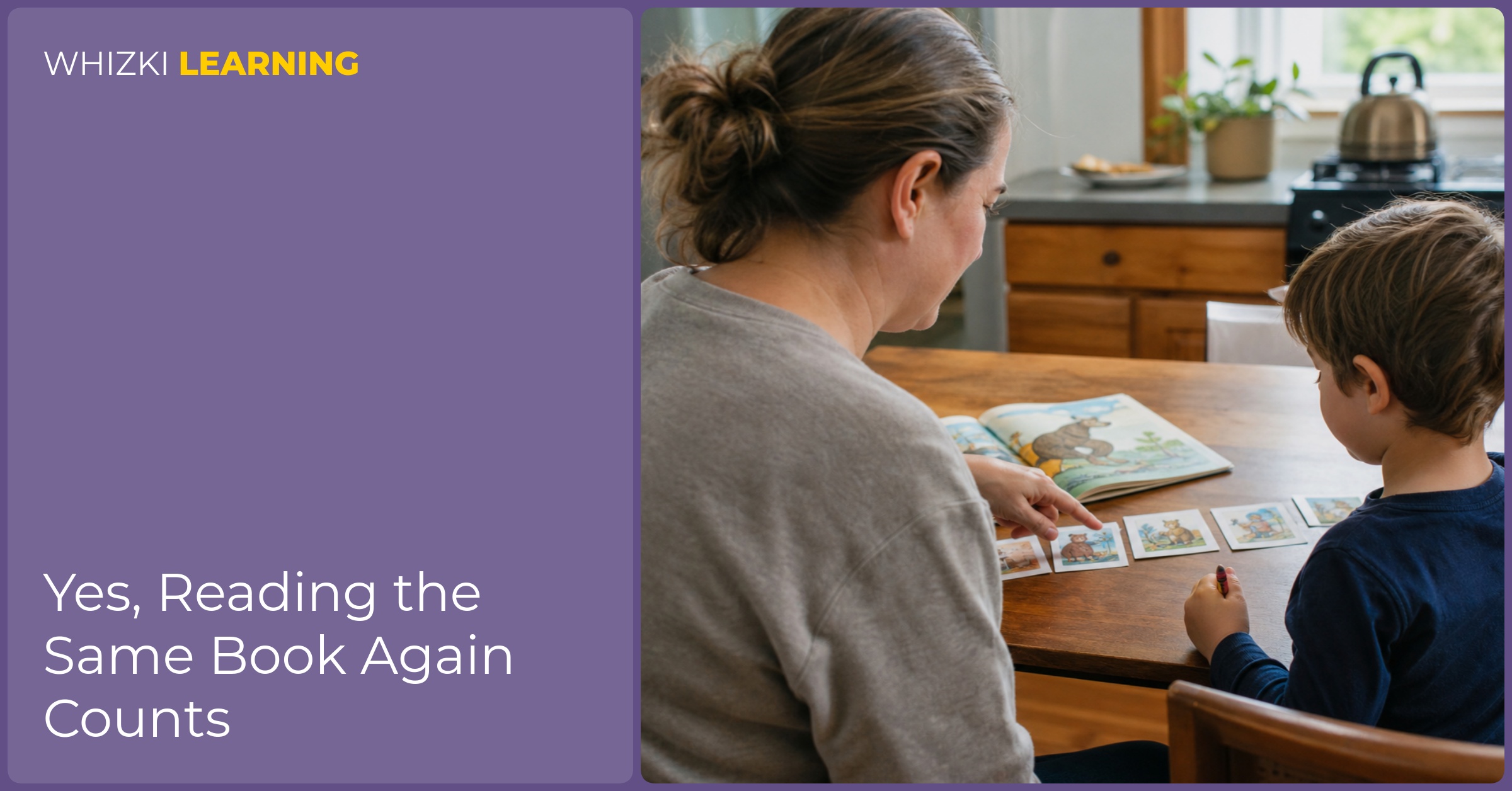
A 12-minute reread routine for real life
The 12-minute routine needs only the favorite book, a sticky note, and a pencil. Occupational-therapy basics remind adults that young children manage attention better when the body is comfortable, so a lap, couch corner, rug square, or pillow pile can matter. The goal is a calm read, not a perfect mini-lesson.
The first four minutes belong to connection. The adult reads with expression, lets the child interrupt, and avoids stopping on every page. A preschooler may need the adult to shorten a long page, while a six-year-old may want the exact words every time.
The next six minutes belong to one tiny literacy focus. The adult can choose anticipation, vocabulary, story order, or print attention, and the adult should choose only one. Families who like a simple weekly rhythm can jot that focus in the family learning planner so reading stays light instead of scattered.
The last two minutes belong to the child’s voice. The child can retell one favorite page, hunt for one repeated word, or act out one scene with a stuffed animal. Orton-Gillingham teaching keeps practice explicit and multisensory, and the same-book routine can do that with a finger, a voice, and a picture.
Whizki Learning keeps a small set of early reading supports in the Learning Hub for families who want a ready-made page beside a favorite book. A printable can serve as a bookmark, a picture hunt, or a word card, not as homework after a cozy read-aloud.
Age adjustments and honest limits
Three-year-olds often reread for comfort, sound, and participation. A three-year-old may chant the refrain, label a picture, or ask for the same page again and again. NAEYC-aligned practice treats that repetition as meaningful play, especially when the adult keeps language simple and warm.
Five- and six-year-olds often reread for pattern, print, and control. A kindergartner may notice that the same word starts with the same letter, or that the title matches a word inside the book. The Orton-Gillingham approach would call that kind of noticing useful because sound, symbol, and meaning are starting to connect.
The same-book routine has limits. If a child cannot answer everyday questions, loses many words, avoids books with strong distress, or seems hard to understand compared with same-age peers, a pediatrician, speech-language pathologist, or early-childhood specialist can help sort out the next step. A rereading habit is a support, not a screening tool or a promise about placement.
A screen-heavy day does not ruin a read-aloud night. The adult can still offer one warm reread, one page of pointing, or one silly voice before bed. For families building more print into the room, the previous literacy lab guide shows how simple labels can make words easier to notice during ordinary play.
A repeated book is real learning because the child hears richer words, predicts the next event, follows story order, notices print, and feels capable. The adult does not need a worksheet stack or a quiz voice, just one loved book, one small prompt, and enough patience to let the familiar story do its quiet work.