If a gifted screener notice is sitting on the counter while your child is stalling bedtime and you are wondering whether to push, prep, or let the deadline pass, the next useful step is to write a five-minute note about one hard moment, one surprising question, and one favorite activity before asking the school for more information. A gifted screener is a snapshot of performance in one setting, not a verdict on a child. A short family note helps adults talk about the whole child instead of staring at one number.
Reviewed by Whizki Editorial Team, Early Childhood Education Editors.
A field note: what a screener samples
A gifted screener samples how a child responds to selected tasks with a particular adult, in a particular room, at a particular time. In NAEYC-aligned early childhood practice, one observation never carries the whole story because young children show skills unevenly across days. A Reggio-inspired teacher would watch the same child in conversation, block building, drawing, pretend play, and problem solving before making a big claim.
A screener score may reflect attention, comfort with the examiner, directions understood, motor demands, language used, and the child's sleep or hunger on that day. A timed pattern task can catch quick visual reasoning, while the same task can hide slow, careful thinking. A quiet child may know a great deal and still offer only short answers in an unfamiliar room.
The score can tell a school, “Look closer at this child,” or “Gather more information before a placement decision.” The score cannot fully capture curiosity, creativity, persistence, kindness, humor, deep interest in a topic, or the way a child invents a new plan after the first plan fails. Families deserve a conversation about the sample, the setting, and the next step.
What one score can miss
One score can miss a bilingual or multilingual child's strongest thinking when the screener leans on vocabulary, speed, or cultural knowledge from one language setting. Speech-language pathology practice reminds educators to separate language difference from language disorder and to ask what a child can explain, retell, or solve across languages. A child who pauses to translate may look slower than a child who answers in the school language first.
One score can also miss advanced ability when a disability, fine-motor challenge, hearing difference, vision need, or attention difference changes how the child can show knowledge. An occupational-therapy heuristic I use in classrooms is simple: ask whether the task is measuring thinking or measuring the body skill needed to answer. A child may reason beautifully with blocks and stories while struggling to mark answers quickly with a pencil.
Some advanced abilities are not easy to bottle into a short session. A five-year-old may design elaborate pretend-play rules, a six-year-old may ask unusually layered science questions, and a seven-year-old may write a funny comic that shows flexible language. A screener may not sample those strengths, so work samples and adult observations matter.
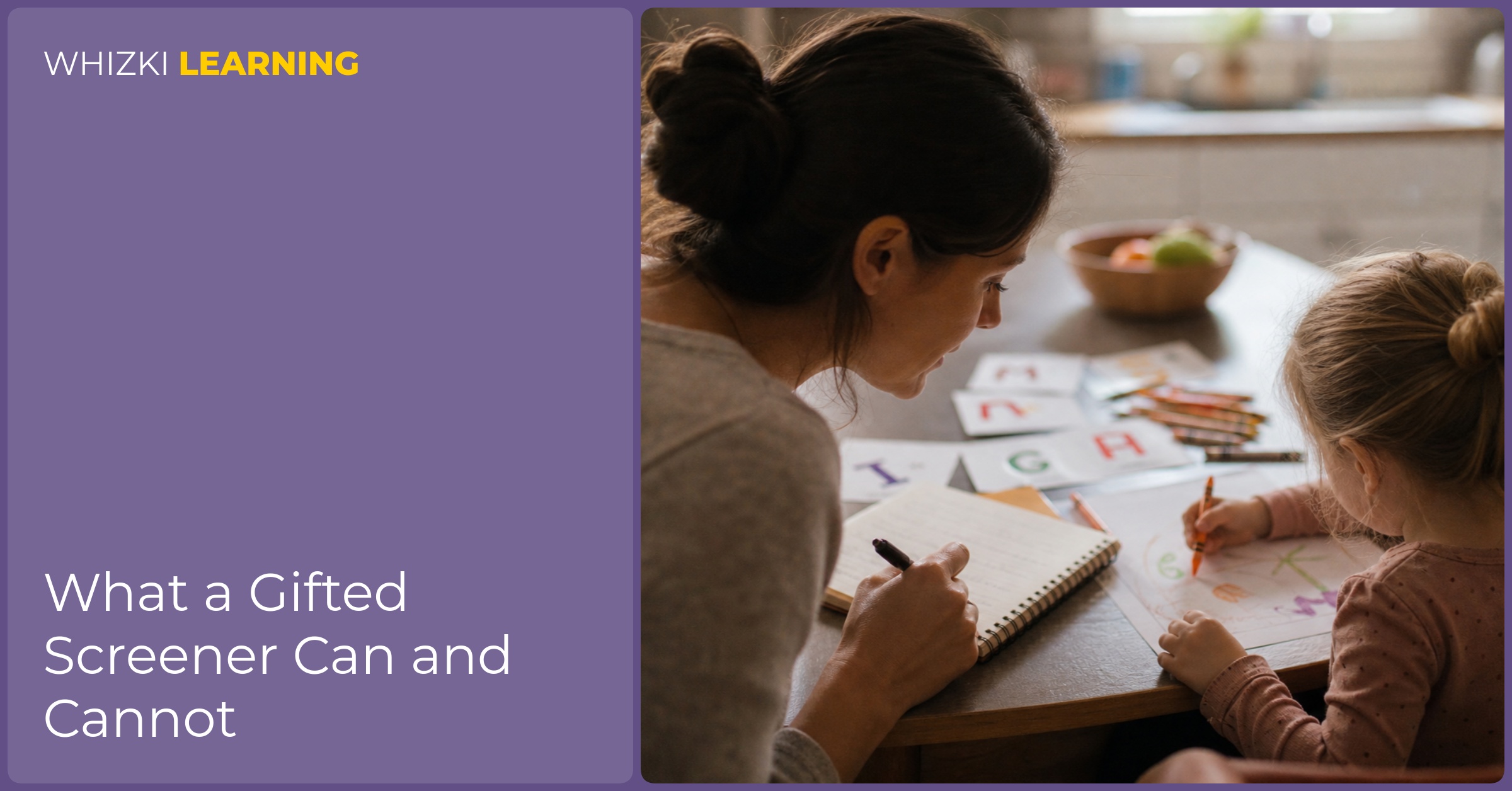
A kitchen-table decision tree for next steps
The decision tree starts with the notice, not with panic. Spend five minutes reading the school letter, then circle the deadline, the contact name, and the words that describe what the screener sampled. If the notice is hard to decode, use the previous parent systems guide to turn the paper into questions for the school.
The first branch is simple: ask whether the score is a screening score, an eligibility score, or one piece of a larger review. The second branch asks what other measures the school will consider, such as teacher observation, classroom work, family input, language background, disability documentation, and opportunities for retesting. The third branch asks whether the program allows later entry, because many children show advanced skills after more classroom experience.
Age matters in the decision tree. For a five-year-old, a short screener can be heavily affected by stamina, separation, and comfort with adult directions. For a six- or seven-year-old, classroom work samples, reading behaviors, math talk, drawings, and project persistence may give a clearer picture alongside the screener.
Avoid coaching private test items or rehearsing puzzle types that the school has not shared publicly. An Orton-Gillingham approach would build real literacy through explicit sound work, blending, handwriting, and language play rather than trying to mimic a secret assessment. A NAEYC-style conversation keeps the focus on fair access, child development, and useful classroom support.
For low-pressure practice while adults sort out the decision, printable alphabet, number, and drawing pages in the Learning Hub can give a child familiar paper-and-pencil routines without coaching test items. Choose one page for ten minutes, then stop while the child still feels successful.
How to use multiple measures without test prep
Multiple measures mean several kinds of evidence gathered over time, not a stack of worksheets. Montessori and Reggio observation traditions both value watching how a child chooses materials, solves problems, revises plans, and explains ideas. NAEYC guidance also supports assessment that fits a young child's age, language, culture, and daily learning context.
At home, a simple observation routine can take ten minutes twice a week. Put a clipboard, blank paper, crayons, sticky notes, a picture book, and a small basket of blocks on the table. Write the date, the material chosen, the child's exact words when possible, and the point where the child kept going or asked for help.
Age adjustments keep the routine fair. For ages three and four, notice pretend-play themes, sorting ideas, questions, and language used during play. For ages five through seven, add a drawing, invented spelling sample, short retell, number talk, or block design photo to show thinking in more than one way.
The family note should not argue that a child must be placed in a program. The family note should help the teacher or coordinator see patterns that a short screener may miss. Strong notes describe observable behavior, such as “built a bridge with ramps and tested toy cars for fifteen minutes,” rather than labels like “genius.”
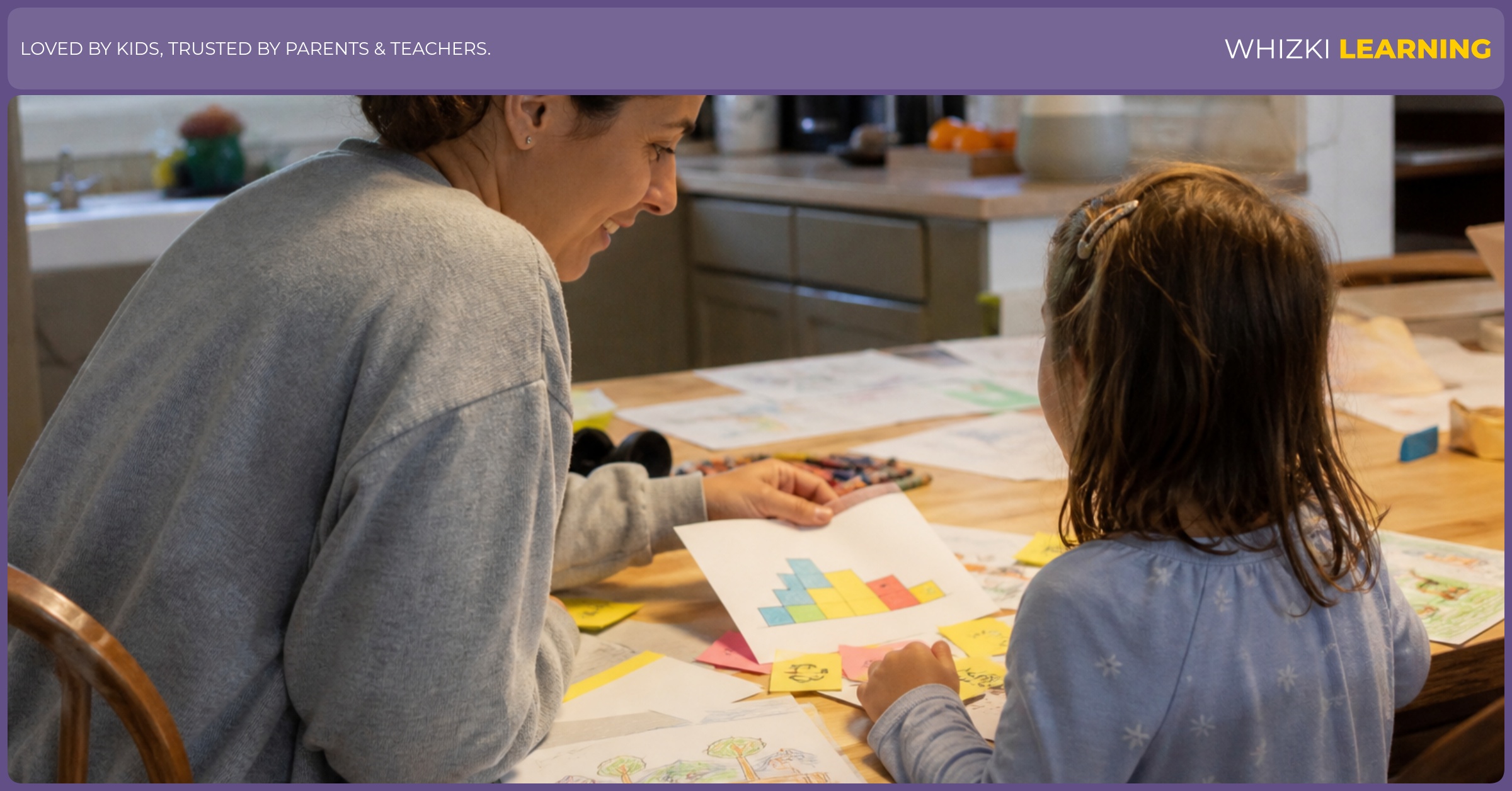
What to do when the answer is wait and watch
Later entry is a real path in many school systems, so a missed cutoff or unclear score does not have to end the conversation. Ask the school when the next review happens, what evidence can be added, and whether classroom enrichment is available while the child continues in the current placement. NAEYC guidance supports ongoing assessment because young children change quickly with teaching, language growth, and confidence.
Classroom support can still happen without a gifted label. A teacher may offer richer books, open-ended building challenges, more complex drawing prompts, science observation tools, or partner talk that stretches language. Occupational-therapy basics also remind adults to reduce barriers, such as pencil fatigue or noisy spaces, before judging a child's thinking.
The honest limit is that a family cannot make one screener say more than the screener was built to say. A school also cannot promise placement from a home observation notebook, a high practice score, or a single strong work sample. The fairest plan combines the screener, classroom evidence, family knowledge, language information, disability supports when relevant, and a clear date to revisit the question.
A gifted screener can open a door to a better conversation, but the screener should not shrink a child into one number. Bring the score, bring the questions, and bring a few grounded examples of how your child thinks, plays, talks, builds, reads, draws, or keeps trying.
The goal is not to win a label at age five, six, or seven. The goal is to help the adults around the child notice real strengths, protect access, and choose the next fair step.