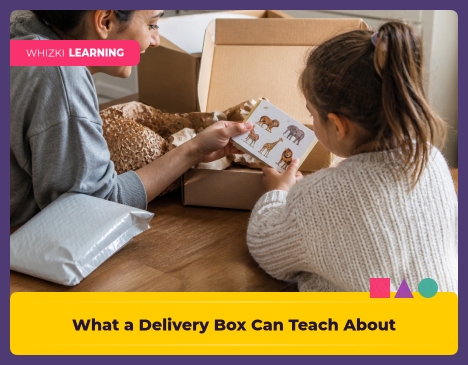
If a delivery box is blocking the hallway while a child is asking to keep every flap, the family does not need a whole project: save one clean piece of cardboard, paper, plastic, and padding, then try a ten-minute compare-and-decide sort today. The packaging sort turns a small mess into real science language children can touch. The grown-up job is to keep the pieces safe, keep the questions simple, and stop before the activity becomes one more chore.
Reviewed by Whizki Editorial Team, Early Childhood Education Editors.
Set up a ten-minute packaging lab
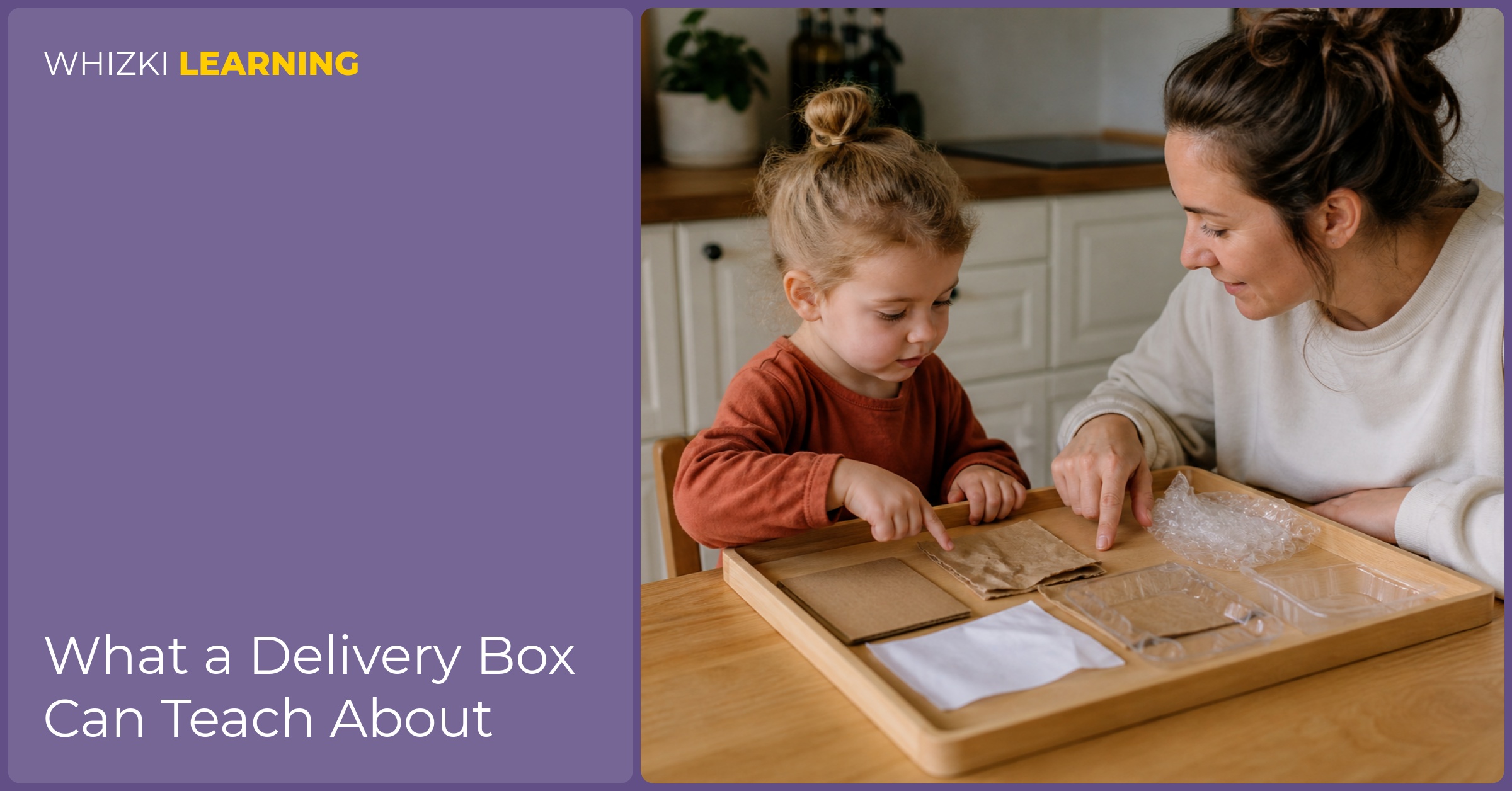
The packaging lab works best with four plain samples: a square of cardboard, a sheet of paper, a piece of clean plastic wrap or mailer, and a bit of packing paper or foam padding. In Reggio-inspired teaching, the material itself gives the child something to notice, compare, and revisit. A tray or cookie sheet keeps the materials contained and gives the child a clear work space.
The adult job is safety before science, especially with children ages 3-7. Remove staples, tape balls, sharp cardboard edges, loose labels with sticky residue, and any plastic bag that could cover a face. The safest rule in my classroom has always been simple: packaging stays on the table, and packaging does not go in mouths.
The comparison question can be small: “Which piece bends, which piece protects, and which piece keeps water out?” The question matches the same family-lab spirit as the previous world lab guide, because children learn by returning to one observable idea for a short time. A timer helps the grown-up end the activity while the child still feels successful.
Compare flexibility with hands and words
The flexibility test begins with touch, not a worksheet. In Orton-Gillingham lessons, I pair movement with clear words because young children remember language better when the hands help the mouth. Ask the child to bend, fold, twist, and crumple each sample while the adult names the action.
Cardboard usually bends at a crease, and cardboard often springs back unless the child presses hard. Paper folds easily and holds a line, which makes paper useful for wrapping or drawing. Plastic may stretch, wrinkle, or bounce back, while padding may squish without making a neat fold.
The flexibility test can be adjusted by age without changing the science. A 3-year-old can choose “bendy” or “stiff,” a 5-year-old can explain which sample changed shape, and a 7-year-old can compare two materials using words such as flexible, firm, flat, and wrinkled. Speech-language practice often starts with real objects for exactly that reason, because the child has something concrete to describe.
Test strength and padding with care
The strength test should stay gentle enough for a living room. Occupational-therapy basics often talk about grading force, which means helping a child notice light pressure, medium pressure, and heavy pressure. Place one small toy car, wooden block, or paperback book on each sample and ask which material stays flat, dents, or tears.
Cardboard usually holds a small object because cardboard has layers and air spaces inside the ridges. Paper may sag or rip when the weight presses into one spot. Plastic can hold together while stretching, but plastic may be slippery and hard for small hands to control.
Padding has a different job from cardboard, paper, or plastic. Padding spreads bumps, cushions corners, and fills empty space so an item does not rattle around. A Montessori-style control of error is easy here: wrap a toy loosely, give the box a tiny shake, and let the child hear whether the toy bumps the sides.
Check waterproofing with tiny drops
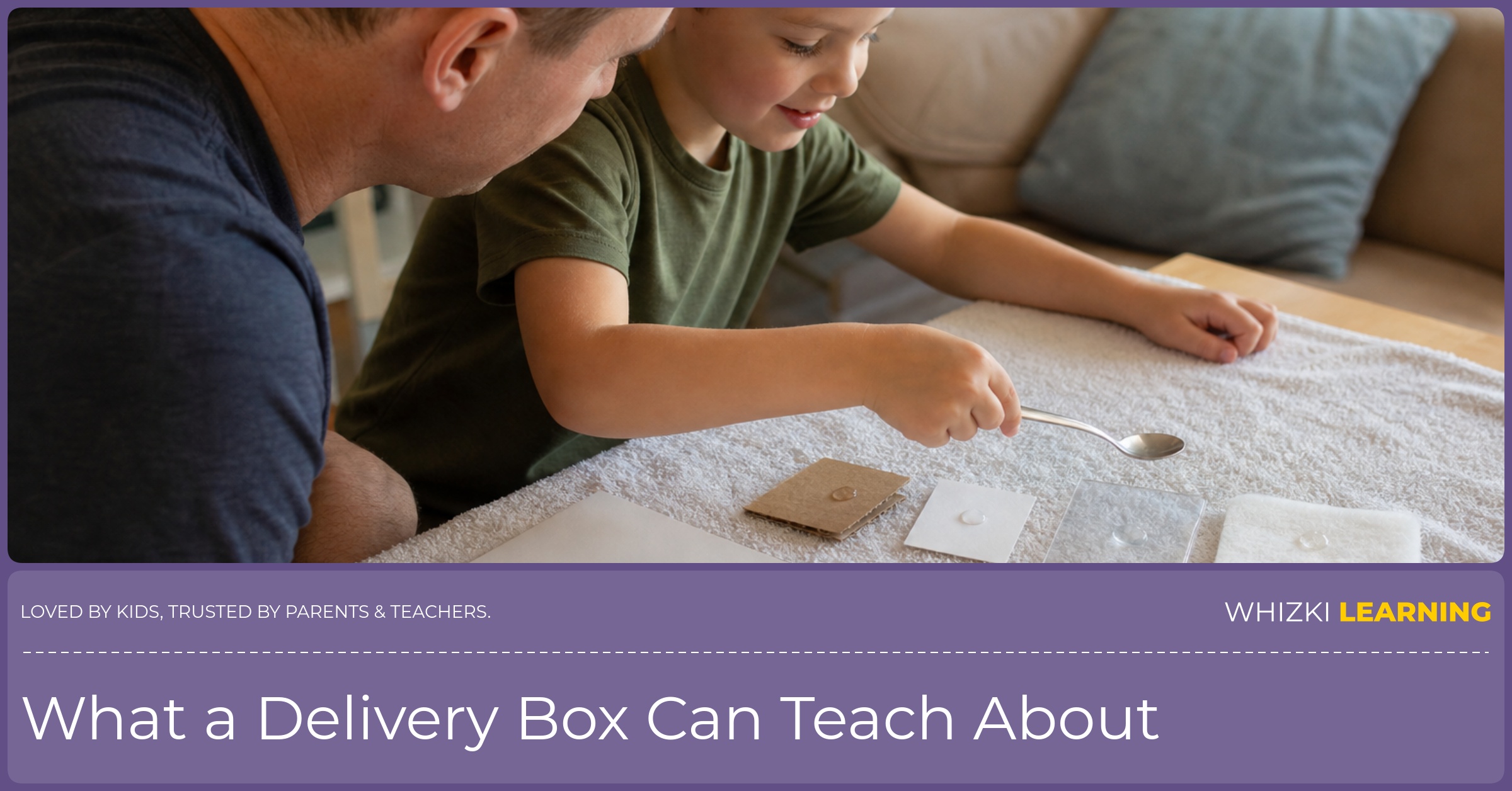
The waterproofing test needs only a spoon, a few drops of water, and a towel. NAEYC guidance on early science encourages safe observation, simple tools, and child talk before adult explanation. Put one drop on each sample and wait thirty seconds before touching the material.
Paper often darkens, wrinkles, or tears after water sits on the surface. Cardboard may resist one drop on the outside, then soak water through an edge or crease. Plastic usually sheds water, while padding depends on the kind of padding because paper padding soaks and foam padding may repel.
The waterproofing conversation is a good time to separate “keeps water out” from “safe for food” or “easy to wash.” A plastic mailer might resist water and still belong in the trash if the local program does not accept that plastic type. For more screen-free sorting and naming ideas, families can browse the Learning Hub after the hands-on test.
Make a reuse or recycle plan
The reuse plan gives the child a real family decision without putting the whole recycling system on the child’s shoulders. Montessori practical-life work values purposeful jobs, and packaging decisions can become one small job: clean pieces go to the art shelf, shipping pieces go near the door, and messy pieces leave the play area. The adult still handles sharp tools, local rules, and final disposal.
Local recycling rules matter because cardboard, paper, plastic film, foam, and padded mailers are not accepted the same way in every town. Check the city, county, hauler, or apartment guidance before telling a child that a material “goes in recycling.” A clean cardboard box might be accepted curbside, while plastic film or foam padding may need a store drop-off or may not be accepted at all.
The family decision tree can stay in spoken language: reuse clean material, repair useful material, ask about local recycling, and throw away dirty or mixed material when the parts cannot be separated. The child hears that materials have properties and limits. The grown-up models care without turning one box into a lecture.
For a quiet follow-up after the packaging lab, simple sorting pages or early science prompts can help a child draw and label what the hands already tested. Browse the printed workbooks when a paper extension would fit your home or classroom routine.
Talk like a young scientist
The best vocabulary comes after the child has touched the material. Orton-Gillingham and speech-language practice both remind me to say the useful word, show the useful word with an action, and invite the child to use the word in a short sentence. “The cardboard is stiff” teaches more than a long explanation about fibers.
The adult can offer sentence frames without making the child perform. Try “The paper changed because…” or “The plastic kept the water…” and accept a short answer, a point, or a gesture from a younger child. A 3-year-old may say “wet,” while a 7-year-old may explain “The drop stayed on top.”
The packaging conversation also supports early writing when the child draws the four samples. The adult can label the drawing with the child’s exact words, which is a Reggio-friendly way to honor observation. The drawing is a record of thinking, not proof that the activity “worked.”
A delivery box will not teach every science idea, and a ten-minute lab will not solve every clutter problem. A small, concrete comparison can still help a child notice flexibility, strength, waterproofing, and reuse while the family makes one cleaner decision about the materials on the table.