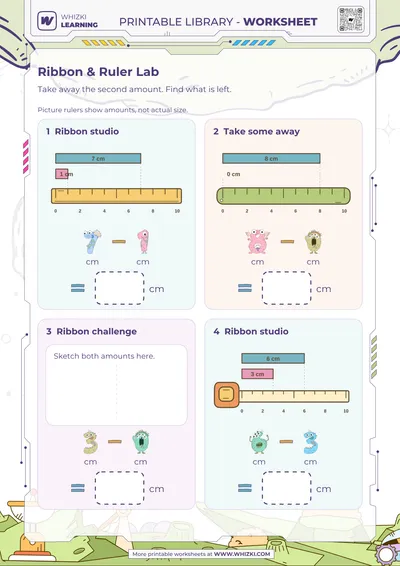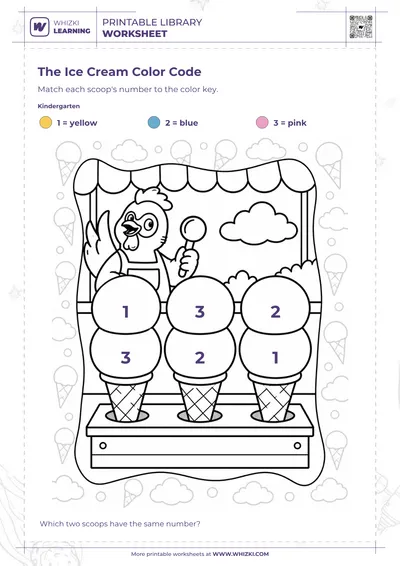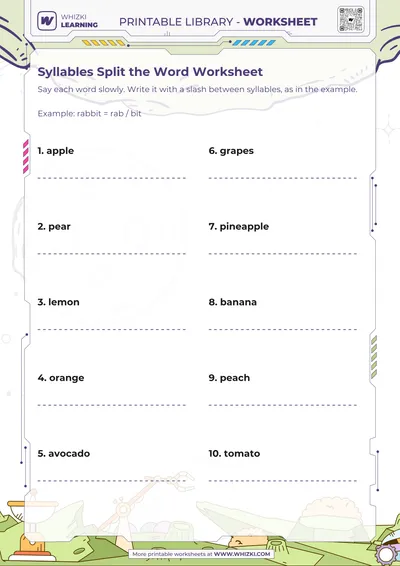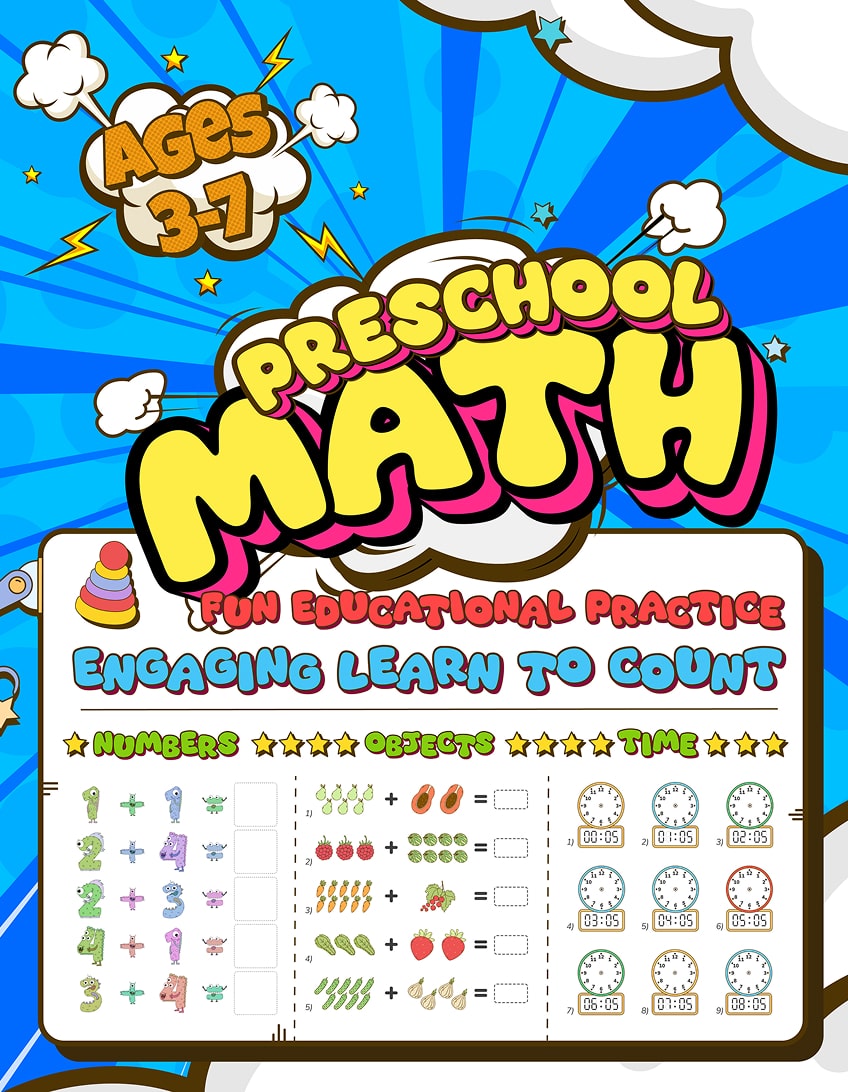

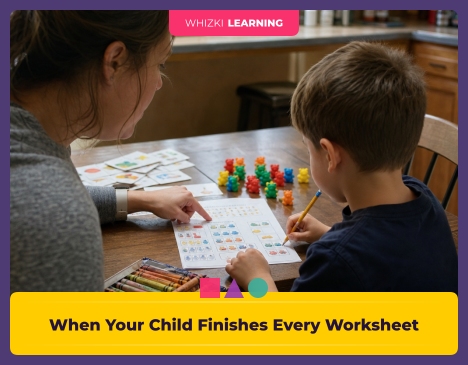
When your child blasts through a worksheet while dinner is half-made, the tempting move is to print five more pages, but today's better move is to pause for two minutes, check one answer, and ask, "Show me how you knew." Fast work can mean confidence, guessing, memorized patterns, or a child who wants the next thing, so speed by itself is not enough information. The goal is not to slow a child down for the sake of slowing down, but to find out whether the page is accurate, understood, and still worth using.
Reviewed by Whizki Editorial Team, Early Childhood Education Editors.
Start with accuracy, not speed
The worksheet is only the first clue, not the whole story. NAEYC guidance on developmentally appropriate practice reminds early-childhood teachers to look at the child's process, the child's age, and the child's meaning-making before making a big decision. A fast correct page and a fast messy page call for very different next steps.
The two-minute accuracy check starts with one small sample, not a full re-teach. Circle or point to three items from different parts of the worksheet, then ask the child to read, count, match, or name those items again. If the worksheet has several errors in one skill area, the next page should not be harder yet.
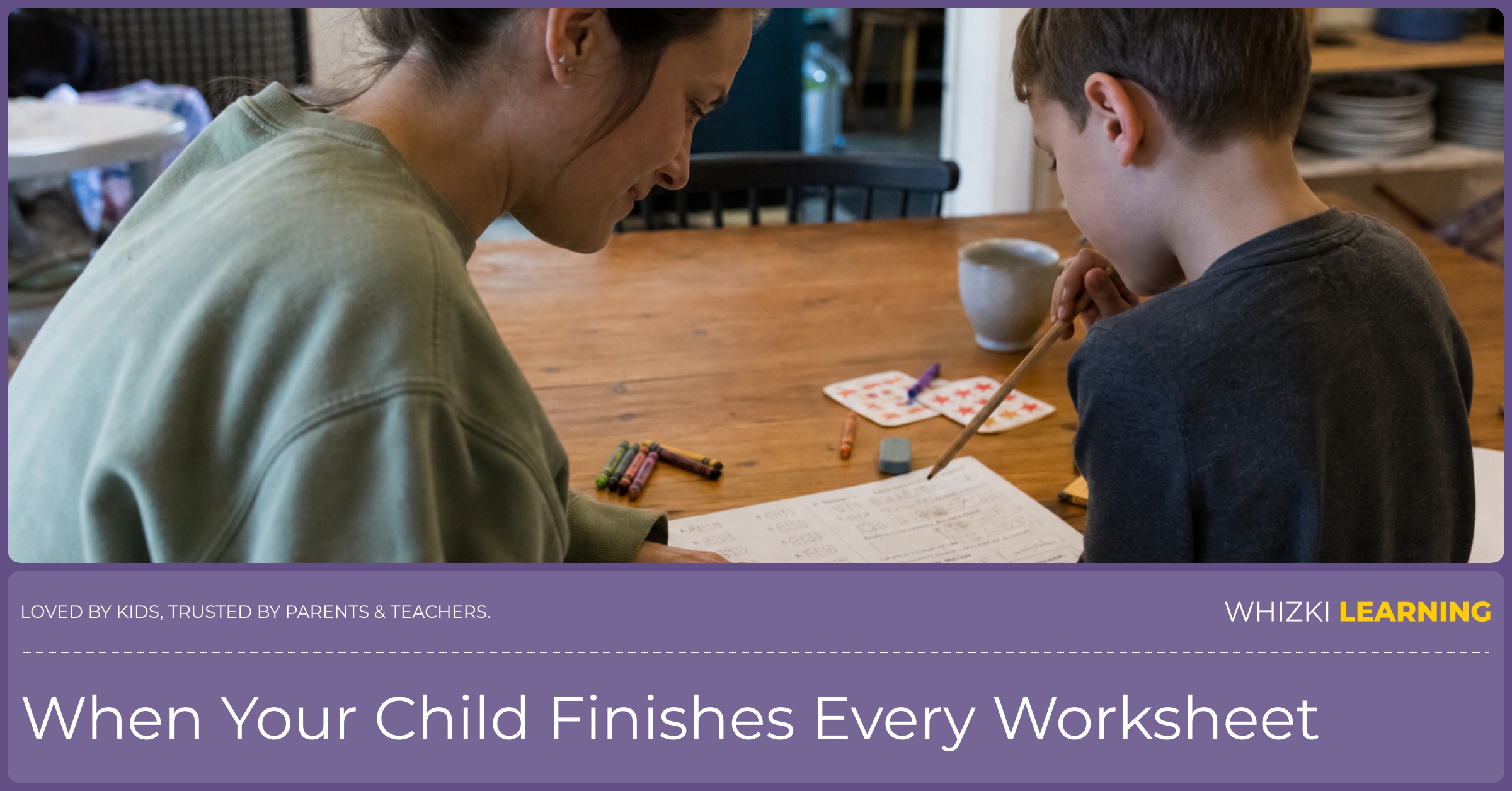
Decision point one: if the work is not accurate, stop adding pages. Choose one error pattern, such as reversed letters, skipped counting, or color-word confusion, and practice that pattern with counters, crayons, or letter tiles for five minutes. For ages 3 and 4, one corrected example may be plenty, while ages 5 to 7 can usually handle fixing two or three examples with an adult nearby.
Ask for an explanation before adding challenge
The explanation step is the part many adults skip because the finished worksheet looks clean. Orton-Gillingham teaching uses explicit, multisensory checks because a child can mark the right answer without fully owning the sound, symbol, or count. Speech-language pathology practice also values teach-back because spoken explanation shows vocabulary and sequencing in a way a circled answer cannot.
Decision point two: if the page is accurate, ask the child to teach one item back to you. Try plain prompts such as "How did you know?" or "Can you prove that with your finger?" A child who can point, say the rule, or count the objects has given you better information than a finished stack of worksheets.
The explanation should stay short and friendly. A 3-year-old might show understanding by touching the matching picture, while a 6-year-old might say, "The word starts with /m/, so I picked moon." If the child shrugs, changes the subject, or repeats "because I know," the next step is a different response style, not a harder page.
Change the response from circling to drawing or teaching
The response mode can hide a child's real skill. Occupational-therapy basics remind teachers and parents that pencil control, sitting stamina, visual scanning, and page layout can affect how a child performs. A child who rushes through circling may need a different way to show thinking, especially after several pages in a row.
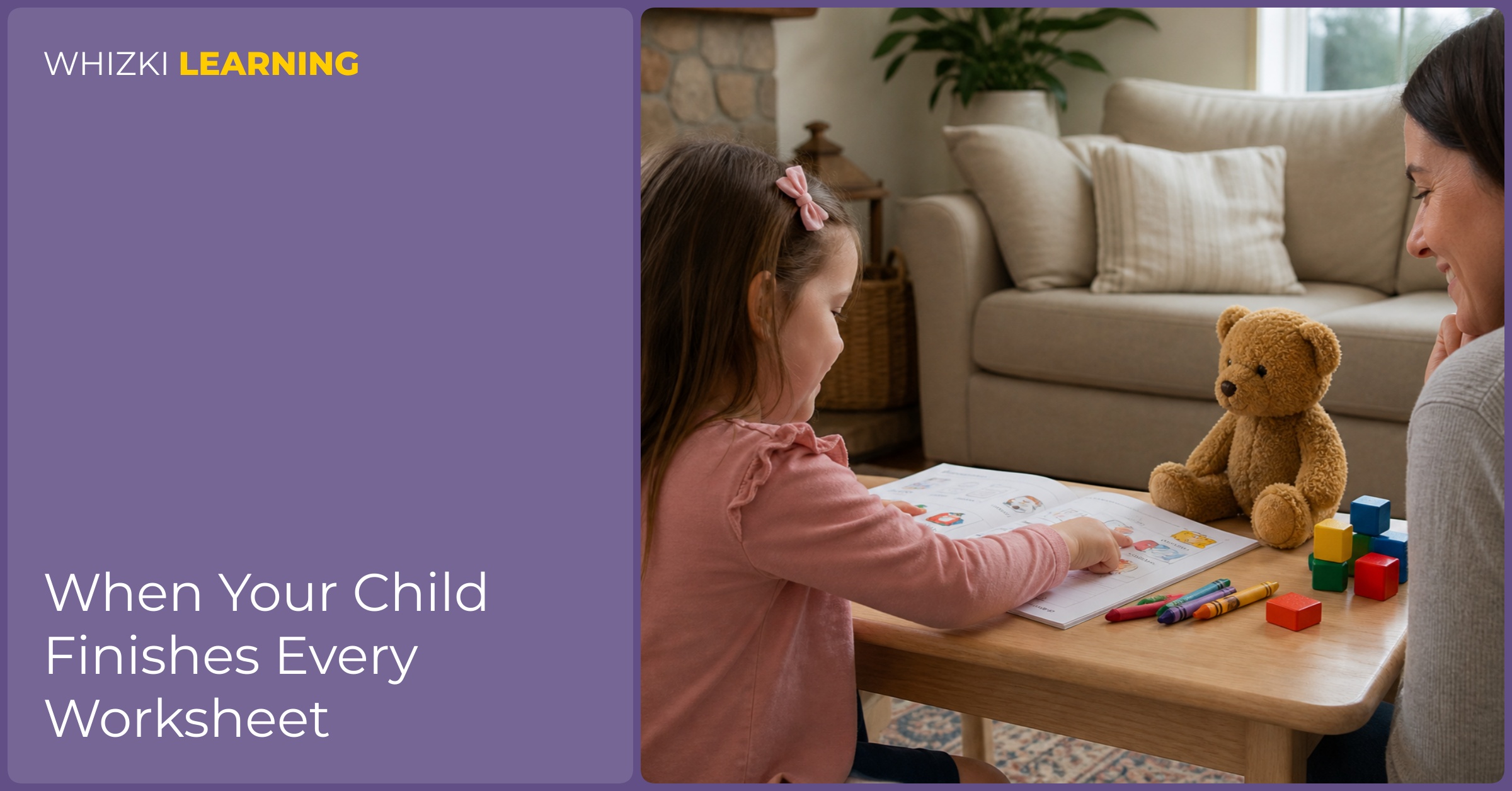
Decision point three: if the explanation is thin, change the job. Ask the child to draw the answer, build the answer with blocks, sort picture cards into two piles, or teach the answer to a stuffed animal. The changed response gives the adult a clearer look at understanding without turning the moment into a lecture.
Drawing and teaching are especially helpful for young children who love speed. A 4-year-old can draw three apples instead of circling the number 3, and a 7-year-old can make a mini lesson for a sibling using magnetic letters. If the child can explain the idea through a new response mode, the fast worksheet probably reflected fluency with that page, not proof that the child needs a new placement.
Decide whether a harder page helps
A harder page is useful only after accuracy, explanation, and a changed response all look solid. Montessori observation often asks whether the material still offers a meaningful challenge and whether the child can notice errors with some independence. A worksheet that is too easy may be finished quickly, but a harder worksheet is not the only answer.
Decision point four: choose depth before difficulty for many children ages 3 to 7. Depth might mean making a new example, finding the same letter in a book, counting snack pieces, or sorting socks by size. Difficulty might mean a page with more items, smaller print, or an unfamiliar direction, and difficulty only helps when the child is ready for that extra load.
Speed alone should never be treated as proof of advanced placement. A kindergarten teacher or homeschool parent can offer a harder page as a trial, then watch for calm effort, accurate explanation, and a willingness to fix mistakes. If a harder page brings guessing, scribbling, or frustration, return to hands-on practice and revisit challenge another day.
When a fresh page is useful, choose one printable that matches the exact skill rather than a thick packet. The printable library can help you pick a short alphabet, number, tracing, or matching page for a five-minute check.
Use a small routine for fast finishers
A small routine keeps the adult from reacting differently every time a worksheet ends early. NAEYC-aligned classroom practice favors predictable steps because young children do better when the adult response is calm, consistent, and easy to understand. The routine can take under ten minutes and still respect a child's energy.
The routine can sound like this: "Check three answers, teach me one, then choose draw, build, or read." A family can write that order in the family learning planner so worksheet time does not become a nightly negotiation. A teacher can place the same three-step note on a clipboard near the small-group table.
Screen time can sit beside the routine without blame. If fast worksheet work often becomes a scramble over shows or games, the previous parent systems guide can help you look at the whole family rhythm instead of treating one quick worksheet as the problem. A clear next step after the page, such as snack, outdoor time, or a read-aloud, lowers the pressure to keep printing.
The fastest child in the room does not always need more worksheets, and the slowest child does not always need less challenge. The better question is, "What does the finished page tell me, and what does the child still need to show me?" Accuracy, explanation, response mode, and a careful challenge trial will give you a steadier answer than speed alone.
For today, try the two-minute check before the printer turns on again. Pick three answers, ask for one explanation, and change the response once before deciding whether a harder page belongs on the table.