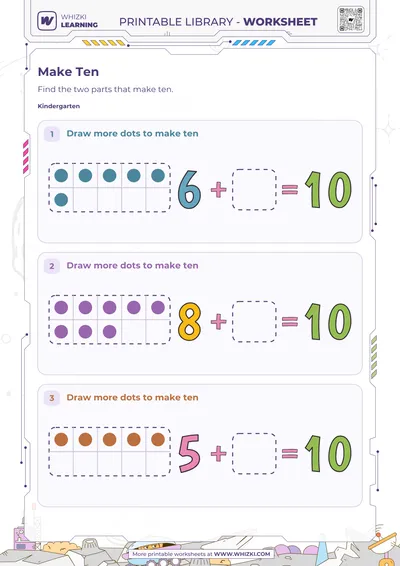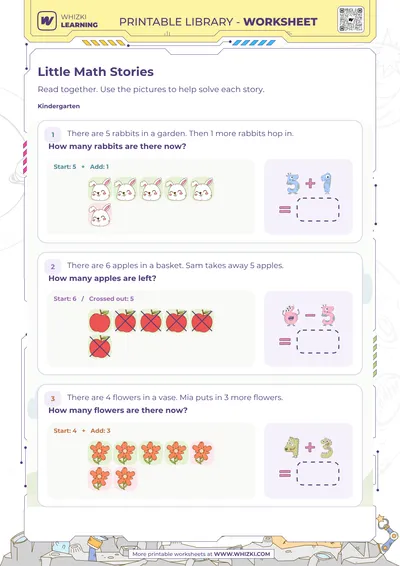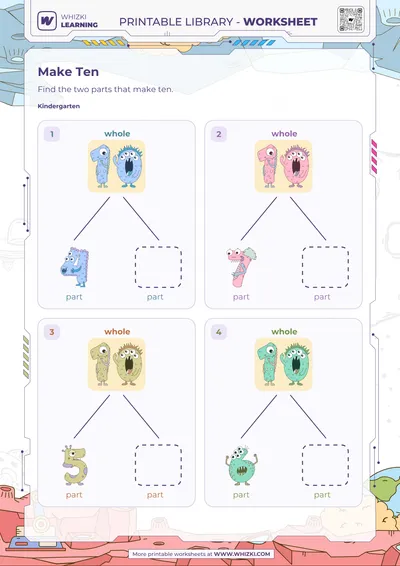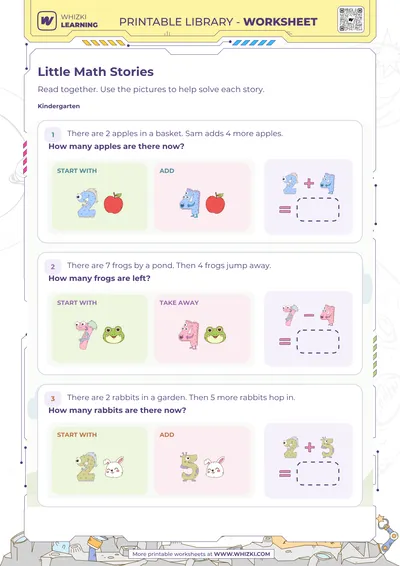
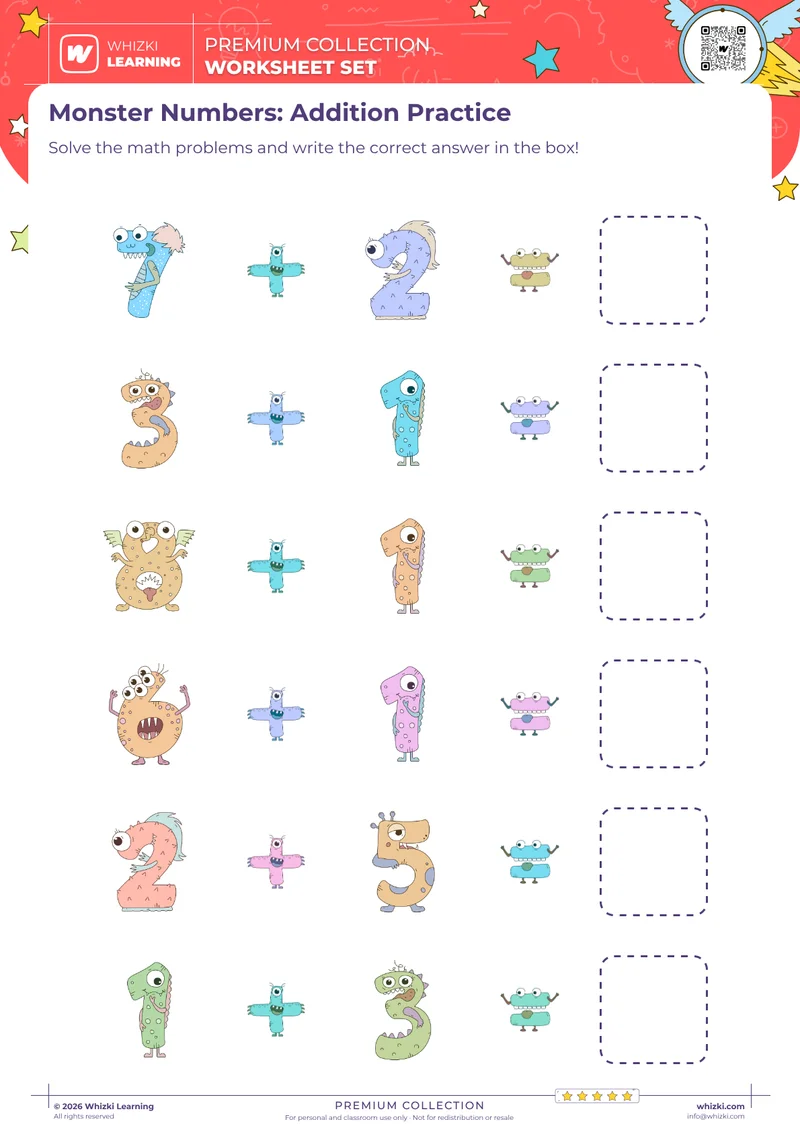


Combine the two amounts in each printed numeral problem, using a counting or reasoning strategy appropriate to the child.
Record the total in the answer space and connect it with the meaning of the plus sign.
Read the numerical values of illustrated monster digits and explain a solution using ordinary number language.

This monster-number addition worksheet has 6 equations to complete. The illustrated numerals show the numbers to use; read their numerical values even though they are drawn as playful characters. Combine the two given amounts and write their sum.
The first row uses 7 and 2. The total is 9. Count both groups, or start at 7 and count on 2 more. Point to the relevant numbers or groups as you explain the example.
Let the child describe a strategy before writing. Counters, fingers, or a separate number line can support the calculation. After finding an answer, return to the equation and read it as a complete mathematical statement. Begin with a few rows and offer another example only when it helps the child continue independently.
Continue with related activities in the Addition and Subtraction Pack. The number reference library offers another look at the numerals and quantities used in early math. Choose a few questions that the child can discuss comfortably, then return to the page during another short practice session. A useful next step is asking the child to explain one answer using a different drawing or a small group of counters.
Boost your child’s skills with our discounted workbooks. Engaging activities for preschool, kindergarten, and grade 1 - now at special sale prices!


Fast shipping
Secure Payment
Licensed Teachers
For the planet
Printed in the USA
Helpful guides for parents and teachers, and tips for making learning at home super fun.

A warm decision guide for asking how a preschool or kindergarten screening handles testing language, interpretation, observations, and home-language evidence.

Use one familiar snack to build science talk and vocabulary without pressure to taste. This kitchen-table investigation honors allergies, texture needs, and child choice.

Help young children measure with paper clips before a ruler, using equal units, clear endpoints, and quick fixes for gaps, overlaps, and different answers.

Picture labels can build meaning, first-sound attention, or guessing habits. Use this parent-friendly decision tree to know when to cover or reveal the picture.
Get exclusive activities, expert tips, and inspiration for a more meaningful, offline family life.