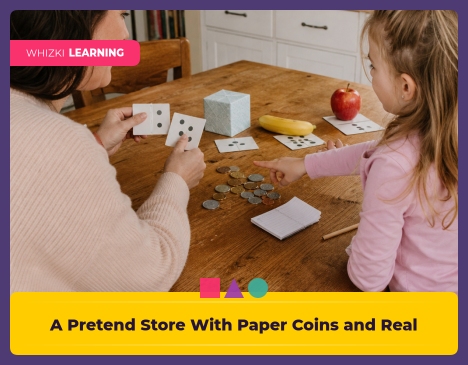
When one child wants every snack-box toy and the coins start turning into an argument, put out three familiar objects today, price each object with dots, and ask which choice the coins can buy. Pretend store math works because the decision is small, visible, and playful. The goal for ages 3 to 7 is counting, comparing, and explaining a choice, with cents symbols kept in the background.
Reviewed by Dr. Anna Klein, EdD, Early Childhood Curriculum Specialist.
Set up the counter in five minutes
The pretend store needs three priced objects, not a whole classroom market. In Reggio-inspired teaching, a small invitation lets the adult watch how the child sorts, counts, and negotiates before adding more materials. If the child is still building one-to-one counting, the adult can revisit the numbers learning hub for simple quantity practice.
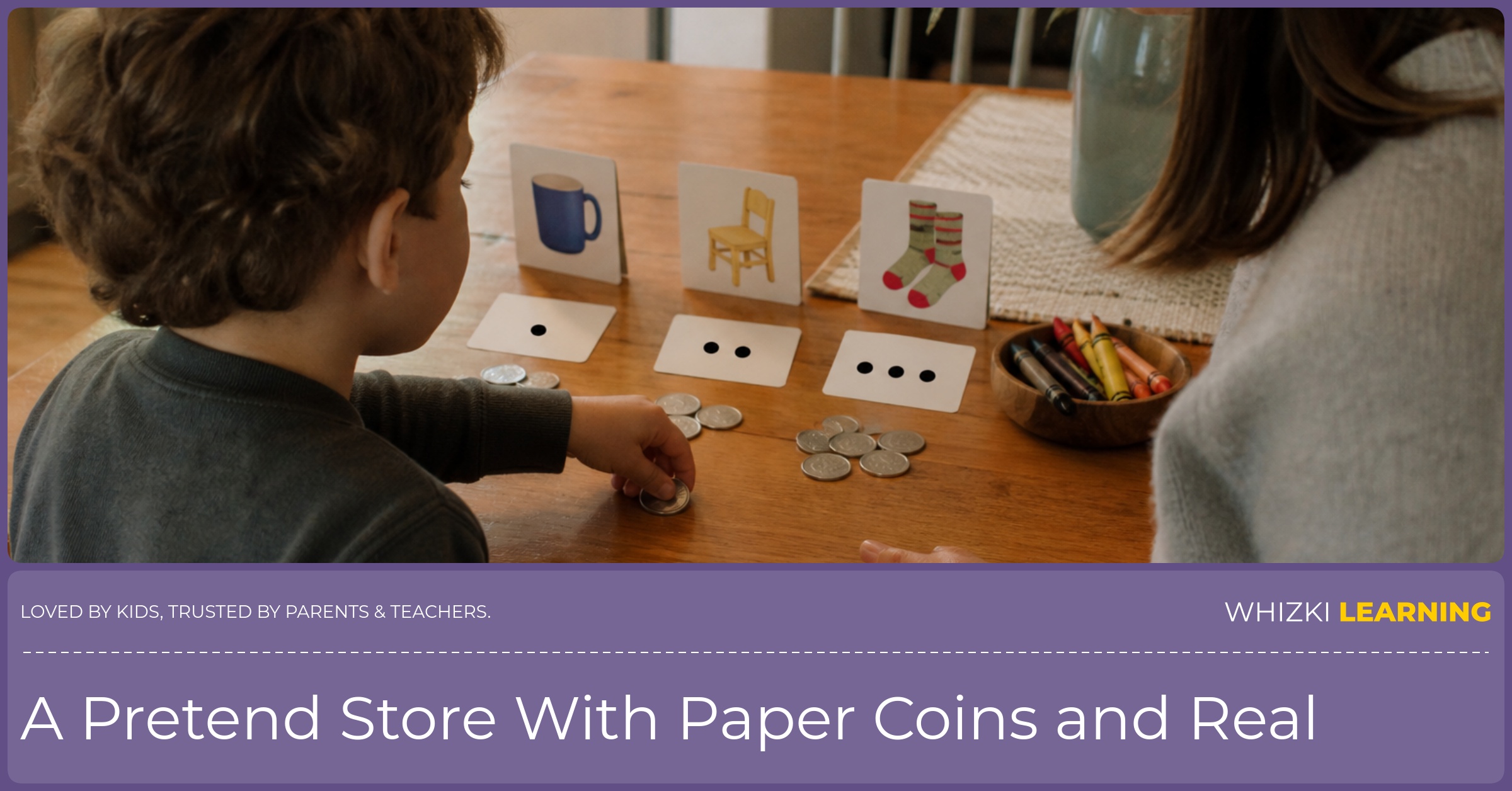
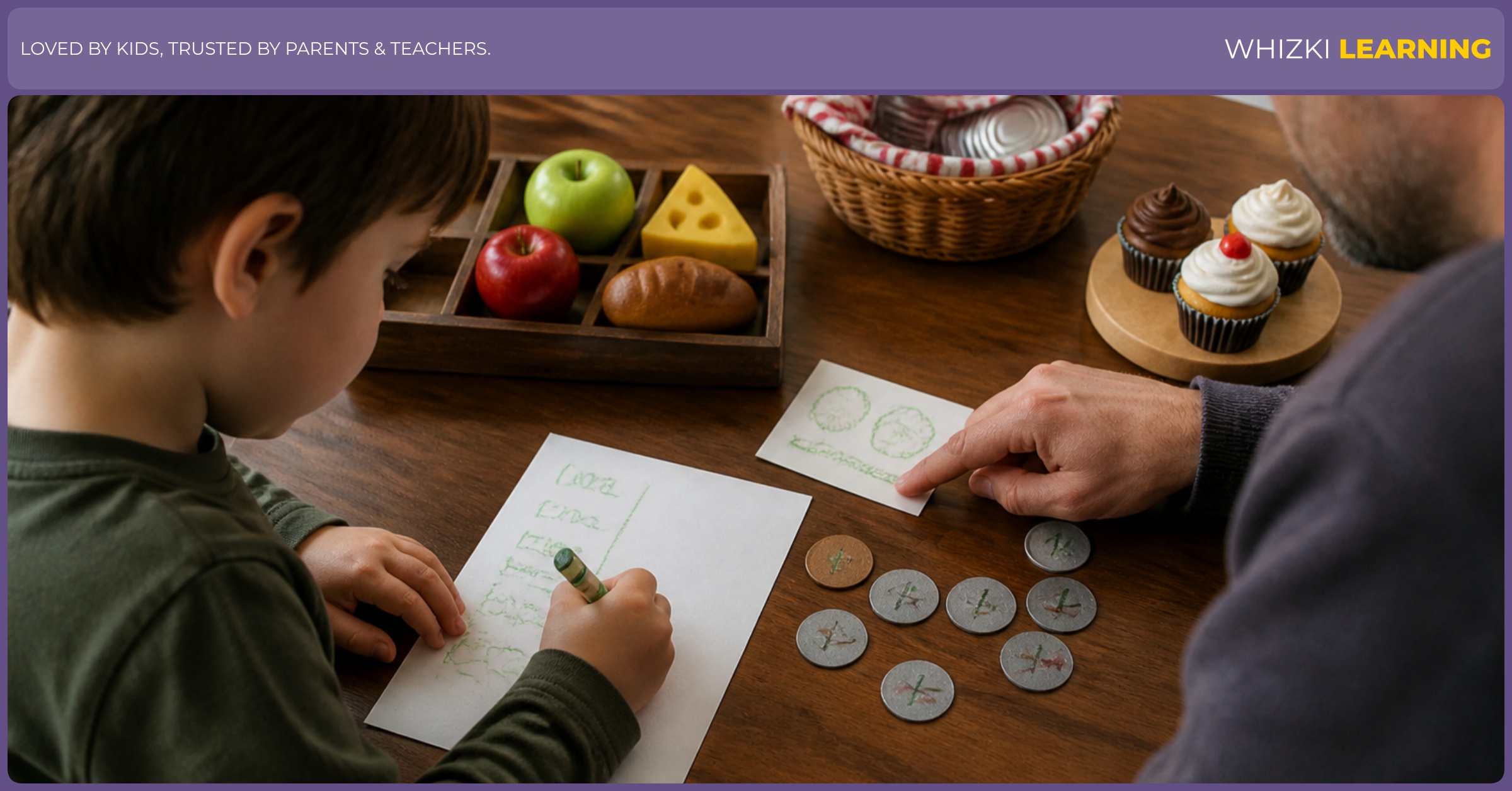
Choose one soft item, one hard item, and one snack-safe container, because different textures keep hands busy without making the math bigger. Make three price cards with dots first and numerals second, such as one dot with the numeral 1, two dots with the numeral 2, and three dots with the numeral 3. NAEYC guidance favors meaningful play over isolated drills, so the objects should be things the child already understands.
Cut six to ten paper coins from scrap paper, or trace circles onto a paper bag. An occupational-therapy basic I use in preschool rooms is to start with pieces large enough for a relaxed pinch, because tiny paper circles can turn counting into a finger-control problem. The adult can add real pennies later if the child mouths paper or needs heavier objects, with close supervision.
Play the buying game without rushing notation
The buying game begins with the child choosing a customer voice, a shopkeeper voice, or a quiet pointing role. The Orton-Gillingham habit of saying, touching, and moving one piece at a time helps here, even though the lesson is math, because the same multisensory rhythm supports attention. The adult says the price aloud while the child touches one coin for each dot.
The adult can model one round by saying that the apple costs two, so two coins go on the counter. The child then tries a round with a different object, and the adult waits before correcting a skipped coin. Waiting matters because many children notice the mismatch when the coins and dots no longer line up.
Keep money notation as a side note for younger children. A small 3¢ mark can sit in the corner for children who are curious, but the main work is matching three coins to three dots and deciding whether a purchase is possible. Kindergarten children may enjoy naming cents, while preschool children can call the pieces store coins.
Compare choices and make a receipt
The comparison step turns the pretend store from counting practice into decision-making. Speech-language pathology practice often uses compare words in real situations, and a store gives useful words such as more, fewer, same, cheaper, and costlier. The adult can ask which object uses fewer coins, then give the child time to prove the answer by lining coins under the price cards.
The previous routine for first, next, and last can connect nicely here because a receipt is just a record of what happened in order. If ordinal language is new at home, the previous math at home guide gives a gentle way to practice sequence before adding a store receipt. In the store game, the child can say first I bought the cup, next I bought the bear, and last I paid three coins.
The receipt can be a half sheet of paper with a picture, a tally mark, and an adult-written word. Montessori classrooms often separate the child’s action from the adult’s label, so the child can draw the item while the adult writes the name nearby. The receipt should show the decision, not perfect handwriting or a formal money format.
Use a decision tree for stuck moments
The decision tree starts with the most common snag: the child grabs every object and declares the store finished. Occupational-therapy basics remind adults to lower the motor and planning load before adding language, so the adult can cover one object and offer two choices. A two-object store still builds real comparison because the child must decide which price matches the coins available.
The decision tree has a second branch for double-counting the same coin. The adult can slide counted coins into a parking space on the left side of the counter, then point back to the remaining coins without a lecture. A clear start side and finish side gives the child a visual path, which is a common classroom support for early counting.
The decision tree has a third branch for frustration, refusal, or silliness that takes over the game. NAEYC-aligned practice treats play as the child’s work, so the adult can close the store for a delivery break and return later with one item priced at one coin. A short pause protects the relationship and keeps math from becoming a power contest.
Adjust the game for ages 3 to 7
The age adjustment for 3- and 4-year-olds is simple matching. In Montessori early math work, the hand often learns before the mouth explains, so the child can place one coin on one dot without naming the numeral. The adult can use prices of one, two, and three, then stop while the game still feels fun.
The age adjustment for 5-year-olds is numeral-to-quantity matching. The kindergarten teacher can point to the numeral after the child has already built the amount with coins, which keeps symbol reading behind the counting action. A child who reverses a numeral can still succeed by using the dots.
The age adjustment for 6- and 7-year-olds is comparing two possible purchases. The child can choose between one object that costs four coins and two objects that cost two coins together, then explain which choice uses the same number of coins. Keep the total within ten unless the child asks for a bigger challenge.
If your child enjoys a fresh page after pretend play, Whizki printed workbooks can sit beside the store for drawing receipts, tracing numbers, or saving favorite price cards. A workbook page should extend the hands-on game, not replace the choosing, counting, and talking.
Know the honest limits
The pretend store has honest limits because paper coins are not a full money lesson. NAEYC guidance would keep the center of the activity on meaningful play, so real currency names, decimal marks, and exact change can wait for another year or a child’s own question. The store is doing enough when the child counts with care and explains a choice.
The adult should stop after about ten minutes for most preschoolers and after fifteen minutes for many kindergarten children. Longer play is fine when the child is leading, but tired counting often turns into guessing, grabbing, or bargaining. A timer is optional; a clear phrase like last customer can help the store close without a battle.
The adult should also watch hand comfort, visual attention, and language load. If a child cannot pick up the coins, cannot see the dots clearly, or cannot answer while playing, the adult can make the pieces larger, reduce talking, or move the game to the floor. A child with ongoing fine-motor, vision, hearing, or language concerns deserves support from the appropriate professional.
The pretend store can stay tiny: three objects, a handful of coins, and one receipt with a picture or mark. The best math moment is the pause when the child decides, counts again, and says why a choice makes sense.