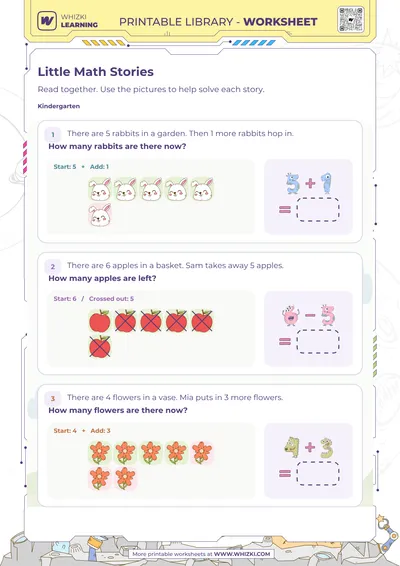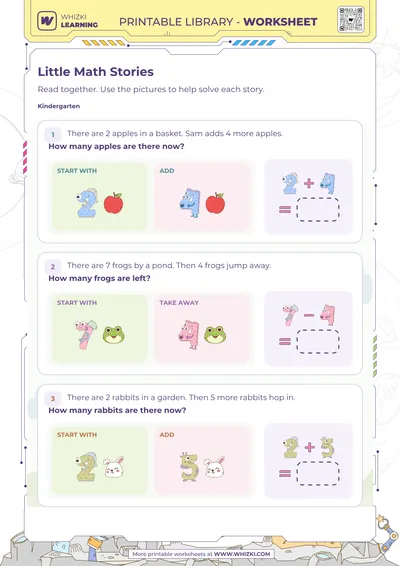
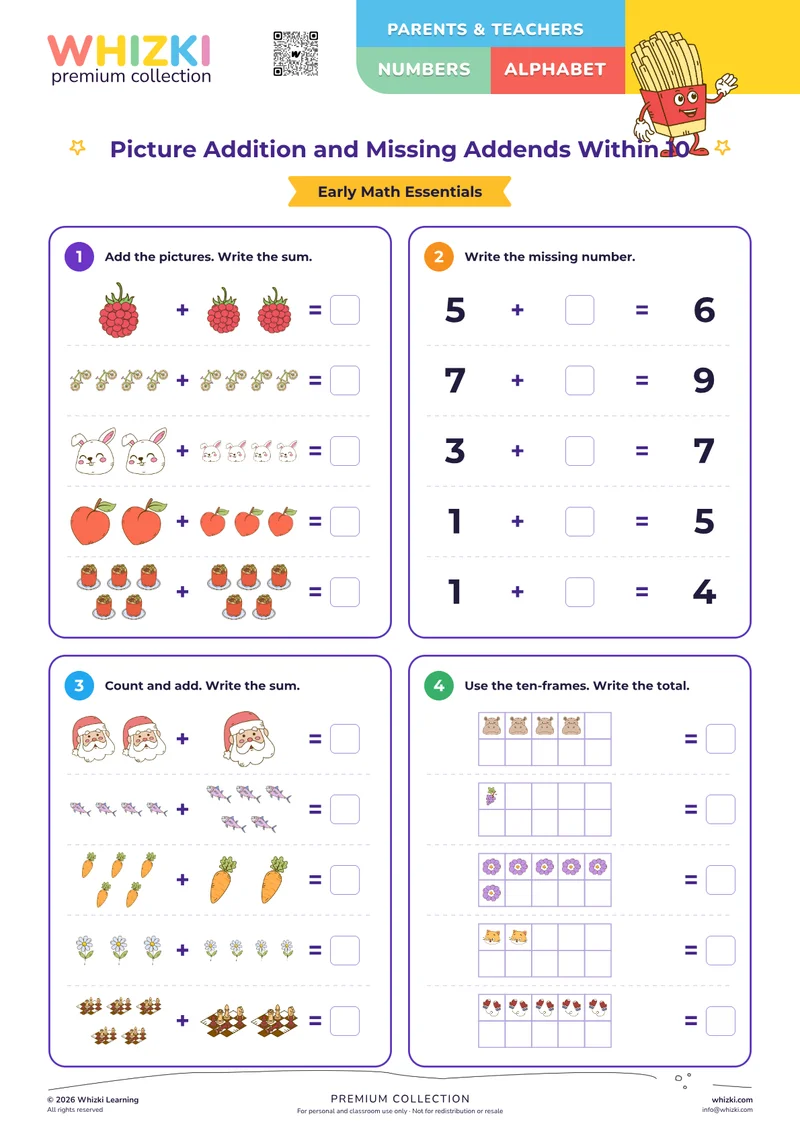


Combine two pictured quantities and record an addition total within 10, using counting or counting on as needed.
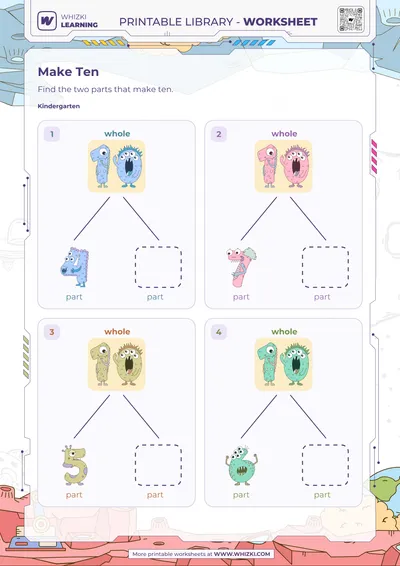
Find a missing addend by relating the known part to the total in a printed addition equation.
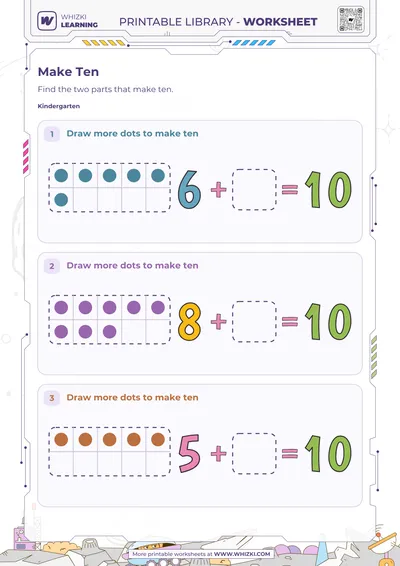
Read quantities shown in ten-frames and connect the filled spaces with a written numeral.

This addition within 10 worksheet combines picture sums, missing addends, and ten-frame counting. The first and third panels each contain 5 picture addition problems. The second has 5 equations with a missing addend, and the last has 5 partly filled ten-frames to count. The printed pictures and answer boxes help children connect quantities with written equations.
The first picture equation represents 1 + 2 = 3. Count the two groups separately, then combine their quantities to find the total. A child may count every picture at first or count on from one known group. Point out the plus sign and explain that the equals sign connects two expressions with the same value.
A missing-addend problem asks how much must be added to reach the given total. For example, 5 + a missing number = 6, so the missing amount is 1. Let the child show this with counters before writing. In the ten-frame panel, count the filled spaces and write that number; the empty spaces can help the child see how far the amount is from ten.
Explore the Addition and Subtraction Pack for related number operations, or use the number 10 guide to revisit the quantity ten. Work through a few questions together and ask how each answer was found. When the child can explain the picture model, try another row with less help. The four panels can be completed across separate short sessions.
Boost your child’s skills with our discounted workbooks. Engaging activities for preschool, kindergarten, and grade 1 - now at special sale prices!


Fast shipping
Secure Payment
Licensed Teachers
For the planet
Printed in the USA
Helpful guides for parents and teachers, and tips for making learning at home super fun.

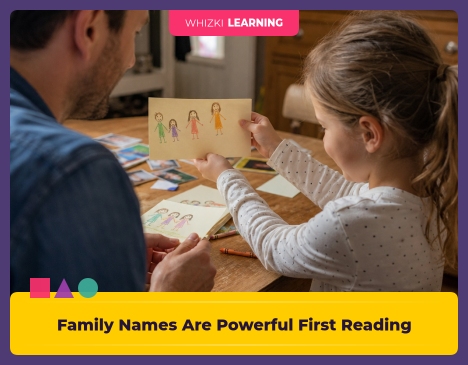
Use place cards, drawings, and photo labels to help children notice letters and sounds in family names while honoring spelling, scripts, and pronunciation.

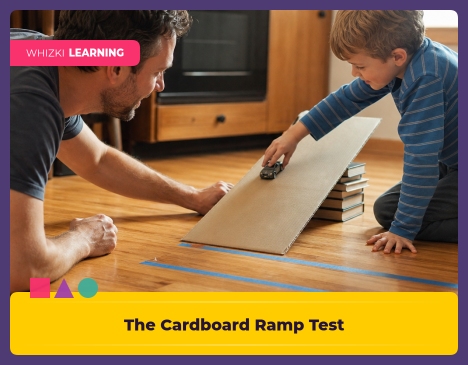
Turn cardboard, tape, and one rolling object into a quick fair-test investigation for ages 3-7 by changing ramp height or surface, one choice at a time.

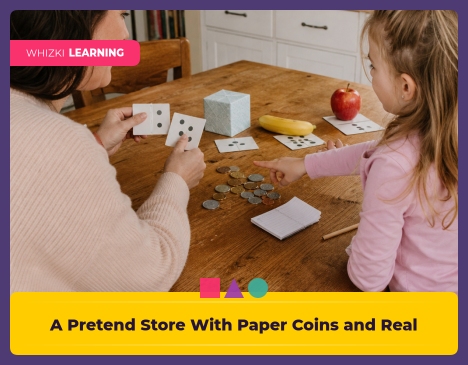
Set up a tiny pretend store with three priced objects, paper coins, and a simple receipt so children ages 3 to 7 can count, compare, and choose.

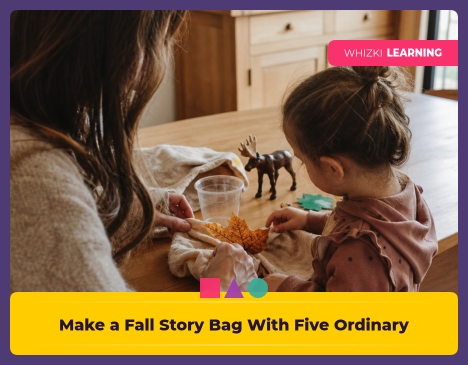
Turn a leaf, scarf, cup, toy, and paper shape into a quick fall storytelling game with age-by-age options for children 3 to 7.
Get exclusive activities, expert tips, and inspiration for a more meaningful, offline family life.