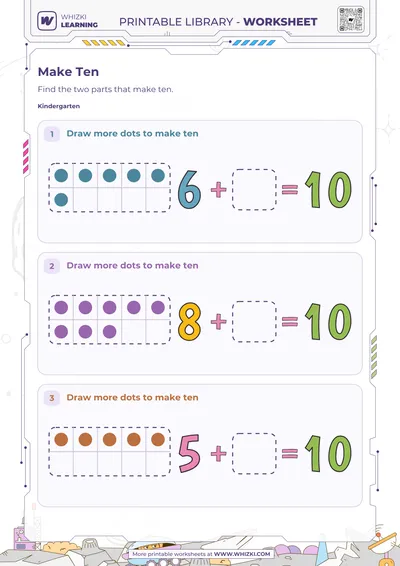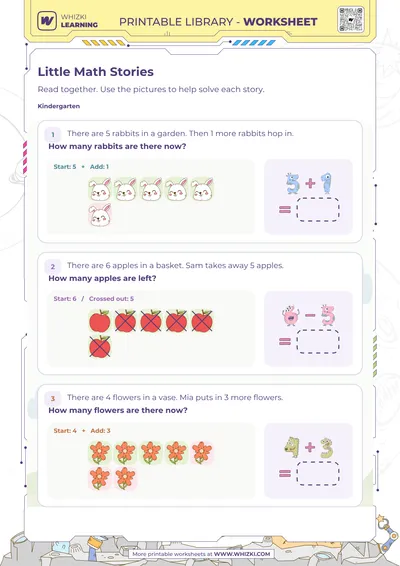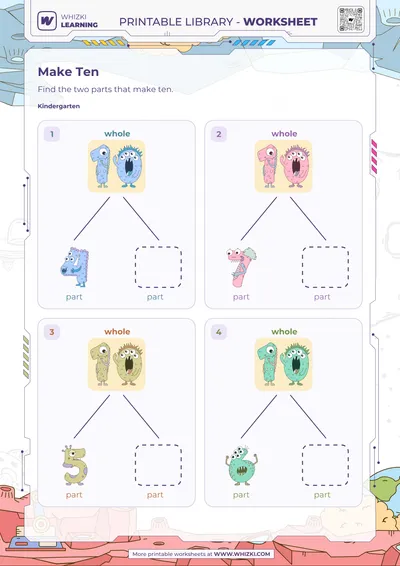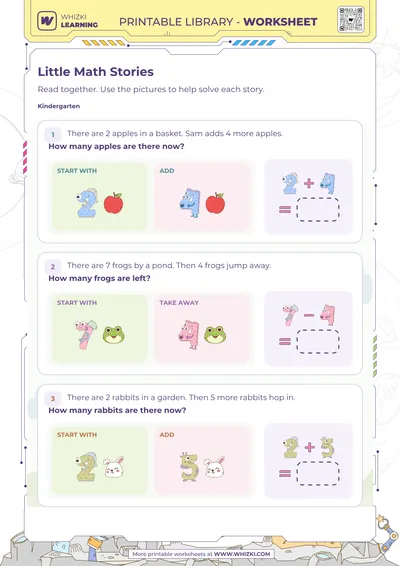
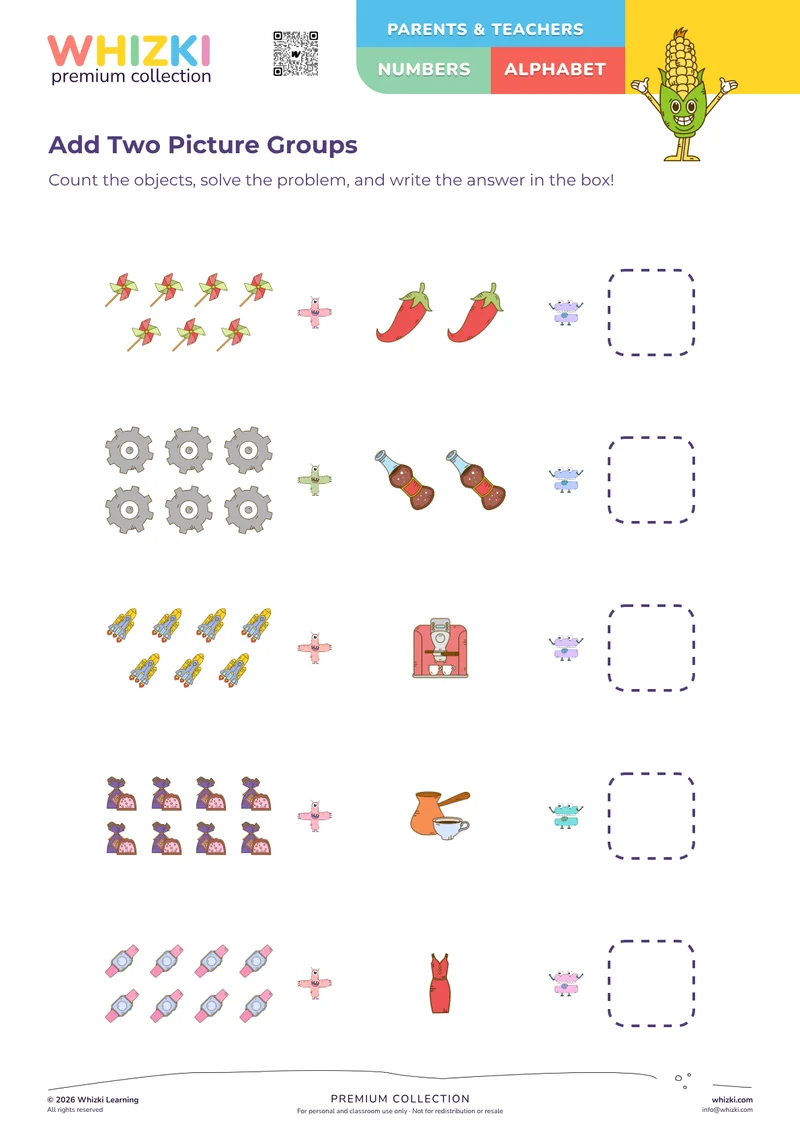


Combine the two amounts in each printed picture problem, using a counting or reasoning strategy appropriate to the child.
Record the total in the answer space and connect it with the meaning of the plus sign.
Connect counted picture groups with numerical relationships and explain how the pictures support an answer.

This picture addition worksheet has 5 equations to complete. Count the objects in the two groups before deciding what the row asks you to do. Combine the two given amounts and write their sum.
The first row uses 7 and 2. The total is 9. Count both groups, or start at 7 and count on 2 more. Point to the relevant numbers or groups as you explain the example.
Let the child describe a strategy before writing. Counters, fingers, or a separate number line can support the calculation. After finding an answer, return to the equation and read it as a complete mathematical statement. Begin with a few rows and offer another example only when it helps the child continue independently.
Continue with related activities in the Addition and Subtraction Pack. The number reference library offers another look at the numerals and quantities used in early math. Choose a few questions that the child can discuss comfortably, then return to the page during another short practice session. A useful next step is asking the child to explain one answer using a different drawing or a small group of counters.
Boost your child’s skills with our discounted workbooks. Engaging activities for preschool, kindergarten, and grade 1 - now at special sale prices!


Fast shipping
Secure Payment
Licensed Teachers
For the planet
Printed in the USA
Helpful guides for parents and teachers, and tips for making learning at home super fun.

A field note on choosing pictures, printed words, or both on early-learning pages so prereaders get the right clue for the skill being practiced.

A gentle gratitude decision tree for ages 3-7, with drawing, choosing, dictating, or passing so children can answer honestly without performing.

A field note on bilingual worksheet directions, with practical checks for parallel meaning, readable layout, clear verbs, and fair visual space.

Try a calm one-week moon watch with young children: look at a regular time, sketch the visible shape, note weather gaps, and compare what changed.
Get exclusive activities, expert tips, and inspiration for a more meaningful, offline family life.