Learning Outcomes
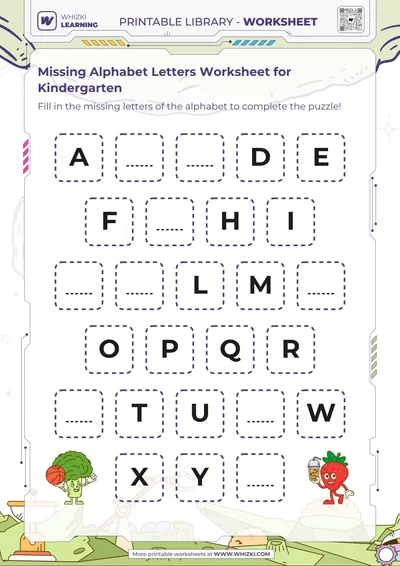
Preschool child -> letter recognition accuracy -> increases to confidently identifying 23 uppercase letters after completing repeated missing-alphabet sequences on the Whizki Learning printable worksheet.
Preschool learner -> alphabet sequencing skill -> strengthens as the learner fills gaps between A–Z, reinforcing left-to-right tracking required for future reading fluency.
Young child -> early writing control -> improves through tracing and writing missing capital letters, supporting strength and correct pencil grip using the Whizki worksheet.

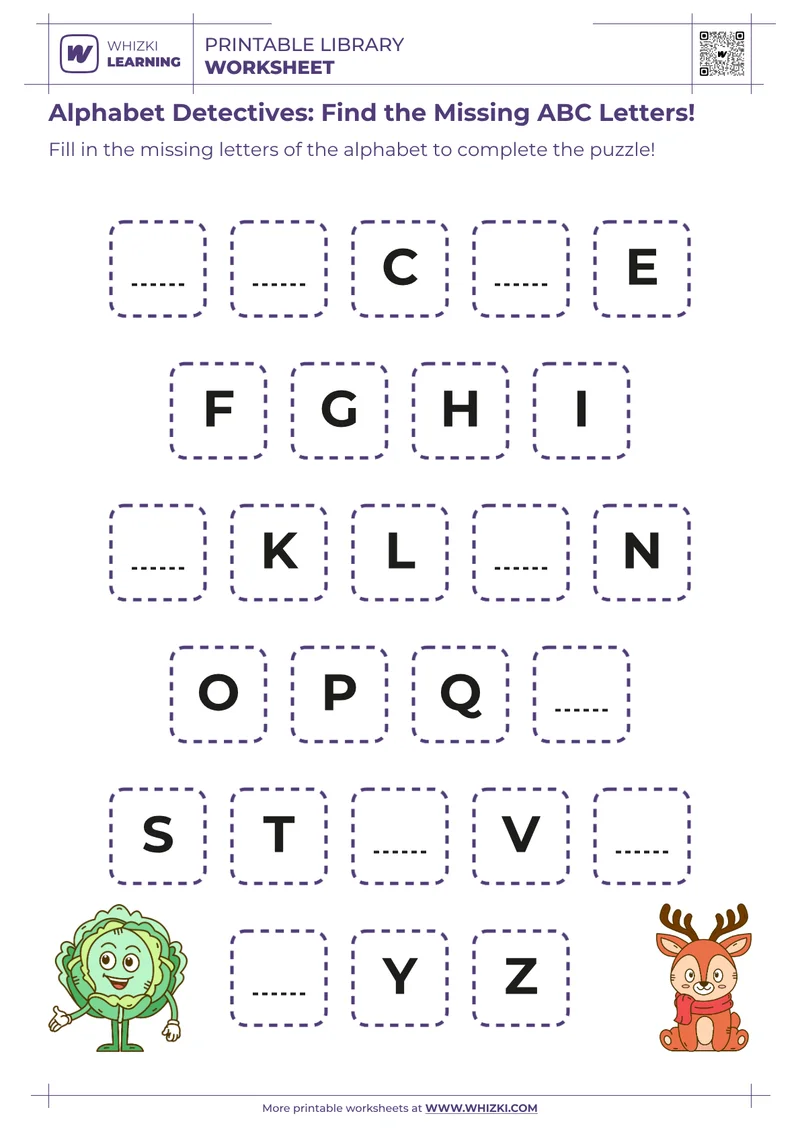
Alphabet Detectives: Find the Missing ABC Letters!
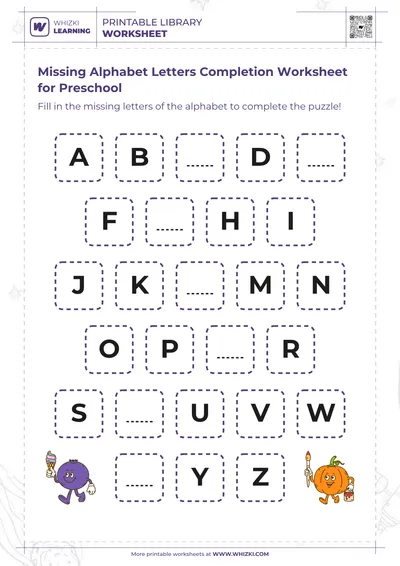
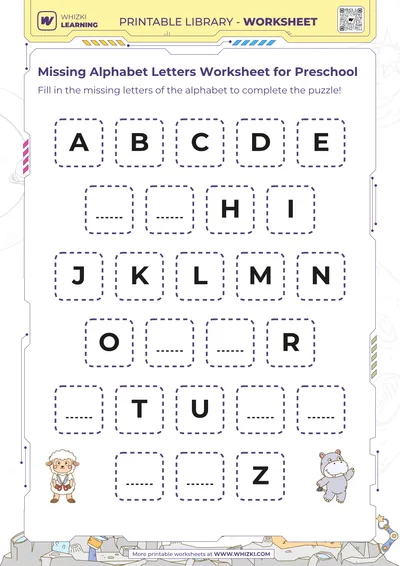
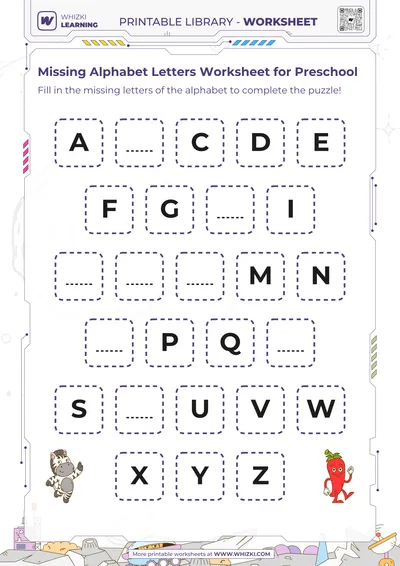
Alphabet Detectives: Find the Missing ABC Letters from Whizki Learning turns alphabet practice into a fun mystery game for preschoolers. This Whizki Learning worksheet invites a 4-year-old child to complete the ABC sequence by spotting missing capital letters, strengthening letter recognition and alphabetical order. Expert early childhood educators at Whizki Learning designed the missing-alphabet layout so a young learner can quickly see letter patterns, notice gaps, and experience success with every row. Parents and teachers gain a ready-to-print resource that supports foundational reading readiness in a clear, age-appropriate format.
The Whizki Learning alphabet completion worksheet uses large, bold uppercase letters arranged in sequence to guide a preschool child's eyes from left to right. Each line of letters on the Whizki Learning worksheet includes deliberate blanks where specific letters such as A, B, D, J, M, R, U, W, and X are missing, encouraging the child to think critically about what belongs in each space. The child can trace, write, or say the missing letters aloud, giving caregivers multiple ways to adapt the activity to different learning styles. Clear spacing and simple graphics prevent distraction so the child focuses on connecting sounds and symbols in the English alphabet.
This Whizki Learning worksheet supports several key preschool skills beyond basic alphabet knowledge. The missing-letter format encourages a 4-year-old child to use visual scanning, pattern recognition, and working memory while searching for the correct letters in the ABC sequence. Every time the child fills a blank with the correct capital letter, the child strengthens hand control, pencil grip, and confidence in writing letters independently. Caregivers can extend learning by asking the child to name the sound for each completed letter or to find objects around the room that begin with the same letter, deepening phonemic awareness and vocabulary.
The Whizki Learning alphabet completion printable worksheet offers flexible use at home, in preschool classrooms, or during on-the-go learning time. Families can slide the Whizki Learning worksheet into a dry-erase pocket for repeated practice, while teachers can place copies in literacy centers, morning work bins, or small-group interventions. Because the activity focuses on missing letters in a clear A–Z sequence, educators can easily observe which letters each child knows and which letters need extra support. Whizki Learning curriculum designers created the worksheet to align with early literacy best practices, giving caregivers a research-informed tool that prepares preschoolers for kindergarten reading success.
Limited Time Sale
Kids’ Workbooks!
Boost your child’s skills with our discounted workbooks. Engaging activities for preschool, kindergarten, and grade 1 - now at special sale prices!


Fast shipping
Secure Payment
Licensed Teachers
For the planet
Printed in the USA
Find fresh ideas
To help your little learners grow!
Helpful guides for parents and teachers, and tips for making learning at home super fun.

Teaching a child to read often creates immense anxiety for parents, leading to frustrating flashcard memorization. This comprehensive guide details a proven, Montessori-inspired phonics method that prioritizes letter sounds over letter names. Learn how screen-free, hands-on learning activities build essential phonemic awareness and prepare preschoolers for fluent reading without academic pressure.
Sunny Hedge
When a child cries at the sight of a pencil, parents must completely stop handwriting practice to prevent long-term academic anxiety. This tactical 7-day guide provides a clinical 'Writing Confidence Reset' designed by early childhood experts. Learn how to rebuild a child's fine motor confidence through screen-free sensory play, vertical drawing, and high-quality printed workbooks without any pressure or shame.
Sunny Hedge
Children frequently develop incorrect handwriting habits, such as starting letters from the bottom or applying extreme pencil pressure. This tactical guide outlines the five most common letter formation mistakes and provides occupational therapist-approved, kind fixes for each. Learn how high-quality printed workbooks and specific tactile exercises build permanent, correct muscle memory without frustrating the child.
Sunny Hedge
Parents often purchase expensive educational toys to build their child's hand strength, but household items provide superior fine motor training. This tactical guide provides 20 occupational therapist-approved, screen-free fine motor games using everyday kitchen and laundry supplies. Learn how activities like threading pasta and squeezing sponges build the essential pincer grasp needed for handwriting.
Sunny HedgeJoin the Screen-Free Movement.
Get exclusive activities, expert tips, and inspiration for a more meaningful, offline family life.