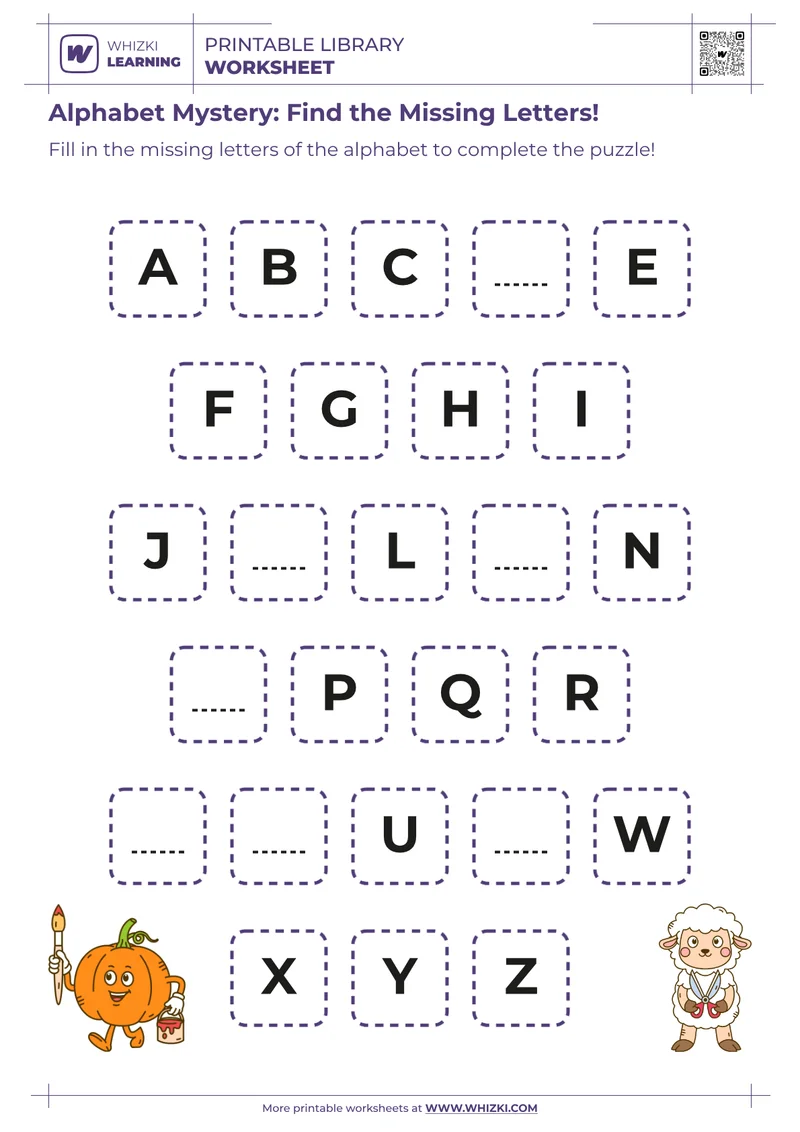
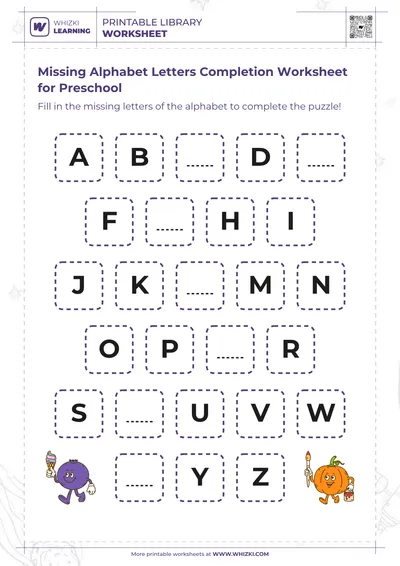
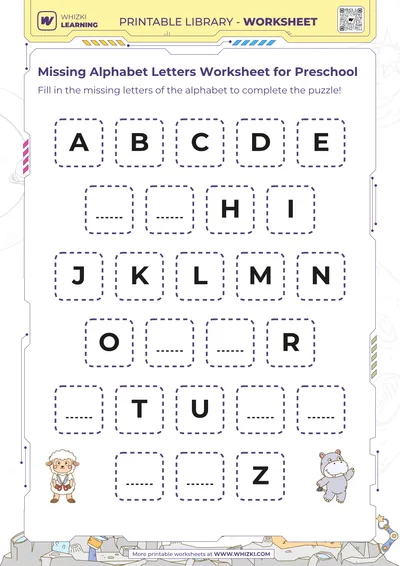
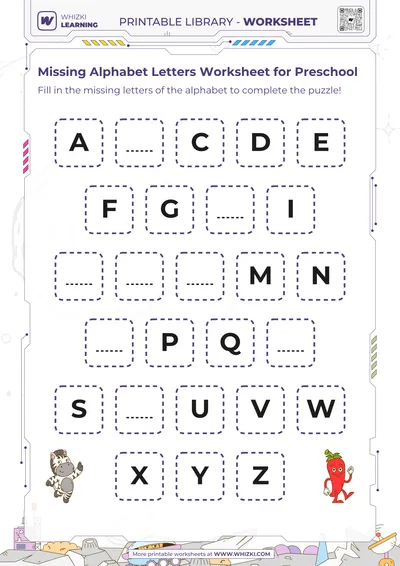
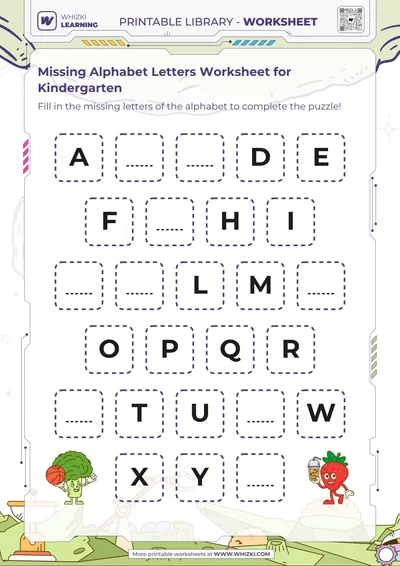
Use the order of the alphabet to decide what belongs next. This missing-letter alphabet worksheet shows the uppercase alphabet with 7 gaps to fill. Read the visible letters and write the missing ones in their spaces. An adult can keep an alphabet reference nearby while the child practices locating and recording the letters.
Begin with the first gap and read the nearby printed letters aloud. Follow the alphabet sequence to work out which letter belongs there, then check against the next visible letter. The missing letters are D, K, M, O, S, T, V. Write one letter in each space. If the sequence is unfamiliar, point along an alphabet strip together and return to the same gap after finding its position.
Work through the gaps in order, using printed neighbors as checkpoints. Saying a familiar alphabet sequence can help, but pause and point to the written letters so the child connects what is said with what is on the page. Write a model on separate paper if forming a letter is harder than identifying it. Check a small section before moving on rather than waiting until every blank is filled.
Visit the alphabet library for individual letter information. The Alphabet Starter Pack offers related letter practice. Complete a small section, say its letters in order, and revisit any uncertainty with a reference. For a later activity, arrange a few letter cards on a table and cover one for your child to identify. Move to independent writing when both the order and the letter forms feel manageable.