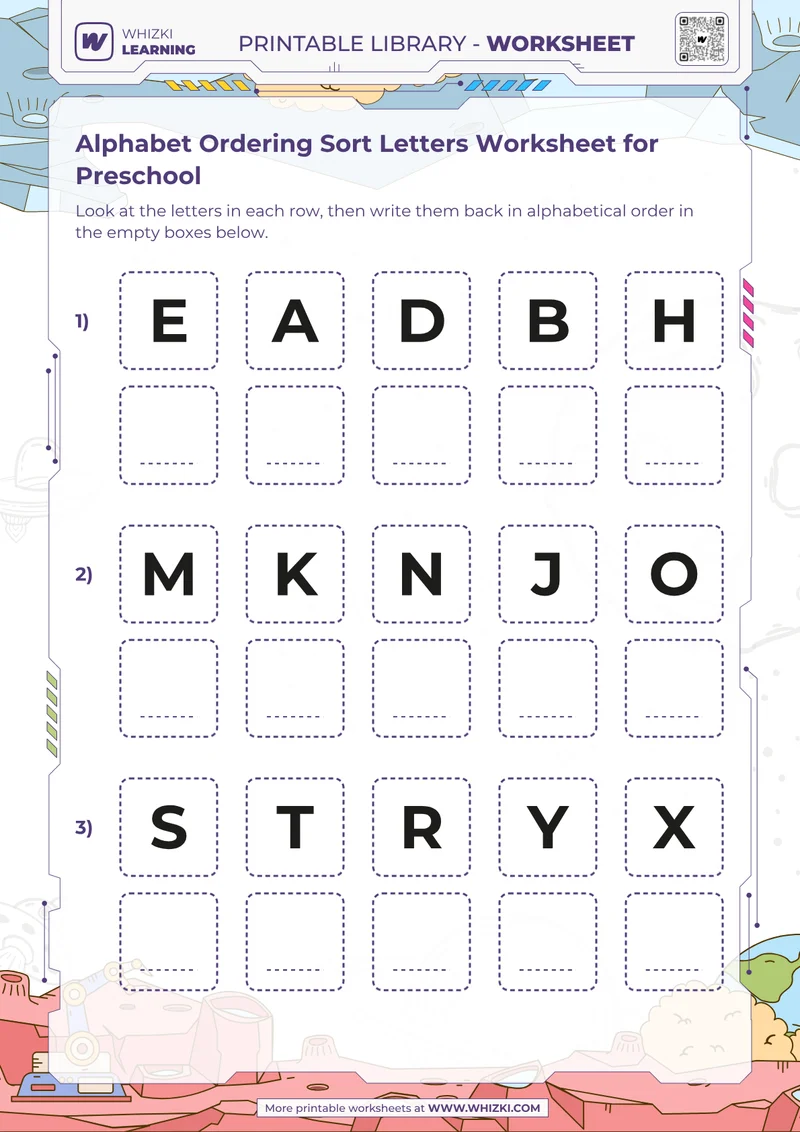


Order the first group as A, B, D, E, H, then apply the same alphabetical-order rule to the other groups.
Use each supplied letter once and distinguish ordering a selected group from completing the entire alphabet.
Record uppercase letter forms in the answer spaces, using an alphabet or handwriting model when needed.

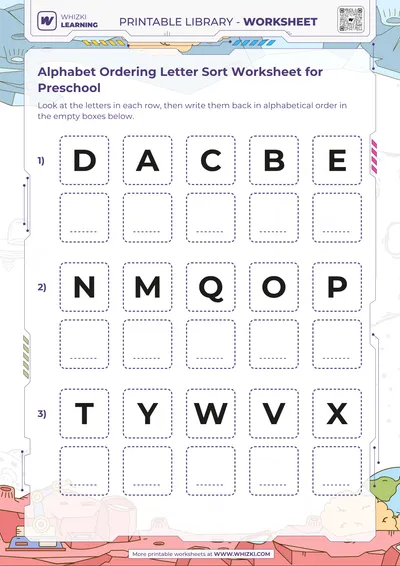
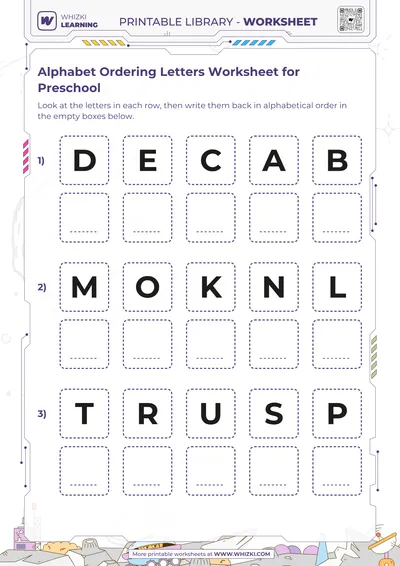
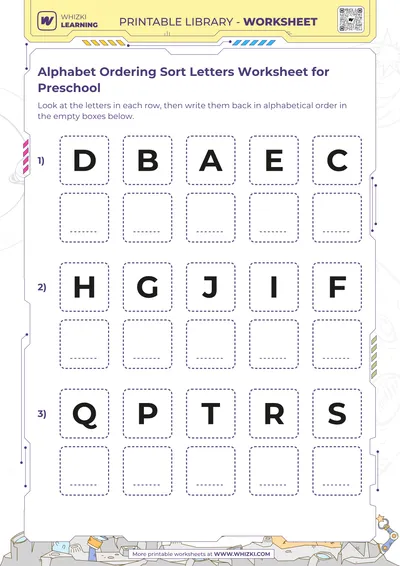
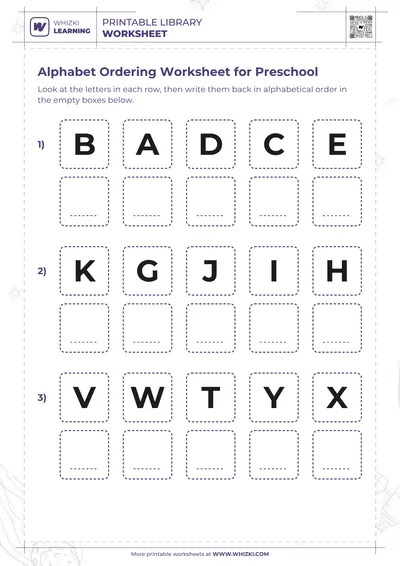
Use the order of the alphabet to decide what belongs next. This alphabet sequencing worksheet presents three groups of five uppercase letters in mixed order. Write each group in alphabetical order in the empty boxes beneath it. An adult can keep an alphabet reference nearby while the child practices locating and recording the letters.
The first mixed group is E, A, D, B, H. Its alphabetical order is A, B, D, E, H. Find the earliest letter in that group, write it in the first answer box, and continue with the remaining letters. Use every supplied letter once. Keep the focus on the five letters shown; there is no need to insert other letters from the alphabet between them.
After the first group, repeat the process with the other two groups. The three completed groups are A, B, D, E, H; J, K, M, N, O; R, S, T, X, Y. Letter cards can let your child move the choices into order before copying them. An adult can point along a reference strip while the child locates each supplied letter, keeping sequencing separate from any handwriting difficulty.
Visit the alphabet library for individual letter information. The Alphabet Starter Pack offers related letter practice. Complete a small section, say its letters in order, and revisit any uncertainty with a reference. For a later activity, arrange a few letter cards on a table and mix them up for your child to put back in alphabetical order. Move to independent writing when both the order and the letter forms feel manageable.
Boost your child’s skills with our discounted workbooks. Engaging activities for preschool, kindergarten, and grade 1 - now at special sale prices!


Fast shipping
Secure Payment
Licensed Teachers
For the planet
Printed in the USA
Helpful guides for parents and teachers, and tips for making learning at home super fun.

Use one familiar snack to build science talk and vocabulary without pressure to taste. This kitchen-table investigation honors allergies, texture needs, and child choice.

Help young children measure with paper clips before a ruler, using equal units, clear endpoints, and quick fixes for gaps, overlaps, and different answers.

Picture labels can build meaning, first-sound attention, or guessing habits. Use this parent-friendly decision tree to know when to cover or reveal the picture.

A vague school screening notice can leave families guessing, so start with seven plain questions about the test, timing, language, evidence, and next steps.
Get exclusive activities, expert tips, and inspiration for a more meaningful, offline family life.