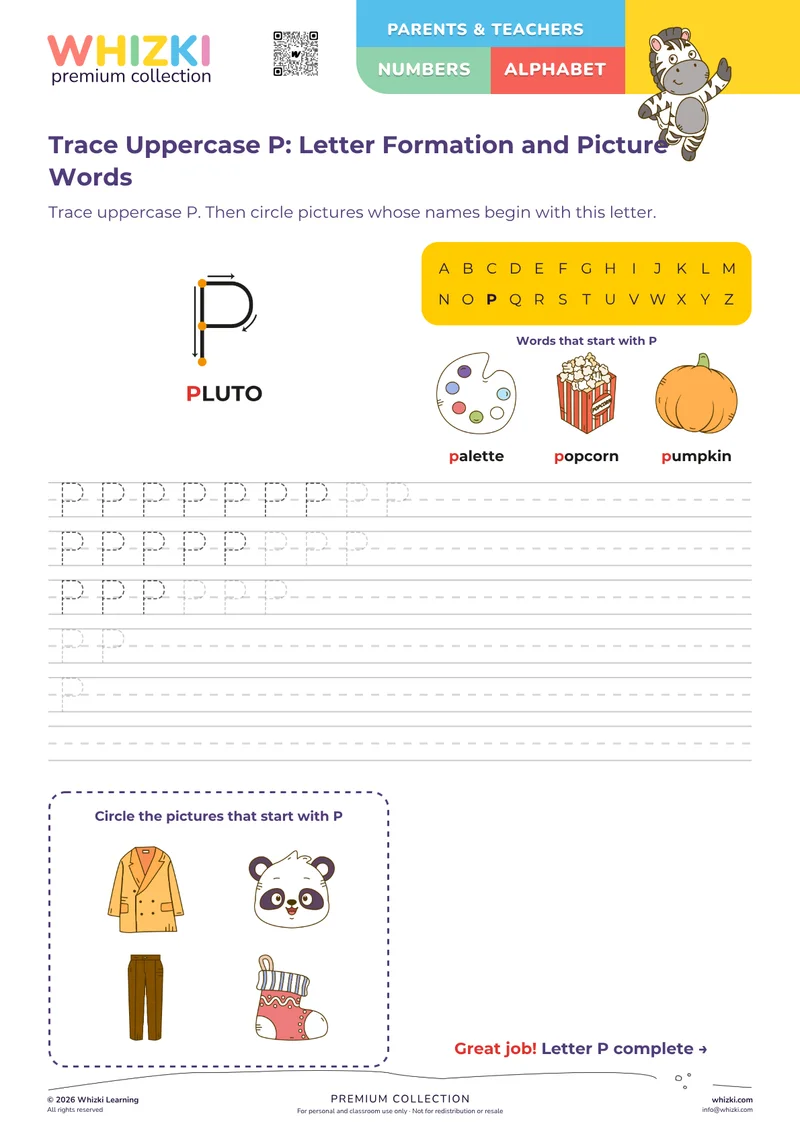


Recognize uppercase P by noticing an upright stem with one rounded section at the top, then locate the same form in the alphabet strip.
Practice the strokes used to form uppercase P, following the model and checking each attempt with adult guidance.
Connect uppercase P with the first written letter in a picture’s name, using adult naming and spelling support when needed.

This uppercase P tracing worksheet combines a large formation model, dotted writing rows, and a picture-word activity. The printed model has an upright stem with one rounded section at the top. Find P in the alphabet strip together, then look at the model before beginning a short section of pencil practice. This page focuses on the uppercase form.
Follow the direction cues and model one letter slowly. Help your child notice where the upper rounded section returns to the stem, then compare a traced attempt with the example. The practice rows offer gradually less dotted support and room to try the shape again. A few careful attempts can be enough for one sitting; return to the large model whenever the movement becomes uncertain.
In the lower activity, children circle pictures whose written names begin with P. The choices include panda and pants. Name unfamiliar pictures and show how their names are spelled before asking for a decision. A shared first letter is a spelling clue; it does not mean every example begins with one identical speech sound. Keep attention on the written letter when explaining this particular task.
For more about this letter, visit the letter P reference page. Choose another uppercase model from the Alphabet Starter Pack when your child is ready. As a separate next step, invite your child to write one P on blank paper or find it in a familiar printed name. Keep the adult support focused on the part that needs practice.
Boost your child’s skills with our discounted workbooks. Engaging activities for preschool, kindergarten, and grade 1 - now at special sale prices!


Fast shipping
Secure Payment
Licensed Teachers
For the planet
Printed in the USA
Helpful guides for parents and teachers, and tips for making learning at home super fun.

Use a grocery receipt for a short, screen-free letter hunt that compares uppercase and lowercase, spots repeated words, and stops before print feels tiring.

A practical decision tree for checking fast worksheet work, changing the response style, and deciding whether a harder page actually helps ages 3 to 7.

A field note on May audit gaps in early learning worksheets, with a simple home check for spotting when clearer artwork matters more than extra directions.

Teaching a child to read often creates immense anxiety for parents, leading to frustrating flashcard memorization. This comprehensive guide details a proven, Montessori-inspired phonics method that prioritizes letter sounds over letter names. Learn how screen-free, hands-on learning activities build essential phonemic awareness and prepare preschoolers for fluent reading without academic pressure.
Get exclusive activities, expert tips, and inspiration for a more meaningful, offline family life.