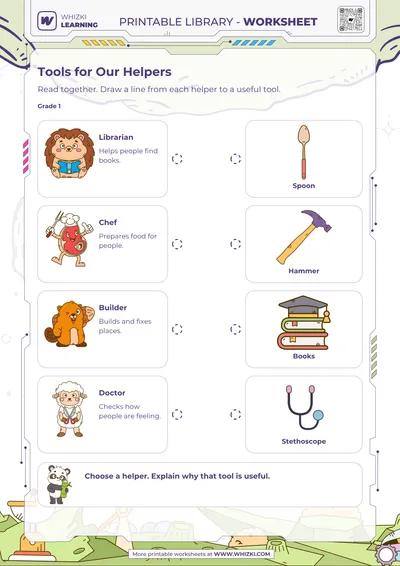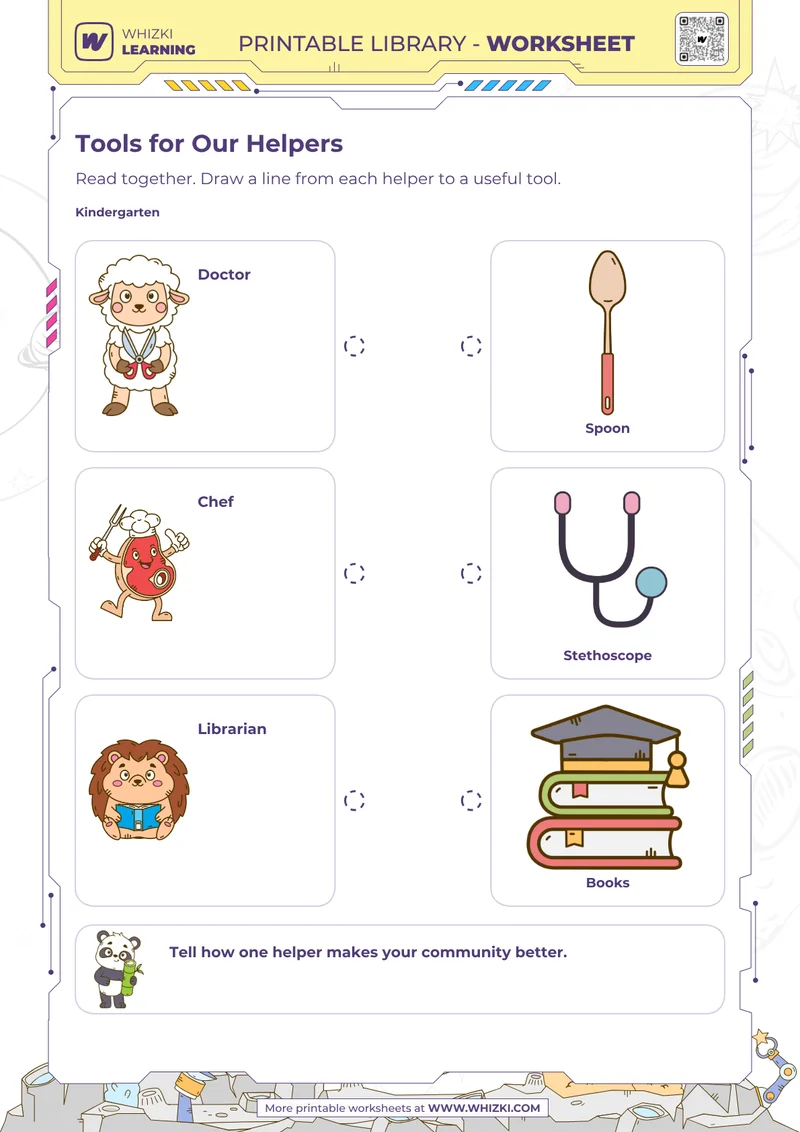


Connect the 3 pictured helpers with useful tools, using their job or object labels as evidence.
Explain one everyday use of a pictured tool and how it supports the helper’s work.
Track a drawn line from its helper to the intended tool and check that every helper has a match.

This community helpers and tools worksheet shows a doctor, chef, librarian. Draw a line from each helper to a useful tool in the other column. There are 3 helper-tool pairs. Read the labels together and name unfamiliar objects before asking the child to decide which tool fits a job.
Start with the doctor and find the stethoscope. Checks how people are feeling. The full set of intended pairs is doctor and stethoscope; chef and spoon; librarian and books. Point to the matching endpoints before drawing a line, then check where that line ends. The tool in the same row as a helper is not necessarily its answer.
Explain what the tool helps someone do rather than treating the picture as an exclusive ownership rule. Several jobs may use the same kind of tool in real life. This page uses one familiar connection for each helper. Let the child describe that connection in everyday words, and help trace a line when other completed lines make the route hard to follow.
Explore the community helpers collection for related practice. The Kindergarten Social Studies set offers other illustrated activities. Work through a few examples with time to explain a choice. After checking the page, try one spoken example using a familiar place, activity, or object while keeping the same skill in focus.
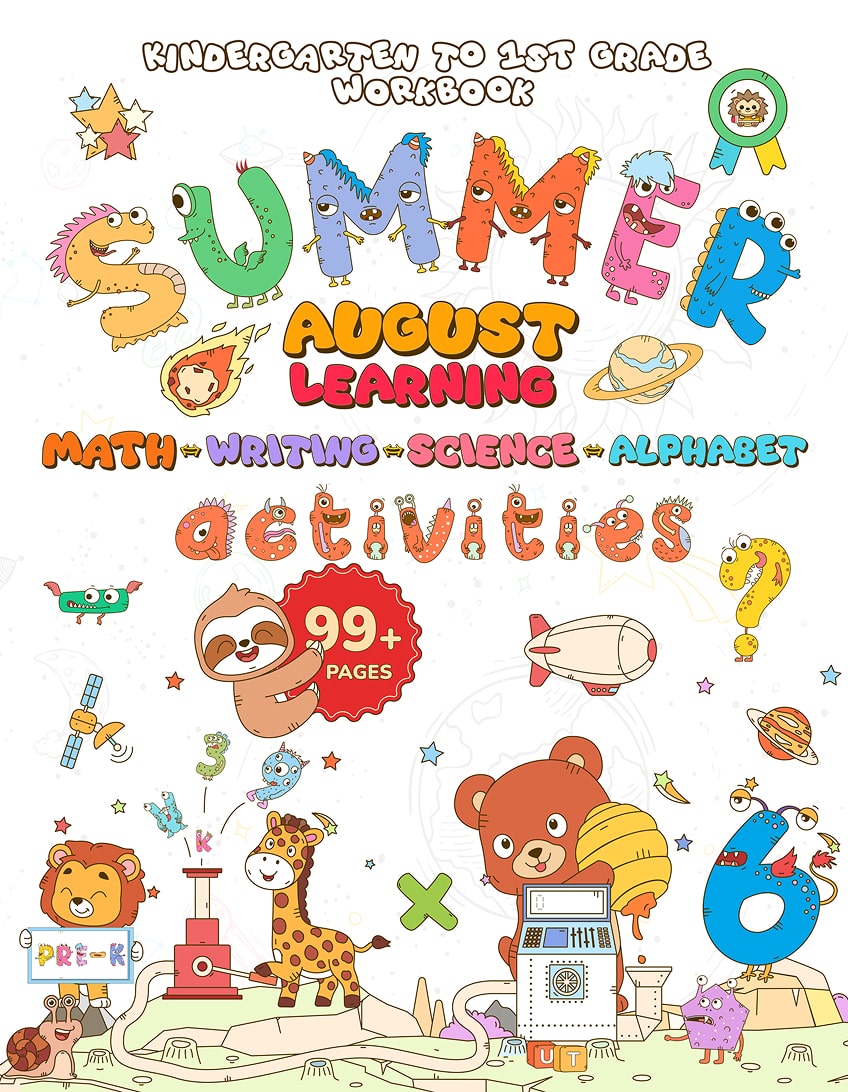
Boost your child’s skills with our discounted workbooks. Engaging activities for preschool, kindergarten, and grade 1 - now at special sale prices!


Fast shipping
Secure Payment
Licensed Teachers
For the planet
Printed in the USA
Helpful guides for parents and teachers, and tips for making learning at home super fun.

Turn a quick room search into early geometry talk by asking about sides, corners, curves, and shapes inside everyday objects.

Use a child’s own drawing and spoken words to build a first sentence through adult dictation, shared writing, or optional child writing.

Turn one borrowed book into five short learning moments for ages 3 to 7, with choosing, rereading, drawing, counting, memory, and returning.

A practical field note on reviewing a 12-page Halloween activity pack for counting, patterns, tracing, vocabulary, handwriting, print choices, and age fit.
Get exclusive activities, expert tips, and inspiration for a more meaningful, offline family life.