Learning Outcomes
Community helpers → Match jobs to tools → Children connect familiar workers with the ways each worker helps a neighborhood.
Neighborhood jobs → Build social studies vocabulary → Children name helpers, workplaces, tools, and helpful actions during guided discussion.
Helper roles → Explain community needs → Children describe how different workers keep people safe, healthy, and cared for.

Community Helpers Kindergarten Worksheet
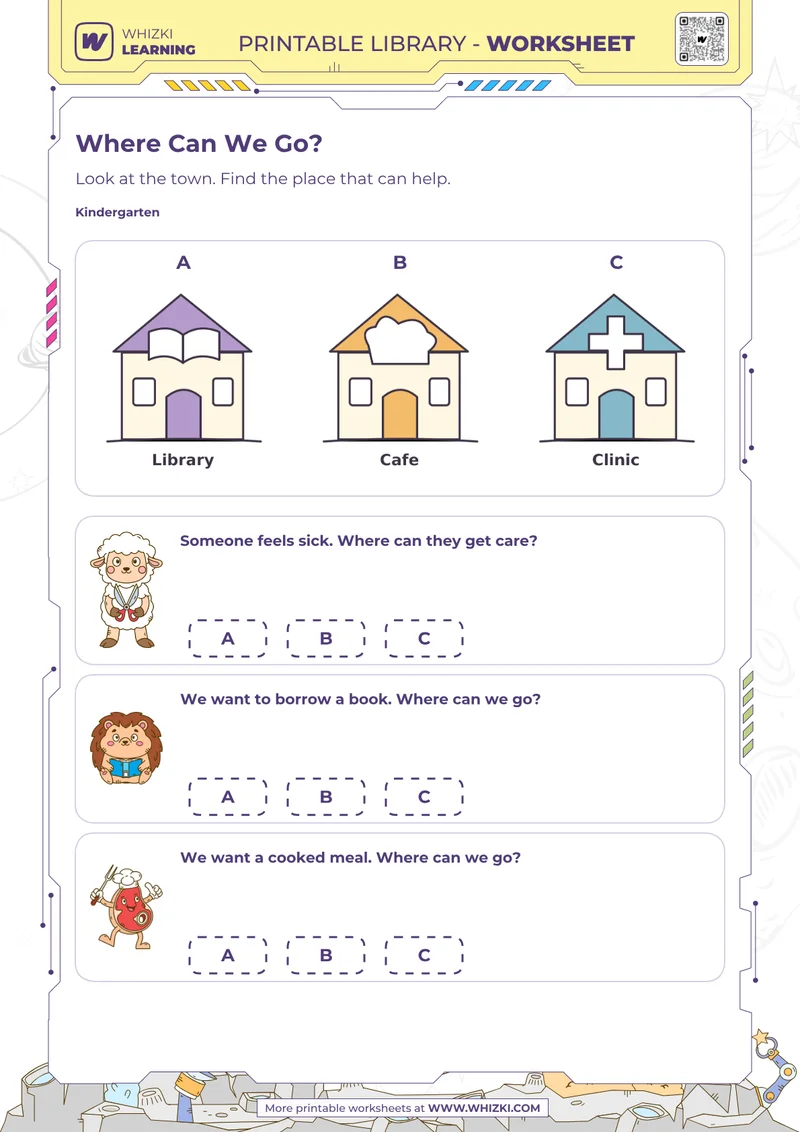
The Community Helpers worksheet is a printable social studies page for kindergarten children. The worksheet practices identifying community helpers and connecting familiar jobs with the ways each helper serves a neighborhood.
At age six, children notice workers in the real world, but children can stall when asked to explain what each job actually does. Naming a helper, a tool, and a helpful action builds the kind of everyday vocabulary children use in class, on errands, and during pretend play.
Sit beside the child and look at each picture or prompt together before any answer gets marked. Ask, “Who is the helper?” then follow with, “How does that helper help people?” so the worksheet becomes a short conversation instead of a quiet guessing page.
The worksheet keeps the focus on real people children may see around town, so the learning feels close to daily life. Clear prompts, familiar roles, and a simple paper format make the page useful for quick parent-child time, morning work, or a small-group social studies activity.
Limited-time savings
on Whizki workbooks.
Boost your child’s skills with our discounted workbooks. Engaging activities for preschool, kindergarten, and grade 1 - now at special sale prices!


Fast shipping
Secure Payment
Licensed Teachers
For the planet
Printed in the USA
Find fresh ideas
To help your little learners grow!
Helpful guides for parents and teachers, and tips for making learning at home super fun.

A field note on the May 2026 move to one shared worksheet generator API, with a simple parent preview for print consistency and handwriting comfort.

A seven-minute apple observation helps children compare color, stem, skin, weight, smell, and a cut surface, then draw what children noticed before any craft begins.

A field note on why Ukrainian-English workbook pages need fresh design choices for letters, examples, space, and language-specific skills.

A fast weather window journal helps ages 3-7 notice sky and temperature feeling with simple symbols, compare a few days, and learn observation versus forecast.
Join the Screen-Free Movement.
Get exclusive activities, expert tips, and inspiration for a more meaningful, offline family life.