Learning Outcomes
Community helpers → Naming roles → Child connects familiar jobs with helper names during simple parent-child conversation.
Community helpers → Job awareness → Child explains how helpers support safety, health, food, mail, or neighborhood needs.
Community helpers → Picture observation → Child notices uniforms, tools, and vehicles while building early social studies vocabulary.

Community Helpers Preschool Worksheet

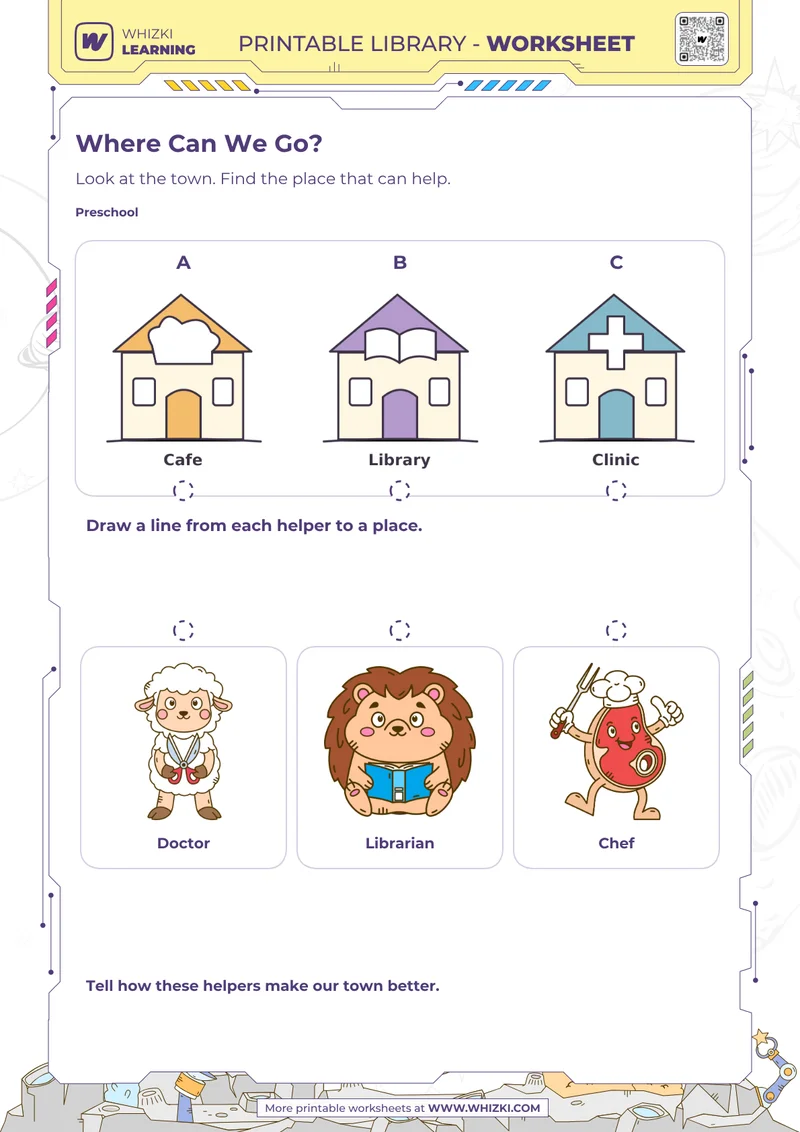
The Community Helpers Preschool Worksheet is a simple preschool social studies page for practicing community helper names and the jobs people do. The page gives 3-year-olds a concrete way to look, point, name, and talk about helpers children may see around town.
At age 3, many children notice uniforms, vehicles, and tools before children can explain the job. A child may call every rescue picture a fire truck, and that mix-up is normal. Naming helpers builds early vocabulary, real-world awareness, and confidence in everyday conversations.
Sit beside the child and look at one picture at a time. Say, “Who helps when someone is sick?” or “What does a mail carrier bring?” Let the child point, answer with one word, or repeat the helper name after you. Add a quick pretend action, like steering a bus or putting on a firefighter hat, to keep the page playful.
The worksheet stays focused on one small idea, helpers in the community, so a 3-year-old does not have to sort through too many directions at once. Clear pictures and short talk prompts make the page useful for a calm table activity, a preschool center, or a quick shared moment before errands around town.
Limited-time savings
on Whizki workbooks.
Boost your child’s skills with our discounted workbooks. Engaging activities for preschool, kindergarten, and grade 1 - now at special sale prices!


Fast shipping
Secure Payment
Licensed Teachers
For the planet
Printed in the USA
Find fresh ideas
To help your little learners grow!
Helpful guides for parents and teachers, and tips for making learning at home super fun.

A vague school screening notice can leave families guessing, so start with seven plain questions about the test, timing, language, evidence, and next steps.

A field note on the May 2026 move to one shared worksheet generator API, with a simple parent preview for print consistency and handwriting comfort.

A seven-minute apple observation helps children compare color, stem, skin, weight, smell, and a cut surface, then draw what children noticed before any craft begins.

A field note on why Ukrainian-English workbook pages need fresh design choices for letters, examples, space, and language-specific skills.
Join the Screen-Free Movement.
Get exclusive activities, expert tips, and inspiration for a more meaningful, offline family life.